
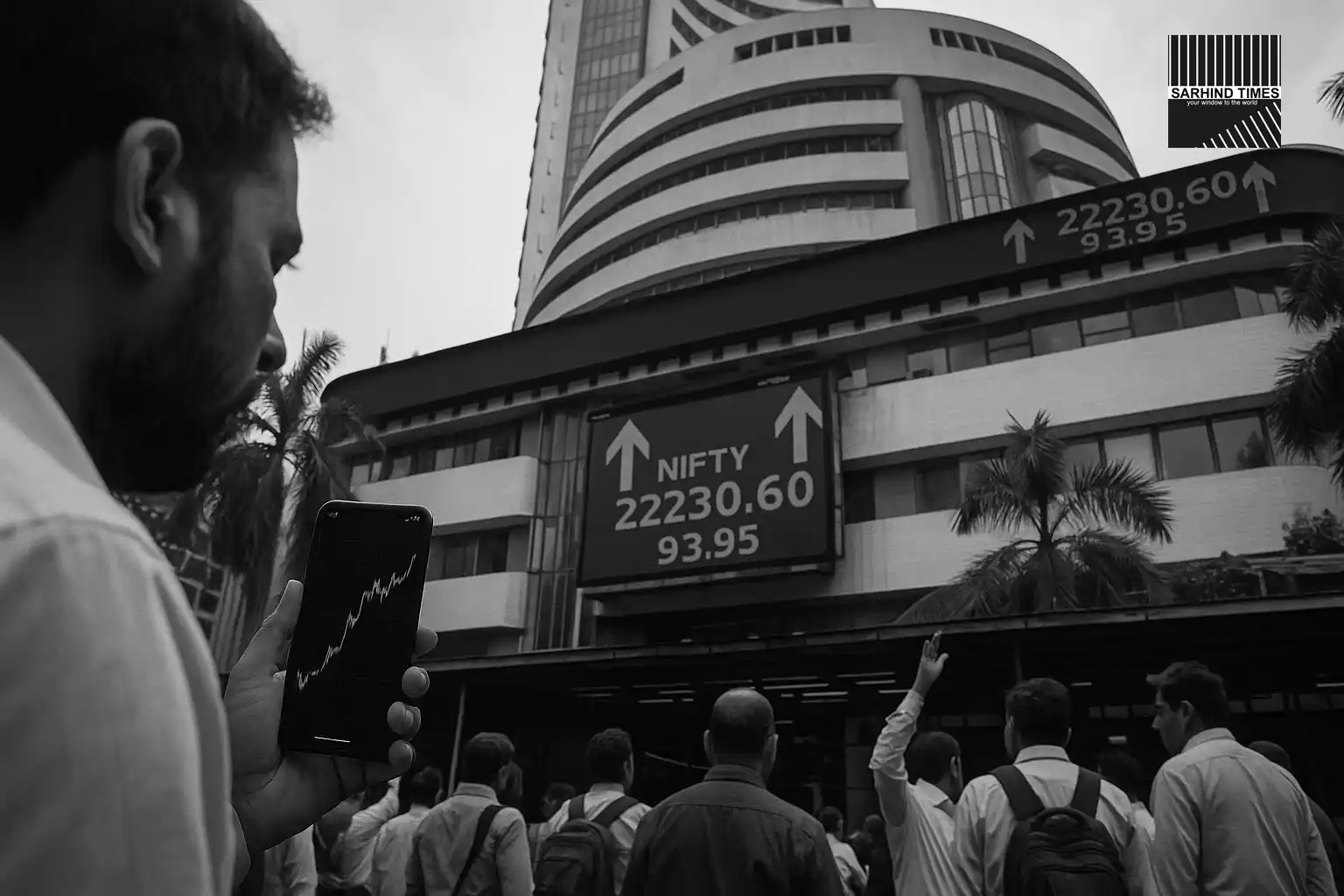
BSE SENSEX and Nifty 50 surge amid optimism over a possible India-US trade agreement and an anticipated interest-rate cut from the Federal Reserve System
Dateline: Mumbai/New Delhi | October 30, 2025
Summary: Indian benchmark indices climbed to their highest levels in over 13 months as investor sentiment turned broadly positive. Boosted by fresh hopes of a comprehensive trade deal between India and the United States and growing expectations of a US interest-rate cut, equities in India saw renewed traction—with banking, metal and export-linked stocks leading the uptick.
Setting the Stage: Why Now?
Indian equity markets have been choppy in recent months—after surges and jitters driven by global cues, regulatory anxieties, and macro-economic uncertainty. So the fact that both the Sensex and Nifty have now surged to their highest levels in over a year signals a meaningful shift in sentiment. The key triggers this week: reports of progress in a possible trade-deal between India and the US, and renewed hopes that the US Federal Reserve may cut interest rates sooner rather than later. The Indian market is thus being pulled upward not only by domestic supports (like strong earnings, festive demand, investment inflows), but also by external tailwinds. Investor psychology in emerging-markets is sensitive to global triggers—the shift in tone here suggests a broader willingness to deploy capital rather than sitting on the sidelines.
Market Movement: The Numbers & Highlights
According to recent data, the Sensex rose to around **84,997.13 points** on the BSE, marking a fresh high in the past 13 months. The Nifty 50 also crossed key thresholds, rising to approximately 26,053.90 in recent sessions.
The rally was broad-based:
– Metal stocks led the gains, with the metal index up around 1.2 %.
– PSU bank stocks also saw strong buying, building on earlier momentum from FDI-limit change reports.
– Export-oriented sectors like textiles and shrimp gained as trade-deal hopes revived.
Why the India-US Trade Narrative Matters
< possible trade framework between India and the US is seen as significant by the market for several reasons: – A trade accord could lead to lower tariffs or smoother regulatory access for key Indian exports (textiles, shrimp, engineering goods) and thus boost earnings potential for Indian companies in the export value-chain. – The geopolitical dimension: deeper economic ties with the US support India’s aspiration to diversify supply-chains, reduce dependencies and attract higher-value manufacturing. Markets like clarity of direction and policy stability. – It also signals to investors that India is moving into a more integrated global trade regime—which tends to increase foreign institutional investor (FII) confidence and fund-flows into equities. These hopes are not guaranteed, but in the near term they create a positive bias—investors tend to prefer the potential upside of a deal rather than paring exposure.
The Interest-Rate Factor & Global Context
< The second key driver is the expectation that the US Federal Reserve may lean towards cutting interest rates. Lower US rates typically ease global capital conditions, prompt search for yield, and reduce pressure on emerging-market currencies. All of which lifts equities in markets like India. Analysts note that India’s corporate earnings environment appears firm, inflation is reasonably contained, and growth forecasts remain supportive—so the domestic backdrop is relatively benign, increasing the attractiveness of equities. In sum: better global cues + decent domestic fundamentals = market rally.
Domestic Triggers: Earnings, Regulatory Relief & Inflows
< On the domestic front, several positive signals have added fuel to the rally: – Foreign Institutional Investors (FIIs) remain net buyers recently, reversing earlier net outflows—this shift supports equity valuations. – Some companies have delivered stronger-than-expected quarterly results, particularly in export/metal sectors, strengthening investor confidence in corporate health. – Regulatory anxieties (for example, over weekly options expiry, mutual fund fee changes) have somewhat eased, removing one overhang from market participants. – The upcoming IPO pipeline (in the run-up to the festive season) is keeping investor interest alive and liquidity moving.
Sectoral View: Winners, Watch-outs and Opportunities
Winners
– Metal & mining stocks: Strong commodity prices, supply-side constraints, and export demand are helping.
– PSU banks & financials: With uptake in credit growth, improved capitalisation, and improved sentiment around state-owned banks, this sector is back in play.
– Export sectors: Textiles, shrimp, and other manufacturing exports are benefiting from trade-deal hope.
– Select mid-caps: With large-caps rallying, some investors are rotating into quality mid-caps—especially those with domestic leverage and growth potential.
Watch-outs / Risks
– Valuation stretch: Indices rising to 13-month highs mean the margin of error narrows; profit-taking or pick-ups may increase.
– Foreign outflows: Any negative global surprise (US inflation, rate rise, China shock) might reverse the FII flows.
– Domestic regulatory risks: If regulatory reform becomes uncertain (for example, mutual-fund fee changes, corporate governance issues), investor caution could spike.
– US interest-rate policy: If the Fed signals delays in cuts or even hints at hikes, the emerging-market rally could stall.
– Corporate earnings execution: Rally built partly on expectations—if companies disappoint in next few quarters, sentiment could reverse.
Market Implications for Investors & Policy Makers
< For investors: the current rally offers opportunity but also calls for caution. With indices elevated, stock-selection becomes more important—a broad “buy anything” approach may carry higher risk. Diversified exposure, attention to balance-sheet strength, and staying mindful of global cues will matter. < For policy-makers: the equity-market rally is positive for wealth, corporate investment and market confidence—but it also sets expectations. Cheers now may tie the markets to forward-looking narratives (trade-deal, rate-cuts) which require delivery for sustainment. Regulatory stability, infrastructure of capital markets, and corporate governance will be under greater spotlight.
Outlook: What to Watch in the Coming Weeks
< Among the key events and indicators to monitor: – Any formal announcement or credible progress in the India-US trade agreement. – The US Fed’s next policy statement and any commentary on rate-cut timing. – FII flows—net inflows vs outflows from India. – Q2 and Q3 earnings season in India—whether the corporate-earnings narrative justifies the rally. – Domestic macro data—especially inflation, GDP growth, credit growth and non-performing assets. – Regulatory developments in India—especially relating to capital markets, derivatives, mutual funds and the financial sector. If the rally anchors on sustained capital inflows, earnings growth and policy clarity, the indices could aim higher toward previous all-time highs. Conversely, if any of the external or internal triggers stumble, volatility may rise and consolidation is likely.
Why This Rally Matters Beyond the Numbers
This is more than just a bouncing stock-market. It reflects investor appetite for India’s growth story—a large, young economy, expanding domestically and engaging more globally. The market’s positive reaction to trade-deal and rate-cut hopes signals a broader belief that India can shift into a higher gear of growth, exports and capital-deployment. In that sense, the market rally is a signal for the broader economy: better global integration, potential flow of foreign capital, improved export competitiveness and stronger corporate investment. If this narrative holds, the gains may go beyond short-term trading and reflect structural change. However, the flip side is real: markets are forward-looking and therefore prone to “disappointment risk”. If policy or global flows stall, correction may be rapid. For now, India’s equity market appears to be enjoying a moment in the sun—but the depth of who holds the rally, how wide it spreads and how long it lasts remains uncertain. “`



+ There are no comments
Add yours