
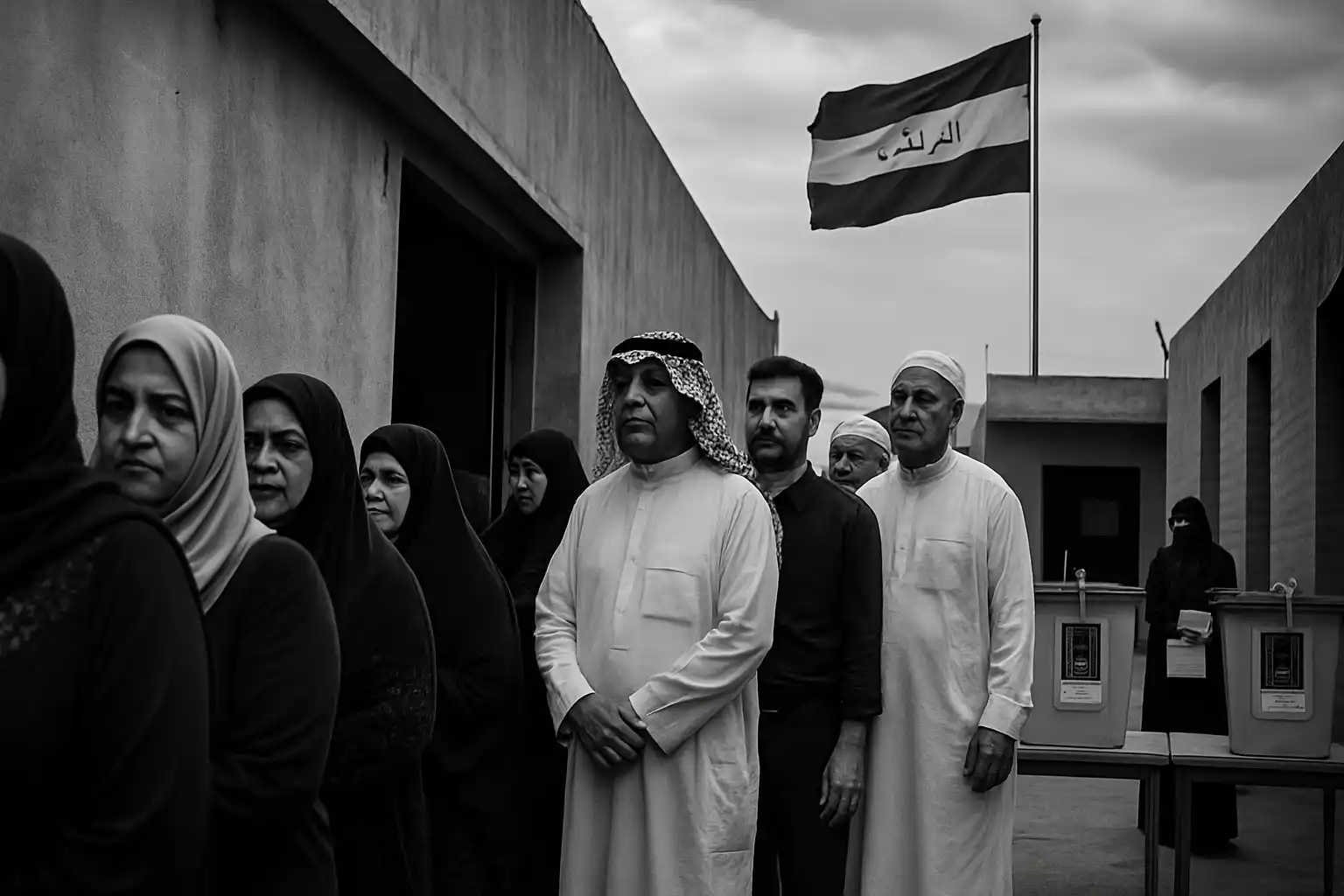
With voting scheduled for 11 November, Iraq faces a crossroads of governance, security and economic transformation
Dateline: Baghdad | 05 November 2025
Summary: Iraq is set to hold parliamentary elections on 11 November 2025, a high-stakes event seen as a key moment for political renewal, security consolidation and economic reform. With the public demanding change and regional pressures mounting, the outcome will test Iraq’s ability to navigate internal divisions and external influence.
Background: A Nation at a Crossroads
Since the overthrow of the previous regime, Iraq’s political trajectory has been marked by fragility, sectarian tensions, security challenges and the influence of regional powers. More recently, public frustration with corruption, joblessness, power outages and inadequate services has fueled street protests and amplified demands for change.
The upcoming parliamentary elections therefore carry weight far beyond routine electoral cycles. They are seen by many as a referendum—not just on individual parties or candidates—but on the broader capacity of the Iraqi state to deliver governance, deliverables and stability. Political analysts suggest that the election could either strengthen reformist forces or entrench the status-quo of factional patronage.
Key Stakeholders: Political Blocs, Security Forces and External Actors
Several distinct groups play a critical role in shaping the outcome and aftermath of the election:
- Reformist movements and independent candidates: These entities have gained visibility in urban protest-zones, especially among younger voters, and are campaigning on platforms of transparency, job creation and improved public services.
- Sectarian and ethnic-based parties: Shiite, Sunni and Kurdish bloc formations remain influential, leveraging historical patronage networks, militia linkages and organisational strength.
- Security-forces and militia interfaces: Although formal military and police units are under state control, informal militia groups retain significant influence in some regions, particularly in the south and west of Iraq.
- Regional powers and international stakeholders: Countries such as Iran, the United States, Turkey and domestic Gulf actors have long engaged in Iraqi politics, whether via economic investment, security cooperation or ideological influence. The outcome of the election will therefore carry regional implications.
Main Issues on the Election Agenda
While many campaign-slogans emphasise national pride, job opportunities and improved services, several core issues dominate the voter perspective:
Governance and corruption: Multiple instances of delayed salaries, diverted funds, weak public-sector performance and opaque awarding of contracts have undermined public trust. Reformist candidates are capitalising on this discontent.
Economic revitalisation: Iraq’s economy remains heavily reliant on oil exports, with limited diversification, high youth unemployment and widespread infrastructural deficits. The election offers a chance to push agendas on private-sector growth, foreign-investment facilitation and better service-delivery frameworks.
Security and terrorism threats: Although major combat operations against extremist groups such as IS have receded, insurgent pockets, militia-competition and external interference persist. Voters are acutely aware that stability remains fragile.
Regional and external linkages: Iraq sits at a geopolitical junction—bordering Iran, Syria and the Gulf states—so external influence, border-security issues, energy-linkages and cross-region trade are central to its future direction.
Electoral Landscape: Structure and Expectations
The elections will determine the composition of Iraq’s unicameral parliament, which in turn selects the prime minister and drives national policy. Analysts anticipate several possible outcomes:
- A reformist surge: If independent and reform-oriented candidates perform well, the parliament could pivot toward a more technocratic government with less overt patronage politics.
- A status-quo coalition: Traditional sectarian blocs and established parties may maintain dominance, resulting in incremental change rather than systemic overhaul.
- Fragmentation and instability: If no coalition emerges clearly, the risk of political deadlock grows, which could impair decision-making and governance until the next election cycle.
Voter Sentiment and Turnout Dynamics
Polls and public commentary suggest youthful impatience and rising expectations. Citizens in major urban centres such as Baghdad and Erbil report frustration with joblessness, services and deteriorating infrastructure. Analysts note that turnout among younger demographics could be decisive—particularly if reform-candidates can mobilise new voters rather than rely on traditional bases.
Security arrangements are being intensified ahead of the vote. Polling stations will be heavily guarded, and the government has deployed additional forces to sensitive provinces to deter violence or disruption. Past elections experienced significant threats; ensuring a safe, fair process remains a priority.
Potential Risks and Contingencies
Despite preparations, the election process faces significant risks:
- Political violence: Militia or insurgent attacks, particularly in border-zones and volatile provinces, remain possible. A major security incident would undermine public confidence and could make results contested.
- Post-election bargaining and coalition-building: Even if elections proceed smoothly, formation of government may be protracted. Delays in key appointments — prime minister, cabinet — could hamper governance.
- External interference: Given the complexity of regional involvement, external actors may attempt to influence outcomes, funding or alignments of local candidates. Transparency in campaign-financing is a concern.
- Economic shocks: Oil-price volatility, fiscal-deficit pressures or delayed foreign aid could limit the incoming government’s ability to deliver quick improvements, disappointing voters.
Implications for Iraq’s Future — Governance, Security and Region
A successful election, followed by clear government formation and execution of reforms, could yield several positive outcomes:
- Greater policy-coherence: A more unified parliament and government could move on long-pending reforms—administrative-reform, investment-policy, public-sector restructuring.
- Enhanced investor sentiment: Stability and reform can attract foreign-investment, diversify the economy, and create job opportunities—critical for Iraq’s younger population.
- Improved security climate: A strong government with public-legitimacy could better manage internal threats, coordinate with regional partners and reduce militia-influence.
- Stronger regional role: A stable Iraq could act as a connector between Gulf states, Iran and the Mediterranean region—potentially facilitating trade corridors, energy pipelines and diplomacy.
Conversely, a problematic outcome could leave Iraq vulnerable to a vicious cycle of weak governments, fiscal crises and renewed unrest. It may also amplify external leverage and reduce domestic agency.
What to Watch: Key Milestones and Indicators
Between now and the vote—and beyond—several indicators will determine the trajectory:
- Pre-election security incidents and how rapidly the government responds.
- Turnout rates across urban and rural provinces, especially among youth.
- Post-election negotiations and government formation timeline.
- Early policy-announcements by the incoming government—on jobs, power-supply, oil-sector reform, governance measures.
- International reactions and foreign-investment signals following the new government’s emergence.
Conclusion
The 11 November 2025 parliamentary elections in Iraq present one of the most consequential junctures in the country’s recent history. With citizens clamouring for better governance, economic reform and stability, the electoral process offers an opportunity for renewal—but also carries risks. For Iraq to turn the vote into genuine progress, the process must be fair, government formation efficient, and policy-implementation immediate.
Ultimately, the election is not just a political event—it is a test of Iraq’s state-capacity, public trust, and its ability to steer domestic reform in a region marked by competition and instability. For domestic stakeholders, the message is clear: the generation that turns out to vote may also determine the generation that shapes Iraq’s future.
For external observers and regional partners, how Iraq navigates this election may signal the stability of the broader Middle East. A stable and reforming Iraq could be a pillar of regional integration; a fragmented outcome might perpetuate volatility.
As Iraq’s voters prepare to cast their ballots, all eyes will be on the conduct, results and aftermath of the election. This is a moment of possibility—and one of responsibility.


+ There are no comments
Add yours