
Resolution endorses multi-stage truce, hostage releases and an international stabilisation force, but sharp disagreements among parties raise doubts about how quickly peace can become reality.
Dateline: New York | 18 November 2025
Summary: The United Nations Security Council has voted to approve a US-drafted resolution backing a detailed plan to end active hostilities in Gaza through a phased ceasefire, hostage-prisoner exchanges and the deployment of an international stabilisation force. While key Western and Arab states hailed the vote as a diplomatic breakthrough, deep reservations from Hamas, hardliners in Israel and several regional actors underscore how fragile the pathway to implementation remains.
A rare moment of convergence at the UN
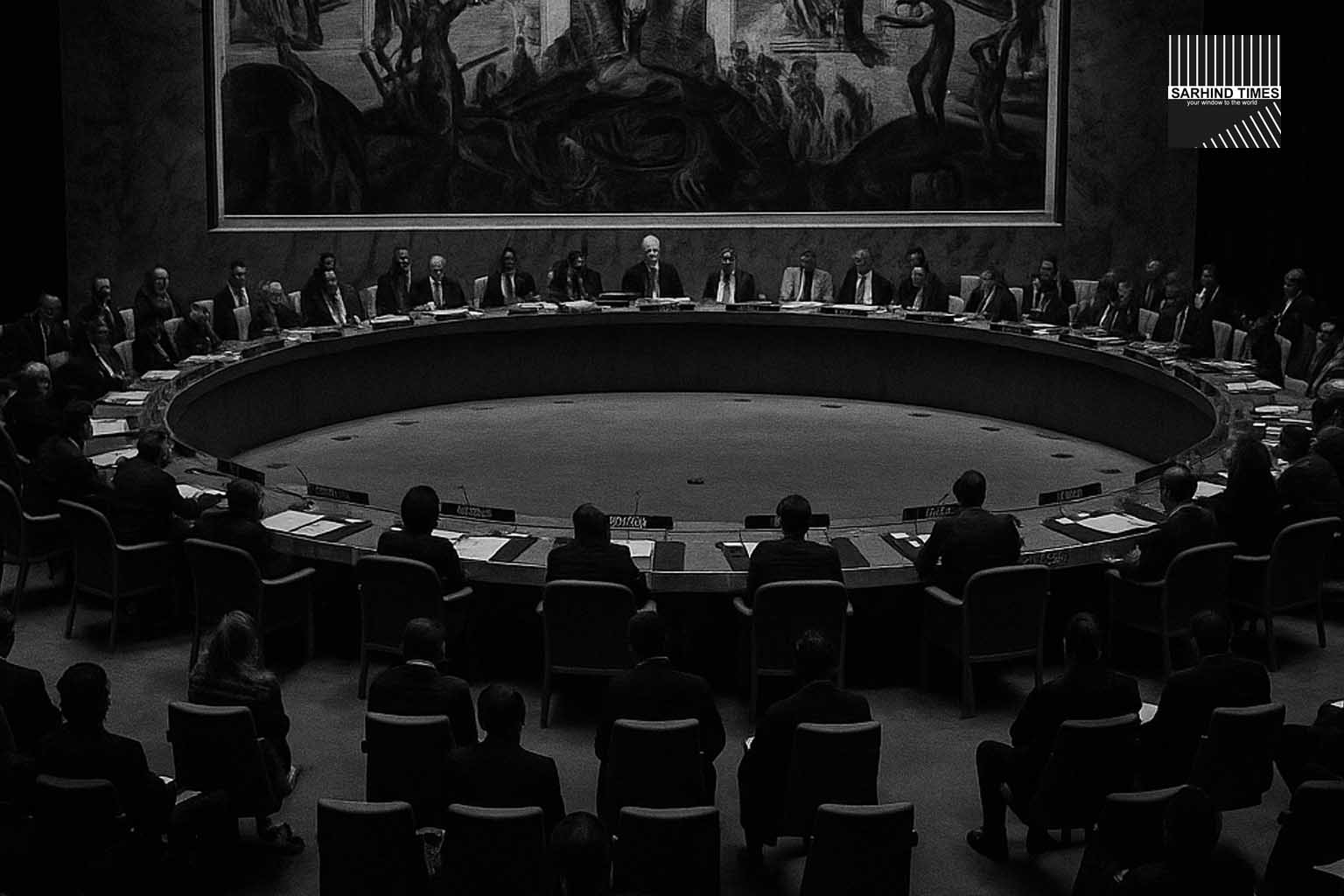
For months, the circular debates inside the UN Security Council had come to symbolise the world’s paralysis over the Gaza war: draft resolutions vetoed, rival texts from different blocs, and statements of concern that did little to slow the daily realities on the ground. That pattern shifted when the Council finally adopted a US-drafted resolution endorsing a comprehensive ceasefire framework aimed at ending active fighting, securing hostage releases and launching an internationally supervised stabilisation mission in Gaza.
The resolution passed with a clear but not unanimous margin. The United States, several European members and a number of rotating Council members voted in favour, arguing that the text offered the best realistic roadmap to halt the bloodshed while addressing core security concerns. Russia and China expressed strong reservations but ultimately chose not to derail the process outright, opting for abstentions rather than vetoes. A handful of states attempted to extract last-minute changes on language concerning accountability and reconstruction oversight, but the broad contours of the text remained intact.
In statements after the vote, US diplomats framed the outcome as proof that the Council can still act on one of the world’s most divisive crises, provided the proposal on the table balances humanitarian urgency with political and security realities. The resolution effectively wraps a complex bundle of military, humanitarian and political steps into one overarching endorsement from the world’s top security body. Yet behind the diplomatic choreography lies a simple question: can the plan survive contact with the facts on the ground?
The three-phase plan: ceasefire, stabilisation, reconstruction
The resolution endorses a three-phase design that has been circulating in diplomatic channels for weeks, with the United States acting as the primary broker among Israel, regional Arab states and, indirectly, Hamas’s political leadership.
Phase One: Immediate humanitarian ceasefire and hostage releases. The first step centres on a sustained cessation of offensive operations combined with large-scale humanitarian access. Israeli forces would halt major ground offensives and airstrikes, while Hamas and other armed groups would cease rocket launches and cross-border attacks. In parallel, Hamas would release an initial tranche of hostages, prioritising women, children, the elderly and those with critical medical needs. In return, Israel would release a specified number of Palestinian prisoners, particularly minors and those held without trial under administrative detention, subject to security screening.
Phase Two: Deployment of an international stabilisation force. Once the initial truce and exchanges take hold, an international force, authorised under the resolution, would begin deploying into designated zones inside Gaza. This mission, involving contingents from multiple countries approved by all major parties, would not be an occupying army but a security and monitoring presence. Its core tasks would include overseeing adherence to the ceasefire, facilitating humanitarian corridors, supporting efforts to dismantle remaining heavy weapon systems, and creating conditions for the withdrawal of most Israeli troops from densely populated areas.
Phase Three: Political track and reconstruction framework. The final stage envisions a structured political dialogue on Gaza’s long-term governance, coupled with a multi-billion-dollar reconstruction plan under tight international oversight. The resolution calls for an inclusive Palestinian governance arrangement that ultimately brings Gaza and the West Bank under a single civilian authority, with reforms aimed at combating corruption and ensuring transparent use of funds. Major donors in Europe, the Gulf and Asia are expected to tie reconstruction pledges to clear monitoring mechanisms and security benchmarks.
Supporters of the resolution argue that the three phases are inter-locking: without hostages being released, there is limited political space in Israel; without stabilisation forces, there is no buffer to prevent renewed clashes; without a serious reconstruction and governance track, the war’s underlying drivers will remain intact. Critics counter that each phase is vulnerable to spoilers who may decide they have more to gain from chaos than compromise.
Hamas’s rejection of “foreign guardianship”
Within hours of the vote, Hamas officials issued sharp public statements rejecting what they called “foreign guardianship” over Gaza. Their statements signalled deep hostility to the idea of a long-term international presence that might constrain the group’s military and political manoeuvring. They also condemned any roadmap that did not explicitly guarantee a complete lifting of the blockade, swift withdrawal of Israeli forces and a clear timeline toward broader political demands.
Behind the rhetoric lies a set of very concrete concerns. An international stabilisation force, particularly one with contributions from states that maintain close security relations with Israel or Western alliances, could threaten Hamas’s ability to rebuild its military infrastructure and exercise de facto control over key sectors in Gaza. If the mission expands into border monitoring and weapons interdiction, it could sharply curtail the flow of arms and funds that have sustained the organisation’s armed wing.
At the same time, Hamas faces its own internal pressures. After months of devastating warfare, mounting civilian casualties and displacement, the group’s leadership cannot afford to appear as though it is capitulating to a framework seen by some supporters as legitimising outside control. Hardline factions within Gaza and in exile networks may view the UN-endorsed plan as a trap designed to disarm them politically and militarily, even if it brings short-term relief to the civilian population.
Diplomats involved in quiet talks note that Hamas’s public rejection does not necessarily mean total disengagement. Historically, armed groups in similar conflicts have denounced international frameworks in public while probing the details through back channels. The core question will be whether the incentives embedded in the plan—particularly prisoner releases, easing of restrictions and reconstruction funds—are strong enough to persuade the movement’s leadership to work with elements of the proposal over time.
Israel’s divided political landscape
On the Israeli side, the reaction has been guarded and fragmented. The government has formally welcomed the Security Council resolution as a recognition of its security concerns and of the need to dismantle armed groups’ capacity for future attacks. Officials have stressed that any ceasefire must be “conditions-based,” not purely time-bound, and that Israel retains the right to act against what it views as ongoing threats.
However, beneath the official line, Israel’s political system is deeply split. Some members of the governing coalition and key security figures see the resolution as an opportunity to transition out of a grinding war that has strained the military, disrupted the economy and isolated the country diplomatically. They argue that a UN-backed international force, if properly structured, could allow Israel to reduce its day-to-day presence in Gaza while preserving a security buffer.
Others, particularly hardline coalition partners, view the plan as an unacceptable constraint on Israeli freedom of action. They fear that the presence of international troops and monitors could limit future military options, expose Israeli officers to legal scrutiny, and accelerate pressure for concessions on issues such as settlements, borders and the status of Jerusalem. Some have already threatened to bring down the government if it accepts any arrangement they interpret as weakening deterrence.
The families of hostages have emerged as another powerful voice. For months they have demanded a deal that prioritises the safe return of their loved ones over broad strategic gambles. Many of them welcomed the Security Council’s endorsement of a detailed exchange framework, but they are acutely aware that every prior attempt at a grand bargain has run into delays, breakdowns or partial implementation. Their protests, vigils and media appearances will remain a crucial factor shaping public opinion as the government weighs each step.
Arab states walking a tightrope
Key Arab governments, especially in the Gulf, Egypt and Jordan, played a central role in shaping the plan and building support for it. For them, the resolution offers a chance to avert further regional destabilisation, stem the humanitarian catastrophe in Gaza and reassert Arab diplomatic agency after months in which military dynamics seemed to crowd out political initiatives.
At the same time, these states are acutely conscious of their own domestic opinion. Images of civilian suffering in Gaza have fuelled anger across the region, putting pressure on leaders who maintain security, energy or economic ties with Western powers and, in some cases, quasi-official ties with Israel. Any perception that Arab governments are helping impose an externally dictated solution that falls short of core Palestinian aspirations could trigger backlash at home.
That is one reason why the text of the resolution includes language reaffirming the long-standing objective of a two-state solution, emphasising Palestinian self-governance in Gaza and the West Bank, and calling for inclusive Palestinian representation in post-war arrangements. Arab diplomats wanted to ensure that the plan’s immediate emphasis on ceasefire and stabilisation did not erase the political horizon.
For countries being courted to contribute troops to the stabilisation force, the calculus is particularly complex. Participating in such a mission could bring international prestige and strengthen ties with major powers. But it also carries real risks: if the ceasefire unravels, foreign soldiers could find themselves in the crossfire between Israeli forces and local militants, or targeted by spoilers seeking to sabotage the process.
The role of global powers: reluctant cooperation
The vote has also highlighted how major global powers, while deeply divided, can still find limited common ground when strategic and reputational costs climb high enough. The United States has invested significant diplomatic capital in shepherding the resolution through, treating it as both a humanitarian imperative and a test of its credibility as a crisis manager.
Russia and China, for their part, have criticised aspects of the plan, arguing that it does not go far enough in mandating an immediate and unconditional end to the offensive or in explicitly condemning civilian casualties. They have also accused Washington of using the UN to re-package its own bilateral agenda. Yet their decision not to veto the resolution suggests that they see some advantage in allowing the process to move forward, perhaps calculating that if the plan falters they can present themselves as supporters of a more maximalist ceasefire.
European states have generally embraced the resolution, seeing it as a chance to move beyond rhetorical appeals towards a concrete framework they can support financially and politically. Many are already discussing reconstruction pledges and technical assistance for governance reforms, though they remain wary of being drawn into open-ended security commitments on the ground.
Humanitarian stakes: from emergency relief to rebuilding a shattered society
While diplomats argue over mandates and sequencing, humanitarian agencies are focused on the immediate potential of the resolution to ease suffering. Gaza’s infrastructure has been severely degraded: hospitals destroyed or damaged, water and power networks in ruins, homes reduced to rubble. A sustained ceasefire, even if fragile, could allow for the scaling up of aid deliveries, restoration of basic services and evacuation of the most critical medical cases.
Humanitarian officials caution, however, that no amount of aid can substitute for political decisions that address the root causes of vulnerability. They stress that simply pumping supplies into a territory without reliable security arrangements, functioning local administration and movement freedom will leave civilians in a state of permanent dependency. For aid workers, the central question is whether the international stabilisation and governance plans will translate into concrete, day-to-day improvements or remain stuck at the level of donor conferences and policy papers.
Another urgent issue is mental health. After repeated cycles of conflict, displacement and trauma, large segments of Gaza’s population—especially children—carry invisible wounds. A genuine transition from war to recovery would require investment not only in concrete and steel but also in education, psychosocial support and community-level reconciliation. None of this is guaranteed by a Security Council vote, but the resolution does open a political space in which such programmes can, in theory, be scaled up.
Legal accountability and the search for justice
The resolution also touches, albeit cautiously, on the question of accountability. It recalls obligations under international humanitarian law and emphasises the need to protect civilians and civilian infrastructure. It


+ There are no comments
Add yours