
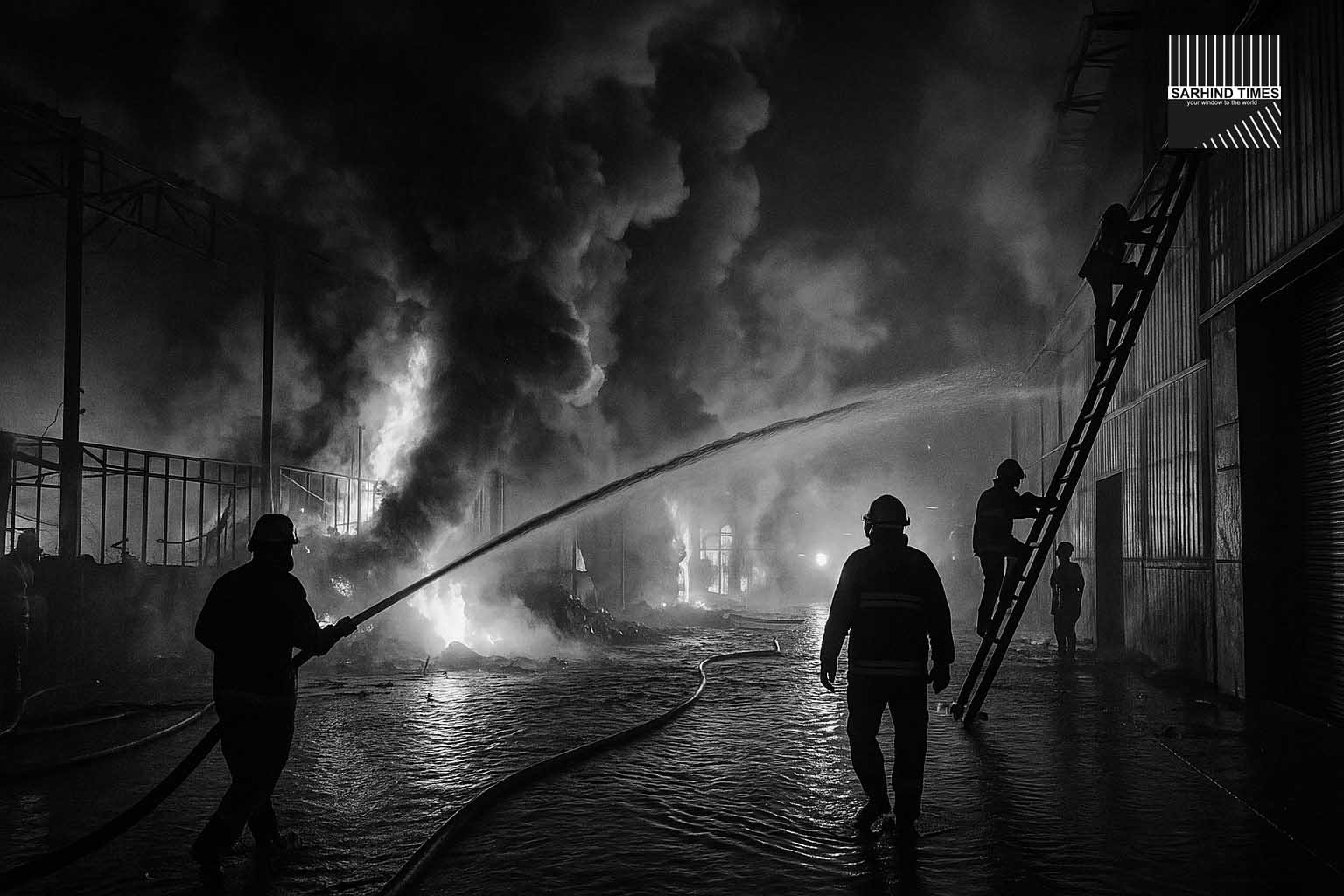
Blaze rages for over eight hours; authorities launch criminal investigation into safety lapses as workers recount terrifying escape amid collapsing structures and toxic smoke
Dateline: Mumbai | 23 November 2025, Asia/Kolkata
Summary: A major fire broke out at the Goregaon industrial hub in Mumbai late Monday night, injuring at least 17 workers and disrupting operations across several small and medium-scale manufacturing units. The blaze, which spread rapidly through interconnected warehouses containing chemicals, textiles and plastic materials, has prompted the Maharashtra government to order a citywide industrial safety review. Fire officials, police teams and forensic experts are now investigating allegations of fire safety violations, missing No-Objection Certificates (NOCs) and alleged negligence by unit owners.
The fire that shook an entire industrial cluster
Mumbai witnessed one of its most devastating industrial accidents of the year when a large fire erupted inside the Goregaon East industrial hub, a dense zone of small manufacturing units, warehouses and workshops. The blaze, reported a little after 10:40 PM on Monday, quickly intensified as it spread from a textile godown to adjacent facilities that stored flammable materials, including solvents, dyes and packaging products.
Residents living in nearby housing societies heard multiple explosions as the blaze ripped through interconnected sheds. The thick black smoke rising above the industrial belt was visible from as far as the Western Express Highway. Firefighters from multiple stations, including Goregaon, Malad, Andheri and Borivali, rushed to the scene, deploying more than 14 fire engines, water tankers and rescue vans.
Eyewitnesses described the eruption as a “wall of fire” that appeared without warning. Workers on night shifts scrambled to exit through narrow passageways as flames engulfed machinery and stockpiles of raw materials. Local police cordoned off the area, and ambulance units transported injured workers to trauma centres across the city.
What made the fire so dangerous?
Preliminary reports suggest the industrial cluster—like many similar zones in the city—contained a mix of:
• highly flammable chemicals
• cotton waste and textiles
• plastic scrap
• metal fabrication units
• packaging warehouses
• small welding shops
Narrow lanes, poor ventilation, and shared electrical infrastructure created near-perfect conditions for the fire to spread uncontrollably. Authorities believe that one or more units may have stored hazardous chemicals without adequate documentation, increasing the risk of combustion.
Firefighting operations: an intense, all-night battle
The fire brigade declared the incident a major Level-3 emergency, requiring coordination across multiple departments. Firefighters worked through the night, battling intense heat, collapsing sheet-metal roofs and pockets of trapped flames. Water supply had to be rerouted from nearby hydrants as the first three hours saw rapid water consumption.
Rescue teams used mechanical cutters to break through locked gates and collapsed metal shutters. Firefighters mounted ladders to spray water from elevated positions as embers drifted across the industrial sheds.
By morning, the fire was brought under control, but thick smoke still billowed from debris piles. Fire crews continued cooling operations for several hours to prevent re-ignition.
17 injured — but fear of unreported casualties persists
Officials confirmed that 17 individuals suffered injuries, including burns, smoke inhalation, fractures and head trauma. Most victims were migrant labourers from Uttar Pradesh, Bihar and Jharkhand who work night shifts in packaging, textile and finishing units.
Hospitals reported that several workers were found semi-conscious from inhaling toxic fumes. Doctors treating them noted exposure to harmful compounds released from burning adhesives and solvents.
Authorities fear additional injuries may have gone unreported, as some workers escaped the scene before emergency crews arrived. Investigators are reviewing CCTV footage to determine if any individuals remain missing.
Workers recount moments of horror
Shocked labourers described scenes of chaos as fire alarms failed to ring and emergency exit lights remained dark. One worker said, “By the time we smelt smoke, flames were already spreading. We ran towards the shutter but it was jammed. We had to break a side wall with metal rods to escape.”
Another worker described jumping from a low rooftop to avoid being trapped inside. Others said they had little training or instructions on how to respond during a fire.
The accounts raise serious questions about workplace safety culture and emergency preparedness within the industrial cluster.
Safety audits and NOC violations under scrutiny
The Maharashtra Industrial Safety Directorate and Municipal Corporation teams have begun a detailed audit of the affected units. Officials suspect that several units may have operated without:
• updated fire safety NOCs
• functioning extinguishers
• emergency exits
• proper electrical load management
• chemical storage compliance certificates
• fire-resistant construction materials
The industrial cluster, dating back several decades, houses a large concentration of small-scale units operating in ageing structures. Many warehouses use makeshift electrical wirings and temporary storage racks, increasing fire vulnerability.
Maharashtra government orders citywide review
In response to the incident, the state government has ordered a citywide review of all industrial clusters, particularly those in Goregaon, Andheri, Malad, Kurla and Bhiwandi. Officials are directed to inspect:
• structural integrity
• hazardous material handling
• fire escape routes
• electrical load balancing
• presence of illegal mezzanine floors
• compliance with building and fire codes
Industries failing to meet compliance standards may face closure notices, penalties or prosecution under the Maharashtra Fire Prevention and Life Safety Measures Act.
Locals demand accountability and permanent solutions
Residents of surrounding societies expressed anger over recurring fire incidents in Mumbai’s industrial zones. Many said they had filed complaints about illegal storage, late-night welding and unsafe chemical shipments but saw limited enforcement.
One resident said, “Every few months we hear an explosion or see smoke from these godowns. The authorities only act after a disaster.”
Community groups are now demanding:
• improved zoning regulations
• stricter monitoring of night shifts
• relocation of hazardous units away from residential areas
• installation of hydrants and wider access lanes
Financial losses run into crores
Early estimates suggest that multiple units suffered heavy losses due to destroyed machinery, burnt raw materials, damaged wiring, collapsed roofs and unusable inventory. Insurance assessors are expected to conduct valuation surveys in the coming days.
Some small businesses expressed fear of total shutdown, having already struggled with rising rents and post-pandemic market fluctuations.
Environmental impact and toxic residue concerns
Environmental experts warn that the burning of plastics, chemicals, adhesives and industrial waste could have released hazardous fumes containing:
• volatile organic compounds
• carbon monoxide
• acid gases
• microscopic particulate matter
The Brihanmumbai Municipal Corporation (BMC) is expected to conduct air quality and residue tests to determine contamination levels. Nearby residents have been advised to keep windows closed and avoid exposure to lingering smoke.
Police file FIR; owners may face strict action
Mumbai Police have registered a First Information Report (FIR) against unidentified factory owners and managers under sections related to negligence, endangering human life and violation of safety norms.
Investigating teams are examining:
• fire audit records
• CCTV footage
• chemical purchase invoices
• storage licences
• worker attendance logs
Officials said that criminal charges may be filed once responsibility is established. Repeat offenders could face cancellation of business licences.
Emergency response praised despite challenging conditions
The Mumbai Fire Brigade received praise for containing the massive blaze despite narrow lanes, low visibility, locked shutters and collapsing structures. Many firefighters faced intense heat and falling debris throughout the operation.
Senior officials said the absence of internal fire suppression systems inside factories made the job far more dangerous.
A familiar problem: Mumbai’s unsafe industrial clusters
The Goregaon fire is the latest in a series of industrial accidents in Mumbai’s older manufacturing belts. In the past five years, several fires have been reported in zones across:
• Saki Naka
• Kurla
• Malad
• Dahisar
• Jogeshwari
• Bhiwandi (Thane district)
• Vasai industrial areas
These incidents often involve chemical warehouses, plastic godowns, textile finishing units and scrap yards located dangerously close to residential zones—an outcome of decades-old zoning policies.
Urban planners call for redevelopment of ageing zones
City planners argue that many industrial areas require complete redevelopment to integrate modern safety norms, fireproof structures, emergency corridors and regulated storage zones.
Experts warn that without structural overhauls, Mumbai will continue to face recurring industrial disasters.
What happens next?
Authorities are expected to:
• conduct detailed forensic analysis
• survey chemical residues
• issue compliance notices
• inspect adjoining units
• propose cluster-level redesigns
• strengthen zoning enforcement
The incident may also influence upcoming policy discussions on urban industrial redevelopment and mixed-use zoning.
Conclusion: A wake-up call for Mumbai’s industrial safety
The Goregaon industrial fire has highlighted the severe vulnerability of Mumbai’s manufacturing clusters. While the immediate focus is on treating the injured and restoring safety at the site, the incident underscores a deeper need for regulatory reform, structural modernization and long-term policy action.
If Mumbai is to protect its workers, residents and economy, industrial safety must become a civic priority—supported by enforcement, planning, and accountability. The blaze at Goregaon may fade from headlines, but its lessons must shape a safer and more resilient urban future.



+ There are no comments
Add yours