
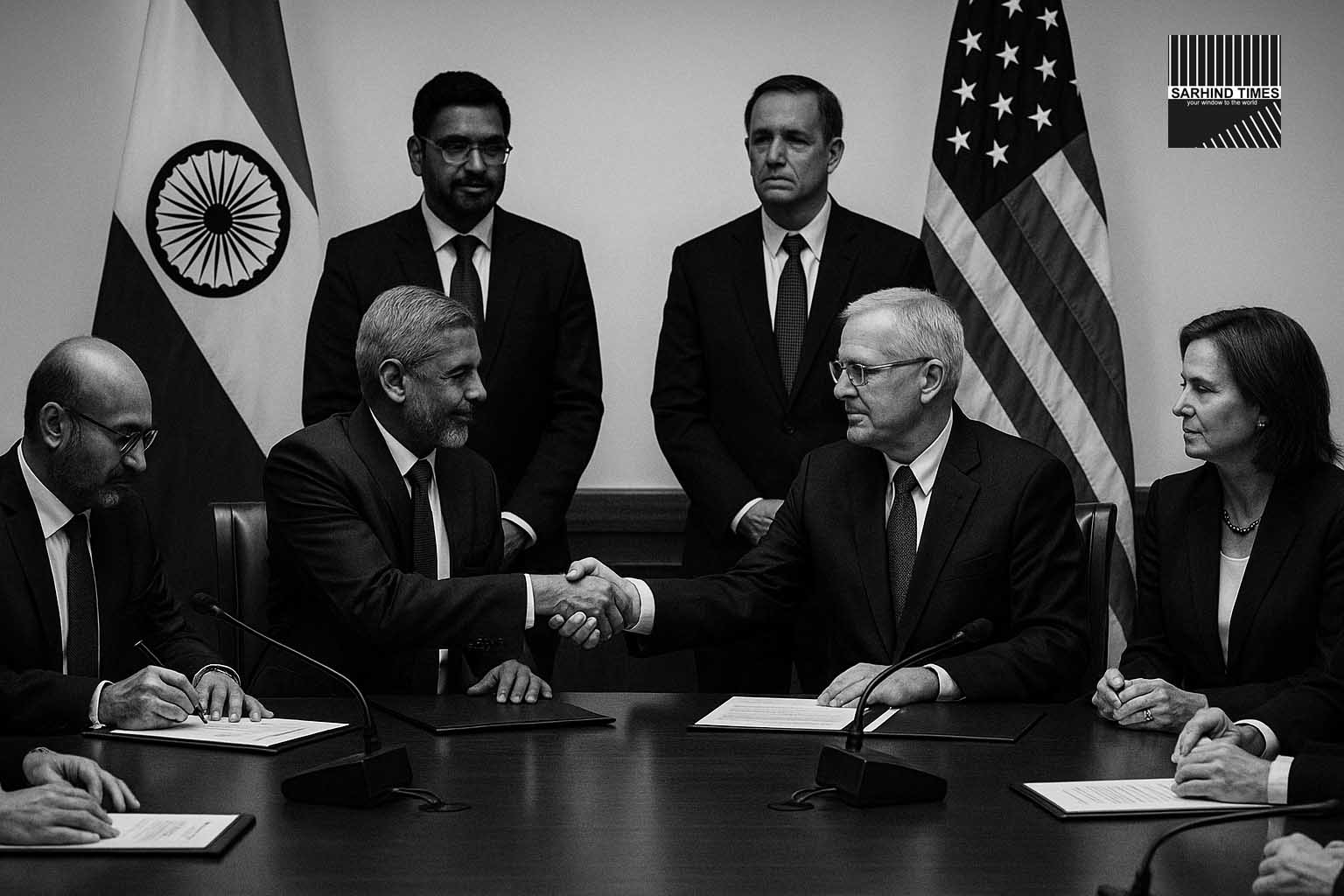
Historic agreement paves the way for joint fabrication units, research collaborations, advanced packaging facilities, and major investments in India’s growing semiconductor ecosystem
Dateline: New Delhi | 26 November 2025, Asia/Kolkata
Summary: India and the United States have finalized a sweeping semiconductor manufacturing partnership aimed at reshaping the global chip supply chain and reducing dependence on East Asian manufacturing hubs. The agreement includes plans for joint fabrication units, next-generation packaging facilities, research acceleration under shared technology frameworks, and multi-billion-dollar investments targeting India’s emerging silicon corridors. Officials say the deal marks a decisive shift in India’s ambition to become a global semiconductor powerhouse.
A transformative moment in India–US tech diplomacy
India and the United States concluded one of their most significant technology agreements of the decade, marking a milestone in global semiconductor cooperation. The new partnership aims to diversify global chip manufacturing, strengthen supply-chain resilience and expand India’s role in advanced electronics production.
Signed during a high-level bilateral meeting in New Delhi, the agreement reflects increasing global urgency to decentralize semiconductor production — a sector dominated by a limited number of East Asian hubs that have faced geopolitical and natural-disaster-related vulnerabilities over the past several years.
Why semiconductors matter more than ever
Semiconductors power nearly every modern device and system, including:
• smartphones
• electric vehicles
• defense electronics
• medical imaging systems
• satellites
• data centers
• AI computing clusters
• consumer appliances
The COVID-19 pandemic exposed deep flaws in global chip supply chains, leading to shortages that crippled automotive production, slowed electronics manufacturing and increased geopolitical tensions. Nations are now racing to localize or diversify chip production.
Core components of the India–US semiconductor partnership
The agreement outlines broad areas of cooperation:
1. Joint semiconductor fabrication units in India
US chipmakers and Indian technology firms will jointly establish fabrication plants (fabs) in states such as Gujarat, Tamil Nadu and Telangana. These facilities will initially focus on specialty chips, power semiconductors and mature-node technologies before advancing to more complex nodes over time.
2. Advanced packaging and testing facilities
A major thrust of the agreement involves advanced packaging — a crucial step in chip manufacturing. India will host state-of-the-art facilities for:
• 3D packaging
• wafer-level packaging
• system-in-package technology
• optical and thermal integration
These units will serve both domestic and international markets, reducing global bottlenecks in chip assembly and testing.
3. Collaborative semiconductor research clusters
Universities and research institutions in both countries will establish joint hubs to accelerate research in:
• new fabrication methods
• compound semiconductors
• gallium nitride (GaN) and silicon carbide (SiC) devices
• lithography techniques
• AI for chip design
• advanced materials engineering
These clusters will enable deep R&D integration between India’s growing engineering ecosystem and America’s semiconductor research leadership.
4. Incentives under India’s Semiconductor Mission
The Indian government will offer incentives under the Production Linked Incentive (PLI) program, the Modified Special Incentive Package Scheme (M-SIPS) and the India Semiconductor Mission. The partnership allows US investors and companies to leverage India’s subsidy frameworks for new fabs.
5. Workforce development and talent exchange
The agreement includes large-scale training programs for tens of thousands of Indian engineers and technicians. Joint talent mobility frameworks will allow Indian chip specialists to train in US facilities and vice versa.
6. Secure supply-chain alignment
The nations will collaborate on trusted-chip standards, export controls, cybersecurity norms and end-to-end supply-chain audits to ensure secure manufacturing of sensitive chips for defense, aerospace and critical infrastructure.
India’s semiconductor ambitions take center stage
India has long aimed to strengthen its electronics manufacturing capability, but lack of domestic chip production has been a major bottleneck. The India–US deal is expected to accelerate progress in:
• attracting global investors
• building comprehensive silicon ecosystems
• reducing import dependency
• supporting India’s electric vehicle and solar manufacturing expansion
• enabling AI and high-performance computing infrastructure
Officials believe that the agreement could create more than one lakh direct and indirect jobs in the next decade.
Geopolitical significance: a counterweight to concentrated chip dependency
The partnership carries major geopolitical implications. Concentration of chip production in a few Asian regions has sparked concerns about supply disruptions due to:
• geopolitical tensions
• natural disasters
• maritime vulnerabilities
• energy shortages
• pandemic restrictions
India and the US aim to jointly build a more distributed global semiconductor map, reducing systemic risk and strengthening strategic cooperation between the world’s two largest democracies.
Industry reaction: optimism tempered with realism
Industry leaders hailed the agreement as a breakthrough. Semiconductor associations in both countries welcomed the collaboration, noting that India’s engineering talent and US technological leadership make for a complementary partnership.
However, experts also noted that semiconductor fabs are extremely capital-intensive, requiring long timelines, skilled labour and advanced infrastructure. The real test lies in:
• execution capability
• power and water reliability
• logistics integration
• long-term policy stability
• global procurement competitiveness
Still, the consensus is that India has taken a decisive step in the right direction.
US chipmakers eye India as growth base
Over the past two years, several US companies have shown increasing interest in India due to:
• India’s massive consumer market
• geopolitical alignment
• strong engineering talent pool
• growing EV and electronics industries
• cost competitiveness
The new agreement is expected to accelerate investments from leading US chip companies across fabrication, testing, packaging and R&D.
India’s “Silicon Corridors” gain momentum
Several Indian states have pitched large industrial land parcels for semiconductor projects. The strongest proposals come from:
• Gujarat — Dholera region, already home to major announcements
• Tamil Nadu — thriving electronics and IT ecosystem
• Telangana — expanding electronics hubs in Hyderabad
• Karnataka — deep engineering talent pipelines
• Maharashtra — established manufacturing base
The government plans to establish integrated semiconductor cities with power stability, water recycling systems, clean rooms, logistics hubs and academic research tie-ups.
Boost to Make in India and export expansion
India currently imports nearly all of its semiconductors, spending billions annually. The partnership aims to reverse this trend by building domestic capacity, eventually enabling India to export chips and high-value electronics.
Analysts say the move bolsters India’s economic diversification and aligns with global corporate plans to reduce China reliance.
Technology transfer: a sensitive but critical component
Semiconductor technology transfer is traditionally limited due to its strategic value. The partnership outlines a framework for:
• collaborative IP development
• shared research patents
• licensing agreements
• controlled transfer of manufacturing processes
• co-development of sensitive technologies under secure protocols
This allows India to gradually build capability without compromising US security commitments.
Support systems: infrastructure, talent and logistics
To support fabs, India must expand:
• renewable energy corridors
• 24×7 stable power grids
• chemical supply chains
• ultrapure water plants
• specialised logistics for sensitive equipment
• cleanroom manufacturing clusters
The government has assured long-term support for infrastructure creation and regulatory simplification.
Expected economic impact
The India–US semiconductor partnership is expected to influence multiple sectors:
• automotive manufacturing
• EV battery ecosystems
• telecom and 5G/6G
• AI and HPC infrastructure
• consumer electronics
• solar inverters and energy hardware
• medical devices
• defence electronics
Economists estimate that India’s semiconductor market could reach $150 billion by 2035 if current momentum is sustained.
Challenges: execution timelines and ecosystem gaps
Despite positive sentiment, experts highlight several challenges:
• establishing a fab takes 3–7 years
• large investments require stable policy
• global competition for skilled chip engineers
• need for strong R&D culture
• supply-chain fragility
• reliance on imported lithography machines
However, India’s combination of policy support, geopolitical alignment and market potential provides a compelling foundation.
India’s long-term vision
India aims to:
• become a major hub for specialty semiconductors
• participate meaningfully in global chip value chains
• reduce import dependency for critical sectors
• attract top global chipmakers
• create one of the world’s largest chip talent pools
The India–US partnership is a cornerstone of this strategy.
Conclusion: A breakthrough moment for India’s tech future
The India–US semiconductor manufacturing partnership marks a defining moment in the evolution of India’s technology and economic landscape. The agreement strengthens India’s global standing, accelerates domestic chip manufacturing ambitions and deepens strategic ties with the United States.
If successfully implemented, the partnership could transform India into a critical node in the global semiconductor ecosystem, shaping the future of electronics manufacturing, AI, electric mobility and national security.
For now, India stands at the threshold of a new era — one where chips become as central to diplomacy as defence agreements or trade deals. The next decade will determine whether this bold partnership translates into a thriving semiconductor powerhouse.


+ There are no comments
Add yours