
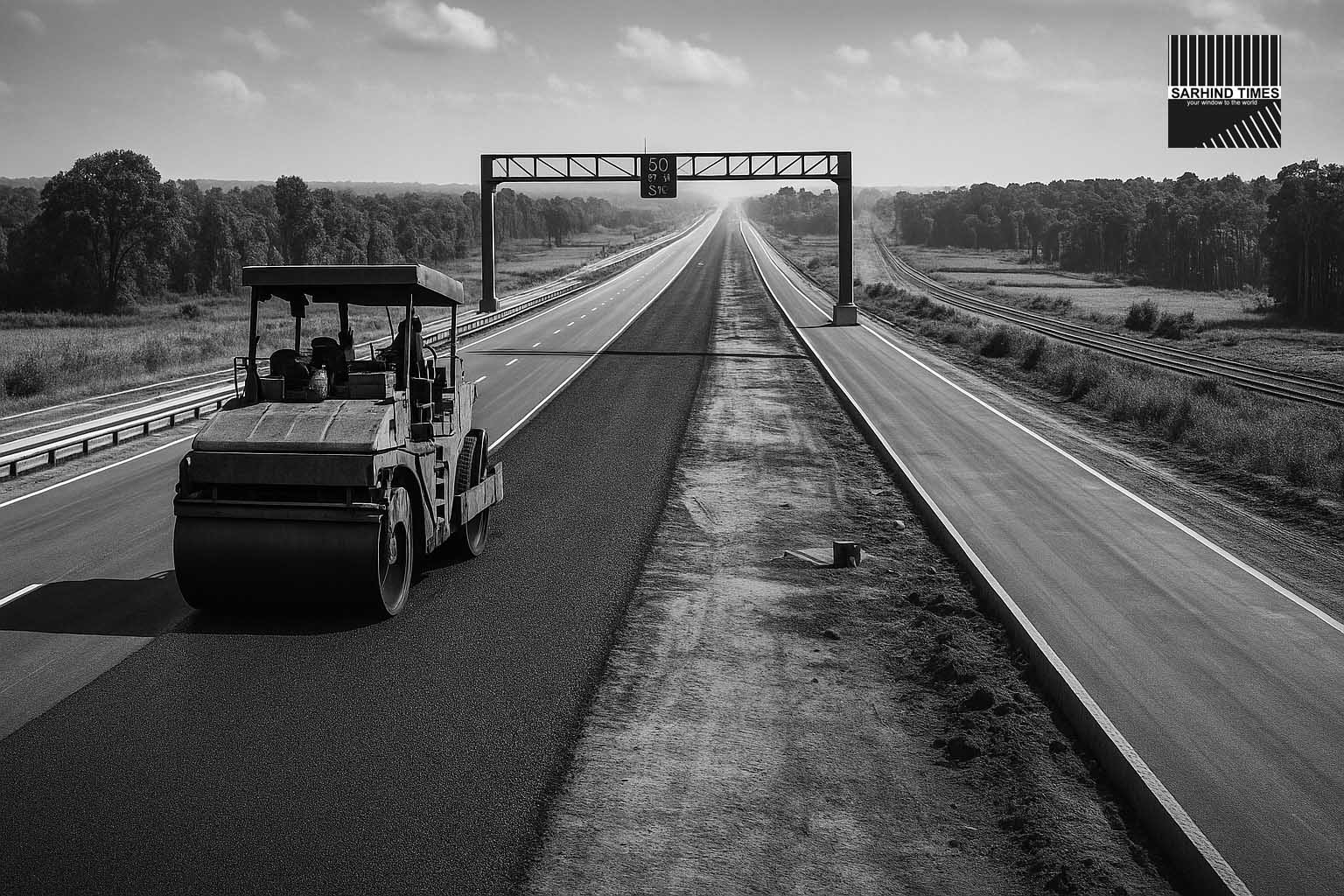
Six-lane greenfield corridor approved under Bharatmala Pariyojana, aimed at linking Chhattisgarh, Odisha and Andhra Pradesh to boost trade, logistics and regional growth
Dateline: New Delhi | 14 November 2025
Summary: The Union government has formally approved a 464 kilometre, six-lane greenfield expressway stretching from Raipur (Chhattisgarh) to Visakhapatnam (Andhra Pradesh) via Odisha. The corridor forms part of the larger Bharatmala national highways initiative and is expected to significantly shorten travel-times, integrate inland industrial zones with the eastern coast, and boost export potential from the Vizag port. Execution will raise multiple structural challenges but the strategic upside is compelling.
Background: Why this corridor matters
India’s infrastructure policy over the past decade has emphasised the need for high-capacity corridors that both connect and integrate regional economies, especially in states often regarded as less mature in logistics and industrial infrastructure. The Raipur–Visakhapatnam expressway (henceforth “the corridor”) aligns with those goals.
Historically, movement of goods and people between central-India states such as Chhattisgarh and Odisha and eastern-coast ports like Visakhapatnam has been constrained by terrain, limited high-capacity roads, and insufficient logistics linkages. The corridor promises to reshape that dynamic by offering a modern six-lane access-controlled expressway. According to reports, travel-time between Raipur and Vizag is expected to shrink by over four hours once the corridor is operational.
Project specifications and alignment
The corridor is designed as a greenfield six-lane expressway, access-controlled, spanning approximately 464 km and cutting across three states: Chhattisgarh, Odisha and Andhra Pradesh. It will function under the Bharatmala Pariyojana framework, designed to strengthen nation-wide connectivity through highways and expressways.
Key structural features include:
- Access-controlled alignment, minimal at-grade intersections;
- Dedicated interchanges for major industrial clusters in Odisha and Chhattisgarh;
- Linkages with existing national highways and port access routes in Visakhapatnam;
- Sustainability features: e.g., solar lighting, integrated wildlife crossings for forested sections, and drainage/afforestation elements built into design.
Economic and strategic rationale
From an economic-perspective, the corridor offers several advantages:
Logistics and trade uplift: By connecting inland manufacturing and resource-rich zones of Chhattisgarh and Odisha to a principal eastern seaport (Visakhapatnam), the corridor stands to reduce transport time, lower cost of goods movement, and enhance export competitiveness. For industries in steel, mining, manufacturing, and automotive suppliers—common in these states—the expressway improves access to global markets.
Regional integration and inclusive growth: By traversing states that have historically lagged behind in infrastructure compared to larger industrial states, the project is a catalyst for decentralised growth. For the tribal and less-urbanised districts along the route, the corridor is expected to spur new logistics parks, ancillary industries, service hubs and employment opportunities.
National strategic connectivity: The corridor enhances redundancies in India’s east-coast logistics, strengthens supply-chains, and aligns with the goal of dispersing industrial locations away from over-congested corridors. It also serves resilience: by diversifying access to ports and balancing east-west flows of goods.
Implementation roadmap and timeline
The project has entered the approval stage and will now move toward DPR finalisation, land-acquisition, tendering and construction. The estimated completion timeframe for similar expressways under Bharatmala is within 3-5 years for major packages provided land and clearances progress smoothly.
Expected milestones:
- 2025-26: Land-acquisition, environmental and forest clearances, final alignment freeze;
- 2026-28: Civil works packages awarded and commencement of construction in key segments;
- 2028-30: Phased commissioning of segments and full operationalisation by 2030-31 (depending on terrain and state coordination).
Challenges and risk factors
While the promise is large, practical challenges are material:
- Land acquisition delays: Sections passing through forested, tribal or hilly terrain may face objections, clearances under the Forest Rights Act and coordination issues; unless early mitigation is undertaken, cost-escalation risk is high.
- Funding and cost inflation: While central funding is allocated, rising inflation in construction materials, labour shortage, and switching to higher-spec designs (for sustainability) could push costs beyond initial estimates. Without cost discipline, expected returns may shrink.
- State-level coordination: Since three states are involved, seamless coordination on alignment, inter-state land issues, feeder-road linkages, and revenue or tolling frameworks is required; inter-state disputes could stall bottlenecks.
- Environmental and social safeguards: The alignment cuts through sections of Odisha and Chhattisgarh where forest cover and tribal habitation are significant; compliance with environmental norms, rehabilitation of displaced persons and creating quality access roads for local communities will be key for sustainability.
- Connectivity and last-mile integration: The project’s benefit will be realised only if the expressway is connected effectively with feeder networks, industrial parks, port access roads and logistics clusters. Isolated high-speed road without connectivity does not deliver full value.
Implications for industry, real-estate and land markets
For industry: Manufacturing units, especially in metals, mining, agro-processing and logistics, will view the corridor as a strategic asset—locations along the corridor may offer lower logistics cost and improved access to exports. Logistics companies may set up warehousing, freight hubs and trans-shipment nodes along the route.
For real-estate: Land parcels adjacent to interchanges and feeder towns are expected to appreciate. Residential, commercial and mixed-use development may cluster around key nodes. For the states involved, the corridor offers an opportunity to re-plan growth hubs and shift away from metropolitan over-congestion.
Broader policy and fiscal implications
The corridor underscores India’s renewed infrastructure push—under Budget 2025-26, the allocation for the infrastructure sector was set at ₹11.21 lakh crore, reflecting the government’s emphasis on next-generation connectivity.
From a financing model perspective, projects under Bharatmala increasingly adopt hybrid-annuity models (HAM) and involve private-sector participation; ensuring competitive tenders, risk-sharing frameworks and timely land-release is critical for replicating success.
What to watch
Key indicators to monitor include:
- Percentage of corridor land-acquisition completed within 12 months;
- Number of DPR and tender packages awarded within 18 months;
- Linkage of key interchanges to industrial parks and feeder networks established within first 2 years;
- State-wise compensation and rehabilitation processes completed for affected zones;
- Up-skilling of local workforce and participation of local contractors in construction phases—this reflects depth of regional benefit.
Conclusion
The 464 km Raipur–Visakhapatnam expressway is a bold infrastructure move that reflects India’s ambition to reshape its internal connectivity and unlock growth across central and eastern zones. If delivered with discipline, cooperation and foresight, the corridor could become a backbone for logistics, manufacturing, exports and regional development for decades.
Still, the allure of promise must be matched by rigorous execution. Land-release, environmental clearances, financing, inter-state coordination and last-mile integration will decide whether this project becomes a transformative corridor or a stalled aspiration. Monitoring these elements will determine whether India’s infrastructure dreams translate into on-the-ground impact.



+ There are no comments
Add yours