
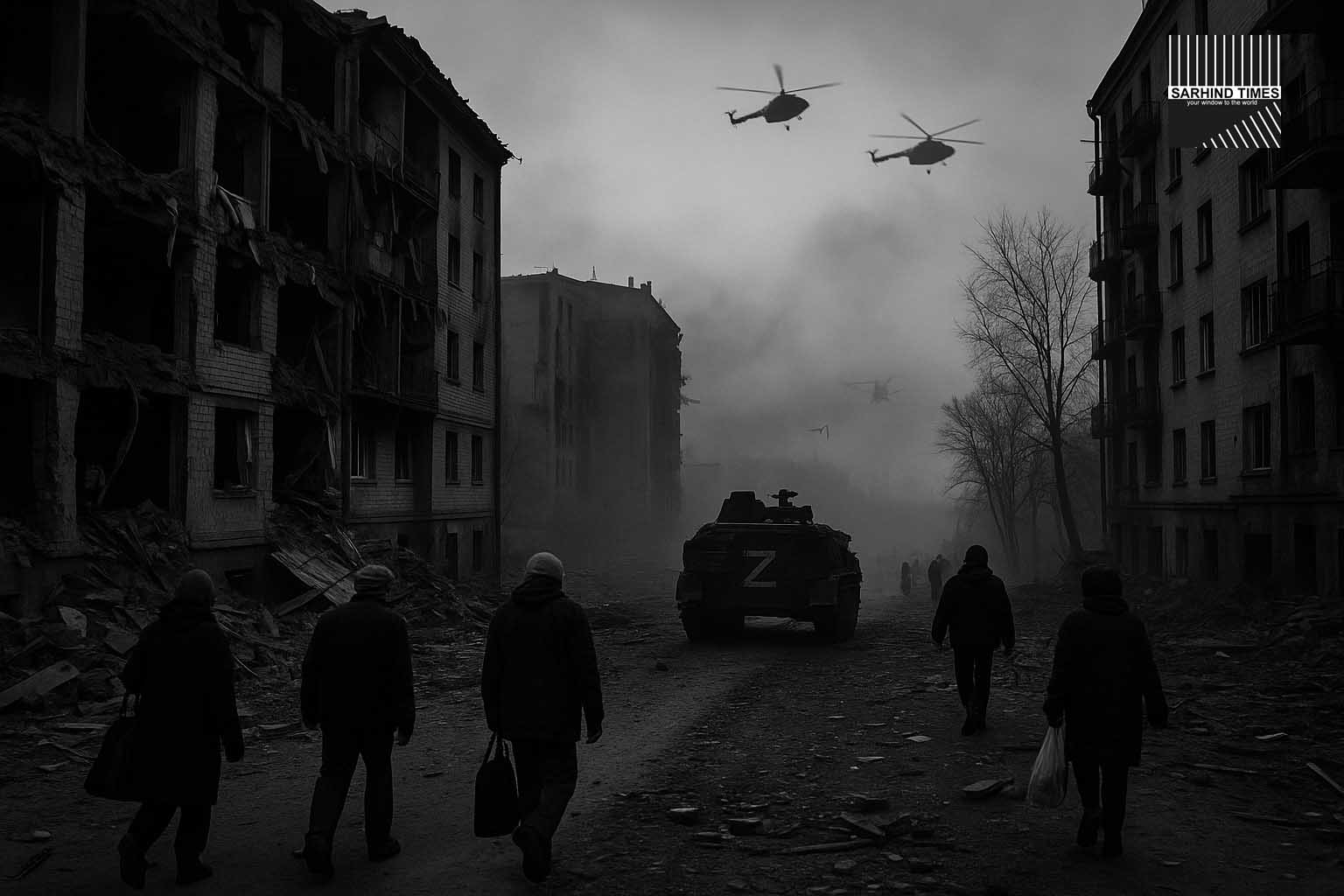
Moscow signals readiness for diplomatic settlement while Eastern front remains volatile and contested
Dateline: Moscow / Kyiv | 14 November 2025
Summary: The Russian leadership reaffirmed that the war in Ukraine will conclude only when its set strategic goals are achieved, yet acknowledged that negotiations have stalled. At the same time, the battlefield remains tense, with Russian advances continuing in parts of eastern Ukraine. The announcement underscores the paradox of Moscow seeking peace while remaining engaged in major military operations.
Setting the scene: nearly four years of war, nearing a pivot point
The conflict between Ukraine and Russia entered its fourth year in February 2026, but as of November 2025, major shifts are evident. On 10 November 2025, the Russian defence spokesman officially stated that Moscow wants the war to end “as soon as possible” — but only upon fulfilment of Russia’s initial objectives. At the same time, he claimed that the peace process is currently stalled, placing part of the blame on Ukraine.
For Ukraine and its Western backers, the war has evolved from rapid initial movements into a grinding, attritional conflict characterised by steady positional fighting, drone and missile strikes, and heavy losses on both sides. Analysts now emphasize that a decisive battlefield victory for either side is unlikely in the short term.
This moment marks a potential inflection: Moscow appears officially open to the idea of ending the war — yet the terms and the conditions remain opaque, and Ukrainian forces continue to face intense pressure in the east. The key open question now: will diplomacy finally take precedence over combat, or will the war simply continue in its current form for a prolonged period?
What Moscow is saying — and what it really means
The Kremlin’s message contains several clear — yet ambiguous — signals:
- End goal defined by Russia: The spokesman reiterated that the war will end when Russia achieves the “goals that it initially set”.
- Diplomatic preference: Moscow suggested that while military means remain available, it would prefer to settle the conflict “by political and diplomatic means” if possible.
- Blame on Kyiv and its allies: The Russian narrative positions Ukraine and its European supporters as obstructing peace by pursuing military victory rather than negotiations.
- Stalled negotiations: Officials acknowledge that no substantive talks between Moscow and Kyiv have been held since July 2025, making the next steps uncertain.
Put together, the messaging signals that Russia may be preparing its population and international partners for a settlement — but one defined on Moscow’s terms, not as one driven by Kyiv or its Western supporters.
What’s happening on the ground while diplomacy stalls
The diplomatic pause has coincided with relentless combat activity and new tactical developments:
• In the eastern Donetsk region around Pokrovsk, Russian forces have intensified operations, reportedly gaining ground and imposing pressure on resupply routes for Ukrainian defenders.
• Ukraine, for its part, has stepped up deep-strike attacks on Russian critical infrastructure — including oil refineries and pipelines — as part of an energy-war campaign aimed at undermining Moscow’s war-making capacity.
• The winter ahead looms as a major test. Both nations are positioning their operations and logistics for sustained conflict through low-visibility months, when mobility is harder and energy, supply and morale become more critical.
Why Russia may prefer diplomacy now — yet still fights
Multiple drivers could explain why Moscow appears more open to negotiating even while combat continues:
War fatigue and resources: Prolonged war is costly—militarily, economically and politically. Russian forces have sustained heavy attrition, and the budgetary strain is growing. Though Russia still has substantial reserves, the marginal cost of fresh gains is rising rapidly.
International isolation and sanctions: Western sanctions, export-controls and financial pressure continue to bite. Moscow may calculate that a negotiated settlement with acceptable terms is more favourable than perpetual conflict with growing costs.
Domestic politics: Keeping the public and elite aligned behind the war narrative is harder when casualties mount and the economy slows. A “victory through negotiation” narrative may help alleviate pressure at home.
Leveraging battlefield momentum: At the same time, Moscow may be racing to consolidate ground gains now that Ukraine is stretched, so it enters talks from a position of strength rather than weakness. The tactical advances, especially in Donetsk and around Pokrovsk, sign this approach.
Why Ukraine is sceptical — and strategically constrained
Kyiv and its Western backers face a difficult choice. Accept a negotiated settlement now — possibly compromising territory — or fight on at substantial cost in hope of better terms later.
Territorial integrity concerns: Ukraine is under strong public and political pressure not to cede what it sees as sovereign territory to Russia in any deal. Many Ukrainian leaders have said they will fight until victory rather than accept losses under duress.
Dependence on Western support: Ukraine’s ability to sustain a large-scale defensive campaign depends on military aid, intelligence sharing and logistical pipelines from NATO and partners. Any settlement before these vectors shore up could disadvantage Ukraine.
Negotiation asymmetry: Analysts note that Ukraine is fighting Russia rather than negotiating from a position of strength. Russia has more manpower, longer supply lines, and fewer international constraints; Ukraine has many urgent vulnerabilities to shore up.
Possible end-game scenarios and what to watch
Several plausible scenarios are emerging for how the war could develop in the next 12–24 months:
- Freeze-and-negotiate: Both sides agree to a cease-fire along current or slightly revised frontlines, followed by a mediated peace process. Russia walks away with some territory, Ukraine retains sovereignty over most of its core, and a large multinational force monitors the line.
- High-cost attrition continues: No formal deal is made. Fighting drags on through winter and beyond, with incremental advances, mounting casualties, sluggish diplomacy. A protracted stalemate, costly for all parties.
- Moment of collapse or breakthrough: Unlikely in near term, but if Ukraine receives a major surge of Western aid or Russia launches a large offensive and breaks through a frontline sector, the war might swing decisively one way. Should that happen, a negotiation afterwards would favour the winner heavily.
- Proxy and frozen conflict transition: The war evolves into a long-term proxy conflict with limited large-scale offensives, but continuing low-intensity fighting, similar to other post-Soviet conflicts. Territorial status remains contested over years.
Key indicators to monitor:
- Whether a new round of formal talks is organised, and which venue, format and participants are agreed (e.g., whether Kyiv accepts Moscow’s preconditions or demands change).
- Shifts in frontline battle rhythm — for example, major Russian thrusts in Donetsk or sudden Ukrainian counter-offensives backed by Western heavy weaponry.
- Changes in Western support for Ukraine — whether there is a funding or arms-pause, or a major escalation of military hardware. A change here could force Kyiv towards diplomacy or intensify conflict.
- Domestic Russian or Ukrainian political shifts — public fatigue, leadership changes, economic shock or major casualty events could drive urgency.
Implications for global security and regional risk
The status of this war has significant global implications:
NATO and European security: Any settlement or freeze in Ukraine will affect NATO’s posture, defence polygon in Eastern Europe, and the direction of EU-Russia relations. A perception of Russian success could embolden other revisionist actors.
Global arms markets and alliances: The conflict has become a major driver of military spending, arms transfers and strategic partnerships beyond Europe. A stalemate or settlement will reshape procurement, production and alliance planning.
Energy and commodity markets: Both Ukraine and Russia play key roles in global energy, agriculture and supply chains. Prolonged conflict means disruption persists; a settlement might ease risk premia, though reconstruction demand rises.
India’s interests: As a large-middle power, India watches closely. A settlement could avail reconstruction opportunity, redefine defence supply chains and contribute to global norms around territorial sovereignty and peace processes. For Indian policymakers the question is whether to engage more proactively or preserve strategic autonomy.
Conclusion: cautious hope or false dawn?
The latest Kremlin statement that the war will end “when we achieve our goals” and the acknowledgment of stalled diplomacy underline a paradox: Russia couches its readiness for peace even as it fights. Ukraine, on the other hand, remains committed to its territorial integrity and highly reliant on Western backing, yet faces heavy pressure.
The most plausible near-term outcome may be a freeze-and-negotiate scenario, but only if both sides and their backers see benefit in stepping back from full-scale combat. If not, the war may simply continue in its current costly, drawn-out form, with frontline shifts, deterioration of infrastructure, and heavy human cost.
For global stakeholders, the challenge is to prepare for multiple outcomes: a negotiated peace, a long stalemate, or a sudden swing. The sooner policy frameworks, reconstruction planning and diplomatic initiatives are aligned, the better the chance of influencing outcomes rather than being surprised. The rubble of the frontline towns may yet give way to politics—but the timing remains uncertain.


+ There are no comments
Add yours