
Temperature dips, smog blankets region, and public health concerns intensify as pollution crisis returns earlier than expected
Dateline: New Delhi | November 19, 2025
Summary: Delhi NCR is facing an unexpected environmental double-hit — an abrupt cold-wave combined with a rapid spike in air pollution that has pushed AQI levels into the ‘Severe’ category across several zones. With schools, commuters, and hospitals already feeling the strain, authorities have activated emergency response protocols weeks ahead of schedule.
A sudden environmental shock that caught Delhi unprepared
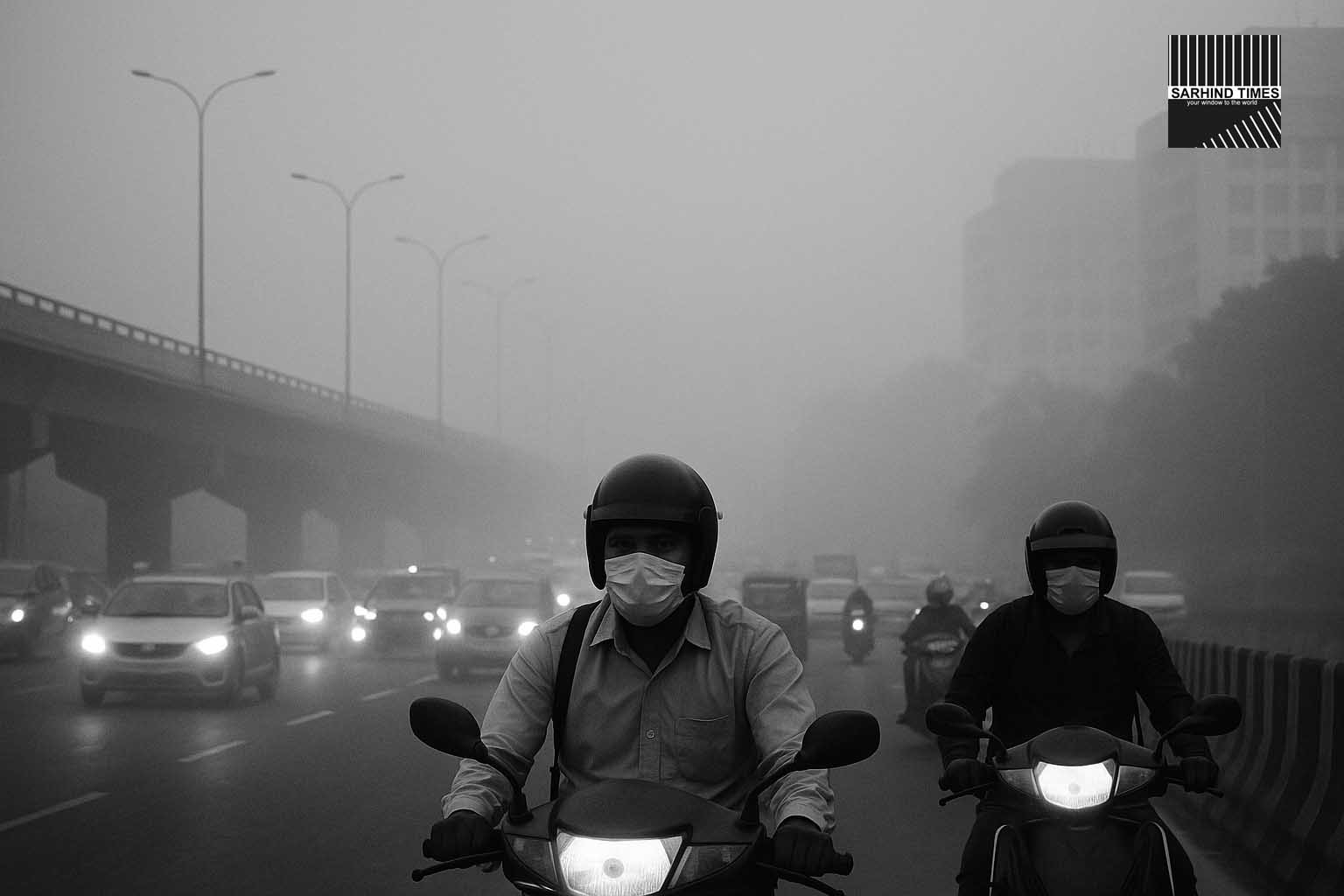
Delhi NCR, already known for its harsh winters and deteriorating air quality, experienced a sudden and sharp temperature drop overnight. Combined with stagnant air, humidity fluctuations, and early-season smog accumulation, the city woke up blanketed in dense grey haze. Air Quality Index (AQI) monitors across the region jumped beyond 420 in several pockets, placing the region firmly in the ‘Severe’ zone.
Meteorological models indicate that a sudden dip in north-westerly winds, temperature inversion layers, and an early cold spell collided over NCR, trapping pollutants close to the surface. The result: reduced visibility, pungent air, and immediate discomfort reported across residential and industrial zones.
The phenomenon is unusual for mid-November. Experts describe it as a “rare confluence” of climatic and environmental factors that magnified pollution intensity earlier than predicted.
Millions wake up to smog, discomfort, and health warnings
Residents across Delhi, Noida, Gurugram, Ghaziabad, and Faridabad reported heavy eye irritation, breathing difficulty, and persistent throat discomfort starting early morning. Visibility on major stretches — including the Delhi-Noida Expressway, Ring Road, Dwarka flyovers, and NH48 near Gurugram — dropped significantly, causing traffic disruptions and slower movement.
Hospitals in several parts of the city, particularly those dealing with respiratory ailments, saw a rapid rise in outpatient visits. Pediatric units reported a surge of children complaining of cough, wheezing, and asthma flare-ups. Elderly patients with chronic lung conditions also demonstrated worsening symptoms.
The Delhi government activated the Graded Response Action Plan (GRAP) Stage IV measures, typically reserved for the worst days of winter pollution. The early activation is unprecedented and reflects the severity of the crisis.
AQI readings tell a worrying story
Several monitoring stations recorded alarming readings:
- Anand Vihar: AQI 460
- Rohini: AQI 445
- Gurugram Sector 51: AQI 428
- Noida Sector 62: AQI 422
- Faridabad: AQI 410
These levels are far above permissible limits and pose severe health risks, even for healthy adults. Experts say prolonged exposure can impair lung function, aggravate cardiovascular problems, and trigger systemic inflammation.
Why the sudden cold-wave worsened the pollution
The abrupt temperature drop resulted in what scientists call a “temperature inversion” — a layer of cold air gets trapped near the ground by warmer air above it. This phenomenon prevents pollutants from dispersing upward, causing them to accumulate near breathing level.
Complicating matters further, wind speeds plummeted to nearly zero, limiting horizontal dispersion. The result: a choking blanket of pollutants hovering low across the region.
Stubble burning still plays a role — but reduced this year
Satellite imagery showed moderate levels of farm-fire activity in Punjab and Haryana over the last 72 hours. However, experts emphasize that this year, the contribution of stubble burning appears lower than in previous winters, thanks to improved enforcement and alternative crop-residue solutions.
Yet even moderate fire activity, coupled with early winter stagnation, was enough to worsen conditions in the capital and surrounding regions.
Emergency measures kick in under GRAP
Under Stage IV of GRAP, multiple restrictions have been enforced:
- All construction activities halted, except essential public infrastructure projects.
- Diesel heavy vehicles banned from entering Delhi borders.
- Industrial units using non-clean fuels temporarily shut.
- Parking fee increased to discourage unnecessary travel.
- Schools advised to suspend outdoor activities; some shifting to online mode.
- Vulnerable groups issued health advisories to stay indoors.
Authorities have also begun night-time mechanical sweeping, intensified water sprinkling across major roads, and deployed anti-smog guns in high-density zones.
Doctors issue urgent warnings
Respiratory specialists warn that the current air quality is dangerous for all age groups. Prolonged exposure can cause:
- acute bronchitis,
- long-term lung damage,
- worsening of asthma and COPD,
- reduced oxygen saturation,
- systemic inflammation leading to headaches and fatigue.
Doctors recommend wearing N95 masks outdoors, using HEPA filters indoors, increasing hydration, and avoiding strenuous outdoor activity.
Economic activity hit as workers struggle under smog
Outdoor and semi-outdoor workforce segments — delivery workers, security guards, construction laborers, cab drivers — have expressed severe discomfort. Several gig workers reported headaches, dizziness, and irritation while working long shifts in dense smog.
E-commerce delivery times increased, taxi prices surged due to reduced supply, and traffic congestion worsened throughout the morning and evening.
Schools divided over closure; parents anxious
While several private schools preemptively shifted to online classes, others waited for official directives. Parents have voiced concern about sending children into severe smog conditions, especially those with respiratory vulnerabilities.
The Directorate of Education may soon issue city-wide guidelines if AQI remains severe over the next 48 hours.
Visibility drops across expressways
Transport authorities issued advisories to drivers on NH48, the Yamuna Expressway, and the Eastern Peripheral Expressway. Early morning and late-night visibility was reported to be below 50 meters in some patches, increasing accident risk.
Cold-wave arrives earlier than expected: IMD explains the sudden dip
The India Meteorological Department confirmed that the sharp cold-wave pattern over Delhi NCR arrived nearly two weeks earlier than past seasonal trends. Historically, late November witnesses gradual cooling; however, this year’s temperature plummeted abruptly, dropping several degrees overnight. Minimum temperatures in Delhi fell into single digits, while Gurugram and Noida recorded even lower dips in isolated pockets.
IMD attributes the sudden chill to a combination of Himalayan cold-wind intrusion, rapid surface cooling due to clear night skies, and weakened westerly disturbances. This early cold-wave amplified pollution levels by encouraging temperature inversion layers, trapping pollutants that usually disperse with moderate wind flow.
Delhi’s winter pollution pattern worsens every year
Delhi NCR has long grappled with severe winter pollution, but climate patterns are making the crisis more unpredictable. Air stagnation events, colder nights, lower wind speeds, urban heat-island effects, and increased fossil-fuel consumption during winter months create an environment where pollutants accumulate rapidly.
Experts say that early winter pollution indicates a shift toward more frequent inversion events and prolonged smog cycles. Without aggressive long-term policy interventions, NCR’s winter air quality could deteriorate even further over the coming decade.
Public transport under pressure as personal-vehicle use surges
Despite advisories urging residents to avoid unnecessary travel, Delhi NCR witnessed a surge in private-vehicle usage as people sought enclosed, filtered environments amid the smog. This surge, ironically, added more vehicular emissions to already suffocating air.
Delhi Metro saw a temporary rise in ridership, but overcrowding during peak hours discouraged many. Buses struggled to maintain schedules due to low visibility and heavy traffic congestion. Ride-hailing platforms saw demand spikes of up to 40%, pushing fares higher across NCR.
Gurugram faces its own smog trouble
Gurugram, one of NCR’s major business hubs, experienced severe morning haze with AQI readings crossing 420 in markets, housing clusters, and commercial districts. Cyber City, Golf Course Road, and MG Road were covered in dense smog as commuters navigated reduced visibility.
Several corporate offices in Gurugram issued internal advisories, allowing employees flexibility in reporting times or opting for remote work. Outdoor corporate events were postponed or canceled, and multiple fitness centers suspended outdoor training sessions.
Noida and Ghaziabad report choking conditions
Noida experienced some of the worst AQI levels in NCR. The industrial belts in Sector 62, Sector 80, and Phase-II reported strong burnt odors mixed with industrial dust, forcing many residents indoors. Ghaziabad saw similar patterns, with dense smog covering major junctions like Kaushambi, Indirapuram, and Vijay Nagar.
Authorities in both cities intensified enforcement on construction sites, waste burning, and diesel vehicle movement.
Airlines report delays due to visibility issues
IGI Airport in Delhi recorded visibility drops during early morning and late-night hours. While no large-scale flight cancellations were reported, multiple domestic flights experienced delays due to runway visibility falling below safe thresholds during low periods.
Airlines issued passenger advisories encouraging early arrival at terminals to accommodate procedural delays caused by fog-safety protocols.
Cold and smog impact migrant and low-income workers the hardest
Low-income groups, particularly migrant labourers, construction workers, street vendors, delivery agents, and rickshaw pullers, bore the brunt of the cold-smog combination. Many work outdoors for long hours, often without protective masks or warm clothing.
Community volunteers and NGOs began distributing blankets, masks, and warm meals across hotspots such as Kashmere Gate, Anand Vihar, Gurugram’s Iffco Chowk and Sikanderpur, and Noida’s Sector 18.
Hospitals begin preparing for a potential surge in admissions
Hospitals across NCR are preparing for increased patient load in the coming days. Winter smog typically correlates with a rise in respiratory cases, including bronchitis, pneumonia, COPD complications, and asthma attacks.
Doctors anticipate a sharp spike in cases involving:
- small children with underdeveloped lungs,
- seniors with pre-existing conditions,
- pregnant women experiencing oxygen stress,
- newborns sensitive to cold-polluted air,
- patients with cardiac health vulnerabilities.
Cold-wave brings challenges in homeless shelters
The Delhi Urban Shelter Improvement Board (DUSIB) scrambled to scale up heating arrangements in night shelters. While capacity exists on paper, real demand often overwhelms available beds during combined cold-smog crises.
Activists warn that thousands still sleep outdoors every winter, and this year’s early cold-wave could worsen risks for the homeless population.
Smog guns deployed across key hotspots
The Delhi government deployed dozens of mobile and fixed smog guns across hotspots like ITO, Anand Vihar, Ashram, Punjabi Bagh, and Dwarka. In Gurugram, municipal teams sprayed water through mounted systems along key arterial roads. Noida deployed water tankers for dust suppression across industrial zones.
However, environmental experts have repeatedly criticized smog guns as temporary and limited in effectiveness.
Fire services respond to an uptick in emergency calls
Fire departments received several calls related to small fires fueled by dry winter vegetation. Combined with smog, these fires created localized pockets of intense pollution. Authorities warned residents not to burn garbage, a practice that sharply spikes particulates around residential and market areas.
Cold-wave alters energy consumption patterns
As temperatures plunged, NCR saw a surge in household energy consumption. Space heaters, electric blankets, and heated appliances increased load on the grid. Power utilities reported consumption patterns similar to peak winter months, weeks ahead of schedule.
What pollution is doing to Delhi’s economy
Beyond health risks, pollution also causes significant economic damage. NCR businesses report:
- decreased workforce productivity due to illness,
- higher absenteeism,
- rising healthcare costs,
- logistics delays due to visibility issues,
- lower footfall in markets and malls,
- decreased outdoor event and hospitality bookings.
Several multinational companies operating in NCR have raised concerns internally about the long-term sustainability of employee wellbeing.
Why Delhi struggles to control pollution despite recurring crisis
Delhi’s pollution is the outcome of multiple contributors converging simultaneously:
- vehicular emissions,
- construction dust,
- industrial smoke,
- biomass and waste burning,
- geographical location in a landlocked basin,
- winter inversion layers trapping pollutants,
- agricultural stubble burning in nearby states.
This mixture creates a “perfect storm” every winter, making Delhi one of the world’s most polluted capitals.
Experts warn that NCR’s pollution is becoming climate-linked
Climate scientists warn that increasingly erratic weather patterns — sudden temperature drops, stagnant wind patterns, and unpredictable rainfall — could worsen NCR’s winter pollution cycle in the coming years. As climate change alters seasonal transitions, smog episodes might begin earlier, last longer, and appear more frequently.
Citizens push for long-term solutions
Citizen groups across Delhi NCR argue that stop-gap measures are no longer enough. They are demanding long-term interventions such as:
- widespread clean-fuel transitions in industry,
- electric public-transport expansion,
- dust-control architecture integrated into urban planning,
- green-cover expansion across NCR,
- stronger enforcement against waste burning,
- permanent solutions for crop-residue management.
Multiple RWAs and environmental collectives are planning petitions and public demonstrations urging policymakers to accelerate structural reforms.
Research links NCR’s pollution to severe long-term health impacts
Decades of pollution exposure have begun showing cumulative effects in NCR residents, including accelerated lung aging, increased childhood respiratory disorders, higher cardiovascular risk, and reduced overall lifespan.
Medical researchers warn that if pollution remains unchecked, NCR could face a generational health burden far worse than currently estimated.
Tourism takes a hit
Winter is peak tourist season in Delhi, but poor visibility and severe smog drastically reduce outdoor sightseeing. Monuments like India Gate, Qutub Minar, and Humayun’s Tomb saw visibly lower tourist presence.
Hotels reported increased booking cancellations, particularly from international visitors unfamiliar with India’s winter pollution severity.
Environmentalists issue scathing criticism
Environmental groups criticized authorities for reacting late, despite clear early-warning signs. They argue that pollution control has become a seasonal ritual, lacking urgency, coordination, and year-round enforcement.
Some organizations are demanding judicial intervention to enforce compliance and penalize local bodies that fail to implement pollution-control mandates.
Pollution emergency sparks interstate tensions once again
The return of severe smog has triggered familiar tensions between Delhi and neighboring states. Delhi officials argue that they cannot control external contributors like agricultural burning and industrial fumes blown in from outside the capital. Haryana and Punjab counter that Delhi must address its own local sources, pointing to high vehicle density, rampant urban construction, and waste mismanagement.
Interstate blame has long hampered coordinated air-quality management. With the crisis hitting earlier this year, experts fear the political friction may again delay urgent joint measures.
Farmers defend themselves amid criticism
Farmer groups in Punjab and Haryana have pushed back against allegations that stubble burning remains a primary driver of NCR’s pollution. They argue that:
- crop burning is concentrated within a short period,
- alternatives remain financially unviable,
- subsidized machinery is insufficient,
- market-driven timelines force rapid crop-cycle turnover.
Farm union representatives assert that without systemic support, including better procurement policies and crop diversification incentives, farmers cannot eliminate the practice entirely.
Public health concerns escalate as smog prolongs
Health professionals warn that even a week of ‘Severe’ smog can create prolonged respiratory distress. Multiple studies show that Delhi residents inhale particulate matter equivalent to smoking dozens of cigarettes during severe pollution episodes.
Doctors emphasize the danger of cumulative exposure, noting that repeated seasonal spikes can lead to:
- chronic asthma,
- permanent lung scarring,
- reduced immunity,
- triggered heart attacks among vulnerable groups.
Several pediatricians reported rising cases of bronchiolitis, a viral infection exacerbated by particulate-rich air that mainly affects babies and toddlers.
Indoor air turns toxic as particulate matter seeps in
Even indoors, residents across NCR found fine particulate matter (PM2.5) levels crossing 200–300 µg/m³ — far above safe limits. Air purifiers sold out across multiple marketplaces, and prices surged for portable filters and N95 masks.
Environmental engineers warned that poorly insulated buildings and older residential structures allow outdoor pollutants to seep indoors, reducing the effectiveness of purifiers.
Cold-wave intensifies health risks for seniors
The combination of cold and pollution creates a dangerous cocktail for senior citizens. Low temperatures constrict airways, while pollutants inflame lung tissue, doubling breathing resistance. Cardiologists warn that winter smog correlates with higher hospitalization rates for heart attacks, arrhythmias, and stroke-like events.
Winter lifestyle disrupted across NCR
Outdoor exercise routines, morning walks, jogging, cycling, and school sports were halted across major NCR cities. Early risers, who typically fill parks and jogging tracks in Gurgaon’s Cyber Hub, Delhi’s Lodhi Garden, and Noida’s Botanical Garden, stayed indoors due to unbearable air quality.
Fitness professionals observed a shift toward indoor workouts, though many complained about indoor air quality issues as well.
Markets lose footfall as shoppers prefer online options
Famous markets like Sarojini Nagar, Connaught Place, Gurugram’s Galleria Market, and Noida’s Atta Market reported reduced footfall. Families avoided outdoor shopping, and several outdoor eateries experienced cancellations. Food delivery businesses, however, saw a surge in orders — though delivery workers struggled through smog-choked roads.
Real estate developers face construction bans
The imposition of GRAP Stage IV brought construction activity to a grinding halt across major NCR projects. Real estate developers expressed concern over project delays and financial losses. Workers, too, faced uncertainty as construction stoppages often lead to temporary loss of daily wages.
Urban planners highlight decades-old structural problems
Urban planners argue that Delhi’s pollution cannot be resolved through reactive measures alone. The capital suffers from:
- dense traffic corridors with outdated road design,
- insufficient green-buffer zones around industrial clusters,
- poor dust-control standards in construction,
- overdependence on diesel-based logistics,
- urban sprawl without environmental planning.
Planners stress that Delhi NCR needs systematic redesign of mobility, housing, industrial zoning, and environmental buffers.
Environmental experts call for measurable targets
Environmentalists say India must adopt measurable air-quality targets similar to those in Europe and East Asia. These include:
- time-bound citywide PM2.5 reduction goals,
- annual emission ceilings for industries,
- mandatory green-building codes,
- real-time public accountability dashboards.
Experts warn that unless authorities commit to measurable outcomes, NCR’s pollution cycle will continue for decades.
Tech-driven monitoring expands across NCR
Authorities have installed additional low-cost air-quality sensors across residential clusters, markets, schools, and industrial belts. AI-driven models are analyzing real-time data to simulate hotspot tendencies and forecast smog accumulation.
Some RWAs have begun using private AQI sensors to track micro-level pollution variations within neighborhoods.
Potential rainfall may offer temporary relief
IMD forecasts indicate a slight chance of drizzling in certain pockets of Delhi NCR over the next 48 hours. If rainfall materializes, it could bring temporary relief by settling dust and dispersing pollutants.
However, meteorologists caution that rainfall alone cannot guarantee sustained improvement, especially if cold, stagnant conditions return immediately afterward.
The psychological burden of smog
Beyond physical health impacts, smog also creates psychological strain. Prolonged indoor confinement, reduced daylight visibility, and sensory discomfort contribute to stress, irritability, and anxiety among residents.
Mental health experts report that seasonal affective patterns intensify during smog episodes, particularly among young adults and working professionals.
Long-term pollution-control strategies under review
Authorities are revisiting multiple long-term approaches, including:
- accelerated EV adoption targets,
- dust-management systems for construction corridors,
- natural barriers like green walls and urban forests,
- expanded metro lines and inter-city rail alternatives,
- industrial relocation from dense urban zones.
Environmental committees emphasize that NCR needs long-term consistency instead of seasonal firefighting.
A region waiting for the winds to shift
Ultimately, Delhi NCR’s air quality often improves only when north-westerly winds gain speed. While enforcement measures can reduce local sources, natural atmospheric dispersion remains the most effective mechanism.
Until then, NCR appears set to endure several more days of toxic air as emergency measures continue.
Conclusion: Delhi NCR confronts yet another winter of uncertainty
The early arrival of severe smog and a cold-wave has placed NCR residents, policymakers, and healthcare systems under intense strain. Each year, the stakes rise higher as environmental, health, economic, and political pressures converge. This year’s early crisis underscores the urgency of sustained, coordinated, and science-driven action.
Delhi NCR now stands at a crossroads. Either the region transforms its infrastructure and environmental governance — or it continues a cycle of suffocation every winter, with increasingly severe consequences for future generations.


+ There are no comments
Add yours