
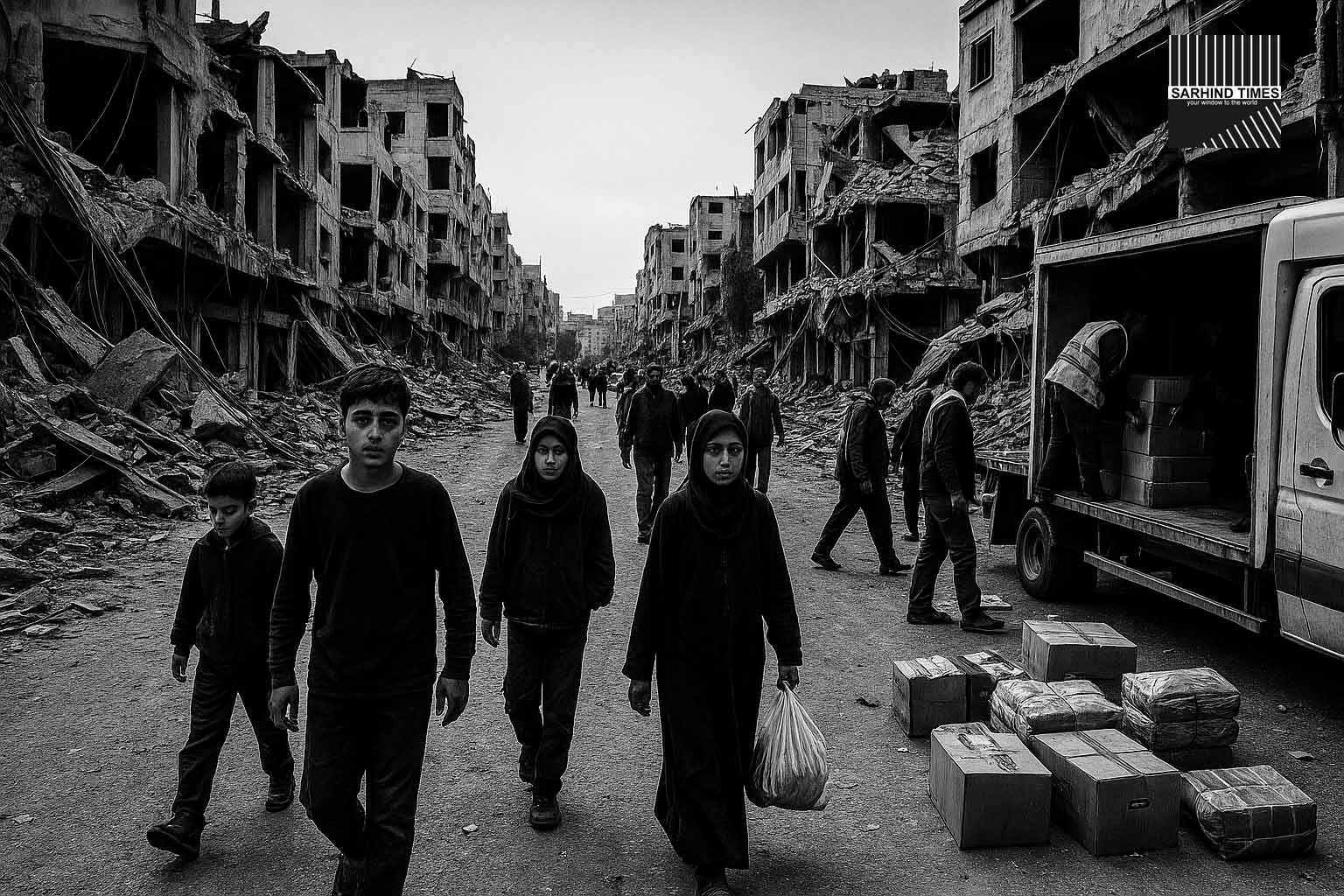
Regional and international diplomats push for de-escalation as civilian casualties rise, hospitals run out of supplies, and aid convoys struggle to enter conflict zones
Dateline: Gaza City | 23 November 2025
Summary: International mediators accelerated ceasefire negotiations this week amid worsening battles across Gaza and mounting global pressure to secure humanitarian access. Hospitals are overwhelmed, essential supplies are running out, and communication blackouts continue to hinder rescue operations. Regional powers, including Egypt, Qatar, and Jordan, are coordinating shuttle diplomacy while the UN demands unrestricted humanitarian corridors. The situation remains volatile with no clear breakthrough yet.
A Region on the Brink as Negotiators Scramble
Diplomatic efforts intensified this week as fighting in Gaza escalated sharply, drawing urgent appeals from global leaders for a ceasefire and uninterrupted humanitarian assistance. The conflict has stretched on with increasing ferocity, resulting in widespread destruction, thousands of casualties, and the collapse of essential services in several districts.
Negotiation teams from Egypt, Qatar, the United States, and the European bloc have been engaged in round-the-clock discussions aimed at securing a temporary truce. However, differences remain on the terms of de-escalation, prisoner exchanges, security guarantees, and humanitarian access mechanisms.
Humanitarian Crisis at Critical Levels
Aid groups describe the situation as one of the worst humanitarian collapses in recent memory. Hospitals are operating far beyond their capacity, many without electricity or functioning medical equipment. Supplies of antibiotics, oxygen, surgical kits, diesel, and even clean water are critically low.
UN officials say several neighborhoods have been reduced to rubble, forcing thousands of families to shelter in overcrowded community centers or makeshift tents. With temperatures dropping, children face severe risks of hypothermia and infection.
Hospitals Struggling Amid Overload
Doctors across Gaza have reported performing surgeries without anesthesia, reusing equipment due to shortages, and working under constant threat of nearby shelling. Many medical staff have not left their posts for days.
A senior pediatrician described “waves of injured children arriving every hour,” with many suffering shrapnel wounds, severe burns, and trauma-related complications. Several hospitals have ceased operations entirely after structural damage or power failures.
Food, Water, and Power in Rapid Decline
The breakdown of supply lines has triggered scarcity in essential goods. Residents report that basic staples like bread, rice, and bottled water are sold at extremely high prices—when available at all.
Rolling blackouts and fuel shortages have left many households without electricity for days, complicating food storage, medical care, and communication.
Aid Convoys Blocked and Delayed
Humanitarian convoys attempting to enter Gaza through the southern crossings face repeated delays due to security checks, damaged roads, and the absence of guaranteed safe-passage corridors. Several aid trucks were forced to wait for more than 48 hours at border points due to renewed shelling.
The World Food Programme warns that unless secure corridors are established quickly, famine-like conditions could develop in the hardest-hit neighborhoods within weeks.
International Calls for Immediate Ceasefire
The United Nations, European Union, and African Union issued urgent appeals demanding a ceasefire and calling for “unconditional humanitarian access.” Dozens of countries have joined the chorus, citing concerns about violations of international humanitarian law.
Street protests erupted in major global cities, including London, Madrid, Kuala Lumpur, Cape Town, and São Paulo, demanding political action to halt the violence.
Geopolitical Stakes Rising
Analysts warn that the continued escalation risks destabilizing the broader Middle East. Cross-border tensions remain high, with sporadic exchanges reported near multiple regional boundaries. Diplomatic sources say regional militaries have engaged in “precautionary deployments” to avoid miscalculations.
The US Secretary of State and European foreign ministers have been in continuous communication with regional leaders to prevent the conflict from spilling into neighboring zones.
The Mediation Landscape: Egypt and Qatar at the Forefront
Egypt, due to its geographic proximity and longstanding role in Gaza diplomacy, is spearheading negotiations. Qatari officials, who maintain open channels with key actors, are coordinating parallel discussions on prisoner exchanges and phased de-escalation.
Jordan has focused its efforts on humanitarian delivery and field hospitals planned near border regions.
Prisoner Exchange a Key Sticking Point
Negotiators say prisoner exchange frameworks remain one of the toughest issues. Each side demands terms the other views as disproportionate, slowing progress. Mediators are attempting phased-release models paired with limited ceasefire windows.
Without agreement on these terms, diplomats caution that any proposed truce may remain fragile.
Communication Blackouts Intensify Fear and Confusion
Periodic communication outages have left families unable to contact loved ones and emergency teams unable to coordinate rescues. Aid workers report using satellite devices to navigate bombed-out neighborhoods where traditional networks have collapsed.
Several civilians described waiting for hours without updates on evacuation orders, leading to panic and uncoordinated movements through dangerous areas.
Children and Elderly at Extreme Risk
UNICEF has warned that tens of thousands of children face acute malnutrition, respiratory illness, and trauma. Many have spent weeks in underground shelters with limited light and ventilation.
Elderly residents, many unable to move without assistance, are especially vulnerable due to medication shortages and lack of access to emergency medical support.
Diplomats Race Against Time
Multiple diplomatic teams have proposed a “72-hour humanitarian pause” to allow aid to flow. However, disagreements over monitoring mechanisms, corridor control, and territorial conditions have delayed implementation.
Diplomats warn that negotiations are becoming more complex as the humanitarian situation deteriorates, increasing pressure on political leaders to reach compromise.
Regional Citizens Mobilize to Support Relief
Ordinary citizens across the Middle East have organized donation drives, medical supply shipments, and public awareness campaigns. Volunteers in Jordan and Egypt have packed emergency kits for distribution at staging points.
Doctors from Turkey, Malaysia, and Spain have offered to join field medical missions pending security clearance.
The Global Economic Impact
Rising conflict has contributed to volatility in global energy markets. Oil prices spiked modestly due to supply concerns, while global shipping insurers raised premiums for vessels crossing sensitive maritime routes.
Economists warn that prolonged instability could disrupt trade flows and deepen inflationary pressures in energy-importing nations.
What Happens Next?
Negotiators are expected to reconvene within the next 48 hours for another round of talks. However, diplomatic officials caution that while pressure is rising, consensus remains elusive.
Without immediate humanitarian access, aid groups predict worsening mortality rates and deeper structural collapse across Gaza’s infrastructure.
A Critical Moment for Global Diplomacy
With millions watching, world leaders face mounting scrutiny over their ability to halt escalating crises and safeguard civilian lives. Whether diplomacy prevails may shape regional stability for years to come.



+ There are no comments
Add yours