
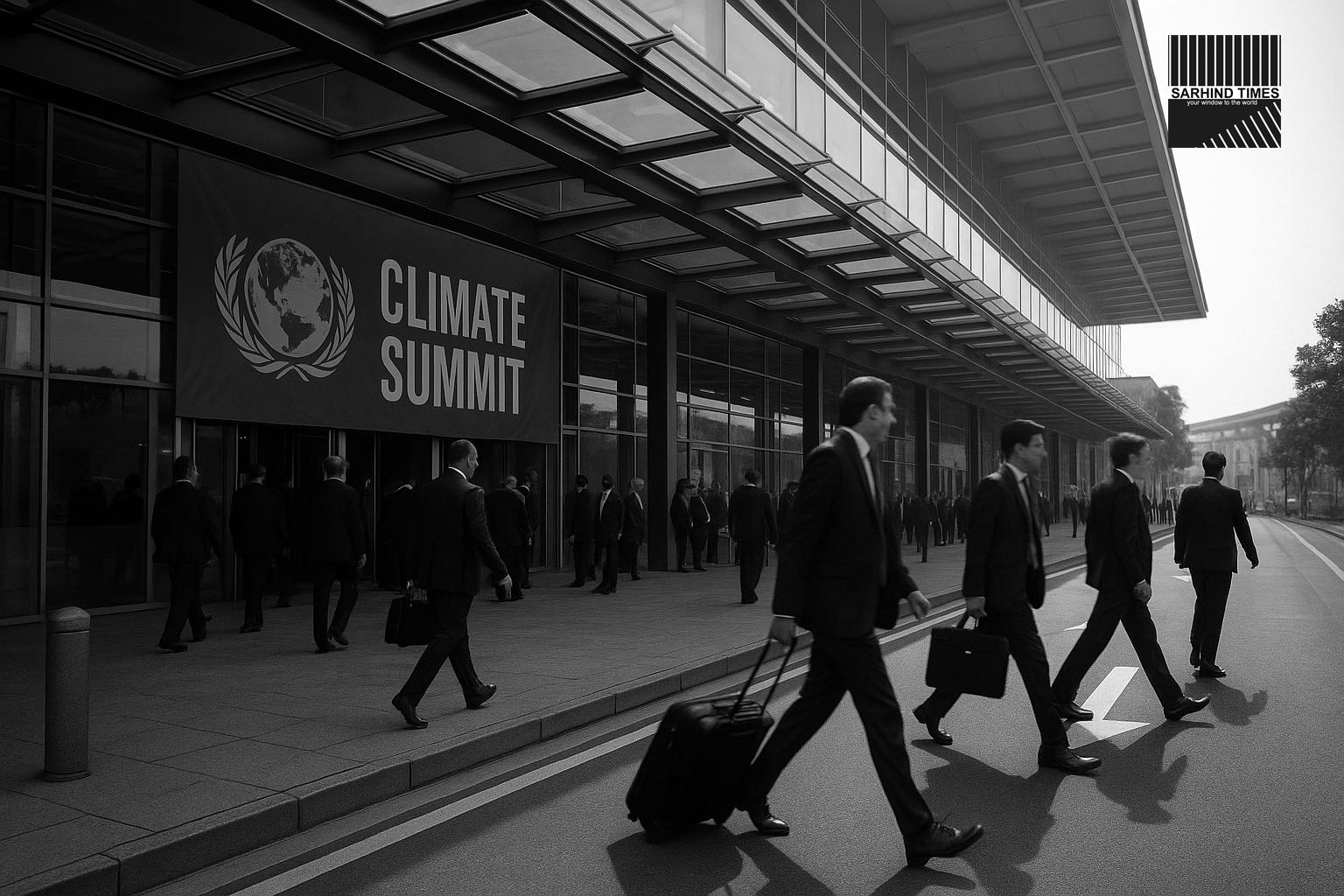
In the shadow of the Amazon and the glare of global event hubs, diplomacy, investment and sustainability converge
Dateline: Belém / Maldives / Dubai | 09 November 2025
Summary: As the 30th session of the Conference of the Parties (COP30) to the UN climate convention draws near, major world leaders are advancing a diplomatic push in Belém, Brazil, to embed climate-action commitments before the official summit. Simultaneously, the United Arab Emirates is hosting a diverse array of global events this November, signalling rising importance of cross-border engagement in economy, culture and science. The alignment of climate diplomacy and global event-hosting underlines how interconnected issues are driving international cooperation, competition and investment in late 2025.
Setting the stage: Why Belém and the Amazon matter
The upcoming COP30, to be hosted in Belém, Brazil, is not simply another annual meeting of climate negotiators—it is being framed as a decisive moment in which the world must respond to what the UN Secretary-General has called a “closing window” for limiting warming to 1.5 °C. The venue—Belém, at the gateway to the Amazon rainforest—carries symbolic weight. Delegates are arriving under heightened scrutiny, and the Brazilian government has already launched the “Tropical Forest Forever Facility”, a new fund intended to support rainforest protection and indigenous safeguards.
Observers point out that by choosing a location so ecologically significant, the summit presidency is signalling urgency and perhaps shifting emphasis from pledges to implementation, especially in vulnerable ecosystems. The Amazon is both a source of climate mitigation potential and a symbol of global environmental equity—bringing forest state, indigenous voices and developed-country obligations into focus.
Diplomatic alignment ahead of the summit
Heads of state and government from across the world gathered in preliminary sessions in the days leading up to COP30 to reaffirm collective commitment to climate action and oppose rising political “extremism” in climate discourse—particularly around denialism or retreat from net-zero ambitions.
In particular, leaders emphasised a narrative of “global common cause” rather than national zero-sum positioning. According to reports, messaging stressed two themes: (1) developed countries must increase climate financing and technology support to emerging-economy parties; (2) forest states like Brazil should be rewarded and empowered as ecosystem guardians. Tensions remain, however, around how much cash and how rapidly commitments will flow.
Key issues on the table: funding, forests, fossil-fuel exit
Among the substantive items to be decided at COP30, three stand out:
- Climate financing and debt relief: Developing countries are pressing for scaled‐up funds to help them transition energy systems and protect natural carbon sinks. Forest-state Brazil’s new facility is one step, but observers note the challenge of translating pledges into flows.
- Forest protection and carbon sinks: With the Amazon under pressure from deforestation, fire and land-use change, Brazil has placed forest protection at the heart of its COP hosting. Ensuring that preservation of tropical forests is rewarded via carbon markets or funding mechanisms may become a key deliverable.
- Fossil-fuel phase-out and industrial transition: While many developing-economy delegates emphasise “just transition” and financial support, developed economies are increasingly signalling they will raise ambition on methane, coal and oil. The challenge is aligning that ambition with affordability and fairness for different national contexts.
Why this matters for India and the global South
Although the summit is in Brazil, the implications are global. For India and other major emerging economies, COP30 is a platform to negotiate access to new low-carbon finance, technology cooperation and strategic partnerships. The outcomes could influence how global value-chains shift, how green-industrial policy evolves and how climate-risk capital is allocated.
In addition, India’s own climate diplomacy will need to balance adaptation needs (e.g., agriculture in semi-arid zones, rising heat-waves), mitigation ambition (e.g., manufacturing clean tech, green hydrogen), and finance access. A strong outcome at COP30 could accelerate Indian investment flows into green-tech and infrastructure, while a weak one may raise domestic pressure for alternative strategies.
Simultaneous global event hub: The UAE’s November agenda
While the climate summit is grabbing headlines, other global gatherings are underway. Abu Dhabi, Dubai and Al Ain in the United Arab Emirates are hosting a dynamic slate of international forums throughout November—covering business, science, culture and sport.
The UAE’s role as a global-event hub underscores a broader shift: nations are leveraging soft-diplomatic capital, tourism infrastructure and cross-sector engagement to position themselves as nodes of connectivity. For businesses, this means attention is shifting not just to economic policies but to physical locations that host global convening, partnerships and deals.
Finance, investment and technology angle
From a financial-markets viewpoint, COP30 and the UAE event-calendar signal investor interest in climate-tech, green-infrastructure, event-economies and regional hubs. Funds targeting forests, carbon trading and climate-resilient agriculture may see increasing capital allocation. On the event-economy side, cities able to host major forums are building brand equity—and that spurs infrastructure investment, hospitality growth, media exposure and knowledge-economy spill-over.
For India, strategic outward engagement via climate signalling and digital-services partnerships becomes relevant. Multinational corporations looking to align with net-zero goals may invest in Indian green-tech or partner in ecosystem-services that span South Asia and Latin America. The climate-finance architecture being shaped at COP30 could rippled into capital flows and regulatory frameworks in India’s own clean-energy and industrial sectors.
Turn from pledges to implementation: the hard work begins
One of the important themes of COP30 is shift from “promise-making” to “delivery.” Previous summits have focused heavily on headline commitments; this time organisers emphasise systems: finance mobilisation, monitoring, accountability, implementation road-maps. The tropical-forest fund is a prime example—its success depends on governance, flora-fauna integrity, local-community inclusion and transparent funding.
Implementation also means countries will be judged on how they integrate climate duties into economic policy, trade strategy, and industrial competitiveness. For emerging economies, keeping growth and jobs while decarbonising is the key balancing act.
Challenges ahead: trust, fairness and geopolitical overhang
Despite the positive momentum, there are multiple challenges that may limit the impact of COP30 and associated global gatherings:
Trust and fairness: Developing countries often feel that developed-economy promises on finance and technology transfer lag behind. Without credible delivery, trust deficits may undermine cooperation.
Geopolitical tension: Climate diplomacy does not exist in a vacuum. Regional rivalries, trade tensions, energy security anxieties and strategic competition can spill into climate talks. For example, countries may view green-tech supply chains through the lens of national security rather than cooperation.
Capacity and governance constraints: Mobilising forests, protecting ecosystems, ensuring community rights, monitoring carbon flows—all of that requires governance capacity. Some of the most ambitious funds may struggle with on-ground execution, which in turn may sap credibility.
Key dates and milestones to track
For those following COP30 and this broader calendar, these are the milestones to watch:
- 11 November 2025: First plenary of COP30 in Belém officially begins.
- The next few days: Publication of the Belém Declaration or equivalent umbrella text on forests and climate finance.
- Mid-November: Announcement of new bilateral or multilateral climate-finance deals tied to forest protection, adaptation, clean-energy deployment.
- End of November: Reports on how many event-deals were signed in UAE’s November event-calendar and whether any major investment or MoU announcements emerge.
What this means for the future of global cooperation
If COP30 succeeds in aligning finance, forests and action, it could mark the moment when climate diplomacy transitions from aspiration to operationalisation. That would reshape how capital markets think about green-investments, how industries view decarbonisation, and how emerging economies integrate climate into growth models.
Conversely, if trust breaks down or deliverables are delayed, the risk is real: climate diplomacy could revert to incrementalism, losing momentum just when science says time is tight.
Conclusion
In the coming weeks the world’s attention will be on Belém, Brazil, but the outcomes will have ramifications far beyond the Amazon. From investment flows in green tech to job-creation in event economies, from forest communities to global finance houses, the intersecting threads of environment, economy and diplomacy are highly active.
For India, for investors, for civil-society and for business, three messages stand out:
- Climate action is no longer optional—delivery matters. The “nice to do” phase is giving way to “must do”.
- Countries that host or partner in major global forums gain influence and connectivity; event-economies now matter more.
- Emerging-economy actors must engage not only as recipients but as designers of global infrastructure, finance and technology systems if they are to capture value and shape outcomes.
The next fortnight will show whether the global community can meet ambition with action—or whether this moment becomes just another tick-box.



+ There are no comments
Add yours