
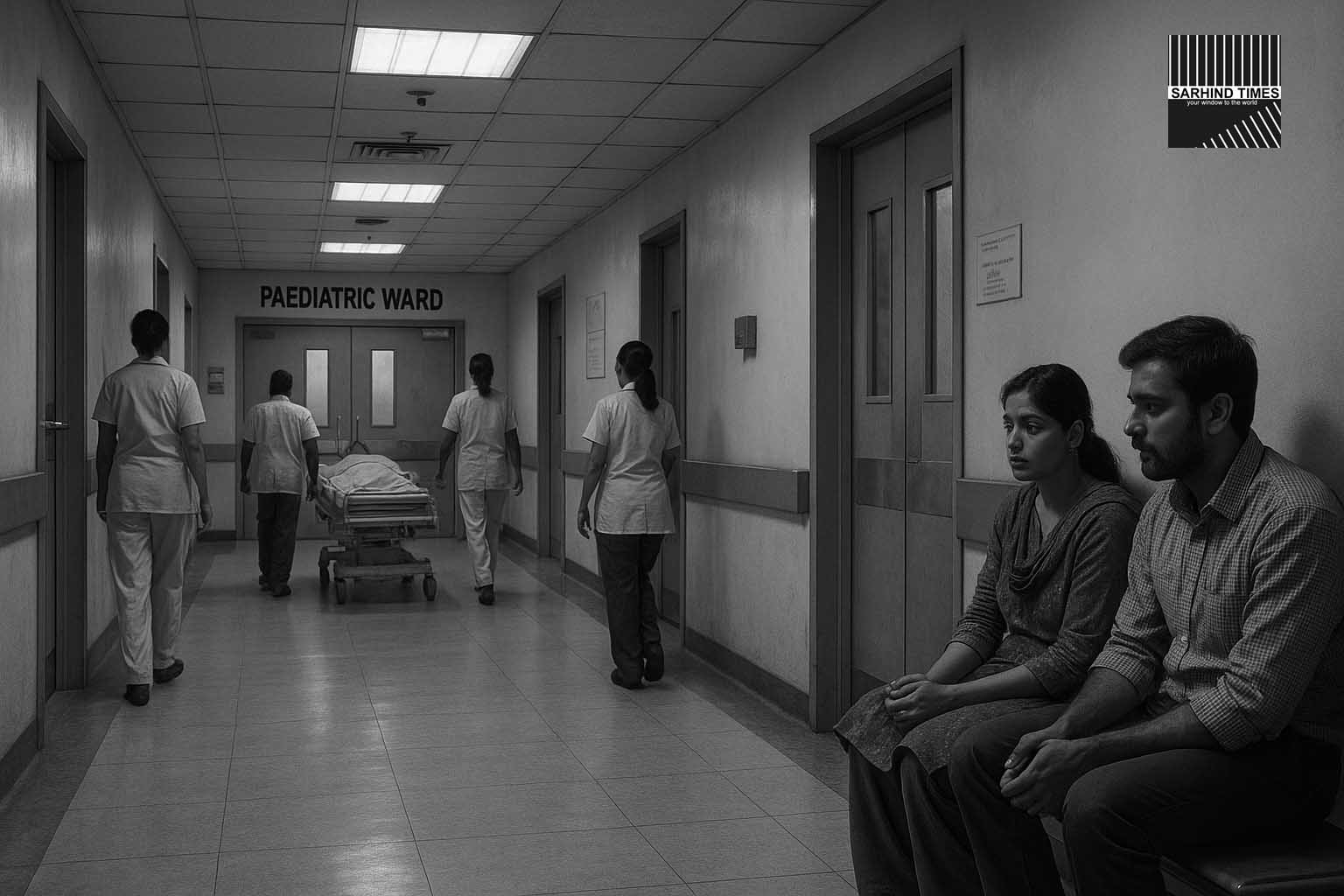
As at least 17 children die in central India, regulators scramble to contain manufacturing failures and restore trust
Dateline: New Delhi | 13 November 2025, Asia/Kolkata
Summary: Three cough syrup brands manufactured in India—linked to at least 17 child deaths—have been flagged by global and national health authorities for containing toxic levels of diethylene glycol (DEG). While the batches have been recalled and production suspended, the incident lays bare gaps in drug-manufacturing oversight, regulatory enforcement and healthcare-supply-chain integrity.
Tragedy unfolds in Madhya Pradesh
In early October 2025, paediatric units in Chhindwara district and neighbouring areas of Madhya Pradesh reported multiple unexplained cases of acute kidney injury and death in children under five. The children had presented with mild symptoms of cough and cold, were prescribed syrup-based medicines, and rapidly deteriorated. Health authorities traced the fatalities to a cough syrup brand named Coldrif, and two other syrups—Respifresh TR and ReLife—also tested positive for a known toxin, diethylene glycol (DEG).
The government announced at least 17 deaths related to the incident; doctors note that the true toll may be higher due to delayed reporting and mis-classification of causes.
What the laboratory tests revealed
Laboratory investigations found that the Coldrif syrup contained DEG at levels of about 48.6 per cent—nearly 500 times the permissible limit of 0.1 per cent. The other two syrups, Respifresh TR and ReLife, contained DEG at 1.342 per cent and 0.616 per cent respectively. Although no deaths have been definitively linked to those two brands, regulators treated them with equal caution and initiated recalls.
DEG is a toxic industrial solvent often used in antifreeze and brake fluids; its ingestion can cause multi-organ failure, particularly in young children whose renal systems are vulnerable.
Regulatory response and enforcement action
The World Health Organization (WHO) issued a “Medical Product Alert N°5/2025” warning global health authorities about the three medicines, urging immediate detection, recall and patient-monitoring if the products were in circulation.
The Indian regulatory agency, Central Drugs Standard Control Organisation (CDSCO), confirmed that the three brands were not exported from India, but manufacturers were ordered to halt production and recall the batches. One manufacturer’s licence was cancelled and criminal investigation launched under the Drugs & Cosmetics Act and manslaughter-linked charges.
Manufacturing oversight: where the system failed
The incident reveals several systemic failures:
- Poor upstream ingredient sourcing—DEG should never be present in medicinal syrups, yet substitute solvents or crude chemical contamination appear to have slipped through.
- Weak in-process quality-control: finished-product testing and stability assessments did not catch the elevated DEG levels before distribution.
- Insufficient monitoring of contract manufacturing units and third-party supply-chains, particularly in smaller pharmaceutical firms where oversight lapses are more common.
- Delayed detection: local health workers reported kidney-failure clusters only after multiple deaths, suggesting that pharmacovigilance and sentinel monitoring systems are weak.
Healthcare impact and family trauma
The human cost has been heart-wrenching. Parents of the deceased described initial cold symptoms that seemed routine, followed by rapid deterioration: inability to urinate, seizures, kidney shutdown. In several cases hospital clinicians were unable to reverse damage despite dialysis support.
Medical experts say children’s vulnerability is higher because their body mass, metabolic resilience and renal clearance capacity are low—making high-dose DEG ingestion rapidly fatal. Long-term survivors of DEG poisoning may face chronic kidney disease, developmental problems and ongoing healthcare burden.
Wider implications for Indian drug-safety and public trust
India is one of the largest producers of generic medicines in the world. The incident raises serious questions about credibility of smaller manufacturing units, regulatory inspections, export controls and overall supply-chain integrity.
Public trust is likely to be damaged not only domestically but internationally; though authorities say the products were not exported, global health agencies note risks of cross-border leakage via informal channels.
Government and industry reactions
The Union health ministry announced a task force to review the incident and propose reforms including tighter raw-material import checks, mandatory deg-screening in paediatric syrups, and enhanced regulatory audits. Several state-level drug-controllers have announced inspections of small-scale syrup-manufacturers, sample-testing across pharmacies and stricter labelling rules for paediatric use.
Pharmaceutical industry associations expressed regret, promised self-audits and emphasised that the issue appears limited to isolated batches—and that the generic-medicine-export sector remains robust. Nonetheless, industry players agreed that the incident is a wake-up call and may trigger increased regulatory scrutiny and cost implications.
Policy-reform opportunities and structural gaps
Experts point to several reform priorities:
- Creating a national real-time pharmacovigilance database that collects adverse-event signals and links them to manufacturing-batch data.
- Expanding laboratory capacity for solvent-residue testing in paediatric medicines and enforcing stricter chemical-risk limits.
- Improving visibility and traceability of raw-material supply-chains, especially for small and medium manufacturers, including requirement of certification for sourcing of active and excipient chemicals.
- Strengthening post-market surveillance by inspecting retail-level stock, enforcing recall mandates, and publicly reporting non-compliance.
- Implementing effective penalty and criminal-liability regimes for manufacturers whose products cause preventable harm—so that deterrence is strong rather than weak.
What happens next — monitoring, restitution, prevention
In the coming weeks and months, authorities will focus on three tracks:
- **Patient monitoring and follow-up**: Children who consumed the implicated batches will need long-term renal follow-up and the health system must track late-onset complications.
- **Batch-tracking and recall enforcement**: Identifying all products, including loose pharmacy-stock, cross-state movements, and ensuring they are removed from circulation.
- **Regulatory reform and capacity-building**: Establishing new rules, upgrading testing labs and training inspectors to detect chemical-contamination incidents early.
The incident may also prompt international regulatory link-ups—sharing information on medicine-safety with WHO and other national regulators to prevent trans-boundary risks.
Conclusion
This tragic event is both a failure and an inflection point. A routine paediatric cough syrup should never become a deadly poison. For India’s pharmaceutical ecosystem, which supplies much of the global generic market, the cost is not just measured in reputational terms but in human lives.
Whether this crisis triggers meaningful reform or remains another “recall-and-forget” episode will depend on sustained regulatory will, transparency of investigations, and structural upgrade of manufacturing and safety mechanisms. For families grieving a child lost and clinicians battling consequences, the outcome must not be tolerated to repeat.
In effect: the question now is not only how many drugs compete globally, but whether every child in every Indian hospital can safely take one. A country critical to global health cannot afford anything less.



+ There are no comments
Add yours