
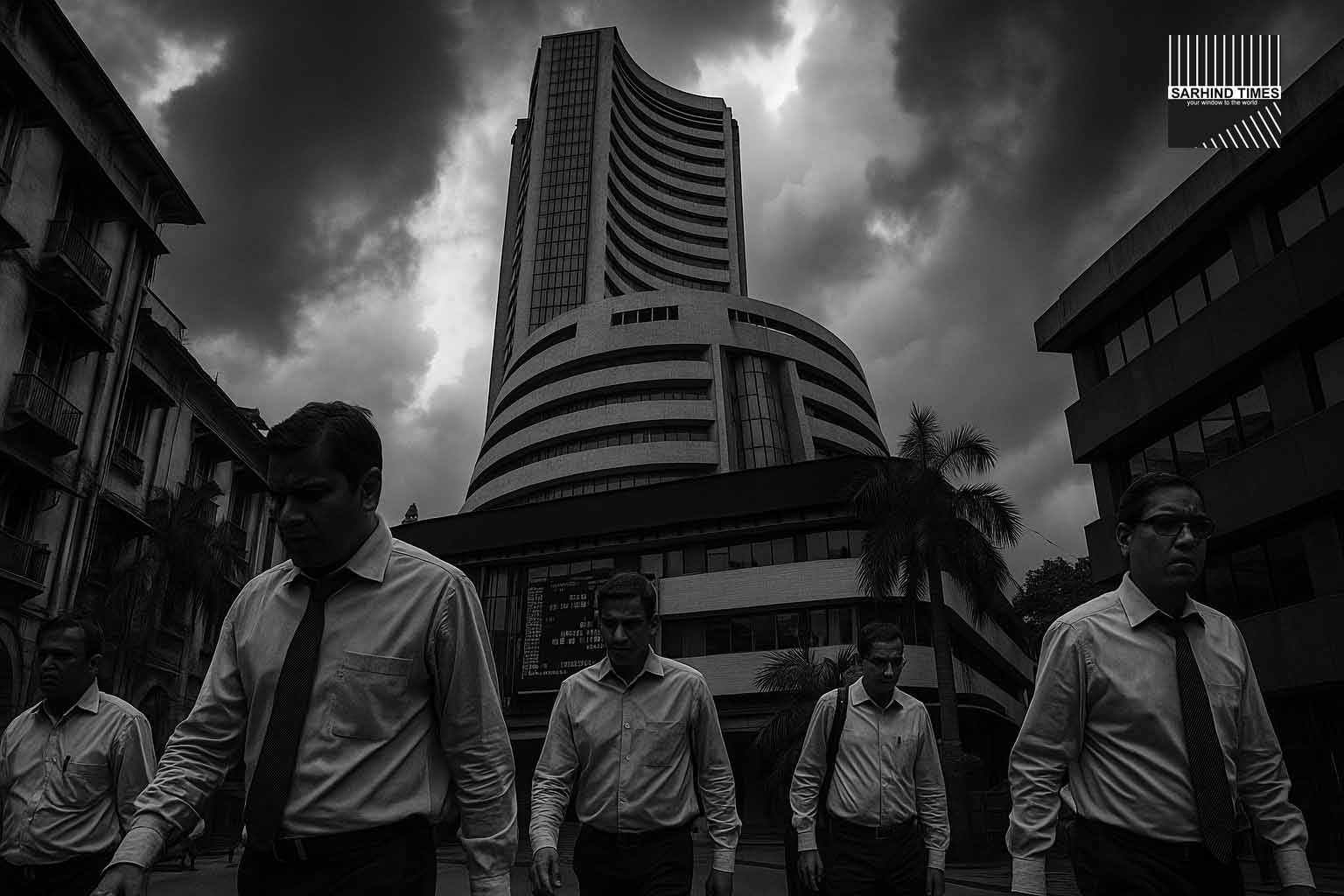
Dalal Street faces one of the most turbulent sessions of the season as FIIs pull out funds, rupee weakens and rate-cycle uncertainty builds
Dateline: Mumbai | 25 November 2025
Summary: Indian markets witnessed a sharp decline this week as the Sensex and Nifty slipped significantly, dragged down by global market turbulence, rising US bond yields, renewed fears of sticky global inflation and persistent selling by foreign institutional investors. Analysts warn of heightened volatility ahead as crude oil prices rise and uncertainties cloud central-bank policy directions.
A Turbulent Start to the Market Week
Mumbai’s Dalal Street witnessed an unexpectedly sharp bout of volatility this week, with the benchmark Sensex tanking over 900 points intraday before recovering a portion of the losses. The Nifty too fell sharply, slipping below critical support levels and signalling a sentiment shift after weeks of relatively stable performance.
The trigger was not domestic alone. A combination of global macroeconomic pressures — from rising US Treasury yields to a surge in crude oil prices and renewed inflation concerns — rattled global markets from Tokyo to New York. India, deeply intertwined with global capital flows, felt the shock sharply as foreign institutional investors (FIIs) pulled out funds at the fastest pace in nearly two months.
As the session progressed, selling pressure intensified across banking, IT, metal and consumer sectors. Analysts were quick to note that the fall was not a standalone domestic event but part of a synchronized global correction.
Why the Markets Fell: A Breakdown of the Core Triggers
Multiple forces converged simultaneously, creating a perfect storm for equities:
- US Bond Yields Spike: Yields on the US 10-year Treasury moved closer to multi-month highs as global investors priced in a prolonged period of tight monetary policy by the Federal Reserve.
- Crude Oil Price Surge: Brent crude once again crossed the USD 90 per barrel mark, stoking fears of imported inflation for oil-dependent economies like India.
- Rupee Weakness: The Indian rupee depreciated sharply against the US dollar, raising concerns over forex outflows and higher import costs.
- FII Selling Intensifies: Foreign investors sold aggressively as risk-off sentiment swept global markets.
- Geopolitical Tensions: Renewed tensions in the Middle East and uncertain global commodity supply outlook rattled investor confidence.
Market participants noted that the alignment of all these factors made the decline almost inevitable and more severe than usual daily fluctuations.
Sectoral Performance: Broad-Based Selling, Selective Pain
The market’s decline was not limited to one or two sectors — the fall was broad-based. However, certain segments bore the brunt more than others:
- Banking & Financials: Heavyweight banks dragged indices lower as bond yields surged globally. Higher yields tend to reduce the attractiveness of equities.
- IT Firms: The tech pack fell sharply due to concerns over US spending slowdown and strong dollar headwinds.
- Metal Stocks: Metal producers slid as global commodity cues weakened, and China’s demand projections remained uncertain.
- Auto Sector: With rising oil prices and higher input costs looming, investors turned cautious on auto players.
- Pharma & FMCG: Defensive sectors held up slightly better but still ended in the red, indicating widespread selling pressure.
The mid-cap and small-cap indices also plunged, reflecting stress among retail-heavy segments. Analysts warned that excessive leverage in these pockets could create more downside risk if volatility persists.
Global Markets Mirror the Slide: India Not an Outlier
Equity markets worldwide were in turmoil. Asian markets opened sharply lower, European markets slipped into deep losses, and US futures signalled weak openings. The synchronization of the selloff indicated deeper concerns about:
- Global inflation trajectory
- Uncertainty about rate cuts
- Persistent energy market volatility
- Slowing Chinese industrial data
- Weak corporate forward guidances in the US
This global backdrop amplified the pressure on Indian markets, despite relatively stable domestic fundamentals.
FII and DII Behaviour: A Divergence in Sentiment
Data from exchanges showed that FIIs were large net sellers, withdrawing significant capital as they shifted allocations towards safer US assets amid rising yields. On the other hand, Domestic Institutional Investors (DIIs), especially mutual funds and insurance companies, were net buyers, attempting to stabilize the market and capture attractive valuations.
However, DII inflows were not sufficient to fully offset the intensity of foreign selling. Experts expect FIIs to remain cautious for the next few sessions, particularly as geopolitical tensions remain unresolved.
How Rising Crude Impacts India: A Deeper Look
India imports nearly 85% of its crude oil needs, making oil prices a critical determinant of inflation, fiscal stability and currency value. With crude now trending upwards due to supply cuts and geopolitical uncertainty, multiple challenges emerge:
- Higher retail fuel prices
- Widening current-account deficit
- Increased fiscal burden on subsidies
- Inflationary spillovers across sectors
Higher oil prices tend to generate systemic pressure on equities, particularly in sectors like auto, aviation, manufacturing, FMCG and logistics.
Rupee Weakens: Currency Pressure Adds to Market Stress
The rupee’s depreciation against the US dollar served as another bearish signal. As yields in the US rose, global investors flocked to safer assets. This “flight to safety” phenomenon strengthened the dollar and weakened emerging-market currencies, including India’s.
A weaker rupee increases import costs, strains corporate margins, and forces the RBI to intervene. The central bank reportedly stepped in lightly to stabilize currency fluctuations but maintained caution on overusing reserves.
The RBI Angle: Delayed Rate Cuts Now a Growing Possibility
Just weeks ago, market participants were hoping for signals of monetary policy easing in early 2026. However, global inflation concerns and rising US yields have changed the narrative.
Experts now believe:
- RBI may keep rates unchanged for several more policy cycles
- Liquidity tightening could continue selectively
- Inflation projections may be revised upward
- Bond-market yields in India may rise
This shift in expectations directly impacts valuations, particularly in rate-sensitive segments like banking, real estate, NBFCs and autos.
Investor Psychology: Fear Takes Charge
Market sentiment was visibly risk-averse. Intraday charts showed sharp selling pressure, followed by attempted recoveries that quickly fizzled out. Traders noted that every rally attempt faced strong resistance, indicating lack of conviction.
Retail traders, especially those in leveraged derivatives, faced significant mark-to-market pressure. Brokers issued margin calls as positions turned negative during the volatile session.
What Analysts Say: A Correction, Not a Crisis
Despite the turbulence, most institutional analysts maintain that this decline is part of a healthy correction after months of strong market performance. India’s macro fundamentals — including GST collections, corporate earnings, banking stability and domestic consumption — remain intact.
“This is global turbulence spilling over, not a domestic economic crisis,” one analyst said. “India still remains one of the strongest long-term equity markets.”
However, they caution that volatility is far from over. For the next few weeks, markets may remain sensitive to global cues, especially inflation data, crude dynamics and US Federal Reserve commentary.
What Investors Should Do: Strategy for Volatile Times
Experts recommend the following:
- Avoid panic selling — corrections are normal in long-term bull markets.
- Focus on quality stocks with strong balance sheets and low debt.
- Avoid high-leverage trades during volatile sessions.
- Use staggered buying instead of lump-sum purchases.
- Stay away from speculative small-caps for now.
Wealth managers also advise reviewing asset allocation and ensuring that portfolios remain aligned with long-term goals, not short-term swings.
What to Watch This Week: Key Market Drivers
Several indicators will influence market movement in the coming days:
- US inflation data release
- Crude oil price movements
- FII flow patterns
- Corporate earnings guidance announcements
- Rupee’s trajectory against the dollar
- Bond-market yields in India and abroad
If global markets recover, Indian equities could rebound sharply. But persistent macro stress may keep rallies in check.
Conclusion: A Correction With Global Roots
The steep fall in Sensex and Nifty this week is a reminder of India’s deep integration with global markets. While domestic fundamentals remain largely stable, global macroeconomic headwinds — rising yields, oil uncertainty, inflation concerns — can create sharp turbulence on Dalal Street.
For now, this remains a correction, not a collapse. But volatility is likely to persist, and investors must brace for sharp swings as the market navigates a choppy global environment.



+ There are no comments
Add yours