
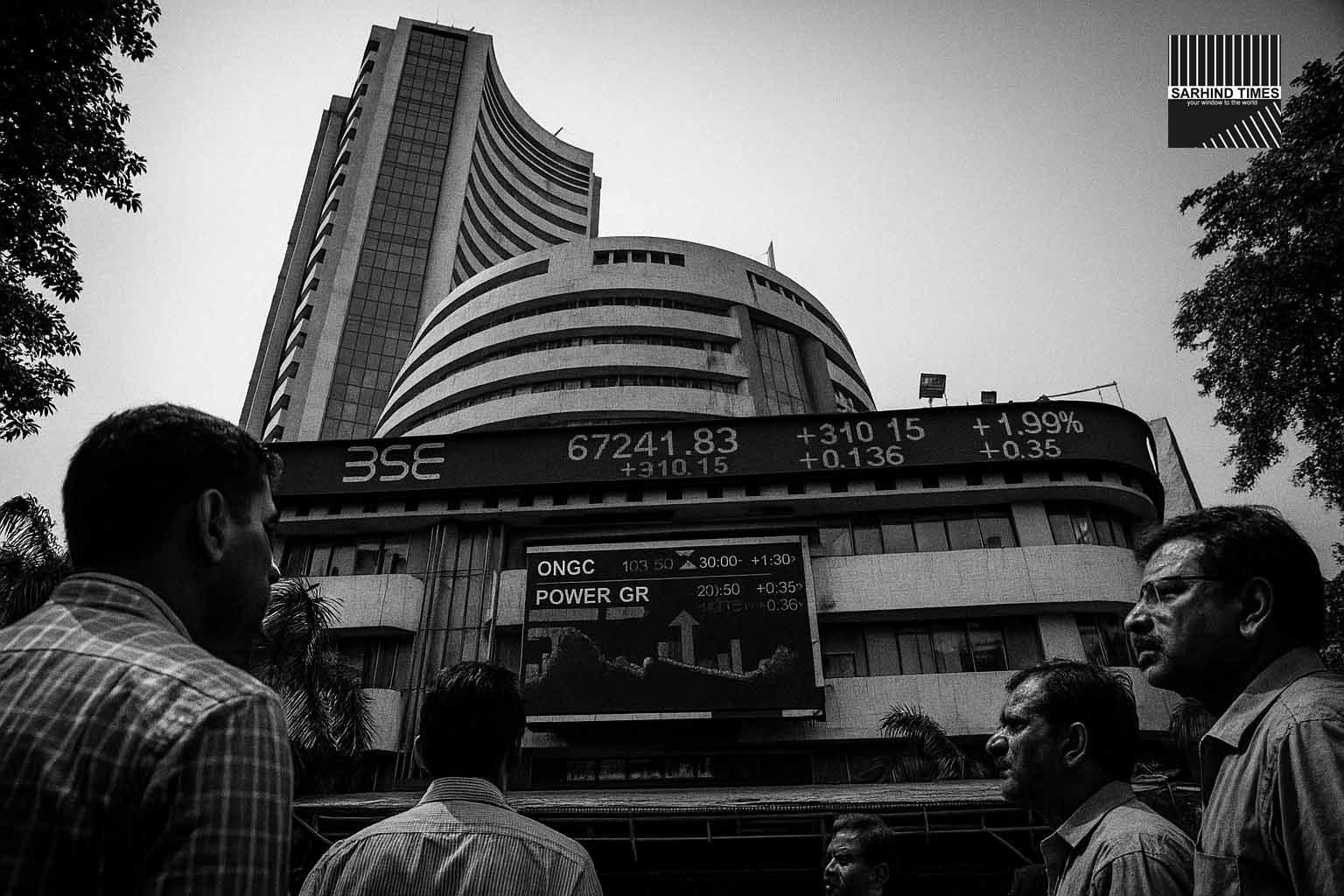
Banking and IT stocks drag indices downward; mid-cap and small-cap segments witness aggressive profit-booking as global cues remain shaky
Dateline: Mumbai | 23 November 2025
Summary: Indian equity markets witnessed sharp volatility this week, with the Sensex and Nifty swinging widely in response to global rate cuts, FII pullbacks, and mixed corporate earnings. Investors reacted to global uncertainty, particularly the US Federal Reserve’s emergency rate action and shifting bond yields. Analysts warn of continued turbulence but see selective opportunities in domestic-facing sectors.
A Week of Unusual Swings for Indian Markets
Financial markets in India faced heightened uncertainty this week as domestic and global triggers combined to push major indices into volatile territory. While the broader market has remained resilient throughout 2025, the sudden instability in global monetary policy, combined with cautious quarterly earnings from several heavyweights, triggered a wave of profit-booking.
The benchmark Sensex oscillated between intense selling pressure and sporadic recoveries, ultimately closing the week marginally lower but with significant intraday turbulence. The Nifty mirrored this movement, failing to hold critical resistance levels.
Global Triggers: The Domino Effect of Fed’s Emergency Rate Cut
Market participants attribute the bulk of this week’s volatility to the shock emergency rate cut announced by the US Federal Reserve. The aggressive reduction in interest rates, intended to cushion the global economic slowdown, sparked concerns about recessionary forces building beneath the surface.
Wall Street’s reaction — steep declines in the Dow, S&P 500, and Nasdaq — immediately spilled into Asian markets, dragging indices across Japan, China, and Singapore. India’s markets, deeply integrated with global flows, felt the impact when trading opened.
Foreign Institutional Investors Pull Back
Data indicates that foreign institutional investors turned net sellers throughout the week, offloading thousands of crores across large-cap and mid-cap counters.
Traders say FIIs are reducing exposure to emerging markets as global risk-off sentiment intensifies. Strength in gold and US Treasuries further signaled a shift toward safety assets.
Domestic Earnings Add Mixed Sentiment
Quarterly results from major companies painted a mixed picture. While several consumer goods and energy companies reported better-than-expected numbers, banking and IT sectors remained under pressure.
IT giants flagged concerns about slowing global order inflows, and major banks reported slight increases in non-performing assets, adding to market anxiety.
Banking and IT Sectors Lead the Decline
Banking, financial services, and insurance (BFSI) stocks were among the worst performers, with traders worried about asset quality in the face of tightening credit conditions. IT stocks fell sharply as global clients signaled caution on discretionary tech spending.
Analysts say both sectors may face short-term pain, though long-term fundamentals remain intact for marquee players.
Mid-Cap and Small-Cap Stocks Face Heavy Selling
The intense rally throughout 2025 had pushed mid-cap and small-cap valuations to elevated levels, prompting traders to lock in profits amid the global uncertainty. Many high-growth companies saw steep corrections this week, though analysts say this unwinding may create attractive medium-term entry points.
Rupee Weakens Against the Dollar
The Indian rupee traded lower against the US dollar as global investors sought safe-haven currencies. Market experts say that currency volatility will likely persist until global rate cycles stabilize.
Oil Prices and Inflation Expectations
International crude oil prices slipped due to recession fears, providing some relief to India’s inflation outlook. Economists suggest that lower crude prices may help cushion the domestic economic impact of global turbulence.
Domestic Investors Turn Selectively Cautious
Retail and domestic institutional investors displayed caution, with many shifting allocations from high-beta sectors to defensive picks such as FMCG, pharma, and utilities.
Meanwhile, several retail investors turned to index funds to navigate volatility, contributing to increased ETF volumes.
Top Gainers and Losers of the Week
Among the worst performers were technology majors, public-sector banks, and high-leverage infrastructure companies. Auto and energy counters held up comparatively better.
Healthcare and FMCG stocks emerged as relative safe havens due to stable demand and stronger earnings projections.
IPO Market Remains Active Despite Volatility
Several upcoming IPOs continued to receive strong subscription interest, indicating that investor appetite for quality listings remains intact despite short-term volatility.
Experts say companies in renewable energy, logistics, and manufacturing may dominate the next IPO cycle.
Market Experts Recommend Discipline Over Panic
Analysts advise investors to maintain discipline and avoid panic-based selling. They recommend staggered buying in fundamentally strong companies large enough to withstand global shocks.
Technical strategists point out that while markets may continue to see volatility, long-term structural trends for India remain strong.
Sectoral Outlook for the Coming Weeks
BFSI: Short-term correction likely, long-term stable.
IT: Weak global sentiment may suppress valuations.
Energy: Benefiting from lower crude prices.
Auto: Expected to remain resilient due to festive demand spillover.
Infrastructure: Strong government spending to support momentum.
Consumer Goods: Defensive sector attracting renewed interest.
The Road Ahead: Volatility Here to Stay
Market watchers expect volatility to persist until global monetary signals stabilize. With the US Federal Reserve, European Central Bank, and Bank of England all expected to issue critical policy updates soon, global cues will continue to dictate market direction.
For India, the medium-term outlook remains robust due to domestic consumption, strong government capex, and financial sector resilience — but the immediate weeks may require caution.
Conclusion
The stock market turbulence of the past week highlights the interconnectedness of global and domestic financial systems. While external shocks have rattled sentiment, India’s structural trajectory remains firmly upward. Strategic discipline, diversified portfolios, and long-term vision remain the tools investors must rely on as markets recalibrate to global uncertainty.



+ There are no comments
Add yours