
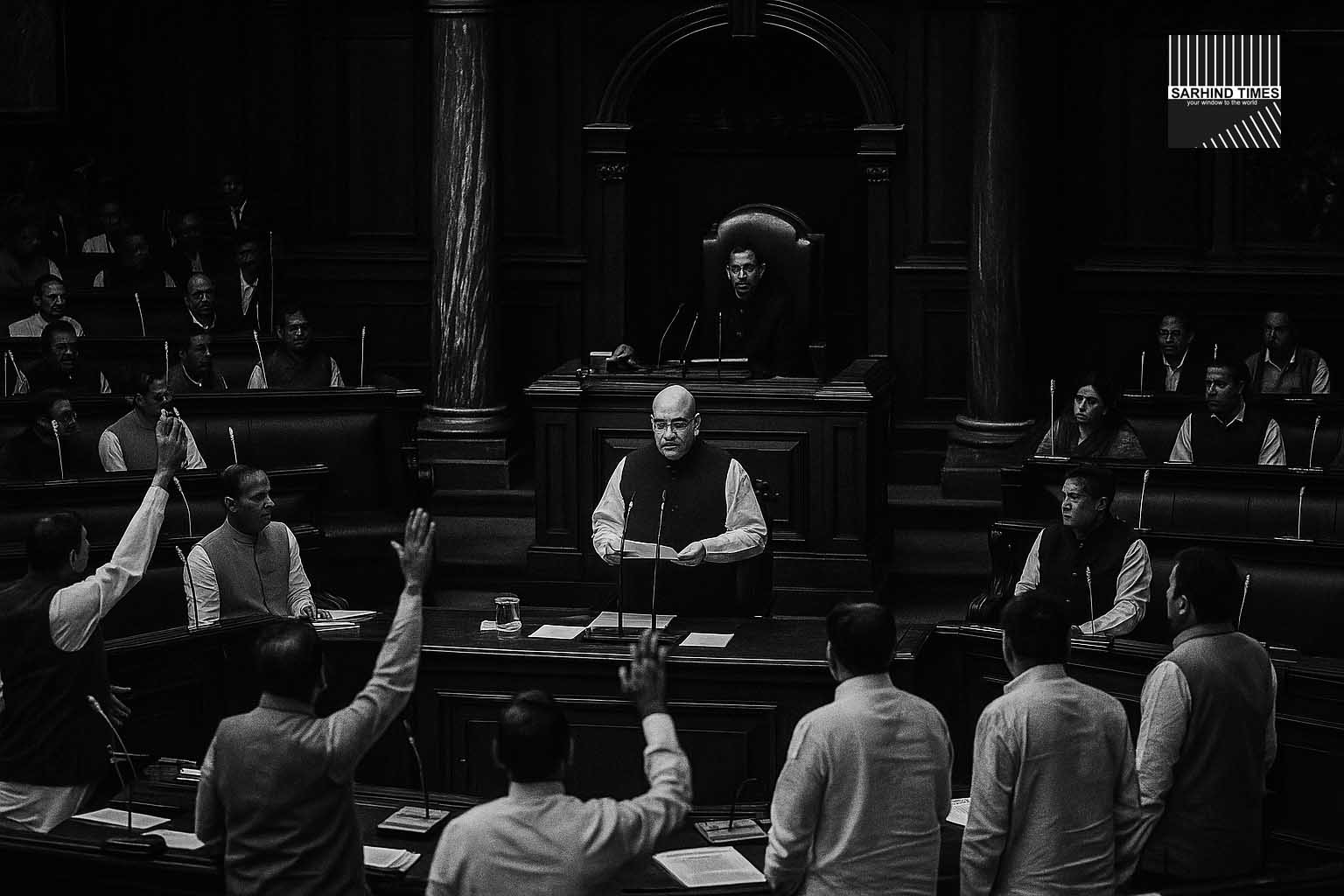
Within the upcoming Winter Session, a high-stakes legislative showdown looms over the Constitution (One Hundred and Thirtieth Amendment) Bill, 2025—its passage could redraw accountability norms at India’s highest political levels.
Dateline: New Delhi | November 16, 2025
Summary: The government has tabled one of the most consequential constitutional amendment bills in recent years—intended to allow removal of the Prime Minister, Chief Ministers and Union ministers if they remain in judicial custody for 30 consecutive days on serious criminal charges. Opposition parties have called it a threat to democratic checks and have boycotted the Joint Parliamentary Committee (JPC) set to review the bill. As the Winter Session approaches, India’s legislative fabric is at a turning point.
1. The Bill That Has Stirred Parliament
In August this year, the Home Minister introduced the Constitution (One Hundred and Thirtieth Amendment) Bill, 2025 in the Lok Sabha. The legislation seeks to add provisions to Articles 75 and 164 (and related clauses) of the Constitution, allowing for automatic cessation of office of the Prime Minister or a Chief Minister if they are under arrest or detention for 30 consecutive days in a case punishable with imprisonment of five years or more.
This novel legislative thrust places India’s highest political offices under a new legal spotlight. Until now, only conviction triggered forced removal under the Constitution; this Bill seeks to redefine the threshold to mere detention of 30 days.
2. Why the Government Says It’s Needed
The government argues that the Bill is a response to growing public frustration with office-holders who continue in power despite serious criminal charges or prolong detention without substantive resolution. The Union Home Minister has described it as a measure to “restore public trust and political morality”.
Proponents stress that democracy demands accountability at the top. They cite instances where senior functionaries, while under investigation or detention, appear unable to adequately perform their public duties or uphold office dignity. They contend the Bill will deter office-holders from delaying legal processes and will help strengthen governance.
3. Opposition Alarm: “Democracy Under Threat”
Opposition leaders view the Bill as a direct assault on the separation of powers and federal structure. Several MPs have argued that the measure risks turning detention into a political weapon, enabling premature removal of elected executives.
The boycott of the JPC by major parties earned headlines as the opposition argued that the committee’s composition—26 of 31 members from the ruling side—undermines credible scrutiny.
4. Mechanics of the Bill: What It Actually Does
Under the proposed changes:
- If a minister (including PM/CM) is detained under a case punishable for five years or more and remains in custody for 30 consecutive days, officeholding ceases automatically.
- Re-appointment is possible only after release on bail or end of detention.
- The Governor or President is empowered to declare vacancy if the office is not vacated within the period.
- These changes cover both Union and State levels, including Union Territories.
Legal experts point out that the Bill bypasses the convention of resignation or impeachment; instead it triggers automatic cessation, potentially reducing political maneuvering but increasing constitutional complexity.
5. The Parliamentary Timeline and JPC Dynamics
Since its introduction, the Bill has been referred to a Joint Parliamentary Committee (JPC) comprising 31 members, of whom 26 are from the ruling National Democratic Alliance (NDA) and 5 from opposition parties.
The opposition demanded a broader composition and equal representation, but the Speaker approved the member list. Some smaller parties agreed to join; most major ones remained absent.
6. Political Implications: Power, Federalism and the Centre–State Balance
One of the most significant consequences of the Bill, if passed, will be its effect on federal politics. Chief Ministers will face the same threshold as the Prime Minister. This raises questions about the autonomy of states, the role of Governors and the interplay of state executive privilege.
Additionally, the Bill could shift how political parties approach candidate selection and legal strategy—senior leaders facing serious charges may become liabilities if detention is used strategically.
7. Legal and Constitutional Debate
Critics highlight several constitutional concerns:
- Whether mere detention for 30 days amounts to a disqualifying event without trial or conviction.
- Potential violation of presumption of innocence until proven guilty.
- Risks to separation of powers: the Bill gives the executive an indirect capability to remove the legislature’s head.
- Impacts on federalism: Governors play a key role in removal—this may politicise state offices further.
8. Public and Civil Society Reaction
The Bill has triggered mixed responses. Some civil-society groups back higher accountability for elected officials; others warn against shortcutting due-process. Media commentators view the debate as a test of India’s commitment to both clean governance and democratic norms.
In public opinion, polls suggest a sizable segment of voters support strong action against tainted leaders, though many also express concern about institutional protection for rights. The equilibrium between reform and rights has become a live public conversation.
9. Strategic Timing: Why Now? Election and Governance Calendar
The timing of the Bill is crucial. With the next Lok Sabha elections still over a year away and multiple state polls on the horizon, political strategists interpret the move as both governance reform and electoral calculation.
By tabling the Bill ahead of the Winter Session, the government signals a legislative push, aiming to capitalise on its parliamentary majority and public appetite for accountability while the alliance dynamics remain intact.
10. How This Could Reshape Political Norms
If enacted, the Bill may produce substantive shifts: senior leaders under serious legal scrutiny may step aside earlier; parties may faster transition to younger leadership. The mere knowledge of an automatic removal clause could change behaviour around detention, plea deals, and resignations.
11. Opposition Strategy and Possible Outcomes
The opposition has three broad strategies:
- Delay: Use procedural tools to postpone passage and force more public debate.
- Legal challenge: Raise constitutional validity in the courts immediately after passage.
- Political campaign: Make the Bill central to upcoming elections and mobilise voters around rights and due-process.
Whether any of these succeed remains uncertain—but the opposition’s coordinated boycott and public messaging suggest a strategic focus on rights over reform optics.
12. What to Watch in the Winter Session
Several key events will determine how this story unfolds:
- Finalisation of the JPC report and debate schedules.
- Bill inclusion in Winter Session agenda and possible early reading.
- Opposition attendance and procedural disruptions in both Houses.
- Possible amendments or sunset-clauses added to appease rights concerns.
13. Potential Risks for the Government
The government must manage multiple risk vectors: rights backlash, unintended consequences (for legal safeguards), disruption of federal state relations, and reputational costs if perceived as undermining democracy. A heavy-handed legislative push could energise opposition voters rather than deter them.
14. Conclusion: A Defining Moment for Indian Democracy
The proposed removal clause encapsulated in the 130th Amendment Bill places India’s governance values and democratic processes on centre-stage. At stake is more than a single law—it is how a large democracy balances accountability, rule-of-law and executive power. The Wintersession promise of debate, reform and contestation will be closely watched. Whether this initiative becomes a hallmark of stronger governance or a cautionary tale of rushed reform will depend both on substance and process. India’s Parliament may be on the cusp of rewriting how political fitness is defined—it is now up to legislators, parties and citizens to decide what language that rewrite uses.



+ There are no comments
Add yours