
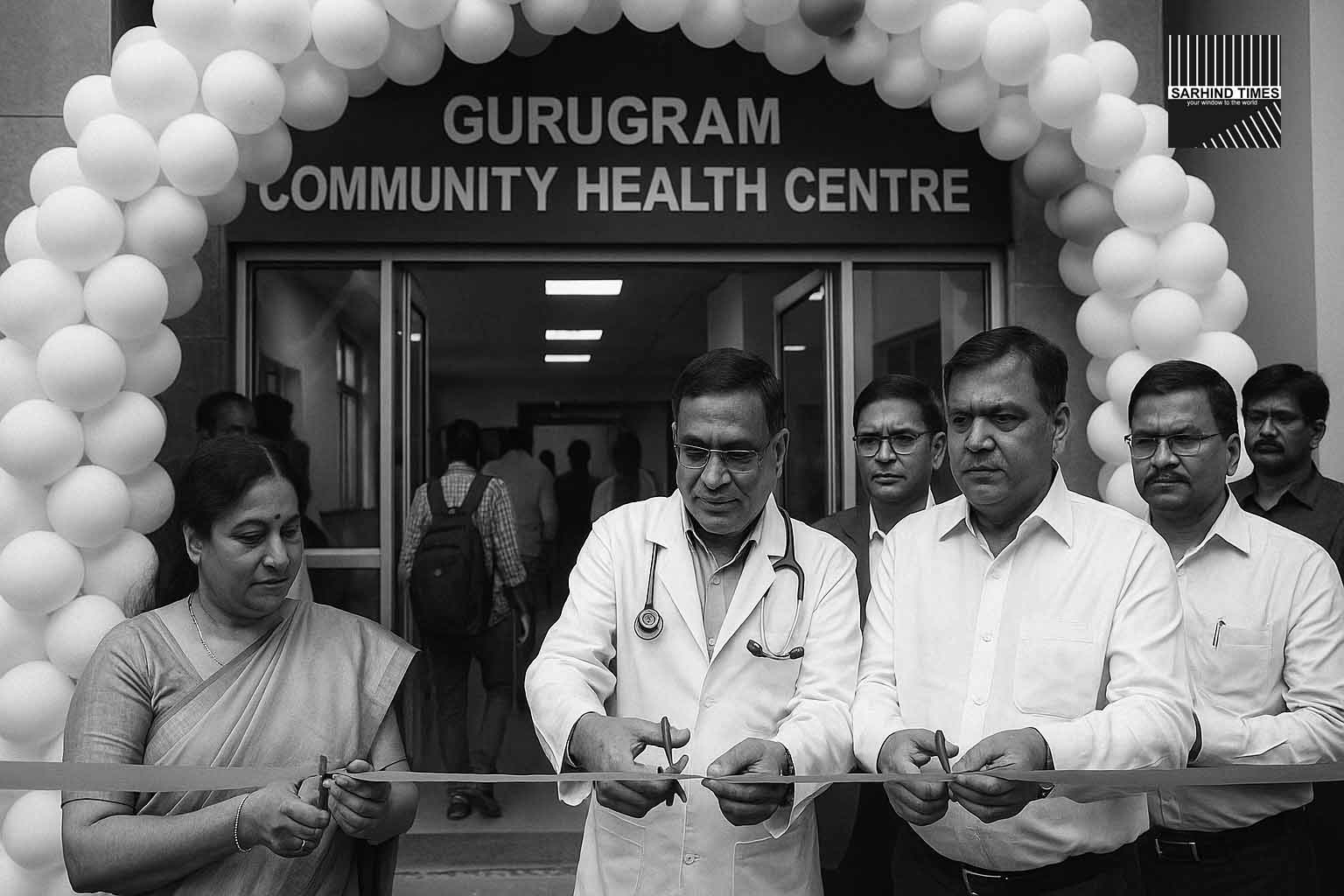
State government inaugurates upgraded primary-care centre aimed at enhancing maternal and child health in Gurugram district
Dateline: Gurugram | 11 November 2025
Summary: The government of Haryana has inaugurated a newly upgraded primary health-care facility in Gurugram, marking a key milestone in the state’s plan to widen healthcare reach. Located in one of the rapidly expanding sectors of the city, the facility is designed to strengthen maternal-child services, non-communicable disease screening and community outreach in a region facing pressures from rapid urban growth.
Why the facility was needed in Gurugram
Gurugram has grown rapidly over the past decade, becoming a major corporate and residential hub. But with fast growth comes health-infrastructure needs: pressures on primary health-care delivery, increasing incidence of lifestyle diseases, and growing numbers of young families and migrant workers. The state government identified this gap and chose a strategically located sector in Gurugram to inaugurate this upgraded public-health centre.
The facility’s location places it within reach of several large residential developments and emerging townships, which commonly lack nearby primary-care units. By situating the clinic here, authorities intend to improve access for underserved pockets, reduce travel distance for routine care, and relieve the burden on tertiary hospitals which are already operating close to capacity.
What the facility offers: services and structure
The health-centre includes the following features:
- A dedicated maternal-and-child-health wing, including antenatal, postnatal and neonatal monitoring facilities.
- Screening units for non-communicable diseases (NCDs) such as hypertension, diabetes and cardiovascular risk, with digital records and link-up to referral hospitals.
- Outreach rooms for mental-health counselling, nutrition education, and community wellness programmes—a first for a state primary health centre in Gurugram.
- Extended hours of operation, with evening clinics and weekend outreach, to cater to working families and those commuting from nearby towns and villages.
- Technological upgrades including tele-consultation booths, digital registration and linkage into the state’s health-information network, enabling faster referrals and record-sharing.
Government officials emphasised that this model is meant to de-congest larger hospitals, ensure early-stage detection of illnesses, and support preventive health in a city where lifestyle, pollution and urban stresses are high.
Policy backdrop: Haryana’s broader health-strategy
The inauguration fits within a larger policy thrust by Haryana’s health authorities to deepen primary-care capacity and target “first-mile” access—especially in fast-growing urban and peri-urban zones. The health department has earmarked funds this fiscal year to open or upgrade ten such centres in key growth-corridor sectors around Gurugram and Faridabad. This aligns with national non-communicable-disease frameworks and the drive to reduce burden on tertiary hospitals.
Officials point out that by improving screening, early intervention and wellness outreach, the state expects to reduce avoidable hospital admissions, manage chronic disease burden better, and improve health-outcomes among working-age populations—an important objective given Gurugram’s role in the national economy.
Implications for residents and workforce
For local residents—families, migrant workers, professionals—a nearby upgraded health centre means access without long travel or high cost. For instance, early screening for hypertension or diabetes at the community level can prevent complications and costly hospital stays later. The centre’s evening hours are beneficial for working people who earlier had to miss work or commute to hospital after hours.
From a workforce perspective, many firms in Gurugram face absenteeism and health-related productivity loss especially from chronic diseases, lifestyle pressures, and air-quality exposure. The health centre helps corporate wellness frameworks by providing easily accessible preventive care, linking local residential zones with workplace-health initiatives.
Community outreach and preventive health angle
A distinct element of the new facility is its emphasis on community outreach and preventive health. The state health department plans regular health camps in residential pockets, schools and workplaces, using this centre as a hub. Topics such as nutrition, obesity prevention, air-pollution risk, mental-wellness and maternal counselling will form part of the monthly calendar.
Such focus is timely. Studies indicate India’s rise in lifestyle disorders—including diabetes, hypertension and cardiovascular disease—are accelerating, particularly in urban zones. Recent data show the nexus of urban living, sedentary behaviour, obesity and younger onset of disease is a mounting challenge. Putting resources at primary level acknowledges that prevention matters as much as cure.
Operational and budgetary signals
The health-centre launch also sends signals about budget priorities and operational strategy. The state government has allocated an initial ₹45 crore to operate the centre for the next two years, while community-wellness programmes receive a separate ₹5 crore. An annual audit and performance-dashboard published by state health will monitor metrics such as patient registration, follow-up rates, referral-success, screening volumes, and community-camp coverage.
Health officials say that this may be a pilot for scale-up across other similar urban growth nodes in Haryana and NCR region, including Faridabad and Panipat. If the pilot succeeds, the state may roll out a tranche of 30 more upgraded centres in the next three years.
Challenges ahead and what to watch
Despite the promise, several implementation risks are real:
- Maintaining staffing and operations: Recruiting and retaining trained personnel—especially specialists for NCD screening and mental-health counselling—will be key.
- Integration with referral hospitals: Primary-level screening must link seamlessly with secondary and tertiary care to ensure early findings translate into timely treatment; otherwise, screening alone will not reduce morbidity.
- Community uptake: Making sure residents use the facility—especially newcomers and migrant populations—will depend on outreach, affordability, and trust-building.
- Continuity and data-tracking: Screening is helpful only if follow-up happens, if records are integrated and if chronic-disease management pathways are sustained over time. Devices alone will not solve that.
What to watch next
Indicators to track over the next 12-18 months include:
- Volume of new patients registered at the centre and proportion coming from nearby underserved residential pockets.
- Number of NCD screenings completed and percentage of early-stage diagnoses identified.
- Referral conversion rate—how many screened patients receive the next stage of care when needed.
- Patient satisfaction, outreach-camp attendance and preventive-wellness session uptake.
- Budget deployment and performance-metrics publishing by the state health department.
Conclusion
The inauguration of the upgraded primary-care health-centre in Gurugram is a welcome step in Haryana’s attempt to align healthcare provisioning with the pressures of rapid urbanisation and lifestyle transitions. By focusing on maternal-child health, NCD screening, community-wellness and extended hours, the facility brings practical improvements into neighbourhoods often overlooked in growth corridors.
But as always, execution will be the differentiator. If staffing, community-uptake and referral-integration are handled well, the centre could become a model from which other cities learn. If not, it risks slipping into another under-used facility in a landscape of tall expectation.
For residents of Gurugram, the message is clear: healthcare is shifting closer to home—and now it’s up to communities to make the shift matter.



+ There are no comments
Add yours