
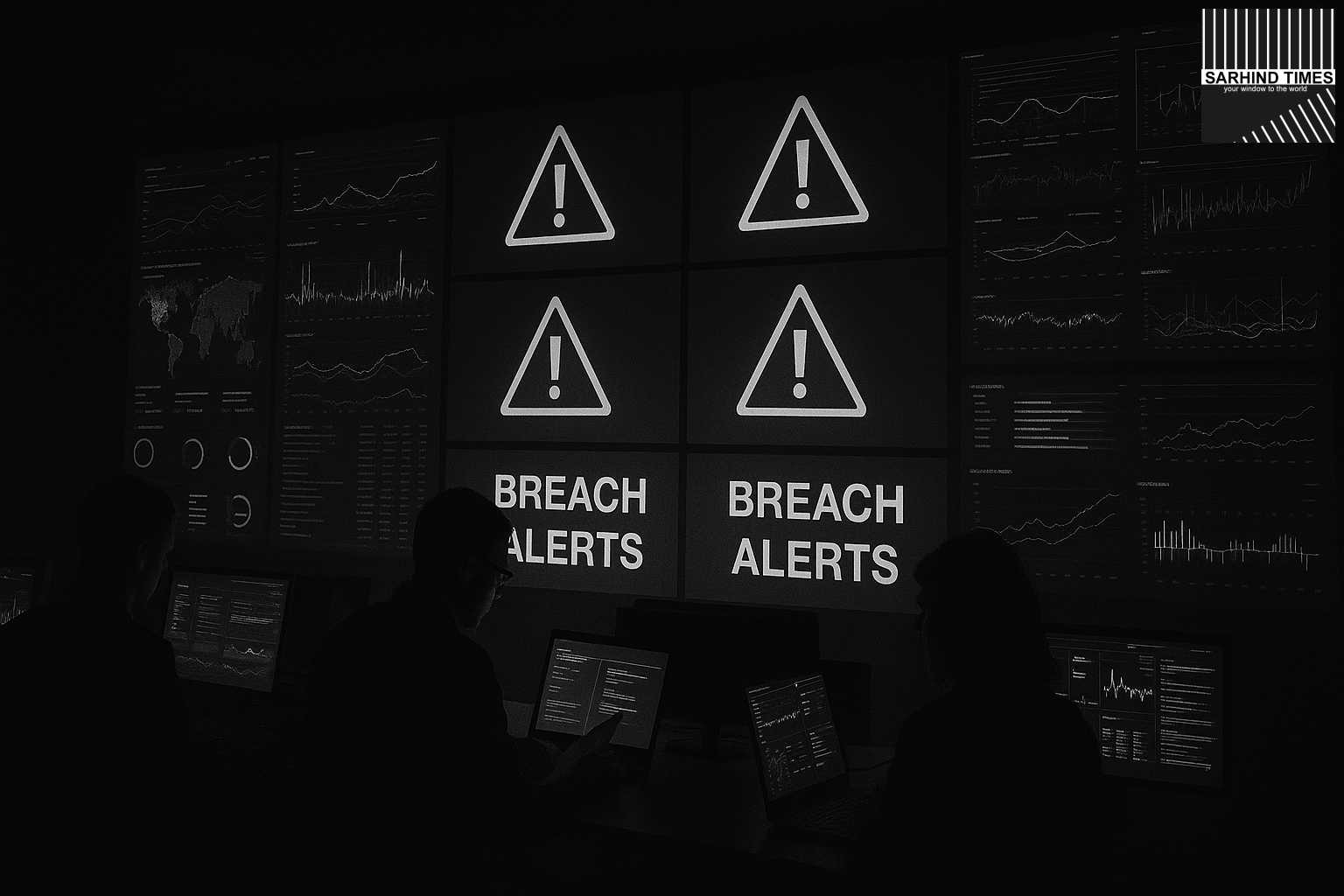
Critical systems disrupted; EU, US, India, and multiple Asian nations activate cyber crisis response units amid fears of coordinated digital warfare
Dateline: Brussels | November 28, 2025
Summary: A large-scale cyberattack struck government networks in 23 countries, disrupting essential services, compromising databases, and triggering an international emergency response effort. Early investigations point to a highly sophisticated threat actor, raising concerns of state-backed involvement.
One of the largest coordinated cyber incidents in recent history
In one of the most significant cyber incidents of the decade, government networks across 23 countries were compromised in a sweeping digital attack that began late Tuesday night. The breach impacted ministries, public-service databases, municipal digital systems, and critical infrastructure monitoring tools, prompting immediate lockdowns and emergency responses across continents.
The European Union’s Cyber Emergency Response Team (EU-CERT) declared the attack “a high-severity global event,” while NATO’s cyber command described the breach as “unprecedented in scale, precision, and tactical execution.”
How the breach unfolded
Initial reports indicate that the attack began through a compromised software update distributed to government institutions across multiple countries. Once installed, the malware created backdoors into sensitive systems and quietly extracted large amounts of data before activating destructive scripts that encrypted servers and disabled authentication systems.
Experts say the malware evaded standard detection protocols, suggesting the involvement of an advanced persistent threat (APT) group with extensive resources.
Which countries were hit
Among the affected nations are several EU member states, the United States, India, Japan, South Korea, Brazil, Australia, and multiple Middle Eastern countries. The full extent of the breach is still being assessed, with cybersecurity agencies releasing hourly bulletins.
Early indications show the attack targeted:
• Government email servers
• Digital identity systems
• Municipal service portals
• Critical infrastructure dashboards
• Defence ministry auxiliary networks
• Public healthcare databases
EU declares “digital state of emergency”
Brussels activated its highest cyber emergency protocol after several member states reported widespread system failures. Emergency coordination centres have been set up to support cross-border response and information sharing.
Officials warned that digital public services such as municipal portals, tax dashboards, and court scheduling systems may remain offline for days.
U.S. cybersecurity teams mobilised
The U.S. Department of Homeland Security confirmed multiple intrusions and activated its Cybersecurity and Infrastructure Security Agency (CISA) rapid response units. Federal agencies were instructed to isolate compromised networks and switch to secure offline systems.
Senior officials briefed the President, citing early evidence that the attack was “strategic and multi-layered,” potentially aimed at intelligence harvesting and disruption of democratic institutions.
India initiates nationwide high alert
India’s CERT-IN raised the cyber threat level after receiving intelligence that several ministries experienced attempted breaches. Although large-scale damage was avoided, officials admitted that some departmental email systems and logistics dashboards experienced disruptions.
New Delhi activated its National Cyber Coordination Centre and instructed state-level CERT teams to run emergency audits of public infrastructure systems.
Potential state-backed involvement suspected
Cybersecurity analysts across Europe and the U.S. believe the attack bears the hallmarks of a well-funded threat actor, possibly a state-backed unit. The scale, speed, and sophistication of the breach point to months of prior reconnaissance.
No group has claimed responsibility, and officials have refrained from naming suspects until forensic evidence is examined.
Critical infrastructure disruptions reported
Multiple countries reported disruptions in:
• Public transportation scheduling
• Hospital appointment systems
• Power-grid monitoring dashboards
• Water treatment facility alerts
• Border control systems
• Local government digital portals
Although no physical infrastructure has been reported damaged, officials fear that compromised dashboards may delay response to unrelated emergencies.
Healthcare databases hit: patient services slowed
Hospitals in at least six countries reported operational delays after patient-registration systems went offline. Doctors reverted to manual recordkeeping as IT teams isolated compromised servers.
Health services stress that no critical support was interrupted, but delays in emergency departments and labs were reported.
Financial markets react with caution
Global financial markets experienced volatility as investors assessed potential risks to digital infrastructure. Banking networks were not directly targeted, but analysts warn that confidence-sensitive sectors may face stress if prolonged uncertainty continues.
Cybersecurity firms saw immediate stock gains, while insurance companies monitored potential surge in cyber-attack claims.
Tech industry scrambles for solutions
Major tech companies deployed emergency engineering teams to help affected governments patch vulnerabilities. Several companies offered temporary free access to advanced intrusion detection tools as part of a coordinated global effort.
Cyber experts emphasised the need for global standards in software supply-chain security to prevent similar incidents.
Diplomatic tensions rise
The attack has intensified geopolitical tensions, with diplomats from multiple countries demanding emergency consultations. Several nations argue that the incident constitutes “digital aggression” and may cross thresholds outlined in international cyber norms.
Experts caution that misattribution can worsen global instability, urging patience until forensic reports are complete.
Public reaction: fear, frustration, and misinformation
News of the attack sparked online panic, with misinformation spreading rapidly on social platforms. Governments urged citizens not to share unverified claims and assured that essential services remain functional despite delays.
Cyber experts urged governments to maintain high transparency to prevent public distrust from worsening.
Long-term implications: the beginning of a new cyber era
Analysts say the incident marks a turning point in global cybersecurity. With governments increasingly reliant on interconnected digital systems, threats of this nature are likely to grow in frequency and complexity.
The attack may accelerate global efforts to strengthen cyber treaties, improve supply-chain security, and invest in cyber defence infrastructure.
What happens next
Investigations are underway across dozens of national agencies. Cyber forensics teams estimate it may take weeks to understand the full extent of the breach, restore compromised systems, and ensure no secondary malware remains.
International cooperation is expected to intensify as nations recognise the shared vulnerability exposed by the attack.
Conclusion: a global wake-up call
The massive cyberattack across 23 countries underscores a stark reality: the world is moving into an era where digital warfare can disrupt governance, threaten critical systems, and destabilise societies as profoundly as physical conflict. As governments race to recover and fortify their defences, one message is clear — collective action will be essential to navigate an increasingly perilous cyber landscape.


+ There are no comments
Add yours