
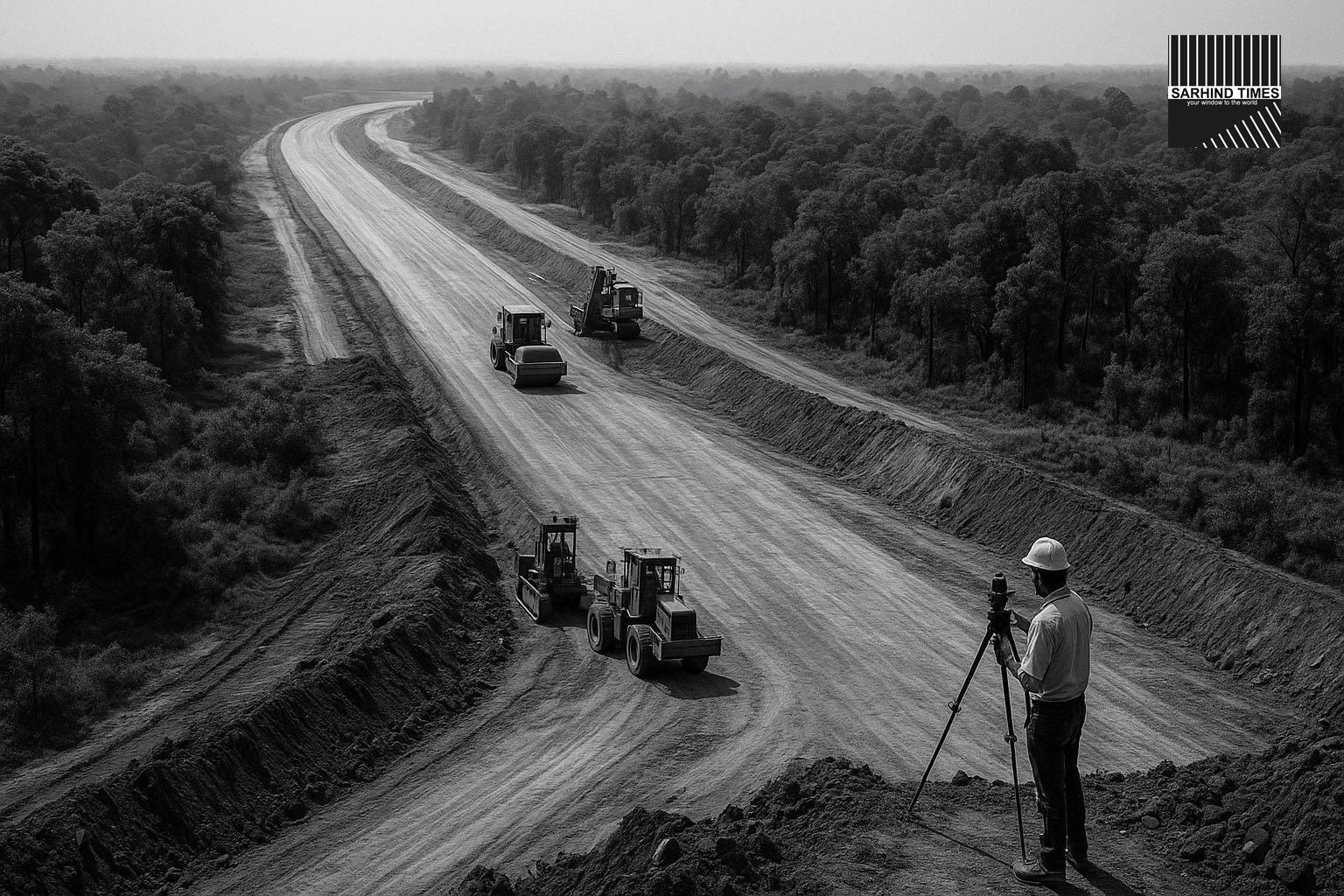
162.6-km corridor to boost connectivity, logistics and economic growth in under-served mining and tribal belt
Dateline: Nagpur | 09 November 2025
Summary: The state government of Nagpur in Maharashtra has approved a ₹3,162.18 crore access-controlled expressway linking Nagpur to Gondia via Bhandara district. The 162.57-kilometre project, to be executed by Maharashtra State Road Development Corporation (MSRDC), is designed to enhance connectivity across the eastern Vidarbha region, reduce travel time, improve freight logistics, generate employment and unlock industrial growth in a region rich in natural resources and mining potential.
Project overview and significance
The Nagpur–Gondia expressway is envisioned as a six-lane, access-controlled corridor covering 162.57 km between Nagpur and Gondia districts in eastern Maharashtra. The project was formally approved through a government resolution on 3 October 2025 and carries a sanctioned cost of ₹3,162.18 crore. Pre-construction surveys and land-acquisition activities are expected to commence imminently, signalling the state’s intent to fast-track the corridor.
Within the route, the alignment will pass through key industrial and mining belt zones including Bhandara district, and will incorporate a 3.7-km link road from Tiroda and a 13.7-km bypass around Gondia. The length and design position this corridor as an extension of the existing Nagpur–Mumbai Expressway (“Samruddhi Mahamarg”) system, thereby strengthening the logistics and connectivity grid in the region.
Officials highlight several motivations behind the project. First, the corridor links agricultural, mining, forest and industrial zones of eastern Vidarbha with domestic and export markets. Second, it is strategically designed to reduce transit times, enhance road-safety through access-control and separation of passenger and freight flows, and alleviate pressure on existing State Highways and National Highways in the region. Third, by unlocking a dedicated infrastructure spine, the alignment aims to stimulate new industrial clusters, logistics parks and value-chain nodes in an area hitherto under-invested compared with western Maharashtra.
Economic and regional development implications
The eastern Vidarbha region (Nagpur–Bhandara–Gondia) is characterised by mineral-rich terrain, forest cover, tribal populations, and relatively lower infrastructure density compared to western Maharashtra. The approved expressway carries the promise of bridging this gap—by reducing transport cost, improving market access for local producers (agriculture, forestry, mineral and MSME sectors) and attracting fresh investment into manufacturing and processing.
A government briefing noted that the corridor could spur new logistics-led employment, warehousing development, ancillary-services growth and cluster formation along its length. For example, per-kilometre freight cost savings (due to higher speed and reduced dwell-time) could enhance competitiveness of rice-mills, forest-produce processors and mineral suppliers based in eastern Maharashtra.
The expressway is also expected to deliver non-economic benefits: improved access to healthcare, education and markets for remote communities; reduction in road-accidents due to better engineering; and environmental mitigation through controlled alignment and forest-corridor planning.
Technical design, funding and execution model
The corridor is planned as an access-controlled expressway with six lanes, median separation, grade-separated junctions, limited at-grade crossings, service roads where required, high-speed design and logistics-friendly geometry. The inclusion of bypass link improvements (3.7 km Tiroda link road, 13.7 km Gondia bypass) shows a nod to integrating feeder-routes with main corridor.
From a funding perspective, the state resolution allocates the major component of the cost; part of it will be structured through loan financing via entities such as Housing and Urban Development Corporation (HUDCO), as per standard practice for large-scale infrastructure in the state. Execution will be through MSRDC and possibly shared-risk models with contractors under Hybrid Annuity or Design-Build-Operate frameworks.
Pre-construction phases—topographical surveys, land acquisition, environmental clearances, utility relocations—are expected to commence immediately and build momentum. The state has indicated preference for fast-track contracting and milestone-linked payments, citing the corridor as a “priority project” for eastern Maharashtra.
Connectivity and network integration
The Nagpur–Gondia expressway complements other national- and state-level corridors. Nagpur is already well-connected via the Samruddhi Mahamarg (Mumbai–Nagpur) and a range of rail links. By improving road connectivity eastwards to Gondia (and further to Gondia-Chandrapur-Gadchiroli in some planning), the new expressway strengthens intra-state mobility and brings the region closer to ports (such as Visakhapatnam), interstate markets (Odisha, Chhattisgarh) and logistics hubs.
For freight movement, this corridor offers a direct route for mineral freight and forest produce to move to eastern or coastal neighbours, bypassing older, slower roads. Passenger mobility improvements will also support commuting, tourism and services.
Importantly, the alignment also integrates with feeder roads and bypasses such as the Gondia bypass, ensuring that small towns along the route do not face bottlenecks or traffic diversion issues.
Environmental and social dimensions
Building infrastructure in a forest- and tribal-rich region requires careful environmental and social planning. The corridor route has been shaped to minimise clearance of dense forest patches, ensure wildlife-crossing provisions, mitigate noise and dust impacts, and manage storm-water discharge. Prior to construction, scheduled tribal hamlets along the corridor are to be consulted, grievance-redress mechanisms set up and land-compensation schemas implemented.
The government has emphasised that the project will comply with environmental clearances, compensate tree-cover loss and ensure re-plantation of native species. Construction will also integrate dust-suppression systems, real-time monitoring of eco-impacts and ring-road alignment in town-zones to reduce surface-impact.
On the social side, the project promises employment opportunities during construction (labour, supply-chain), and post-construction (maintenance centres, auxiliary services). Local small-businesses are set to benefit from improved market access. The state has committed that 20 % of labour for early works will be hired locally, and skill-training centres will be set up in adjacent districts to support workers transitioning into infrastructure jobs.
Challenges and risk factors
Despite its promise, the project faces several execution risks that will need to be managed closely:
- Land-acquisition and utilities relocation: Eastern Vidarbha has hilly terrain, mixed land-ownership (forest, mining, tribal clusters). Ensuring timely compensation and relocation will be critical to avoid delays.
- Forest-clearance and environmental delays: Given the route passes forest-adjacent fabric, obtaining environmental-clearances, mitigation-approvals and wildlife permits may take time if not fast-tracked.
- Cost escalations and funding strain: Large infrastructure projects often face cost overruns due to inflation, scope creep or delays. Maintaining budgetary discipline will be key.
- Right-of-way and local community engagement: Ensuring that affected communities are fairly compensated, consulted and rehabilitated will govern project sustainability and minimise protests.
- Integration with logistics and industrial clusters: Building the corridor is step one—realising its economic potential depends on feeder infrastructure, land-use planning, state‐industrial policy and connectivity to ports and markets. Without those, the corridor may under-perform.
Project-management bodies have emphasised early platforms: the MSRDC has committed to monthly progress reporting, independent audits, milestone-linked payments to contractors and public availability of land-acquisition status. These are positive signals that governance is being actively shaped.
Why this matters beyond Maharashtra
Although this is a state-level project, the Nagpur–Gondia expressway has national relevance. It aligns with India’s push to diversify manufacturing and logistics away from overloaded western corridors to less saturated zones (eastern Maharashtra, central India, the Eastern Ghats belt). By strengthening the corridor in eastern Vidarbha, the project supports decentralised growth, equitable regional development and balanced infrastructure investment.
In freight-terms, the corridor adds to India’s east-west connectivity grid; it complements other large corridors (such as the upcoming Purvanchal Expressway in Uttar Pradesh) and may attract national-level logistics investment. For central-government policy makers, this project exemplifies how state-level roads can contribute to national objectives of supply-chain-diversification.
Furthermore, for residents, improved connectivity means better access to markets, healthcare, education and services. For the growing economy of eastern Maharashtra, which often receives less attention than the western belt, this expressway may be a game-changer.
Next steps and implementation timeline
Following the formal approval, the immediate tasks include tendering of major construction packages, contract award for the link roads (Tiroda link and Gondia bypass), initiation of land-acquisition and clearing of utility encroachments. The state has set internal targets: awarding the first packages by December 2025, commencing earthworks in Q1 2026 and achieving first-link operational status in 2028, with full corridor completion by 2030 (indicative timeline).
The MSRDC has indicated bi-monthly reporting dashboards will be published and an investor-forum for ancillary cluster development will be convened in Q2 2026. The state’s industries minister has flagged the corridor as a “priority for the decade” and promised policy support (industrial parks aligned with the corridor, logistics nodal centres, skill-centres and land-banking).
Conclusion
The Nagpur–Gondia access-controlled expressway is more than a road. It is a statement of intent from Maharashtra: to spread infrastructure, investment and connectivity beyond its western economic heart-belt into its under-served eastern region. If executed well, the corridor can rebalance regional growth, improve connectivity, deepen logistics networks and generate jobs.
But the deliverables matter. Governance, community inclusion, environmental sensitivity and integration with broader economic ecosystems will determine whether this becomes infrastructure with impact, not just a ribbon on the map.
For business, policy-makers and residents alike, this expressway may mark the moment when eastern Vidarbha steps out of the shadows and into India’s infrastructure spotlight.



+ There are no comments
Add yours