
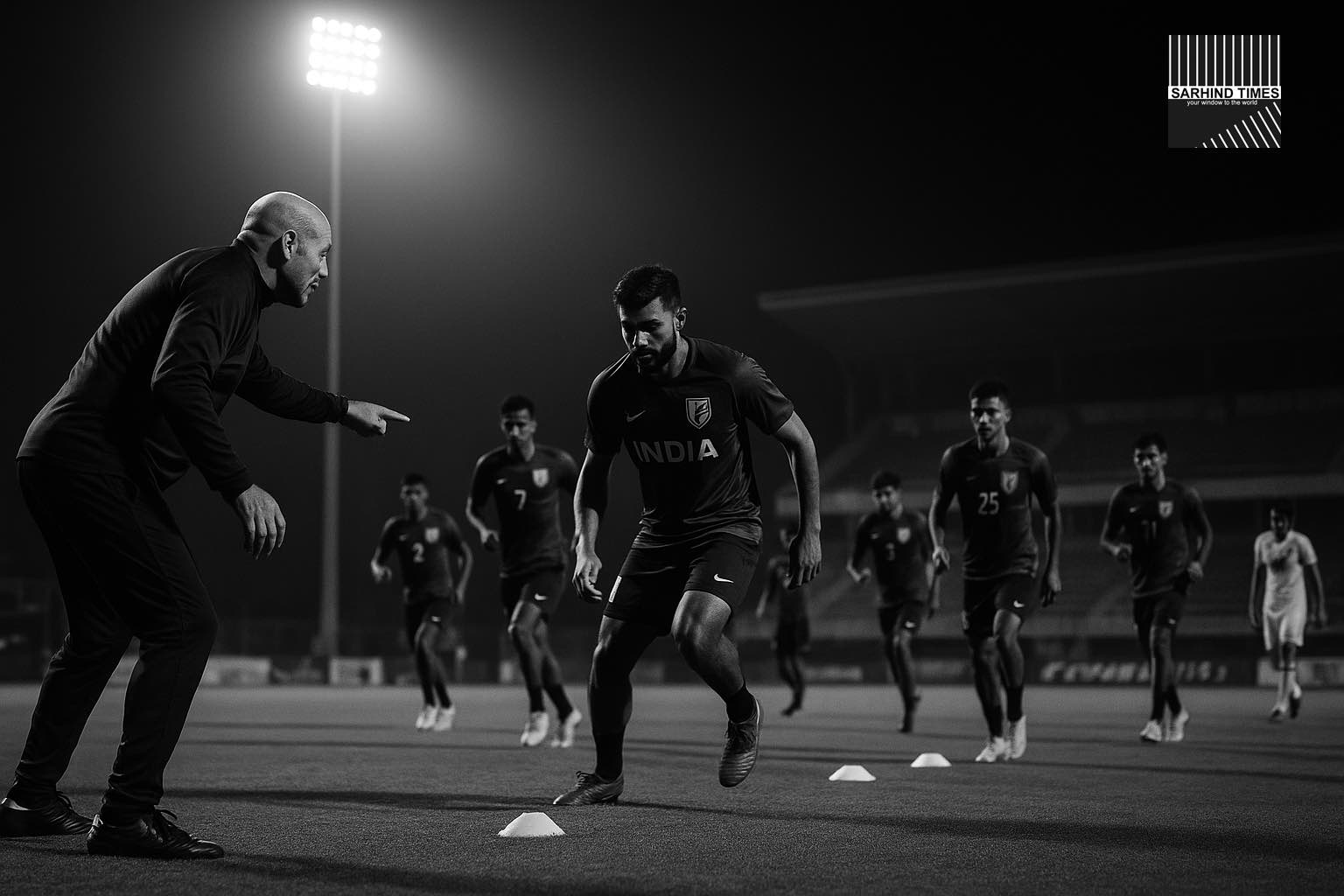
Historic home-grown appointment signals new chapter for the Blue Tigers as India’s football leadership shifts to Indian coaching talent
Dateline: New Delhi | November 7 2025
Summary: The All India Football Federation (AIFF) has appointed Khalid Jamil as head coach of the senior men’s national team, making him the first Indian to hold the role in roughly thirteen years. The decision reflects a strategic pivot toward Indian coaching talent as India’s football ecosystem seeks a fresh start in global and regional competitions.
A milestone decision in Indian football leadership
The AIFF formally announced the appointment of Khalid Jamil as the new head coach of the senior men’s national football team on 1 August 2025. He was selected by the AIFF Executive Committee on the recommendation of the Technical Committee after evaluation of three shortlisted candidates. Jamil replaces the outgoing coach and becomes the first Indian in over a decade to assume the role.
The decision has been described by the federation as part of a broader roadmap to revamp India’s national-team approach—emphasising familiarity with the domestic player pool, stronger alignment with the Indian football ecosystem, and improved continuity and integration.
Why Jamil was chosen: credentials and context
Khalid Jamil brings considerable domestic experience to the job. As a former Indian international midfielder (with 40 caps for the national side) he has transitioned into coaching and achieved notable domestic success—including a landmark I-League title with Aizawl FC in the 2016-17 season and strong performances in the Indian Super League (ISL). His reputation for working with Indian players and understanding of the local environment were key factors in his selection.
In its evaluation, the Technical Committee underscored that India had previously achieved higher FIFA rankings under Indian coaches, and that giving domestic coaches opportunities was central to long-term development. The Executive Committee’s decision aligned with that view, favouring a home-grown coach over foreign options.
Immediate tasks and strategic challenges ahead
As Jamil steps into his new role, he inherits several immediate challenges:
– Restoring confidence and momentum in the national team after under-whelming recent results in qualifiers and regional tournaments.
– Integrating younger talent with experienced players to build a team capable of competing regionally and globally.
– Improving goal-scoring output and tactical coherence — a longstanding issue for the national side.
– Building a defined playing philosophy, establishing a stable back-room structure, and strengthening scouting, preparation and match-readiness.
– Preparing for upcoming important fixtures such as the CAFA Nations Cup and the next round of Asian Cup/World Cup qualifiers, with limited time for transitional adjustments.
Jamil’s first assignments are set to test his readiness, as the team will participate in regional tournaments and face significant qualification fixtures within the next year. His domestic experience is expected to ease the transition and enable faster implementation of plans.
Implications for Indian football’s broader trajectory
The appointment of a domestic coach at the national level marks more than just a personnel change—it signals a philosophical shift. For years, Indian football has looked abroad for technical leadership; moving to an Indian coach reflects a belief in building internal capacity, continuity and cultural alignment.
This may yield multiple benefits:
– A closer alignment between the national team and domestic leagues (I-League, ISL), enabling smoother player transition and development pathways.
– Enhanced motivation for Indian coaches and greater investment in coach-education programmes, creating a stronger overall coaching ecosystem.
– A stronger sense of national identity and connection between the team and its supporters, potentially energising fan-engagement and media interest.
At the same time, the move carries expectations: success or visible progress in the coming months will be closely watched by stakeholders, fans and media. A disappointing run could raise questions about whether domestic appointment was the right strategy or whether further structural changes are required.
Stakeholder reactions and support signals
Reactions to Jamil’s appointment have been generally positive: senior figures in Indian football and former players expressed optimism that the domestic-coach model could inject fresh energy. Some also noted the symbolic value of returning to an Indian head coach after many years.
At the domestic club level, Jamshedpur FC (where Jamil coached prior) confirmed his departure and extended best-wishes, signalling a smooth transition. The AIFF has emphasised that the federation and its technical division will provide robust support, including expanded training camps, enhanced analytics, and improved preparation resources under the new coach.
Looking ahead: benchmarks and future outlook
Several milestones will serve as checkpoints for the success of this appointment:
– Short-term: Competitive results in the immediate regional tournaments and qualifiers, demonstration of improved team cohesion, tactical clarity and goal-scoring improvement.
– Medium-term: Qualifying for major international tournaments (Asian Cup, World Cup qualifiers) with credible performances, and an upward trajectory in FIFA rankings.
– Long-term: Building a sustainable national-team pipeline integrating youth development, coach education, domestic club alignment and talent transition, culminating in India being competitive at world level.
The underlying question is whether the domestic-coach strategy can produce tangible uplift in performance and how quickly. If successful, it could reshape Indian football’s long-term strategy; if not, it may prompt further reforms.
Conclusion
The appointment of Khalid Jamil as head coach of the Indian senior men’s national football team is a landmark moment in Indian football. It marks a renewed focus on domestic coaching talent, cultural and tactical alignment with Indian players, and an attempt to chart a fresh course for the Blue Tigers on the global stage.
With the clock ticking on regional tournaments and qualification cycles, the next few months will be critical. Success will require not only passion and planning from Jamil, but also structural support, patience, and alignment across Indian football’s ecosystem—from clubs and coaches through to the national federation.
As Indian football looks to rekindle hope and build momentum, the stage is now set—and the first act has begun.



+ There are no comments
Add yours