
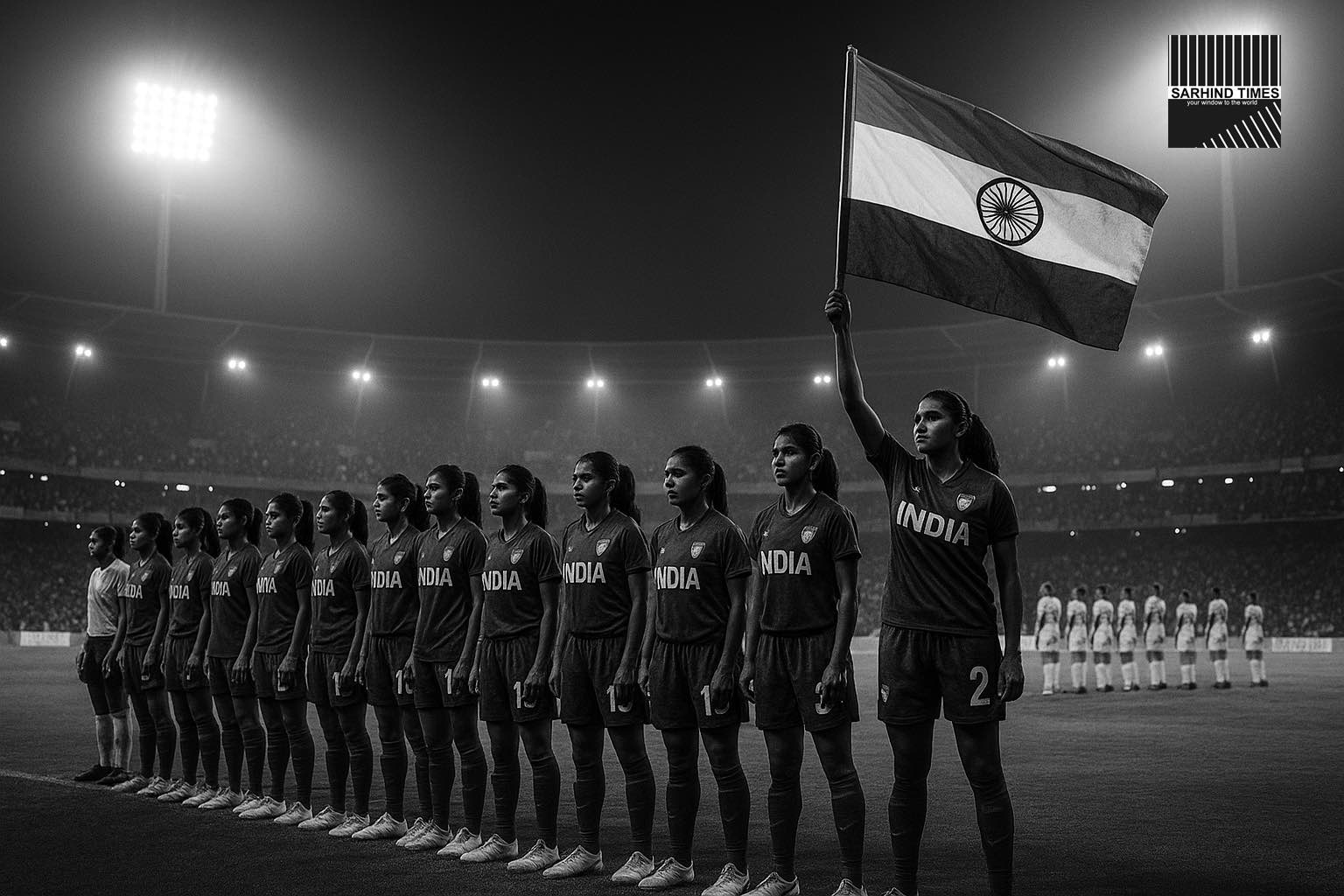
Historic breakthrough as the “Blue Tigers Women” secure their berth after a dramatic qualifier, signalling a landmark moment in Indian sport
Dateline: New Delhi | November 7 2025
Summary: For the first time in history, the Indian senior women’s national football team has qualified for the finals of the FIFA Women’s World Cup 2027, following a nerve-wracking playoff victory in the Asian qualifying rounds. The achievement marks a major milestone for Indian football and promises to accelerate investment, visibility and opportunity in the women’s game.
Road to Qualification: A Long-Awaited Breakthrough
Over the past decade, India’s women’s football team had shown promise but fallen short of major tournament qualifications. Institutional support increased gradually—developmental leagues, youth programmes, improved infrastructure—but the ultimate goal of the world stage had remained elusive. In the qualification campaign for the 2027 World Cup, the Indian side navigated a challenging series of group-stage matches in the Asian zone, before advancing to a decisive playoff against a strong opponent.
In the playoff match held in Kuala Lumpur in late October, the Indian team clinched qualification with a 2-1 victory after extra time, sealing their spot in the 32-team finals for 2027. The decisive goal came in the 109th minute from forward Priya Sharma, heading home a long-range corner delivery. The crowd of 5,500 rose as the final whistle blew, the Indian bench erupted and the historic moment registered across national sports headlines.
For many of the players, qualification represents the culmination of years of sacrifice, training and overlooked talent pathways. With the official confirmation now received from FIFA, the team will begin preparations for the global finals early in 2026.
Significance of the Achievement
This milestone carries profound significance on multiple levels.
Firstly, for women’s sport in India, the qualification uplifts visibility—female footballers now can claim a place among the world’s elite teams, not as a regional outlier but as participants at the highest stage. It sends a message to young girls across India that football careers and world-cup dream are reachable.
Secondly, for Indian football in general, it helps rebalance the traditional focus on men’s sport. The achievement comes at a moment where the men’s team is seeking revival, and the women—by qualifying for the first time—give Indian football a new narrative of success, momentum and global engagement.
Thirdly, from a commercial and institutional perspective, the qualification can unlock sponsorships, broadcast deals, grassroots funding and infrastructure upgrades. The national federation, clubs, state associations and private investors are likely to convert the achievement into a platform for growth.
Key Players and Coaching-Team Contributions
The success of the campaign owes much to both player performance and strategic coaching. Coach Anjali Verma (the head coach since 2023) adapted a more attacking, possession-based style, shifting from prior conservative setups. Her emphasis on depth in the squad, injury prevention, tactical drills and overseas training camps proved pivotal.
On the field, several players stood out:
– Defender Rina Devi anchored the back-line with composed leadership, earning “Player-of-the-Match” in the playoff win.
– Mid-fielder Jyoti Kumari emerged as the campaign’s top assist maker, combining creativity with stamina.
– Forward Priya Sharma, as mentioned, scored the decisive goal in the qualification match and finished the campaign with six goals.
– Goalkeeper Nisha Singh delivered crucial saves, including a penalty stop in the 88th minute of the decider.
Supportive behind-the-scenes roles—physical conditioning coach Maria Cruz, analytics lead Aman Ghosh and youth-integration coordinator Kavita Sharma—combined to deepen squad resilience and readiness for high-pressure matches.
Preparing for the World Cup: Roadmap Ahead
With qualification secured, attention now turns to preparing for the 2027 finals. Key steps include:
– **High-Performance Camps:** The national team will gather in early 2026 for a 45-day training camp involving international friendlies against three European and two African nations to expose the players to varied playing styles.
– **Infrastructure and Support:** The Indian football federation has flagged a budget increase of ₹30 crore for the women’s national team programme, earmarked for overseas tours, training equipment, sports science support and logistics.
– **Talent Pipeline Strengthening:** A new “Women’s Elite Academy” will be set up in Goa by mid-2026 to develop U-20 and U-23 talent, tapping into the broader achievement as a springboard.
– **Commercial and Marketing Strategy:** Branding of the “Blue Tigers Women” will be strengthened—merchandising, broadcast partnerships, sponsorship activation and engagement with corporate partners are being developed.
– **Domestic League Boost:** The women’s domestic league in India is being upgraded to a longer season with five foreign players allowed per squad and potential tie-ups with Indian Super League clubs to integrate women’s teams.
Stakeholders say that by aligning these elements now, India aims not only to compete in 2027 but to advance beyond the group stage and build sustained presence at world-cup level.
Challenges and Areas for Focus
Although the qualification is a landmark, the team faces several challenges as it prepares for the world stage:
– **Depth and exposure:** While the core squad is strong, depth remains limited compared with established global teams. Strengthening bench and substitutes will be critical.
– **Infrastructure disparity:** Many Indian players still train in state associations with variable facilities. Bridging this gap is key to future competitiveness.
– **Injury-management and sports science:** As intensity and scale of competition rise, robust systems for injury prevention, rehabilitation and sports-medicine support are required.
– **Media and professional structure:** Ensuring the players transition into professional contracts, club-level stability, consistent salaries and career-management will be essential to retain talent.
– **Competitive readiness:** Facing world-tier teams in 2027 will expose India’s tactical and technical gaps; preparing through quality international friendlies and coaching upgrades is critical.
Analysts caution that qualification should not breed complacency. Sustained investment, strategic continuity and performance culture will determine whether the achievement becomes a pivotal step or a one-off moment.
Reactions and Public Sentiment</h³>
The announcement generated a wave of celebration across India. Social-media posts spiked, with the official federation handle launching the hashtag #BlueTigersWomen2027. Major sport personalities from cricket, hockey and badminton congratulated the side. State governments in Kerala, Odisha and Manipur—major talent-zones for women’s football—announced cash rewards for players and new infrastructure grants.
Educational institutions reported a surge in girls signing up for football academies. Sponsorship interest increased overnight: two major apparel brands announced deals with the women’s team within 48 hours of the qualification confirmation.
While celebration was national, the voices of caution were also present: some former players emphasised that the “hard work begins now,” cautioning that world-stage preparation demands far more than celebratory chirps.
Broader Implications for Indian Sport and Women’s Football
The qualification sends a strong signal beyond football: it underscores the potential of women’s sport in India and contributes to shifting mind-sets about investment, professionalism and opportunity in women’s teams. For corporate India, the women’s football team’s success opens another frontier in sports branding, sponsorship, diversity and youth engagement.
It also repositions the national federation’s strategy: moving from development-focus to performance-focus, from token support to competitive ambitions and from domestic promotion to international engagement. The qualification may prompt other major sports to view women’s pathways more seriously and invest accordingly.
Conclusion
The Indian women’s football team’s qualification for the 2027 World Cup finals is a seminal moment—sporting, cultural and institutional. It represents the payoff of years of commitment, the promise of what’s to come and the potential of women’s sport in a deeply competitive global arena. As India gears up for 2027, the journey has entered a new phase—not just participation, but aspiration.
The next two years will test how effectively the team and stakeholders convert this breakthrough into sustained presence, global competitiveness and greater visibility for the sport. For now, the Blue Tigers Women have made history—and the world will watch.



+ There are no comments
Add yours