
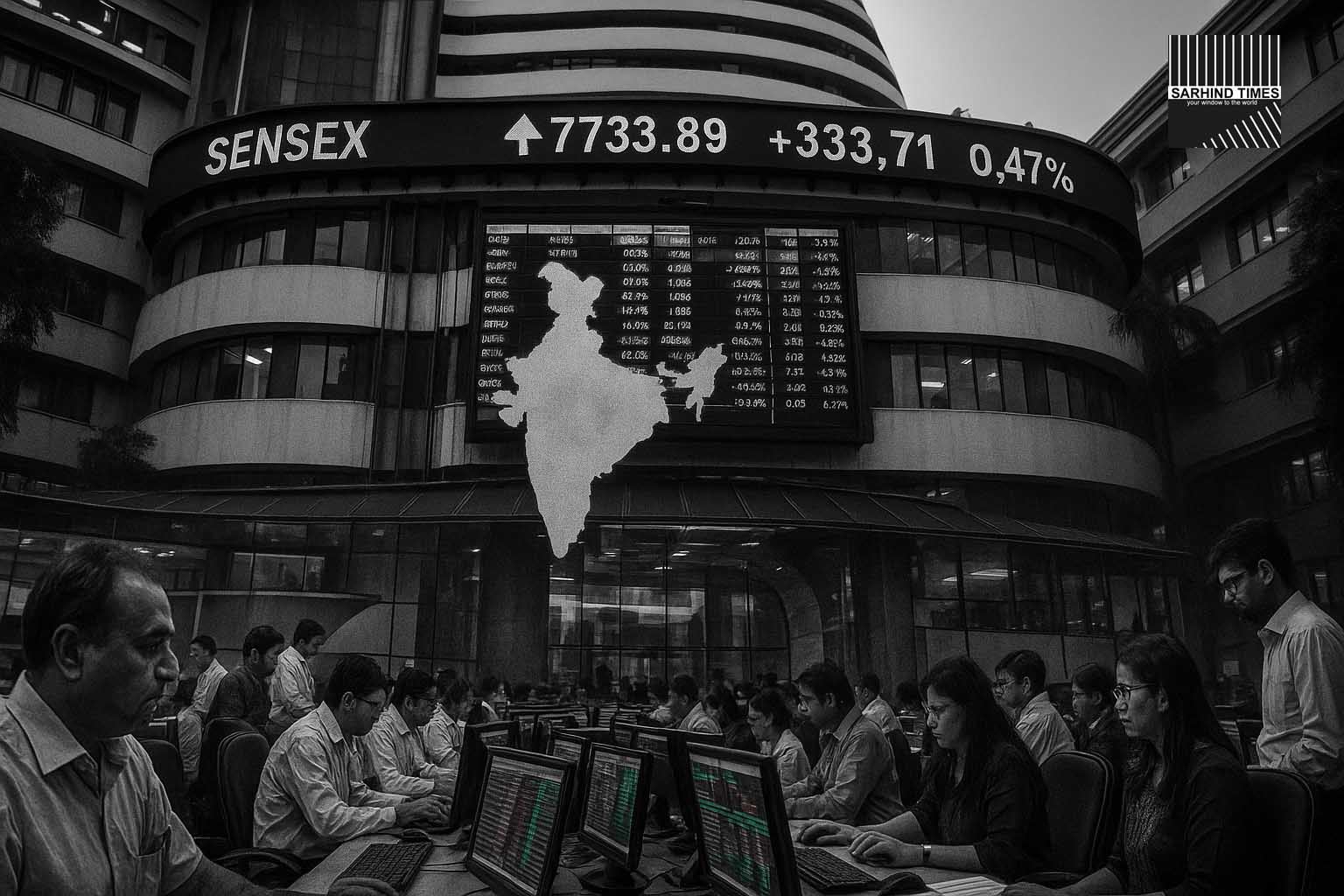
Benchmark indices recover and foreign-buying returns, yet only a handful of stocks carry the rally and structural risks persist
Dateline: New Delhi | November 12, 2025
Summary: India’s benchmark equity indices have shown renewed life in early November, with the Nifty 50 crossing 25,700 and the BSE Sensex reclaiming the 83,800 level. However, analysts caution that the market’s performance is narrow — just a few stocks are driving most of the gains — and overall momentum remains contingent on earnings, valuation discipline and foreign investor flows.
The recent market rebound
Indian equity markets ended higher on November 11, with the Sensex up around 336 points to close at 83,871 and the Nifty 50 rising about 120 points to 25,695. The upswing follows earlier weakness and reflects a measure of regained optimism among domestic investors and foreign portfolio flows. Global cues played a supporting role — the resolution of the U.S. federal government shutdown and renewed optimism in developed-market growth lifted risk appetite.For context, in October the Indian market posted one of its better monthly performances of the year, with the Nifty advancing roughly 4.5 % and the Sensex up about 4.6 %.That said, the year-to-date outcome remains modest — the Nifty is up just around 5 % in 2025, making India one of the worst-performing major markets globally.The rebound is encouraging in headline terms, but the underlying picture is more nuanced.
What’s driving the gains?
Several interlocking factors are helping explain the market recovery:
- Global sentiment upgrade: The end of the U.S. government shutdown and signs of stabilising global growth boosted investor risk appetite, which in turn helped Indian equities.
- Sector leadership: Gains in IT, autos and metals have been central to the uptick. For example, stocks such as major auto-makers and large tech exporters led the rally, reflecting improved end-market demand and export prospects.
- Improved earnings and margin outlook: Analysts at HSBC point to the potential for an earnings surprise in 2026, driven by margin expansion, better asset quality and renewed investor interest.
- Foreign portfolio investment (FPI) return: With global yields stabilising and Indian valuations looking relatively reasonable, foreign flows are inching back in, supporting broader market structure.
The warning signals: Narrow rally and fragile breadth
Beneath the surface though, the market’s strength comes with important caveats. The lead is concentrated. As noted by analysts from ASK Investment Managers, only 26 stocks accounted for nearly 60 % of the gains in the BSE 500 in October—indicating that the rally is broad in index terms but narrow in participation.
This implies several risk dynamics:
- If the leadership stocks were to falter, the rest of the market may struggle to follow.
- Mid-cap and small-cap stocks are underperforming or trading with lower conviction despite the headline indices moving up.
- Retail investor participation and breadth metrics are yet to show robust strength; accumulation is concentrated. This increases vulnerability to momentum reversal or profit-booking
Valuation and return expectations
On valuation fronts, Indian equities are not cheap. A number of large-cap names trade at elevated multiples, especially given the moderate growth environment and global uncertainties. The subdued YTD return of 5% despite favourable macro signals highlights the challenge—investors are questioning whether earnings growth justifies current prices.
While global banks like Goldman Sachs have upgraded India’s equity outlook to “overweight” and set Nifty end-2026 targets around 29,000, achieving that will require execution on growth, reform and corporate earnings.
Sectoral breakdown and themes to watch
Given the structure of the rally, several sector-themes stand out for both opportunity and risk:
IT & Exports
Tech exporters benefit from global recovery and the weak rupee, making them favourable. However, global competitiveness, margin pressure and visa/regulatory risks remain.
Automotive & Capital Goods
Strong domestic demand, supply-chain localisation and export incentives are positives. That said, commodity inflation and input-cost cyclicality need monitoring.
Financials & Credit Cycle
While banks and NBFCs are getting some relief in asset-quality, loan growth remains patchy, and margins are under pressure in a high-rate environment.
Metals & Materials
With global commodity demand picking up, metals companies are in focus. But cyclicality and regulatory risks loom large.
Risks on the horizon
Several headwinds could limit further upside or trigger setbacks:
- Earnings hiccups: If companies fail to deliver growth or show margin compression (due to inflation, input costs or global demand softness), investor sentiment may regress.
- Liquidity & interest-rate risk: India is not insulated from global rate shocks; a renewed tightening cycle or foreign-outflow reversal could hit equities sharply.
- Over-reliance on limited stocks: Because the rally is narrow, risk of correction is elevated if a few large names under-perform.
- Structural reform fatigue: Reform momentum (labour, land, finance) is vital for broad-based growth; lag here may dampen long-term returns.
- Global trade & geopolitics: India’s export exposed sectors may suffer if global demand softens, trade tensions rise or supply-chain disruptions occur.
Implications for investors, companies and policy-makers
For investors, the current state calls for selective optimism but prudent positioning. Some practical considerations:
- Focus on quality and leadership stocks: Given the narrow rally, backing companies with strong earnings visibility, corporate governance and export potential may reduce risk.
- Diversify beyond the headline indices: Consider mid- and small-cap segments only where fundamentals are solid and valuations reasonable—breadth remains weak.
- Monitor liquidity flows: Alerts on foreign-institutional investor (FII) behaviour, derivatives open interest, and sector flows are key in the current environment.
- Avoid chasing valuation extremes: With sentiment improved, many stocks may price in expectations. Patience may yield better entry points with budget- or reform-driven triggers.
For companies, this environment presents both opportunity and challenge. A supportive sentiment backdrop means they can push for growth, expansion, globalisation and exports. But this must be backed by operational execution, margin discipline and transparent communication. For policy-makers, the clear call is to sustain reform momentum, broaden the tax and credit base, accelerate capital-market deepening and address sectoral imbalances so that market gains become inclusive.
What to look out for in the next 6-12 months
Key indicators to watch include:
- Quarterly corporate earnings trends (especially Q3 of fiscal year 2025-26) and margin surprises.
- Foreign-institution flows into India—whether this is a sustained return or just a transient bounce.
- Breakout of the rally into broader segments: mid-cap, small-cap, domestic investor participation.
- Macro-data: real GDP growth, inflation, loan growth, non-performing assets and global trade indices.
- Policy triggers: Budget announcements, regulatory changes, listings and capital-market reforms.
Conclusion
India’s equity markets have handed investors a reprieve from earlier inertia—indices are moving higher, optimism is creeping back, and policy/investor flow conditions are favourable. Yet beneath the surface lurks a cautionary note: the rally isn’t broad-based, earnings growth remains the central pivot, and external shocks (global rate hikes, trade disruptions) remain capable of denting sentiment. Investors, companies and regulators alike must recognise that the next leg of the bull market will require more than just headline numbers—it will demand sustained structural growth, inclusive participation, and governance discipline. If India can deliver on those fronts, the outlook may brighten significantly; if not, the market risks reverting to a range-bound or volatile state. Until then, the message is: like any rebound, this one deserves respect—and a healthy dose of caution.



+ There are no comments
Add yours