
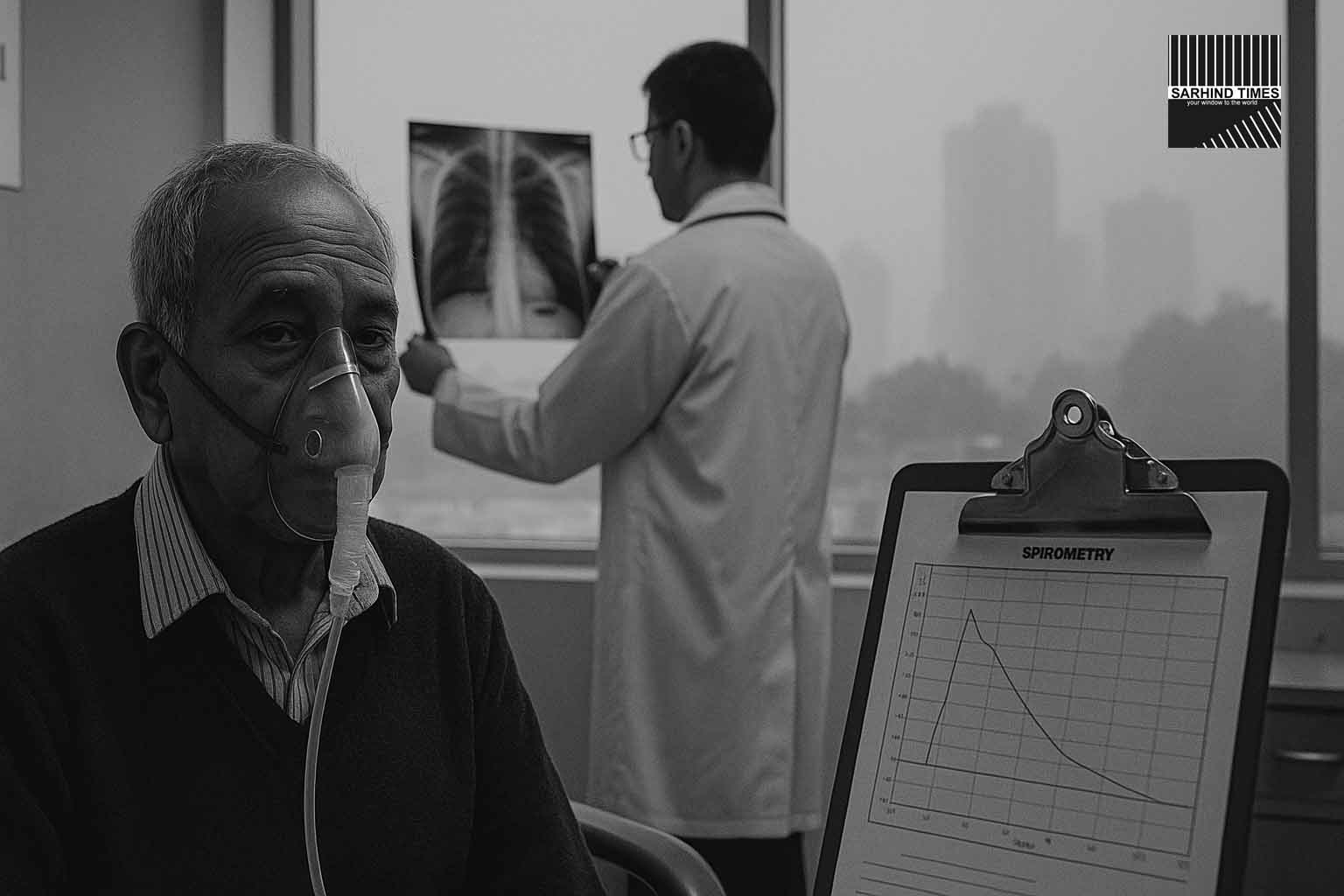
Experts warn of mounting burden of chronic obstructive pulmonary disease ahead of winter smog season
Dateline: New Delhi | 25 November 2025
Summary: A new analysis reveals that Chronic Obstructive Pulmonary Disease (COPD) is rising dramatically across India — increasingly affecting nonsmokers, women and younger populations. With environmental and indoor-air risks mounting, the disease now overtakes heart disease as a leading cause of death in some states. Public health systems face a convergence of winter pollution, under-diagnosis and treatment gaps.
What New Data Reveals: COPD No Longer Only a Smoker’s Disease
In India, the conventional understanding of COPD has long been tied to older male smokers. But recent reporting and health-analysis articles show a startling shift: the condition now affects large numbers of younger adults, women, and people with minimal smoking history. One article highlighted that in several states COPD is “now emerging as a major cause of death, sometimes even surpassing heart disease.”
The implication is clear: the bulk of India’s lung-disease burden lies largely hidden. Patients often present late, with irreversible damage already done. The layering of multiple risk factors—air pollution, biomass fuel exposure, occupational dust, indoor cooking smoke, and winter smog—has turned India’s lung disease profile into something vastly more complex than just “smoker’s cough”.
Why COPD Is Now Rising: Multiple Risk Drivers Collide
A number of inter-linked factors are accelerating the COPD burden:
- Air pollution and winter smog: The deterioration in ambient air quality across urban India—especially in winter—adds a chronic assault on lung health. Fine particulates (PM2.5) penetrate deep into lung tissues, triggering inflammation and long-term damage.
- Indoor biomass and fuel combustion: Many Indian households continue to rely on wood, charcoal or crop-residue burning inside poorly ventilated kitchens. Women and children living in such settings accrue lung damage over years—even without smoking.
- Occupational and environmental dust exposure: Construction, mining, manufacturing, and urban traffic expose workers to dust, chemical fumes and poor ventilation, all contributing to lung-function decline.
- Delayed diagnosis and low awareness: COPD symptoms often begin as chronic cough or breathlessness—which are normalised in polluted cities. Diagnosis is delayed and many patients are treated for asthma or other conditions instead of being screened for COPD.
The “Winter Effect”: Why This Moment Matters
As India enters the winter months—with dropping temperatures, inversion layers and intensifying smog—lung disease risk spikes significantly. COPD patients face higher rates of exacerbation, hospitalisation and mortality. But the issue now affects a wider base than earlier: non-smokers and younger adults are more vulnerable.
Health experts warn that winter 2025 could be especially challenging given that ambient air-quality data already show severe deterioration in many cities. In this context, COPD looms as an under-acknowledged public-health crisis.
State-Wise Burden and Emerging Trends
While comprehensive national COPD data remains hard to compile, regional analyses offer insight. States such as Uttar Pradesh, Bihar, Madhya Pradesh and Odisha report large numbers of patients with chronic respiratory symptoms but inadequate diagnosis. Urban states such as Delhi, Haryana and West Bengal report rising hospitalisations during winter months—often attributed to “smog-related bronchitis” but increasingly identified as COPD deterioration.
One health-reporting piece noted: “For years, COPD was seen as a condition that mainly affected older smokers. That picture has changed completely now.” In other words, the disease’s epidemiology in India is shifting.
Clinical Implications: Why This Matters for Patients
From a clinical perspective, the rise in COPD among non-smokers and women should trigger several urgent actions:
- Screening programmes: Healthcare systems need to expand spirometry use in primary care settings and not restrict testing only to heavy smokers.
- Early interventions: Initiating inhaler therapy, pulmonary rehabilitation, vaccination (influenza and pneumococcus) and indoor-air improvement for high-risk individuals.
- Public education: Changing perceptions so that chronic breathlessness or persistent cough is no longer ignored or normalised.
- Air-quality regulation: Ensuring cleaner indoor and outdoor air becomes a core part of lung-health policy—ventilation, fuel transition, dust mitigation.
Health-System Preparedness: Are We Ready?
The sheer scale of COPD poses a major challenge for India’s health system. Compared to western countries, public awareness is low; diagnostics infrastructure is limited; and rural facilities often lack spirometers or respiratory specialists. Many doctors continue to treat persistent cough as generic bronchitis rather than refer to lungfunction testing.
In cities the burden is compounded by pollution and an aging population. But the shift to younger non-smokers means that even working-age adults are at risk, potentially affecting labour productivity, healthcare costs and government insurance schemes.
Societal and Economic Cost: The Bigger Picture</ >
The economic burden of COPD extends beyond direct medical costs. Frequent hospitalisations, missed workdays, reduced productivity and early retirement all stamp an indirect cost. When younger non-smokers become ill, families are impacted financially and socially.
For India’s ambition of high-growth economy and expanding workforce, rising chronic lung disease presents a drag unless mitigated. Think of a workforce where outdoor air is toxic, indoor kitchens silent killers and lung health ignored until advanced. That is not just an individual problem—it is a systemic risk.
Case Studies: From Urban Commuters to Rural Women</ >
Consider two hypothetical but representative cases:
Case A: A 38-year-old Delhi office worker, non-smoker, uses public transport and wears no mask for years. He begins to experience breathlessness climbing stairs. Dismissed as “getting older”. Two years later he is diagnosed with moderate COPD with partially irreversible lung damage.
Case B: A 29-year-old woman in Uttar Pradesh cooking with wood inside a poorly ventilated hut, exposed to biomass smoke through her young adulthood. She develops chronic cough and seasonal breathlessness. At age 35 she is diagnosed with severe COPD and struggles to continue full-time farming work.
These two cases underline how COPD is no longer just a smoker’s disease—it is a disease of exposure, delay and neglect in India.
Policy Response & Where to Focus</
To address this emerging epidemic, policy makers should prioritise:
- National COPD guidelines: Incorporate non-smoker variants, rural exposures, biomass fuel exposure and pollution context into treatment protocols.
- Surveillance mechanisms: Strengthen district-level reporting of all chronic respiratory disease cases and integrate with air-quality, occupational health and epidemiology data.
- Infrastructure investment: Ensure primary health centres have basic spirometry, inhaler availability and referral mechanisms for advanced care.
- Transition to clean fuel and ventilation programmes: Expand access to LPG/electric cooking, retrofit ventilation in slums/huts, regulate industrial and construction dust emissions.
- Public awareness campaigns: Launch national campaigns that speak to “persistent cough and breathlessness” rather than “smoking” alone as warning signs.
Looking Ahead: Window of Opportunity Before Winter Worsens</ >
With pollution levels rising and winter setting in, the next three months are critical. COPD patients face heightened risk of exacerbation; non-diagnosed persons face faster decline. Health systems must act now—not react later.
When combined with the earlier-highlighted smog surge in Delhi-NCR, this emerging COPD burden rounds out a broader picture of lung-health crisis in India. The interplay between chronic disease, environment, exposure and delayed treatment is creating a silent wave of respiratory risk.
Conclusion: A Call-to-Action</ >
India needs to recognise that lung disease is no longer a niche issue. COPD is rising in populations previously considered low-risk: non-smokers, women, younger adults. The shift demands a recalibration of healthcare, surveillance, awareness and policy. If action is delayed, the winter smog, indoor exposure and occupational risks will converge to deepen the burden—and millions will suffer avoidable consequences.
For individuals: if you or someone you know has persistent cough, breathlessness or frequent lung infections—even without smoking history—see a doctor. Get lung-function testing. For health systems: build capacity, screen early, and integrate clean-air policy with lung-health policy. Because the lungs of India deserve more visibility than they’ve had so far.


+ There are no comments
Add yours