
New Delhi | 4 November 2025
Dateline: New Delhi | 4 November 2025
Summary: The Government of India has officially approved the Raipur–Visakhapatnam Expressway, a 464-kilometre, six-lane access-controlled greenfield highway linking Chhattisgarh, Odisha and Andhra Pradesh under Phase-I of the Bharatmala Pariyojana. The project is expected to significantly reduce travel time between Raipur and Visakhapatnam, boost connectivity to ports and industrial hubs, and give fresh impetus to regional development and logistics efficiency.
Project overview and strategic rationale
The Centre has approved, under its flagship Bharatmala Pariyojana programme, the construction of a new greenfield expressway stretching approximately 464 km between the state capitals of Raipur (Chhattisgarh) and Visakhapatnam (Andhra Pradesh). This six-lane, access-controlled highway is designed not merely as a road project, but as a **growth corridor** enabling quicker freight movement to the eastern coast, linking mineral-rich central India with port infrastructure and export markets.
With the expressway passing through three states — Chhattisgarh, Odisha and Andhra Pradesh — the alignment has been chosen to maximise regional connectivity, capture logistics gains from the metallurgical and mining belt of central India and decongest existing routes. The project is envisioned to serve as a catalyst for industrial agglomeration, export gateways, hinterland development and improved supply-chain resilience.
Key technical and alignment features
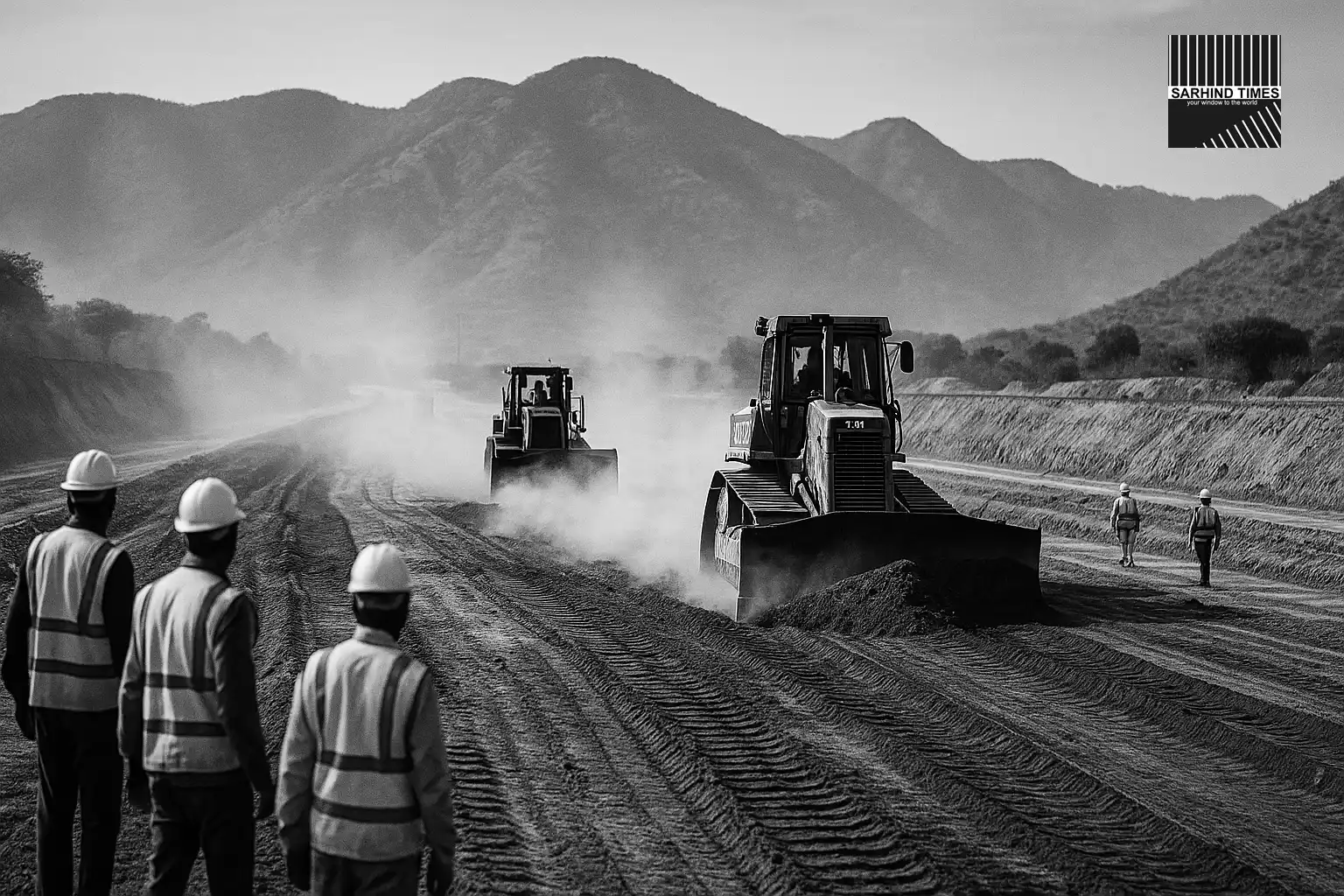
The expressway will be fully access-controlled, six lanes wide, and built with modern design parameters including high-speed geometry, service roads in critical zones, grade-separated interchanges, dedicated truck lanes and logistics parks en route. The alignment will largely avoid dense urban zones in order to minimise land acquisition disruption, pass through industrial clusters and link with existing national highway networks at key nodes.
Construction will be executed under the Hybrid Annuity Model (HAM) to mobilise public-private investment while ensuring timely delivery and risk sharing. Environmental safeguards include slope protection in hilly sections, noise-barriers near habitations, solar-powered lighting, rain-water harvesting along rights-of-way, and integration of rest-areas with tree-plantation zones. Early traffic modelling suggests that the new corridor could reduce travel time between Raipur and Visakhapatnam by up to 40 % relative to the existing route, and cut logistics cost per tonne-kilometre by a meaningful margin.
Economic and regional implications
This expressway is more than a transport route — it aims to reshape economic geography across central and eastern India. Key anticipated impacts include:
- Trade and exports boost: With direct linkage to Visakhapatnam port, the corridor facilitates faster movement of minerals, finished steel, aluminium, ores and bulk cargo from Chhattisgarh and Odisha to export berths. This is expected to improve turnaround time, reduce freight dwell-time and boost competitiveness for central-Indian industrial clusters.
- Industrial corridor development: Along the expressway alignment, logistics parks, warehousing hubs, manufacturing units and multimodal freight terminals are planned. This could catalyse growth in adjacent districts, increase employment, and support value-chain deepening beyond metro centres.
- Multiplier effects for regional states: Chhattisgarh, Odisha and Andhra Pradesh stand to gain from infrastructure-led investment: improved connectivity may attract corporate campuses, new-age manufacturing, and ancillary services. The expressway may also help bridge regional disparities by reducing travel and transaction frictions.
- Urban-rural linkages and mobility gains: While freight is a core focus, improved road access will enable better movement for passengers, reduce travel times for remote districts, encourage tourism and ease logistics for agriculture and perishables in the hinterland.
State-level stakes and coordination
The three states involved must coordinate on land acquisition, rehabilitation, utility shifting, forest/eco-clearances, and route alignment fine-tuning. State governments in Chhattisgarh and Odisha will be expected to prepare supporting infrastructure — service roads, local road feeders, logistics park land parcels, state industrial policies and skill development centres. Andhra Pradesh will leverage its coastal corridor and port infrastructure to complement the expressway’s inland-to-coast linkage. Inter-state coordination mechanisms, empowered project-level steering committees, and combined state-centre implementation units have been mandated to ensure cohesion and timely progress.
Financing and delivery timeline
The estimated cost for Phase I of the expressway is approximately ₹ 30,000 crore (US $ 3.6 billion) though final approvals and tenders may refine this figure. The project is expected to be rolled out over six years, with substantial portions of land-acquisition and construction to be completed by end-2028 and full operationalisation targeted by 2030. The Hybrid Annuity Model will see the government contribute 40 % of the project cost during construction years, while the private-sector partner will invest upfront and operate for a defined concession period.
Connections with national infrastructure strategy
The project aligns closely with the National Infrastructure Pipeline and the government’s emphasis on seamless logistics corridors. India’s broader transport-infrastructure push has seen the national highway network expand substantially: as of March 2025, the National Highways network spans 1,46,204 km, up nearly 60 % from 2013-14. The Raipur–Visakhapatnam Expressway is one of a set of new greenfield corridors under Bharatmala designed to reduce logistics cost (currently ~14-16 % of GDP) and improve freight efficiency.
Furthermore, the highway links with planned logistics parks, dedicated freight corridors (rail) and port-connectivity projects, reinforcing the multi-modal ambition of India’s infrastructure strategy. By shortening coastal-inland distances and enabling faster flows of goods, the expressway contributes to the Make-in-India and Atmanirbhar Bharat thrusts by reducing supply-chain fragmentation and export lead-times.
Risks, challenges and mitigation strategies
While the benefits are significant, several challenges and risk factors need close management:
- Land acquisition and rehabilitation: Terrain across three states includes forested and tribal zones, which may complicate acquisitions and clearances. Ensuring timely settlement, fair compensation and minimal legal delays is critical.
- Environmental and social safeguards: The corridor passes through mineral belts and ecologically sensitive zones; careful assessment and mitigation of environmental impact — especially dust, noise, habitat fragmentation — is essential.
- Cost escalation and inflation risk: Large-scale infrastructure faces risks of inflation in construction materials, labour, equipment and input logistics. Some buffer has been built into the HAM model but vigilant contract-management is required.
- State coordination and implementation capacity: Multiple jurisdictions increase complexity. Project-management frameworks must ensure state-centre synergy, timely approvals, utility shifting and local stakeholder buy-in.
- Utilisation risk: While freight upside is strong, realisation depends on manufacturing clusters, logistics park activation and industrial use. Without matching supply-chain growth, traffic volumes may lag.
Stakeholder perspectives and public-reaction
Local industry bodies and state governments have welcomed the announcement. The Chhattisgarh Industries Department highlighted how the expressway will open direct access for the state’s steel and mineral sector to a sea-port economy. Odisha officials noted that the corridor would add a missing link between their interior districts and coastal export terminals. Andhra Pradesh welcomed the incremental freight-volumes anticipated through Visakhapatnam port and said its logistics ecosystem stands to gain from the faster inland feed-routes.
Civil-society groups and environmental advocates, while supportive of enhanced connectivity, flagged the need for transparent land-acquisition, robust public-consultation, protection of tribal rights and proactive air-and-noise mitigation plans. Some local residents expressed hope for jobs but sought clarity on local feeder roads, skill training and community access to benefits.
What this means for business and investment
From a business perspective, the expressway opens new corridors of investment: logistics parks along the route are likely to attract warehousing, cold-chain, e-commerce fulfilment centres, auto-ancillaries, metals-processing units and port-adjacent services. Real-estate near interchange nodes may see increased demand for industrial land. Overseas investors seeking India-based manufacturing hubs may now include the corridor-states in their location matrix, thanks to the improved connectivity and export-focus.
Looking ahead: next milestones
Over the next 12-18 months, key milestones to watch include: land-acquisition packages, appointment of concessionaire(s) under HAM, finalisation of Detailed Project Report (DPR) including cost-refinement, environmental-clearance certificates for sensitive stretches, enabling feeder road links and logistics-park frameworks. States must align their industrial-policies and land-zoning frameworks with corridor-objectives and activate local economic ecosystems.
Conclusion
The Raipur–Visakhapatnam Expressway marks a significant leap in India’s infrastructure narrative. By marrying freight-driven design with regional development goals, the corridor becomes more than just a road — it is a strategic artery meant to drive industrialisation, logistics efficiency and inclusive growth. The challenge now lies in execution: ensuring that land, environment, funding, state-cooperation and industrial activation align to deliver the corridor’s promise. If successful, this expressway could become a model for how India builds smart, future-ready infrastructure while enabling balanced regional development.



+ There are no comments
Add yours