
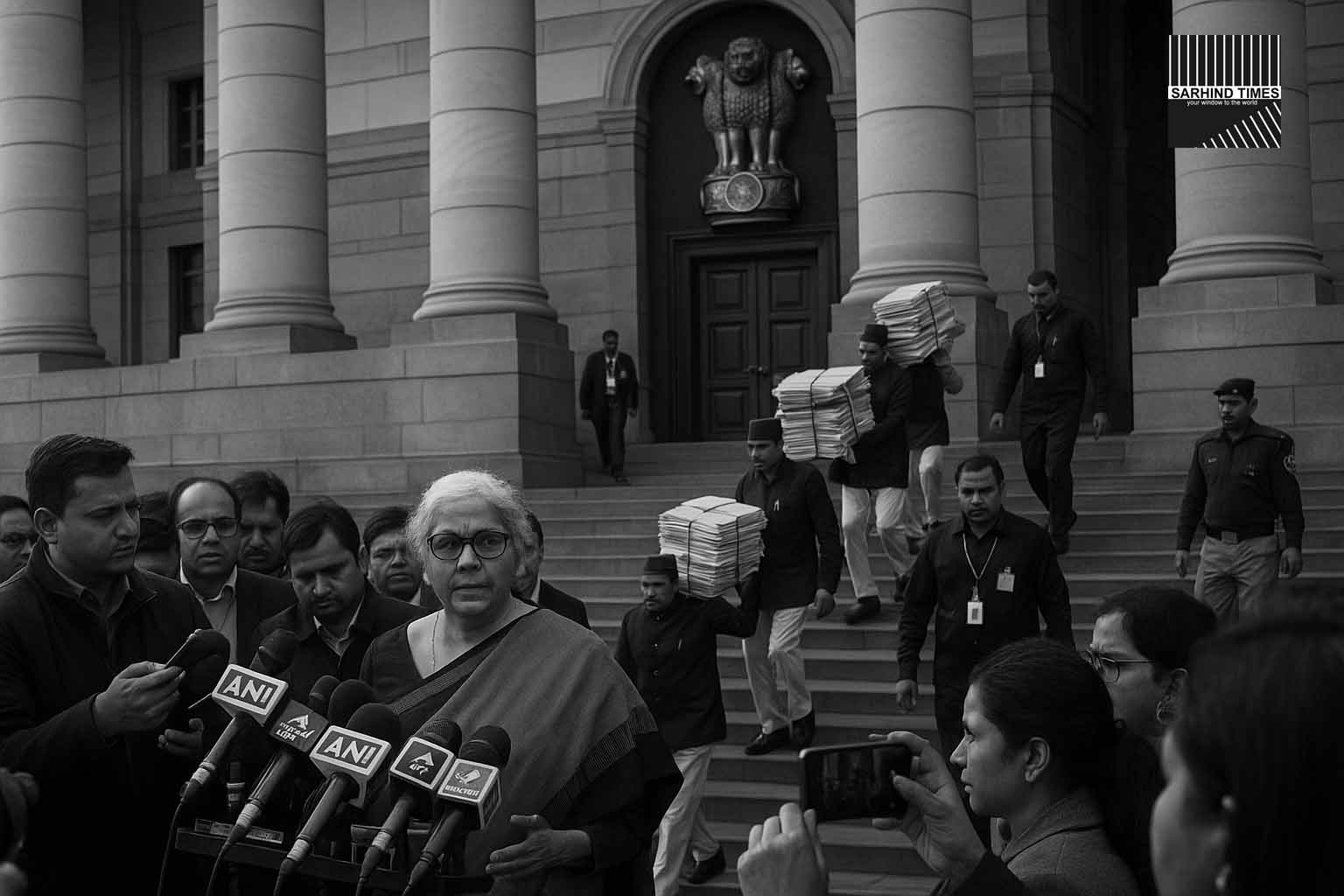
From four slabs to two—5 % and 18 %—with luxury goods at 40 %: India’s biggest GST overhaul in years
Dateline: New Delhi | 11 November 2025
Summary: The Indian government has carried out a sweeping reform of the Goods and Services Tax (GST), closing the four-slab rate structure and moving to a simpler two-slab regime of 5 % and 18 % for most goods and services, with a special 40 % rate for luxury/sin items. Effective 22 September 2025, the reform—branded “GST 2.0”—aims to spur domestic consumption, support manufacturing, and improve the ease of doing business.
The GST regime in India, in place since 2017, had become burdened by multiple tax-slabs, complex classification issues, and a proliferation of exemptions and special rates. Analysts and the government alike had flagged that cumbersome tax structures, inverted duty burdens and uncertain classifications were hindering formalisation and manufacturing competitiveness.
At the same time, India is facing shifting global headwinds: export pressures, emerging supply-chain realignments, domestic demand risks and a need to stimulate consumption ahead of a crucial economic phase. The government saw in tax reform — especially indirect tax relief and simplification — a lever to simultaneously reduce friction for business and deliver relief to households.
On 15 August 2025, the Finance Ministry presented a roadmap proposing a two-slab structure, emphasising structural reform, rate rationalisation and ease of living. Subsequently, the GST Council met in September (56th meeting) and approved the changes. The new structure came into effect on 22 September 2025.
The mechanics of the reform: What changed?
Under the previous system, GST had multiple slabs: 5 %, 12 %, 18 % and 28 % (plus special rates for certain goods). The reform replaces most of these with two primary slabs:
- 5 % slab for everyday consumer-goods, basic items and merit goods.
- 18 % slab for most goods and services that were previously taxed higher.
- A special 40 % slab for luxury and sin goods (e.g., high-end cars, tobacco, certain liquors) remains or is newly designated.
The Council also clarified transitional rules: the tax rate applicable depends on the date of payment or invoice in relation to the 22 September cut-off. Advance payments, supplies crossing the threshold, and input-tax-credit issues were all addressed in FAQs issued for compliance.
Immediate impact: households and business
For households, the most visible benefit is reduced taxes on everyday goods: toiletries, kitchenware, bicycles, packaged foods, and smaller appliances were moved from 12 %/18 % slabs down to 5 %. For example, items such as toothpaste, shampoo, dry nuts, certain dairy and packaged foods saw significant tax relief.
On the business side, corporations benefitting include those in consumer durables, electronics, automobiles (especially smaller-engine cars), and processed foods. The reform simplifies classification, reduces tax-slab arbitrage and offers improved predictability of tax liability.
Why this matters for India’s economy
The reform does more than deliver near-term relief: it touches on three major economic levers.
- Consumption boost: By lowering tax rates and making many goods cheaper, the policy aims to stimulate household spending, which in turn supports manufacturing, retail, and service sectors.
- Manufacturing and formal-economy push: A simpler tax structure reduces compliance burdens, lowers friction for GST-registered firms, and encourages movement of business activity out of informal economy channels.
- Ease of doing business and investment-friendliness: With fewer slabs, reduced classification ambiguity and a clearer appellate mechanism (the GST Appellate Tribunal is to be operationalised), India strengthens its tax-governance architecture — a key factor in investment decisions.
Reactions: applause and caution
Market participants, consumer-goods companies and industry associations largely welcomed the changes. The reduction in tax rates and simplification were seen as positive steps for boosting demand and reducing tax-compliance costs. One major brokerage noted that the policy “revisits the tax lever as a driver of demand rather than only revenue”.
Yet, caution persists: analysts point out that while the reform is ambitious, its success will depend on real pass-through of tax relief to end-consumers, structural corrections in input-tax-credit cascades and sustained demand momentum. Some companies in apparel reported higher tax rates (18 % vs. prior 12 %) for items above certain value thresholds, which could dampen that segment.
Fiscal and governance trade-offs
Any major tax cut raises questions of revenue loss and fiscal sustainability. The government anticipates a short-term collection shortfall but believes the consumption multiplier will offset this via higher taxable volume and economic growth. The Finance Minister has stated that the estimated loss – around ₹48,000 crore – would be managed without jeopardising public finances.
Meanwhile, the reform also includes institutional fixes: the GST Appellate Tribunal (GSTAT) is set to become functional by end-2025, and backlog appeals are to be cleared by mid-2026 — a move expected to improve dispute-resolution certainty for taxpayers. Challenges ahead: what to watch
Several risks and implementation issues could determine the ultimate success of the reform:
- Pass-through integrity: If manufacturers or retailers absorb the tax benefit without lowering consumer prices, relief to households may be muted.
- Revenue volatility: A structural shift in consumption patterns, global headwinds, or slower demand could reduce the tax base and undercut the expected consumption boost.
- Input-tax credit alignment: Ensuring that upstream taxes and credits align with downstream tax liabilities remains a complex challenge; inverted duty or credit accumulation issues linger in some sectors.
- Classification ambiguity and litigation: Despite simplification, disputes over product-classification (what falls under which slab) may persist and create uncertainty for firms.
- Distributional fairness: While many goods benefit, segments such as high-end apparel, luxury goods or certain services face higher effective tax. The reform must ensure that lower-income households also gain sufficiently.
Sector-specific impacts
Some specific sectors stand out:
- Consumer-durables & electronics: Lower tax rates may reduce retail prices, boost demand and accelerate replacement cycles of appliances and gadgets.
- Automobiles: Smaller-engine cars, three-wheelers, hybrid/EVs get favourable tax treatment, potentially giving local OEMs an edge in the domestic market.
- Insurance & financial services: Individual life and health insurance premiums have been made exempt from GST, improving affordability for households.
- Luxury/fashion / branded apparel: Some items moved to 18 % but others above thresholds may incur 18 % instead of 12 %, dampening demand for premium segments.
- Input-intensive manufacturing: With tax rationalisation, manufacturing cost structures may become more competitive — especially benefiting “Make in India” aligned firms.
Implications for businesses and investors
For corporates and investors, the reform matters for several reasons:
- Strategic pricing decisions: Firms must re-calibrate pricing strategies given changed tax loads on input and finished products, adjust inventory valuations and model cost pass-through.
- Supply-chain optimisation: Reduction of tax slabs can simplify supply-chain tax overheads, ease GST rule compliance and reduce cross-crew arbitrage or tax-driven distortion.
- Investment attractiveness: A simpler, more predictable tax regime improves India’s investment climate, especially for consumer-facing, manufacturing and export-oriented firms.
- Compliance readiness: Businesses need to ensure their systems, invoicing, ERP, GST-portal filings and legal classification are aligned to the new rules — transitional missteps can be costly.
What consumers should watch
Households should monitor:
- If price reductions actually reach shelves for goods which moved to the 5 % slab.
The long-term structural narrative
The GST reform is part of India’s broader economic transformation. It signals a shift from tax-collection focus to tax-policy strategy aligned with growth, consumption and global-integration. If executed well, it may accelerate formalisation, enhance tax-base resilience, strengthen domestic manufacturing and embed greater simplicity in indirect taxation.
Conclusion
India’s rollout of the GST 2.0 reform is bold, timely and multifaceted. It touches households, firms and the economy’s structural underpinnings. While many will celebrate the immediate benefit of lower taxes and simpler compliance, the real test lies in execution: ensuring relief reaches citizens, businesses align with the new regime and the fiscal system sustains without surprise gaps.
If all goes as intended, the reform could mark a turning-point in India’s indirect-tax history — where tax becomes not just a burden but a lever for growth. But the path ahead is uneven: monitoring, adjustments and enforcement will determine whether GST 2.0 realises its promise or remains an ambitious reform with limited follow-through.



+ There are no comments
Add yours