
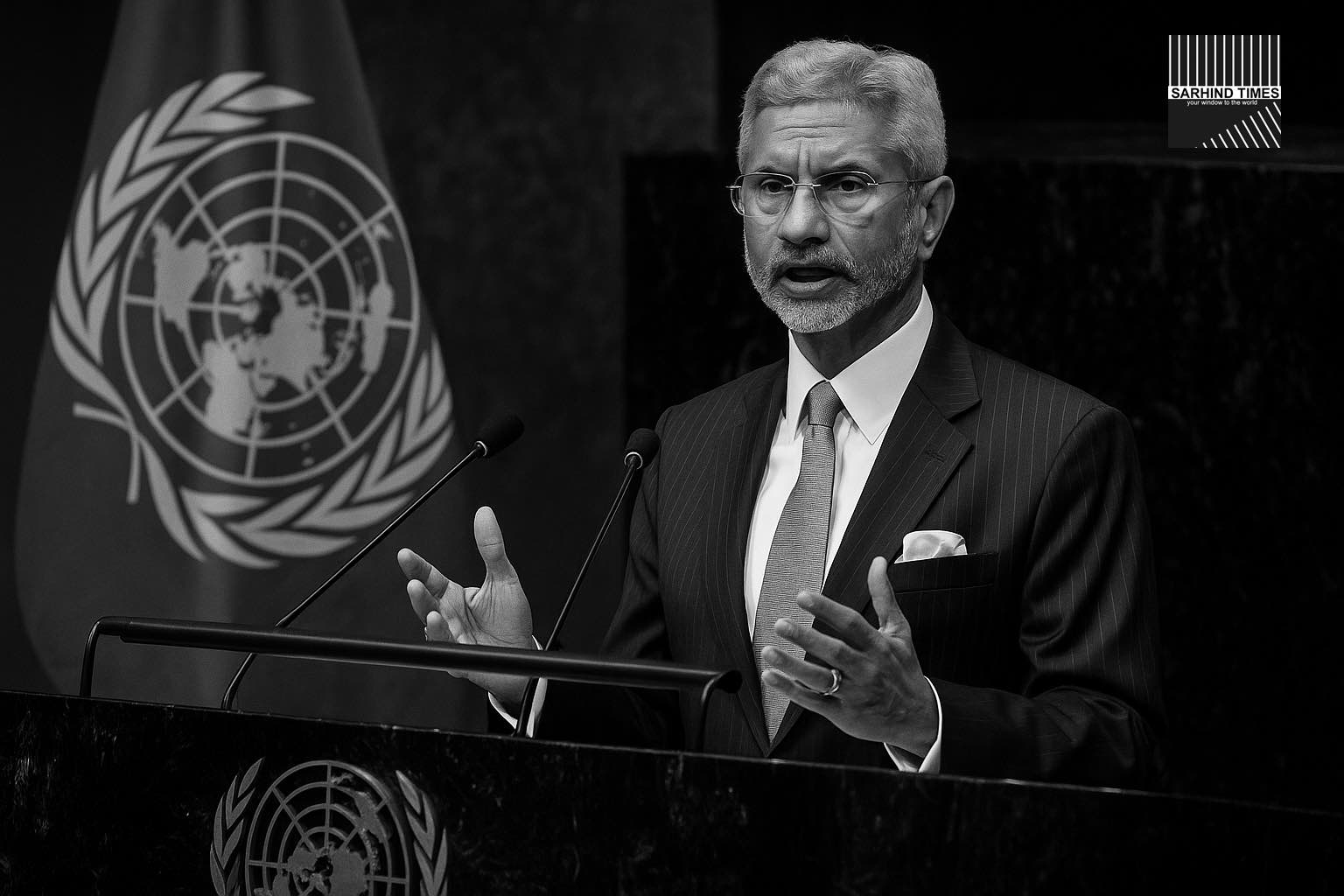
Diplomatic Visit to Moscow by S. Jaishankar Signals Deepening India-Russia Strategic Ties
Dateline: New Delhi | November 7 2025
Summary: India’s External Affairs Minister is set to travel to Moscow in mid-November to lay the groundwork for the 23rd India-Russia Annual Summit scheduled for December. The visit emphasises the strategic depth of the bilateral relationship amid shifting global order and underlines India’s diplomacy amidst multiple global alignments.
Setting the Stage: The Moscow Invitation and Strategic Timing
Diplomatic calendar now features a major summit between India and Russia in early December, and in preparation, the Indian minister of external affairs will travel to Moscow during the third week of November. The visit is being described by government officials as “critical” for finalising outcomes and agreements ahead of the summit. This engineering of high-level diplomacy reflects the enduring nature of the India-Russia strategic partnership, even as the global geopolitics undergos significant transition. The summit — the 23rd Annual India-Russia Summit — will be attended by the Russian President and is expected to underline mutual interests in defence, energy, high-technology cooperation, space, and supply-chain security. India’s preparatory visit underscores both countries’ intention to move beyond formal diplomacy and into concrete cooperation.
Historical Depth of India-Russia Relations
Since the post-Cold-War era, India and Russia have maintained a multi-dimensional relationship rooted in defence, energy, and political alignment. Russia remains a major supplier of military hardware to India, while India is one of the largest importers of Russian crude and a key partner in civilian nuclear technology. Over the years, this relationship has been framed as a “special and privileged strategic partnership.”
In recent years, India has diversified its partnerships, engaging with Western powers, Japan, Australia and the Quad grouping. Nonetheless, the Russia link remains central for India’s strategic autonomy and for Russia’s global relevance, particularly in Asia. The upcoming summit is being framed as a reaffirmation of this enduring partnership.
Why Now: Global Shifts and India’s Diplomatic Balancing Act
The timing of this diplomatic effort is significant. Against a backdrop of intensifying great-power competition, supply-chain realignments, the Russia-Ukraine war, sanctions regimes, and India’s own search for supply-chain resilience, the India-Russia partnership offers both opportunity and challenge.
For India, the summit comes at a moment when it seeks to consolidate diversified sources of energy, advance its space and nuclear programmes, and ensure geostrategic depth in its western neighbourhood. For Russia, India remains a large and reliable partner amid its partial isolation from Western systems. Both sides thus have converging interests in deepening cooperation.
Key Agenda Areas: Defence, Energy, Technology, and Connectivity
Several thematic areas are expected to dominate discussions during the summit and associated preparatory visits:
- Defence and military cooperation: India remains one of Russia’s largest defence customers. The agenda is expected to include long-term planning for platform upgrades, joint exercises, co-development of future systems, and after-sales support of Russian equipment in Indian service.
- Energy and hydrocarbons: With global energy transitions underway, India is keen on securing reliable and cost-effective supplies of oil, gas and nuclear fuel. Russia has offerings in hydrocarbons, Arctic gas projects, and potential nuclear cooperation.
- High-technology and space collaboration: The summit could showcase India’s growing capabilities in space and technology, and Russia’s interest in leveraging Indian innovation. Cooperation in satellite navigation, deep-space missions and dual-use technologies may feature.
- Supply-chain and sanctions mitigation: The Russia-Ukraine conflict and Western sanction regimes have forced both India and Russia to consider parallel supply-chain architecture. The summit may explore new trade-finance mechanisms, rupee-ruble settlements and non-dollar routes.
- Connectivity and regional cooperation: Both countries will likely address connectivity links via the International North–South Transport Corridor (INSTC), Arctic-Asia routes, and economic corridors that enhance Eurasian access and reduce dependence on traditional corridors.
Preparatory Visit: What to Expect From Jaishankar’s Moscow Trip
The Indian delegation’s Moscow stop during the Shanghai Cooperation Organisation heads-of-government meeting provides an opportune moment to talk bilaterals on the margins of larger multilateral diplomacy. The External Affairs Ministry has noted that the visit will involve both government-to-government and institutional engagements, including think-tanks, business councils and diplomatic channels.
During the visit, the Indian side is expected to:
- Conduct final tranche of preparatory talks and draft the summit communiqué.
- Identify incremental projects to be announced alongside the December summit — for instance, new industrial or technology cooperation.
- Resolve outstanding issues such as energy pricing, defence deliveries, export-licence approvals and banking arrangements.
- Attend to bilateral concerns — for example, India’s sensitivity to non-proliferation standards, and Russia’s concerns about western pressure and financing.
Challenges and Complexities Ahead
While the partnership has deep roots, the current global environment presents complications. Key challenges include:
- Sanctions and logistics: Russian entities remain under Western sanctions regimes, complicating cooperation in financial flows, technology transfer and dual-use goods. India will need to navigate this carefully to avoid unintended consequences.
- External alignment pressures: India’s expanding relationships with the United States, Europe and regional partners may at times be at odds with Russian interests. India’s diplomatic balancing act will be under testing.
- Delivery timelines: Past experience reveals that many large-scale agreements announce intent but falter during execution due to funding, infrastructure, and regulatory hurdles. The December summit must yield tangible outcomes.
- Domestic optics: India needs to ensure that deeper Russian ties are understood domestically as part of its strategic autonomy and not as misalignment with other partners. Transparent communication will matter.
Indian Economic and Commercial Dimensions
Beyond strategic and military ties, the India–Russia partnership has important commercial lines. Indian firms are increasingly eyeing cooperation with Russian counterparts in oil & gas, mining, agriculture, pharmaceuticals and infrastructure. Russia in turn values access to India’s large market and increasingly skilled workforce.
For India, deeper Russian engagement could mean:
- Access to hydrocarbons on preferential terms, aiding energy security.
- Joint ventures in downstream processing, petrochemicals and rare-earths.
- Space- and defence-industry synergies with potential export orientation.
Regional and Global Implications of the Summit
The upcoming summit has consequences beyond bilateral relations. Several implications stand out:
- Signal to global south: India’s willingness to maintain a robust partnership with Russia underscores that it will continue to pursue diversified diplomacy and not align exclusively with any one bloc.
- Balance in South Asia: Enhanced India-Russia ties may inflect regional security dynamics, especially in Central Asia, the Indian Ocean Region and the Arctic gateways.
- Defence-technology balance: As India procures from and co-develops with multiple partners, the Russia dimension remains central to its military-industrial base and deterrence posture.
- Energy geopolitics: India’s energy linkages with Russia could shift parts of the global energy map, especially as the west-Russia dynamic reshapes supplies, logistics and pricing.
Analyst Perspectives and Expert Commentary
Strategic analysts view the upcoming summit as confirmatory rather than transformational: India and Russia will reaffirm commitments but also will face the test of execution. Some observers caution that unless clear measurable deliverables emerge, the summit may risk being symbolic rather than substantive.
Others note that India’s multi-vector foreign-policy strategy means that alliances must be flexible and calibrated. The Russia axis remains one plank, but India is concurrently deepening ties with the United States, Australia, Japan, the EU and ASEAN. In this light, the summit is both a reaffirmation of an old bond and a statement of India’s continuing independence in foreign policy.
What to Watch: Indicators of Progress and Deliverables
In the run-up to December, key indicators to monitor include:
- Signing of new industrial-technology cooperation agreements between Indian and Russian firms.
- Announcement of large-scale joint projects in energy, space or defence with quantifiable timelines.
- Mechanisms to ease trade-finance and bypass sanctions-related bottlenecks.
- Clear roadmap for high-technology exports from India to Russia and vice versa.
Conclusion: A Strategic Moment in India’s Foreign Policy
As India prepares for its December summit with Russia, the diplomatic choreography now underway signals a high-stakes balancing act. On one hand, the India–Russia relationship remains a bedrock of India’s strategic autonomy; on the other, India must engage multiple global partners in a complex, multi-polar world.
The upcoming summit offers an opportunity to turn historic ties into future-oriented cooperation, yet the test lies in delivery. For India, the success of this engagement will not only reflect bilateral partnership but also its broader diplomatic competence as a rising power navigating multiple currents.
In the coming weeks, the Moscow trip by the External Affairs Minister will be closely watched—internally, by Indian policymakers; externally, by global capitals. The results of that visit will set the tone not just for the December summit, but for India’s place in the 21st-century geopolitical map.


+ There are no comments
Add yours