
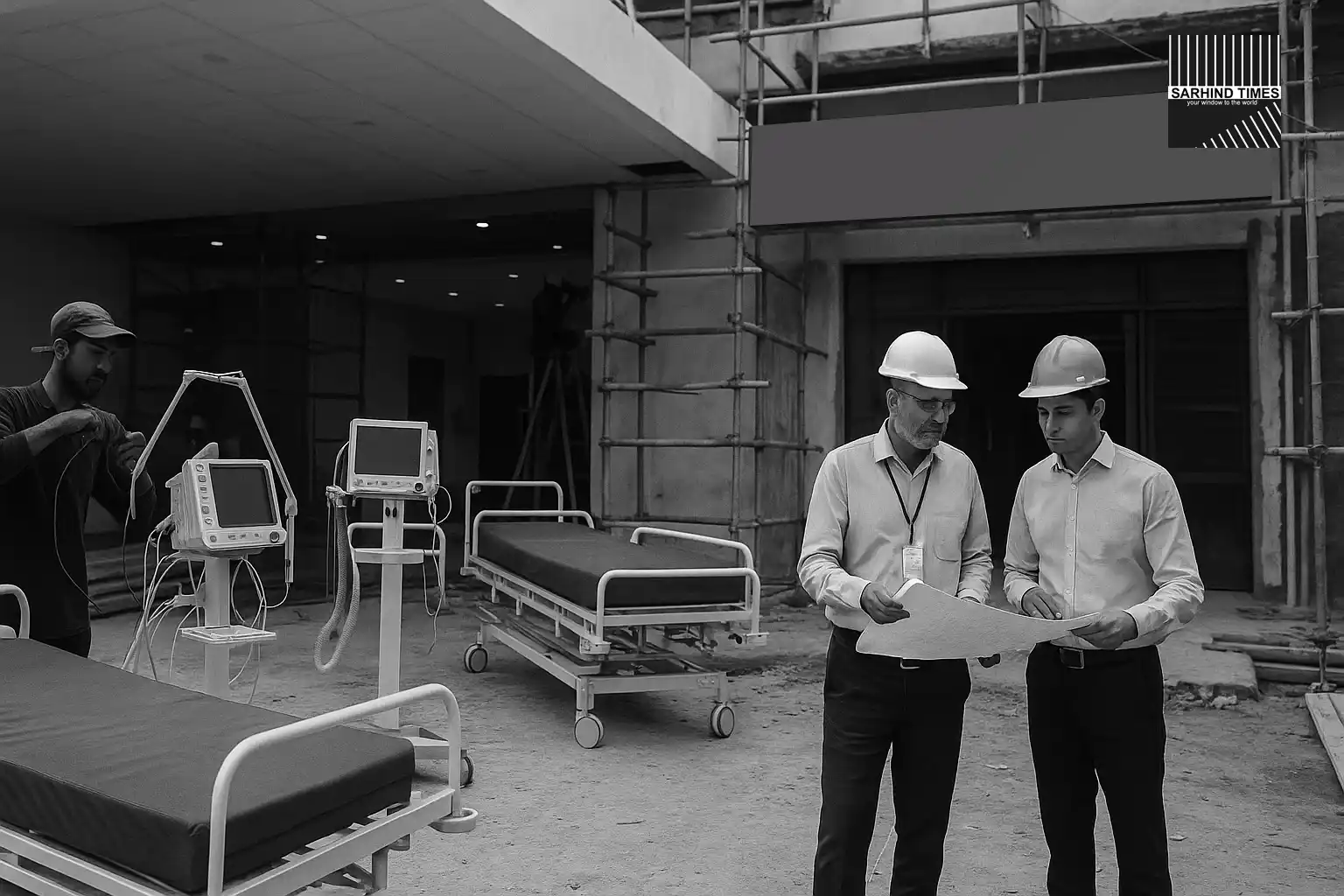
Government targets major upgrade of primary, secondary and tertiary health-care facilities across states, aligning with global treaty commitments
Dateline: New Delhi | October 30, 2025
Summary: The PM‑Ayushman Bharat Health Infrastructure Mission (PM-ABHIM) has been allocated ₹64,180 crore for 2021-26. Of that, ₹54,205 crore is earmarked under the Centrally-sponsored scheme and ₹9,340 crore under the Central-sector component. This major commitment indicates India’s pivot from reactive to proactive health-system building, especially after the COVID‑19 pandemic.
The Significance of This Step
India’s health-care architecture has long been critiqued for its vulnerability to shocks—whether pandemics, natural disasters, or large-scale disease outbreaks. The COVID-19 crisis exposed weaknesses: insufficient ICU beds, delayed diagnostics, weak surveillance systems, and patchy primary-care infrastructure. The PM-ABHIM allocation signals a structural transformation from episodic crisis response to sustained health-system strengthening.
According to government sources, the mission’s objective is to build resilience by creating infrastructure across all levels—**Ayushman Arogya Mandirs** (AAMs) at block level, **block-public health units (BPHUs), integrated public health labs (IPHLs)**, and critical-care blocks at district and tertiary hospitals. Key components also include pathogen-sequencing labs, tele-ICUs, mobile emergency response units, and strengthened surveillance systems.
Break-down of the Funding and Structure
The ₹64,180 crore allocation spans a five-year window (FY2021-22 to FY2025-26). Of that:
- ₹54,204.78 crore under the Centrally-sponsored component (where Centre’s share flows to states/UTs).
- ₹9,339.78 crore under the Central sector component (direct allocations to Union Territories or central institutions).
Administrative approvals worth ₹32,928.82 crore have already been granted to states/UTs as of the latest update.
What Areas Will Be Upgraded?
The mission covers multiple domains:
1. Primary Health Infrastructure
At the base level, AAMs are envisaged as 50-bed facilities for comprehensive primary care convergence, diagnostics, tele-medicine, and referral linkage. Many rural blocks currently lack even basic infrastructure; the mission aims to fill that gap.
2. Public Health Labs & Surveillance
Integration of integrated public health labs (IPHLs) aims to bring diagnostics closer to people, and tracking of pathogens will become faster. This is crucial if India is to meet its commitments under the Pandemic Agreement adopted by World Health Organization member states in May 2025.
3. Critical Care & Hospital Blocks
District hospitals will have reinforced critical-care blocks with ventilators, high-dependency units, oxygen systems, modular ICUs. The aim is that no district should be overwhelmed in future health emergencies.
4. Digital Health & Connectivity
Linking the infrastructure to digital platforms—such as e-Hospital, tele-ICU, unified health-records, and connectivity to the ABHA health-account number—ensures that services are coordinated and accessible. The MoHFW notes that digital readiness is essential for modern health systems.
Why Now: The Timing and Implications
There are multiple reasons why this pivot is timely:
- Post-COVID realization: The pandemic revealed global fragility of health systems; India recognised that prevention and preparedness must be built, not ad-hoc.
- Global treaty commitments: The Pandemic Agreement aims for equitable access to vaccines, diagnostics, shared supply-chains. India’s domestic strengthening helps fulfil its own side of the bargain.
- Economic rationale: A healthier population is more productive; fewer pandemics means less economic disruption. The investment is both in health and resilience.
- Demographic transition: With non-communicable diseases rising, infrastructure needs to shift from purely curative to preventive and surveillance-oriented care.
Challenges That Lie Ahead
While the mission is robust in concept, execution will determine its impact. Some of the key implementation risks include:
- State-level capacity: Many states have weak health-infrastructure governance, lack of technical skill, and turnover at senior levels. Translating funds into operational facilities may be slow.
- Maintenance & staffing: Creating infrastructure is one thing—the bigger challenge is sustaining it. High-tech labs, ICU equipment, tele-medicine require maintenance, trained personnel and recurring budgets.
- Coordination across tiers: Linkage between primary care, labs, district hospitals, and tertiary centres needs integrated referral systems and transport networks. Fragmentation risks will reduce returns.
- Geographic inequities: India’s states vary in infrastructure maturity. The mission must ensure that weaker states are supported adequately—not just the stronger ones that already had some systems in place.
- Governance & monitoring: Transparent tracking of fund utilisation, timelines, and service-delivery metrics will be critical. Without local accountability, infrastructure may remain under-used.
What Stakeholders Must Do
For States & UTs: Update district health plans, align state budgets with AAM and IPHL road-maps, engage private-sector if needed for management, ensure recruitments through quality wardrobe.
For Health-Professionals & Academia: Training modules for tele-medicine, digital-health tools, and outbreak response should be scaled. Research centres should align with infrastructure upgrades.
For Private Sector & Investors: This infrastructure push opens opportunities in hospital-equipment supply chains, digital health platforms, tele-medicine services and aftermarket maintenance. Firms aligned with the mission may benefit.
For Citizens: Eventually, the promise is better access to diagnostics, care closer to home, fewer journeys when sick, and faster response in emergencies. The mission aligns with universal health coverage goals.
Risks & Balanced View
It is important to maintain a realistic perspective. Infrastructure alone will not deliver health outcomes. Institutional reforms, workforce planning, prevention strategies and community engagement are equally essential. If states focus purely on bricks and mortar and ignore underlying system strengthening, health outcomes may lag behind investment.
The fund size—₹64,180 crore—is substantial but spread over multiple years and across all states/UTs; therefore, per-district per-year allocation will be modest, especially compared with gaps. The mission must be seen as necessary but not by itself sufficient for holistic health reform.
Will It Achieve the Intended Outcomes?
The mission’s success metrics include: number of AAMs operationalised, labs built, beds created, digital referrals functional, tele-ICUs active, and overall improvements in indicators (avoidable mortality, outbreak response time). At the end of this phase (2026), policymakers will evaluate how well the physical infrastructure translated into outcomes. Early signs will matter. If states deliver rapidly, India could move significantly toward SDG-3 (Good Health & Well-being) and Universal Health Coverage.
Broader Implications for India’s Health Landscape
The impact may cascade beyond immediate health care:
- Emergency readiness: With modern labs and infrastructure, India will be better placed to monitor emerging pathogens, respond rapidly, and integrate with global systems.
- Healthcare access: Decentralised, upgraded infrastructure could reduce urban overload, improve rural access and ease out-migration of patients.
- Digital health acceleration: As facilities become networked, India’s health-data architecture may evolve—supporting research, preventive analytics and personalised care.
- Health-economy link: By reducing health shocks and improving productivity, the infrastructure investment becomes a growth enabler.
Conclusion
The PM-ABHIM allocation of ₹64,180 crore marks a watershed in India’s health-policy evolution. It reflects a strategic shift—from responding to illness to building a resilient health ecosystem capable of prevention, early detection, treatment and emergency response. The goal is ambitious but compelling: every Indian district should soon be equipped with infrastructure that many countries take decades to build.
Yet, ambition alone is not enough. The mission’s real success will be judged not by construction milestones, but by outcomes—reduced mortality, improved access, faster outbreak containment, and better health for millions of Indians. Citizens, experts and policymakers alike must press for transparency, state-wise equity and measurable progress. If delivered effectively, this ₹64,180-crore commitment could become a pivotal enabler of India’s health-trajectory in the next decade.


+ There are no comments
Add yours