
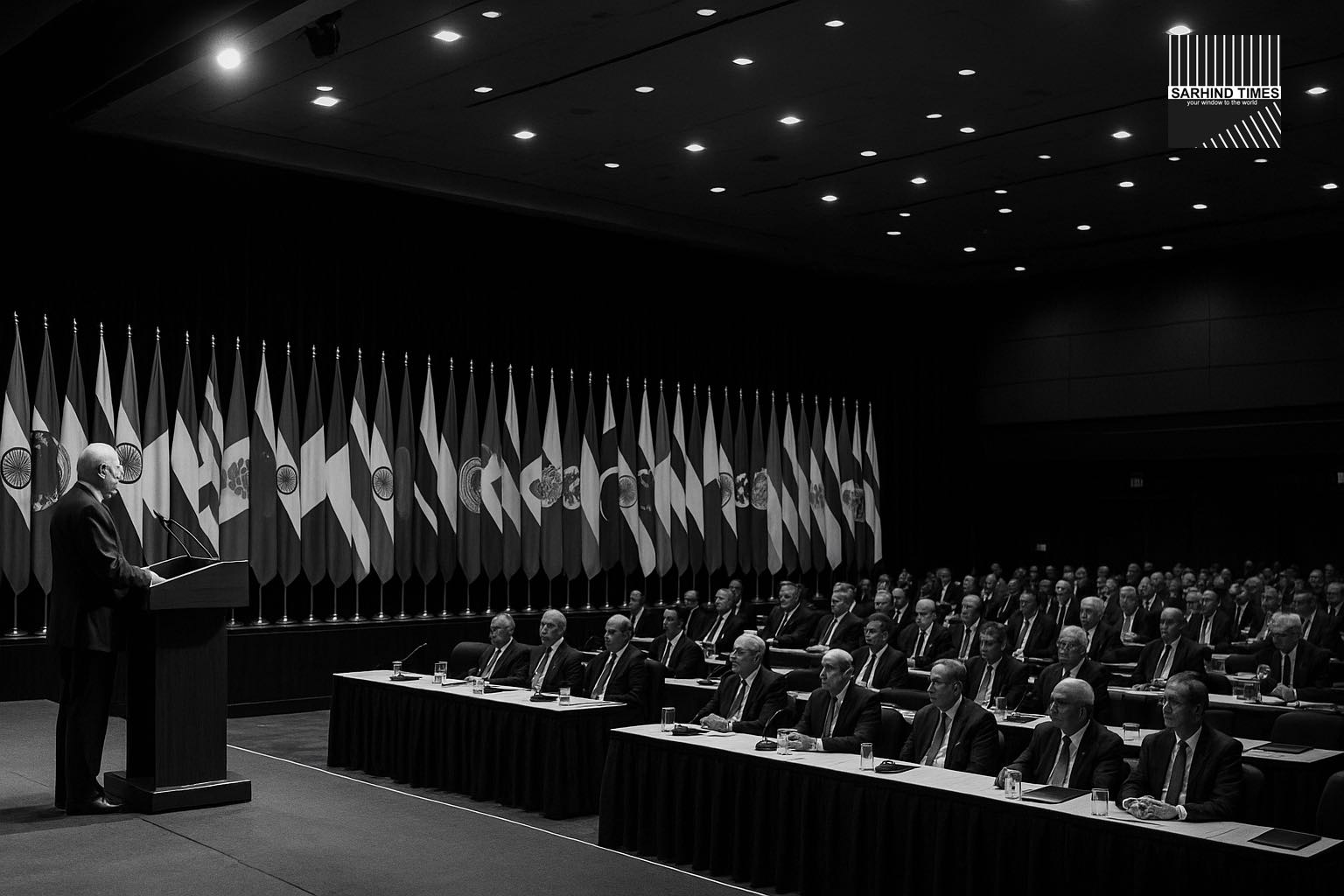
“Accelerating Global Trade: Fostering Partnerships, Connectivity & Resilience” – India’s biggest business-gathering of the year aims to set stage for next-gen trade ties
Dateline: Mumbai | 09 November 2025
Summary: The 10th edition of the Global Economic Summit 2025 (GES) is set to open on 21–22 November at the World Trade Center Mumbai, under the theme “Accelerating Global Trade: Fostering Partnerships, Connectivity and Resilience.” With participation expected from more than 50 countries, over 40 national and sectoral pavilions, and representation from international organisations such as the World Trade Organization (WTO) and United Nations Conference on Trade and Development (UNCTAD), the summit signals India’s intent to deepen its role in the global trade ecosystem. Early-sessions will focus on export diversification, supply-chain re-orientation, MSME engagement and green-trade corridors.
Why this summit matters at this moment
India is entering a critical phase in its economic diplomacy. The global trade environment is in flux: supply-chain realignments triggered by geopolitics, rising trade barriers, and sustainability demands mean countries must rethink how they engage. By hosting the Global Economic Summit 2025, India is signaling that it is ready to step up—not only as a manufacturing destination but as a trade and connectivity hub for Asia and beyond. With over 50 countries expected, the scale of engagement is high and the agenda ambitious. The participation of key global organisations such as the WTO and UNCTAD indicates that this is not just a talk-shop but a platform to align India’s trade strategy with global norms.
Agenda and structure of the summit
The summit’s agenda covers several broad pillars:
- Trade facilitation & connectivity: How to enhance trade corridors, improve logistics, reduce tariffs and friction — particularly important as India’s trade partners seek alternatives to traditional routes.
- Investment dialogue: With India’s manufacturing push under schemes like Production Linked Incentives (PLI), the summit will provide a forum for global capital to engage with Indian opportunities in green energy, electronics, textiles and defence.
- SME and innovation link-up: One of the 40 sectoral pavilions is focused on MSMEs, start-ups, and export-oriented innovation; the summit aims to convert pledges into B2B or B2G engagements through curated meetings.
- Policy & institutional engagement: Government-to-government (G2G) dialogues will run in parallel with business streams, covering alignment with global trade norms, digital trade architecture, dispute-resolution, and sustainability credentials.
India’s strategic positioning
For India, the summit is an opportunity to consolidate gains and project a new narrative: from “outsourcing factory” to “integrated global trade partner.” Already, India’s FDI inflows and export growth have attracted global attention. The timing of the summit is apt: global supply-chain diversification efforts, especially away from China, are accelerating. India’s large domestic market, skilled workforce, and improving manufacturing ecosystem make it a contender for a bigger role.
However, the challenge remains: scale. Indian exports still face issues around infrastructure bottlenecks, standard-certifications, logistics costs and firm-level competitiveness. The summit seeks to draw attention to those gaps and mobilise international partners to help bridge them.
Key participants and pavilions
The summit organisers list participation from more than 50 countries, with bilateral trade ministries, export-promotion agencies, business-delegations and embassy representations. Among the 40 national/sectoral pavilions, some of the prominent ones include: electronics manufacturing, green hydrogen, textiles and apparel, digital services/export-platforms, and agro-processing. :contentReference[oaicite:7]{index=7}
Global organisations such as WTO, UNCTAD, World Intellectual Property Organization (WIPO), International Trade Centre (ITC) and the World Trade Promotion Forum (WTPF) are participating, providing policy-framework overlay to the business-sessions. Their presence indicates that this summit may feed into collective global trade governance discussions.
Expected outcomes and pledges
The organisers expect multiple outcomes:
- A set of MoUs and partnership announcements: in previous editions of trade summits, commitments ran into tens of billions of dollars. While exact figures are yet to be disclosed, the scale of global participation suggests significant announcements are likely.
- Expansion of national trade-pavilions: countries seeking to diversify their export-markets are likely to deploy high-level delegations and showcase investment-opportunities in India and in partner states.
- Trade-facilitation frameworks: the presence of trade-governance organisations means there will likely be declarations or frameworks around digital-trade, logistics, customs-modernisation, sustainability in exports and supply-chain resilience.
- Link-up of Indian MSMEs/start-ups with global opportunities: curated B2B meetings expected to number in the thousands — the summit’s brochure mentions 14,000 B2B/G2B engagements.
Challenges and scepticism
It is easy to over-sell large-scale summits. Past trade conferences have had high expectations but sometimes low conversion in actual delivery. For India and the partners involved, some of the key risk-areas include:
- Implementation-gap: Announcements are one thing, execution another. If MoUs remain on paper the credibility of the Indian trade-narrative may suffer.
- Global headwinds: Trade tensions (tariffs, protectionism), slowing global growth, logistics inflation and rising costs may dampen trade-growth regardless of summit outcomes.
- Competition from other hubs: Countries such as Vietnam, Indonesia and Mexico are also vying to attract diverted supply-chains. India must sharpen its competitive edge if the summit is to translate into real economic repositioning.
Sectoral implications
Some sectors stand to benefit more than others:
- Textiles & apparel: With global apparel brands seeking alternatives, India can capture share—but logistics and compliance must improve swiftly.
- Electronics & hardware manufacturing:The electronics pavilion aims to tap into investment flows as electronics makers look to diversify beyond traditional hubs.
- Green technologies & exports: Efficiency, sustainable-manufacturing, and climate-compliance are increasingly non-negotiable for global buyers. The green-energy and clean-exports pavilion will therefore be critical.
- MSMEs & start-ups: Rather than only large firms, smaller firms will be showcased in the innovation pavilion. To succeed they must scale, upgrade processes and link to global value-chains meaningfully.
What to watch during and after the summit
Key metrics and signals to monitor will include:
- The number, size and sector-mix of MoUs announced and how many convert to project starts.
- Participation and visibility of Indian states: many states field pavilions; the quality of inbound investment into non-metro regions will matter for broader growth balance.
- Global supply-chain announcements or trade-corridor partnerships unveiled during the summit.
- Follow-through from international organisations (WTO/UNCTAD) in terms of policy-frameworks agreed and whether India leads or signs up to them.
Why this matters for global players
For global business and policy-makers, the summit represents a window into India’s next-phase strategy: large-scale manufacturing, export diversification, green-trade, resilient value-chains, and regional connectivity. A successful summit could shift more investment, corporate decisions and supply-chain redesign toward India and its neighbours.
Conclusion
The Global Economic Summit 2025 in Mumbai is more than a conference—it is India’s pitch to the world to deepen trade linkages, attract investment, leverage geographies and tap new growth paradigms. The sheer scale of participation, hosting of high-level international organisations and focus on connectivity and resilience all suggest the stakes are real.
But ambition alone doesn’t deliver. The test will be in post-summit follow-through: whether the deals translate into factories, exports, jobs and integrated supply-chains. For India and global partners alike, now is the moment of alignment—converting talk into trade, and pledges into production. If the conversion happens, this summit may mark a meaningful inflection in the country’s trade trajectory. If it stalls, it risks becoming another high-profile event with limited long-term impact.


+ There are no comments
Add yours