
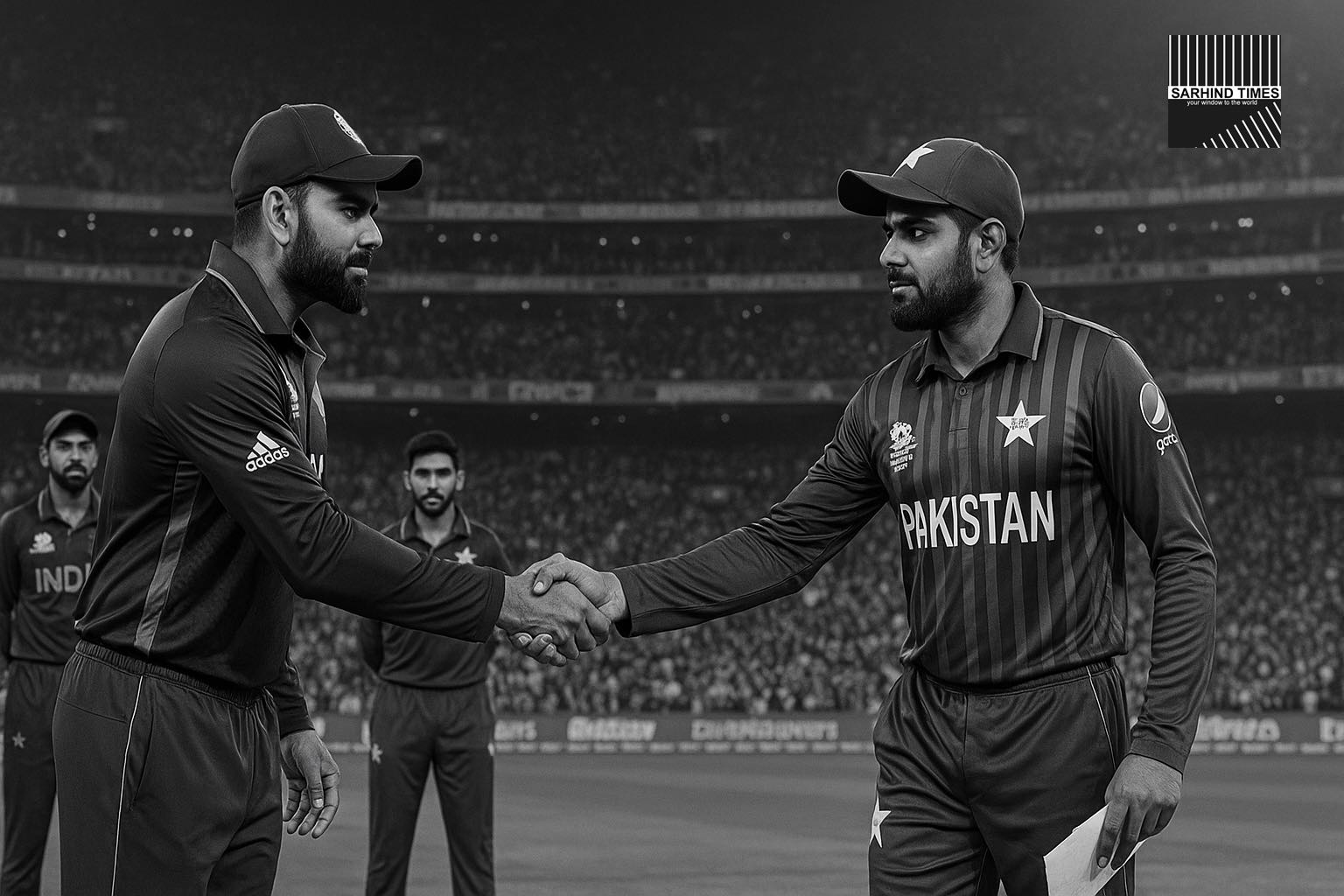
Emerging-team rivalry reignites on 16 November in Doha as the two cricketing giants renew competition amid evolving dynamics
Dateline: Doha | 09 November 2025
Summary: The youth-and-A-team versions of India national cricket team and Pakistan national cricket team are poised to meet again on 16 November in Doha, in the ACC Asia Cup Rising Stars 2025 tournament. Scheduled for 20:00 local time, this fixture follows years of high-stakes encounters between the senior sides and comes as a measure of the future talent pipeline for both nations. While senior bilateral ties remain frozen, the emerging-teams format offers a new theatre for the historic rivalry to play out, albeit with fresh faces and stakes centred on long-term development rather than only glory.
Setting the stage for the clash
The ACC Asia Cup Rising Stars 2025 is scheduled to run from 14 to 23 November in Doha, Qatar. According to the tournament organisers and cricket-media reports, the group stage sees India A and Pakistan A in the same pool, setting up their face-off for 16 November. The match is slated to begin at 8 pm local time (2:30 GMT) at one of Doha’s premier cricket venues. The event is a rebranding of the previous Emerging Teams Asia Cup, indicating a renewed emphasis on youth/emerging talent in Asian cricket.
Historically, India–Pakistan matches capture public imagination, heightened by geopolitical context, fan fervour and commercial interest. Even at the ‘A’-team level the rivalry retains intensity. The decision to document and promote this fixture underscores the broader shift toward structured talent-pathways in both nations’ cricket ecosystems.
The format and what this tournament means
The Rising Stars tournament adopts a format similar to senior Asia Cups: group stage followed by knock-outs, but features “A” or emerging squads from Test-playing nations, alongside senior teams from some associate nations. India A will face UAE on 14 November, Oman on 18 November, and Pakistan A on 16 November in the group stage. Meanwhile Pakistan A has its own sequence.
For India and Pakistan, this tournament offers strategic value: a chance to test emerging players in pressure situations, to deepen bench strength ahead of senior international commitments, and to cultivate cricketing ecosystems beyond the top 15. From a broader Asia-cricket governance and broadcasting viewpoint, the event is a vehicle to strengthen regional competition outside senior frameworks.
What to watch for India A
The Indian contingent will largely comprise players who are on the cusp of senior selection—young batters, all-rounders, and pace/spin options not yet firmly established. Given India’s recent success at senior level, the A-team’s performance is being watched for signs of talent continuity, depth of bench and adaptability under rivalry pressure.
Selectors may use this tournament to test players’ temperament in a high-profile match: handling large crowd/fan attention, media narratives, heavy expectations—even if broadcast audiences are smaller than senior internationals. For instance, a young spinner or batter performing well in this India A vs Pakistan A match could fast-track into senior T20 or ODI squads.
Pakistan A’s perspective
For Pakistan, the A-team format is equally strategic. With senior team transition underway and investment in emerging talent being emphasised, the match against India A provides not only a competitive platform but a chance to recalibrate team culture, mental conditioning and rivalry-handling. Pakistan’s talent managers will treat this fixture as much about psychological preparation as cricket-skills calibration.
Rivalry renewed—but in a different context
The India vs Pakistan rivalry is often loaded with emotion, symbolism and national pride. With senior bilateral series absent and meetings only in multi-team events, the pathway through emerging-team tournaments becomes important. The 16 November fixture inherits that history—but with a difference: it carries less of full global scrutiny and more of developmental framing.
Fans and media will still view the contest as high-pressure—even if senior stars are absent. Broadcast platforms, digital streaming services and social-media channels are already positioning it as “the next generation’s showdown”. For players, the spotlight may be smaller—but the margin of error narrower.
Key players and talent centres to watch
A few segments merit attention going into the game:
- Indian front-line: Young batters with recent domestic strong showings, spin prospects stepping up for senior queue, fast-bowlers adapting to international conditions.
- Pakistan counterparts: Aggressive pace-options (Pakistan has tradition in quick-bowling); emerging batsman gaining experience in multi-nation tournaments; ‘A’-team tour management emphasising exposure rather than hiding talent.
- Mental-conditioning under rivalry load: For both squads this is one of their earliest major fixtures against the traditional rival—how they handle media, expectation, failure/pressure will speak volumes.
- Scouting and selection signalling: Good performance here may accelerate senior-team inclusion. For example a spinner central to India’s T20 framework or a pace-bowler with Pakistan may find breakthrough.
Broadcasting and commercial aspects
The tournament is likely to draw digital streaming interest across Asia-Pacific diaspora. While global broadcast rights are less developed compared with senior national series, platforms like FanCode, Sony LIV and regional providers are reportedly in talks for coverage. The media narrative emphasises the India vs Pakistan element to boost viewership.
Commercially, emerging-team tournaments historically have lower sponsorship ceiling than full internationals—however, the India-Pakistan dimension increases value, enabling sponsors and broadcasters to tap audience interest at a more modest cost base. Organisers hope for good attendance in Doha, and the venue selection reflects an attempt to combine neutrality, climate suitability and broadcast-reach.
Broader implications for cricket development
The importance of this fixture goes beyond a single match:
– It signals reinforcement of Asia’s emerging-team cricket architecture. Investors, coaches and administrators recognise that talent pipelines matter if senior teams are to sustain success.
– For India and Pakistan, with domestic leagues, franchise systems and global tournaments proliferating, the A-team event provides space for players not yet locked into senior squads to gain international exposure.
– For fans and cricket-ecosystem stakeholders, this type of fixture helps maintain engagement even when senior bilateral ties are limited or politically fraught. The rivalry lives on, albeit at a new level.
Potential roadblocks and caution-points
Despite its promise, several caveats remain:
- Emerging-team tournaments often suffer from lower attendance, reduced media coverage and less broadcast infrastructure—true for this event as well unless marketed strongly.
- Travel, scheduling and rest-load issues: Young players often come in after domestic commitments; fatigue and adaptation may affect performance.
- Pressure of rivalry: While it brings excitement, too much weight could potentially hamper talent development if players carry legacy burdens rather than focusing on growth.
- Political or security disruptions: Although less than senior tours, any geopolitical flare-up between India and Pakistan could impact the fixture—as has been the case in senior cricket; organisers need robust contingency planning.
- Depth of competition: The match is important, but the tournament outcome will ultimately matter. If one of the teams treats this as primarily developmental while the other fields a near-senior-level squad, the competitive balance may tilt and the story may lose long-term relevance.
What to look for after this match
Following the 16 November showdown, stakeholders should watch:
- Which Indian players use this match as springboard into senior national selection; announcements post-tournament may reflect impact.
- Pakistan’s performance and how their talent-streaming strategy aligns with senior re-structuring; whether young performers carry momentum into domestic or franchise leagues.
- Broadcast and engagement metrics—viewership figures, digital spikes, sponsors’ response to the event.
- Whether the Rising Stars tournament becomes a permanent fixture in the calendar with regular renewals, thereby boosting Asian cricket depth.
- Media and fan narratives: do India-Pakistan matches at this level get brand equity? Does audience treat them as “mini senior” clashes or purely developmental? The answer will shape how emerging-team cricket is marketed going forward.
Takeaways for fans, players and stakeholders
For fans: this fixture offers a chance to glimpse future stars of India and Pakistan under rivalry stress; viewing it may well provide early identification of players who will define cricket in the next decade.
For players: treat it as both high-stakes and growth-opportunity—performing under pressure matters. For coaches: this is a proving-ground. For administrators: use this event as a template for aligning development with engagement and for leveraging marquee match-ups even at emerging levels.
For broadcasters and sponsors: the key is to treat this not just as a one-off but as part of a longer story—“The next generation of India-Pakistan cricket” could become a brand in itself.
For cricket boards: ensure this tournament does more than fill a calendar slot—integrate it into long-term talent strategy, ensure continuity, and track player trajectories post-tournament.
“We want more than a one-match headline,” said an Indian selector in a recent session. “If a young player stands up on 16 November, we want him to be visible in the senior season.”
Conclusion
In the end, the meeting between India A and Pakistan A on 16 November in Doha could prove to be more than just another fixture. It may signal a new phase of India-Pakistan cricket rivalry—one rooted in development, sustainability and future-readiness rather than only national pride. If handled well, it could help redefine how cricket in Asia engages its classic rivalries while building toward future competitiveness.
For fans, it is a preview of what’s to come; for players, a proving ground; for administrators, a strategic checkpoint. The spotlight on 16 November is bright—and the promise is real. Watch it, because the winner may not just lift a trophy—but begin a career.



+ There are no comments
Add yours