
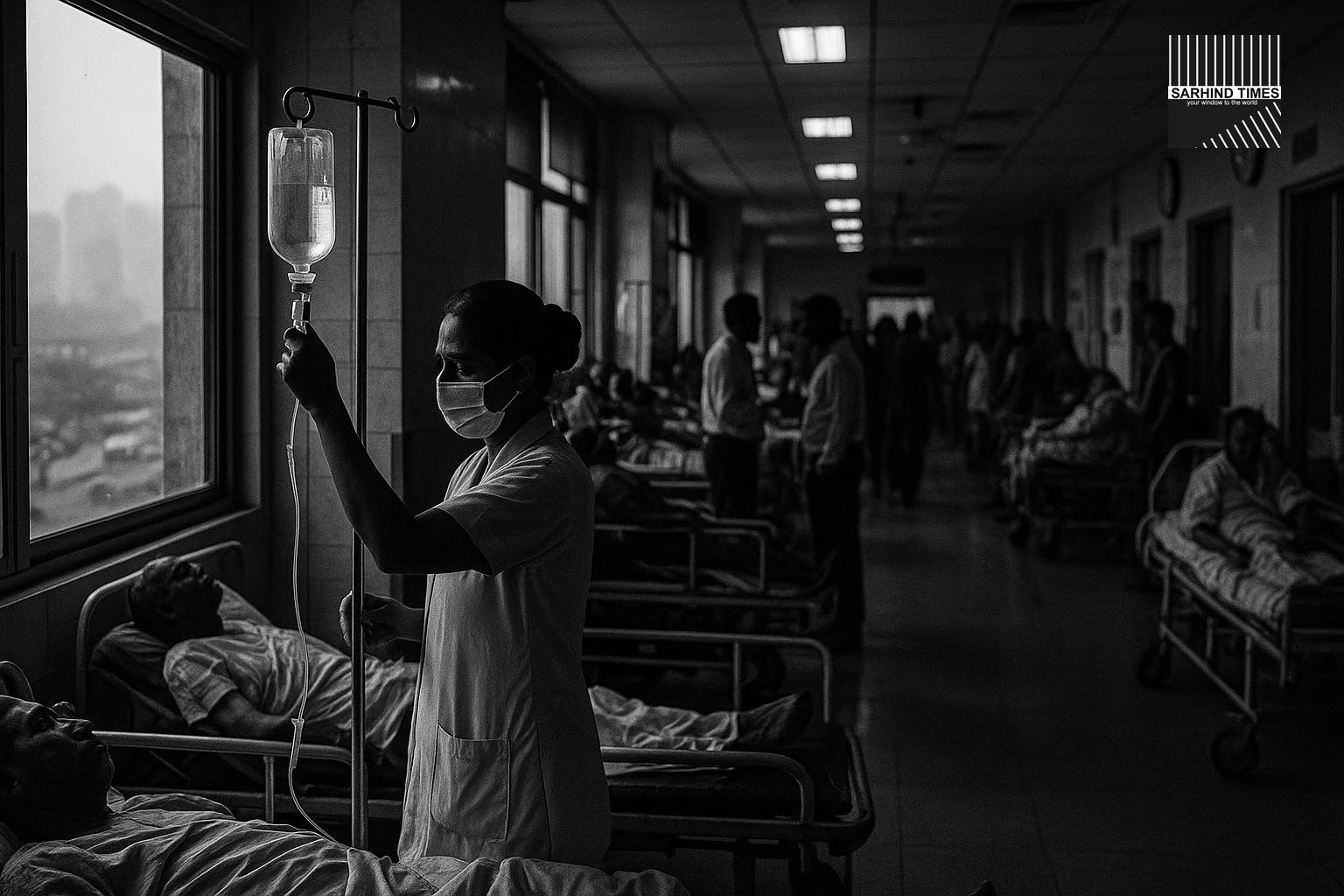
As flu hospitalisations spike ahead of winter, India’s health system braces for pressure — demand for vaccination, diagnostics and surge capacity rises.
Dateline: New Delhi | 2 November 2025
Summary: India has entered an early and pronounced influenza season ahead of the winter months, with multiple states reporting above-average caseloads, increased hospital admissions and rising concern among public‐health authorities. The Ministry of Health & Family Welfare (MoHFW) has issued a national advisory urging heightened surveillance, expanded vaccination drives especially for at‐risk groups, and hospital preparedness to manage a likely uptick in severe respiratory illness.
Setting the Stage: Early Rise in Influenza Cases
Traditionally, influenza activity in India peaks between December and February, coinciding with cooler weather and lower humidity. But this year, several regional surveillance units and state health departments began reporting higher-than-expected influenza‐like illness (ILI) and severe acute respiratory infection (SARI) cases as early as October. Hospitals in Delhi, Maharashtra, Karnataka and Telangana have noted occupancy rates rising by 15 – 20 percent compared to the same period last year.
The MoHFW has signalled that lab‐confirmed influenza A and B cases are up by roughly 30 percent in sentinel sites during the last four weeks, albeit comprehensive national data are still being compiled. While the absolute numbers remain manageable, the shift in timing and intensity has prompted concern among public‐health officials and hospital networks. The early wave places pressure on health systems already managing non-communicable diseases, monsoon-related illnesses and the routine universal immunisation programme.
Possible Drivers of the Surge
Public-health analysts point to several converging factors that may be driving this early influenza surge:
- Reduced immunity from prior flu seasons: With flu activity having been suppressed during COVID-19 pandemic years and with lower overall exposure, the population’s residual immunity may be lower.
- Relaxation of respiratory precautions: With the lifting of pandemic restrictions and reduced mask usage, transmissibility of seasonal respiratory viruses has increased.
- Air-quality degradation and pollution spikes: Several urban centres, notably Delhi-NCR, have recently experienced higher levels of particulate matter, which can exacerbate susceptibility to respiratory infections.
- Early temperature drop combined with high humidity: Some meteorological zones have entered cooler nights while daytime humidity remains moderate — a combination favourable for influenza virus survival and spread.
- Circulating viral strain change: Some virology laboratories have identified a slight shift in dominant influenza A sub-types compared to last year, potentially indicating a variant that is less familiar to the immune systems of many people.
National Advisory & Preparedness Measures
In response to the emerging situation, the MoHFW issued a comprehensive advisory to states and union territories. Key components of the advisory include:
- Intensified surveillance: States urged to enhance ILI/SARI case-detection, expand sentinel-site testing, share weekly data with the national real-time platform, and flag unusual clusters of respiratory illness.
- Vaccination drive expansion: Although the influenza vaccine is not part of the routine Universal Immunisation Programme (UIP) for all age-groups, the advisory recommends prioritising high-risk groups — children aged under 5, pregnant women, persons aged 65 and above, people with chronic diseases (diabetes, COPD, cardiovascular conditions) and healthcare workers. States are encouraged to procure additional doses urgently.
- Hospital readiness: Hospitals and district-level facilities are advised to review bed-capacity, stock antivirals (if applicable), ensure isolation protocols for severe respiratory infections, maintain oxygen and respiratory-support readiness, and coordinate with private-sector hospitals for surge demand.
- Public-communication campaign: The advisory emphasises public messaging on respiratory hygiene, early care-seeking for fever and cough, avoidance of overcrowding in closed spaces, use of masks in high-risk settings, and vaccination of eligible persons. Media and frontline workers are requested to amplify these messages.
- State-level coordination and data-sharing: Proposed weekly briefings between state surveillance and health-action teams, coordination with meteorological departments (to anticipate colder nights), school-closing contingency planning and transport shelter preparedness in urban low-income areas.
State Scenario — Who’s Reporting What?
The early escalation is visible across several states:
Delhi & NCR
In the national capital region, the municipal health authority noted a 22 percent rise in ILI outpatient visits over the past fortnight, and a 16 percent increase in respiratory-related hospital admissions compared to the same period in 2024. Several tertiary hospitals reported near-full occupancy of paediatric respiratory wards, and intensivists noted that even previously healthy adolescents were presenting with moderate flu complications. The region’s elevated air-pollution levels during recent inversion episodes may be amplifying illness severity.
Maharashtra
In Mumbai and Pune, state surveillance indicated an uptick in laboratory-confirmed influenza A (H3N2) cases, with an unusual number of pregnant women requiring hospital observation for fever and cough. The state health ministry has increased procurement of influenza vaccine doses by 40 percent compared to last year and is running awareness campaigns in slum and suburban clusters where access to care is delayed.
Karnataka & Telangana
Southern states have noted early admissions in children aged 2-7 years with high fevers, body aches and respiratory symptoms. In Bengaluru, the state health department flagged the two-week average for paediatric SARI admissions moving up by about 18 percent. These states are issuing school circulars on influenza risk, advising students with symptoms to stay home and urging schools to avoid large indoor gatherings until January.
Others
States such as Odisha, West Bengal and Uttar Pradesh have also raised alerts. The advisory emphasises that while absolute numbers remain manageable, the upward trend and earlier timeline are notable. Some districts are reporting vaccine-stock shortfalls and mobilising additional procurement. Rural health units in northern states have been asked to share weekly updates of ILI rounds so that emerging clusters can be flagged early.
Hospital Capacity and Health-System Response
Hospital administrators across multiple states report higher occupancy in respiratory wards and intensive-care units (ICUs), prompting a review of bed-allocation, staffing stretch and oxygen-support readiness. Key issues emerging include:
- Bed-occupancy pressure: Paediatric wards, particularly in urban centres, have reported occupancy of 85-90 percent in some shifts and a minority of patients requiring ventilation support. Some multi-specialty hospitals have deferred elective surgeries to conserve oxygen-beds and medical-staff capacity.
- Staffing strain and supply-chain: Nursing staff have noted many respiratory patients presenting with overlapping conditions (flu plus asthma/COPD exacerbation). Rapid turnover demands fresh recruitment or re-deployment of staff from other departments. The MoHFW advisory emphasises staff-rotation, refresher training in infection-prevention protocols and surge-timing roster planning.
- Diagnostic and reporting challenges: Some district labs currently face backlog in influenza-testing due to high volumes; turnaround-times of 48-72 hours have been reported. The advisory recommends streamlining logistics, RNA-testing prioritisation and real-time data input.
- Vaccine-distribution and stock-logistics: With demand rising, some states are experiencing short-term vaccine-stock stress. The MoHFW is coordinating with manufacturers to release additional doses and is urging states to manage cold-chain but maintain flexibility for emergency procurement.
Public-Health Implications and Risks
The early flu surge carries several implications for India’s health-system and broader society:
Impact on vulnerable populations: The increased activity means that young children, pregnant women and older adults may face risk of complications earlier than usual. In households where multiple members are working or studying, this may raise absenteeism and contagious spread.
Overlap with other respiratory viruses: The flu surge coincides with rising cases of other viruses such as respiratory-syncytial virus (RSV) and rhinovirus. Co-circulation could increase severity, complicate diagnostics and heighten hospitalisation risk. Policies will need to manage multiple threats simultaneously.
Economic and productivity impact: With flu affecting working-age populations earlier in the season, companies may face higher absenteeism, productivity losses and increased demand for sick-leave. Schools may need to adjust closure policies for symptomatic children and large indoor assemblies.
Vaccination challenge: Influenza vaccines in India are typically purchased via private markets rather than mass public-fund programs. The advisory places a spotlight on increasing uptake, but achieving high coverage with limited public-procurement may be difficult given cost and logistics.
Surge readiness in context of future waves: If this early wave is the first of multiple peaks, health-services may face resource constraints going into the typical high-demand winter months (December-February). Pre-emptive readiness will be critical to avoid overload.
What People Should Do: Public Guidance
The MoHFW advisory includes the following public-facing guidance which is important for all citizens:
- Get vaccinated if eligible — particularly children under 5, older adults, pregnant women and those with chronic illnesses.
- If you have fever, cough or body-ache, avoid crowded indoor spaces, wear a mask until you recover, and seek early medical advice if symptoms worsen.
- Maintain good ventilation at home and workplaces; avoid long indoor gatherings with poorly filtered air.
- Continue respiratory-hygiene practices—cover coughs and sneezes, clean hands often, avoid touching face and use tissue or elbow when coughing.
- For workplaces and schools: screen for symptomatic persons, stagger large gatherings, encourage remote work or leave for those unwell, and increase sanitisation of shared indoor spaces.
- Avoid self-medication; consult healthcare professionals for persistent high-fever, breathlessness or inability to drink. Ensure you follow doctor’s advice on antivirals or supportive care.
Regional Projections and What Lies Ahead
Looking ahead, health-modelling teams project the following scenario over the next three months:
• Peak influenza activity may arrive earlier than typical in northern India, possibly halving the usual December–February window and compressing high demand into a shorter timeframe.
• Southern states may see a secondary surge in January as school returns and holiday travel resumes.
• Re-infection risk for people who skipped flu vaccination in late-2024 remains elevated. Unmet vaccination needs and low public awareness may exacerbate outbreak clusters.
• The combined effect of flu, RSV and weather-driven respiratory viruses may place pressures on tertiary-care transmission, oxygen-support systems and rural hospital networks—hence early preparedness is critical.
Conclusion: Vigilance and Action Matter
India is facing an early start to its flu season—one that may test the resilience of the health-system, public-health planning and vaccination infrastructure. The MoHFW’s advisory is timely and signals that authorities are alert. Yet the gap between recommendation and execution remains the real test.
If states, hospitals and individuals act now—by stepping up vaccination, improving surveillance, and adopting preventive behaviors—India may avoid the worst of what could be a compressed and sharper influenza wave. On the other hand, any delay risks higher morbidity, particularly among vulnerable populations, and could strain services during winter. The time for action is now.



+ There are no comments
Add yours