
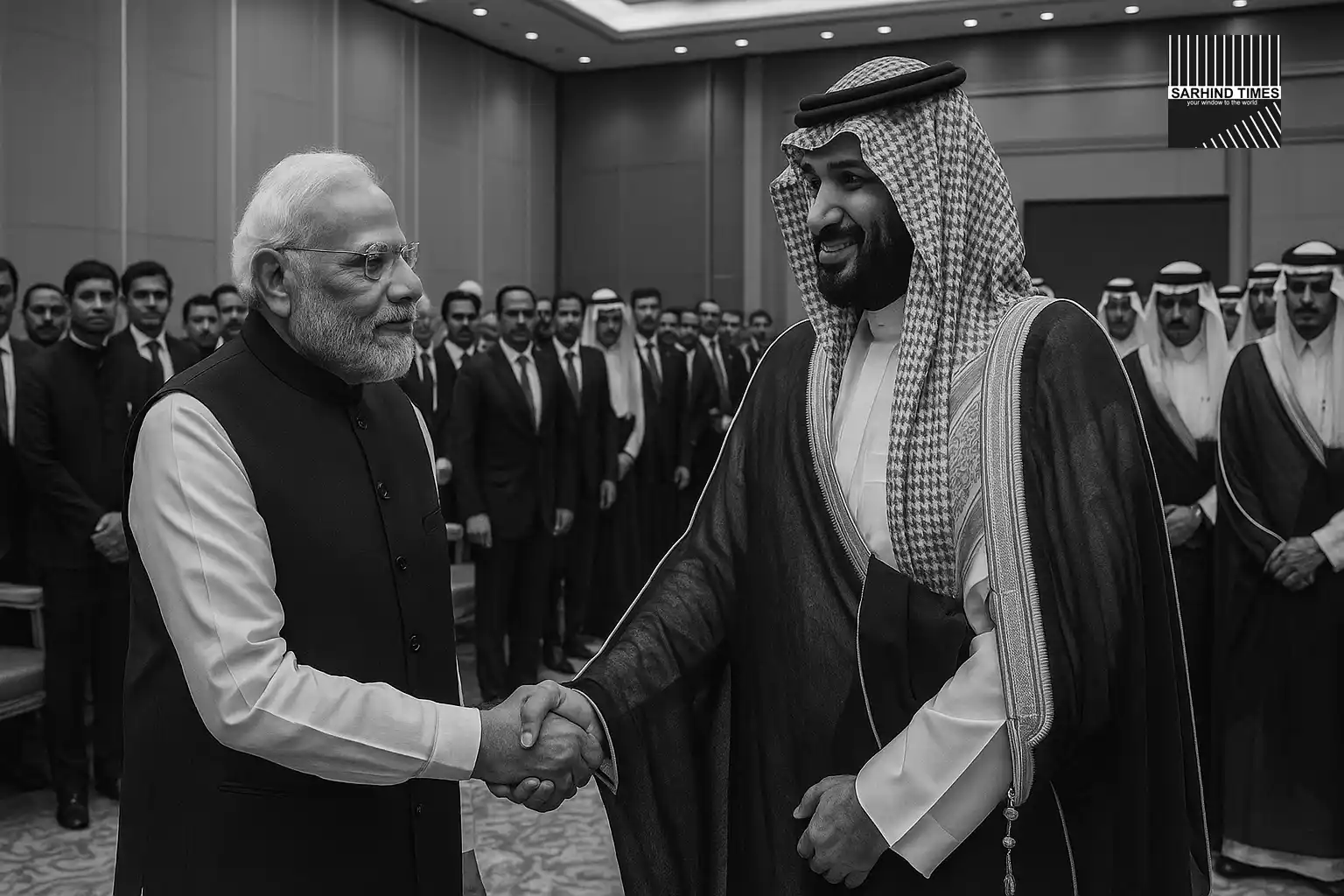
New Delhi and Riyadh sign landmark agreements covering hydrogen projects, defence supply chains and Indian labour rights
Dateline: Riyadh | 31 October 2025
Summary: At a high-level summit today in Riyadh, the governments of India and Saudi Arabia announced a comprehensive strategic partnership encompassing a USD 25 billion hydrogen-energy project, a defence-industrial cooperation agreement, and enhanced protections for Indian migrant workers in the kingdom. The accord reflects India’s increasing tilt towards the Gulf and Saudi Arabia’s push for global-partnership diversification as part of its Vision 2030 agenda.
Summit background and significance
The summit in Riyadh between Indian Prime Minister Narendra Modi and Saudi Crown Prince Mohammed bin Salman (MBS) comes at a time of shifting global alignments, elevated energy-security risks and India’s ambition to diversify its strategic partnerships. The two sides emphasised that this was not merely a transactional deal, but a “2 + 2 strategic partnership” covering energy, defence, labour mobility and technology. Indian officials described it as among the most significant bilateral agreements India has signed in the Gulf region in recent years.
For Saudi Arabia, forging a strong relationship with India, the world’s fastest major economy and a key consumer of energy, helps underpin its Vision 2030 aim of transitioning from hydrocarbons to ‘green’ and hydrogen energy and deepening ties beyond traditional Western partners. For India, the deal helps secure clean-energy imports, defence supply-chain diversification, and improved rights for its diaspora of nearly 3 million workers in the kingdom.
Key components of the accord
Several headline elements in the agreement stood out:
- USD 25 billion green-hydrogen investment: Saudi Arabia and India will jointly develop a large-scale green-hydrogen production facility in the Red Sea region, using Saudi renewable power paired with India-based offtake for domestic use and export. The project is expected to deliver up to 1 million metric tons of green-hydrogen annually by 2030, subject to regulatory and financing clearance.
- Defence-industrial cooperation framework: The two nations signed a memorandum of understanding that will see collaborative manufacturing of artillery-systems, medium-lift drones, unmanned surface vessels and logistics support infrastructure. Indian private-defence firms will set up manufacturing hubs in Saudi Arabia, leveraging the kingdom’s ‘make in Saudi’ ambition and India’s growing defence-industrial capacity.
- Migrant labour and social-protection pact: A key and less-publicised element of the deal was India securing enhanced protections for its migrant workers in Saudi Arabia. This includes access to a joint grievance redress mechanism, employer-bond reform, and social insurance cover for Indian labourers in sectors such as construction, services and logistics. The diaspora welcomed the move as long-awaited.
- Energy-security and refining cooperation: Saudi Aramco and Indian refiners have agreed on a long-term supply contract of low-sulphur crude to Indian refineries and an option for Indian firms to take minority equity in a Saudi refinery complex slated for completion in 2028. This tangibly connects energy-security to diplomacy.
- Technology and digital infrastructure collaboration: Both nations committed to exploring joint work in smart-cities, 5G/6G telecom, satellite-communications and cybersecurity. A task-force will be set up within 90 days to chart a roadmap, with India leading certain modules and Saudi Arabia contributing capital-and-markets backing.
Why this matters for India
Several strategic imperatives for India drive this deal:
- Energy diversification: India imports over 85 % of its crude oil needs and is aggressively seeking to move into clean-energy imports and hydrogen. Partnering with Saudi Arabia on green hydrogen gives India access to early-mover advantage.
- Defence autonomy and supply-chain robustness: With the India-China border stand-off, Russia-Ukraine war spill-over and global defence-supply uncertainties, India is keen to develop alternative manufacturing bases and strategic partners beyond traditional suppliers.
- Diaspora welfare and remittances: India’s large migrant workforce in the Gulf sends home remittances exceeding USD 80 billion annually. Ensuring stronger protections enhances both labour-rights and the sustainability of remittance flows.
- Geopolitical balance: By deepening ties with Saudi Arabia, India hedges its position between Middle-East blocs and secures a strategic friend in a region still dominated by great-power competition (US, China, Iran).
Saudi Arabia’s perspective and ambitions
From the Riyadh side, the agreement serves multiple aims:
- Scaling Vision 2030 beyond the Gulf: With its decarbonisation push and aim to attract global strategic partners, a partnership with India helps Saudi Arabia diversify its investor-base and customers beyond Europe and the US.
- Manufacturing expansion: Saudi Arabia wants to build advanced manufacturing ecosystems in defence, aerospace and logistics; Indian private firms bring scale, cost-competitiveness and know-how.
- Labour market reform signal: By agreeing to enhanced protections for Indian workers, Saudi Arabia signals to other labour-source countries (Philippines, Indonesia, Bangladesh) that it is moving toward better practices and could unlock better access to Gulf job-markets.
- Soft-power and regional influence: A deeper India link enhances Saudi Arabia’s stature in the Global South, especially in Asia, and aligns with its efforts at playing a constructive role in regional diplomacy between India-Iran, India-Pakistan and beyond.
Reactions from capitals and stakeholders
In New Delhi, Union Ministers for External Affairs and Commerce as well as the Ministry of Defence termed the accord a “paradigm shift” in India’s West Asia policy. Indian industry associations welcomed the defence-manufacturing tie-up and several mid-tier Indian companies saw the pact as an invitation to form joint ventures with Saudi-Arab firms.
Saudi media praised the deal as “a new chapter of strategic partnership” with India; analysts in Riyadh highlighted that the hydrogen-deal could make Saudi Arabia a major exporter of green-hydrogen to India and beyond, not just Europe.
Worker-advocacy groups in India cited the labour-protection pact as “a much-needed breakthrough” and said it could set a standard for Indian migrant rights globally. Some trade-unions in India, however, expressed caution and asked for detailed monitoring of implementation of protections on the ground.
Challenges and risk-factors to watch
Despite the headline-bigness of the handshake, several risk-areas remain:
- Financing and commercial viability: A USD 25 billion hydrogen investment is ambitious; securing long-term offtake, managing cost-overruns and technology-risk will be critical.
- Execution timetable: Defence-manufacturing hubs, labour-reform mechanisms and cross-border institutional frameworks will take years to operationalise; delays could cause political-friction.
- Political/geopolitical sensitivity: The Middle East remains volatile; India must balance its Saudi friendship with Iran, Israel, UAE and other partners. Any regional flare-up could test India-Saudi cooperation.
- Labour-rights implementation gap: While the labour-protection accord is welcome, real-world enforcement in Saudi Arabia’s large-scale construction-services sector (where migrant abuses have been reported) remains challenging.
- Domestic optics in India: Some Indian observers question whether the strategic deal will translate into jobs, manufacturing growth and export gains for India’s economy — not just headline memoranda.
What to monitor going forward
Key milestones and indicators to watch include:
- Final investment agreements and project-financing for the hydrogen plant (which should be signed by Q2 2026).
- The selection of Indian and Saudi manufacturing partners under the defence MoU and the first joint-venture announcement (expected by end of 2026).
- Implementation of the worker-grievance mechanism (with public-reporting of cases and resolution times) to test whether the labour-protection framework becomes meaningful.
- Market reaction and share-price movement in relevant Indian defence, energy and infrastructure firms—investors will watch whether the deal leads to contract wins, orders and revenue upside.
- Diplomatic follow-up: whether India-Saudi cooperation translates into regular ministerial-level 2 + 2 meetings, tri-lateral initiatives in West Asia and joint security/anti-terror operations. A first such meeting is expected in 2026.
Broader context: India’s West Asia pivot
This agreement must be viewed in the larger framework of India’s increasing engagement with West Asia. Over the past decade, India has deepened ties with the United Arab Emirates, Qatar, Israel and Saudi Arabia — framed around energy, diaspora, trade and geopolitics. The Riyadh summit strengthens this trend and signals that India no longer treats the Gulf purely as a service-economy destination for its migrants and energy imports — but as a strategic partner in co-development.
For Saudi Arabia, engaging with India provides a counter-weight to over-dependence on Western buyers and investors. The green-hydrogen project, defence-manufacturing pact and labour-reform signalling align with Riyadh’s attempt to reshape its global partnerships from extractive-economy partner to high-technology collaborator.
Conclusion
The India-Saudi accord signed in Riyadh represents a high-stakes, long-term wager by both Delhi and Riyadh. If fully executed and sustained, it could reshape energy-flows, defence-supply-chains and labour mobility between the two nations — and by extension alter regional geopolitics across Asia and the Middle East.
But ambition alone is not sufficient. The real test will lie in translation: investment executed, manufacturing plants built, rights upheld, exports flowing. For Indian policymakers, business-leaders and citizens alike, the message must be: watch delivery, insist on accountability, and ensure that strategic rhetoric results in tangible benefits. The handshake today may be strong; whether it solidifies into sustained partnership remains to be seen.



+ There are no comments
Add yours