
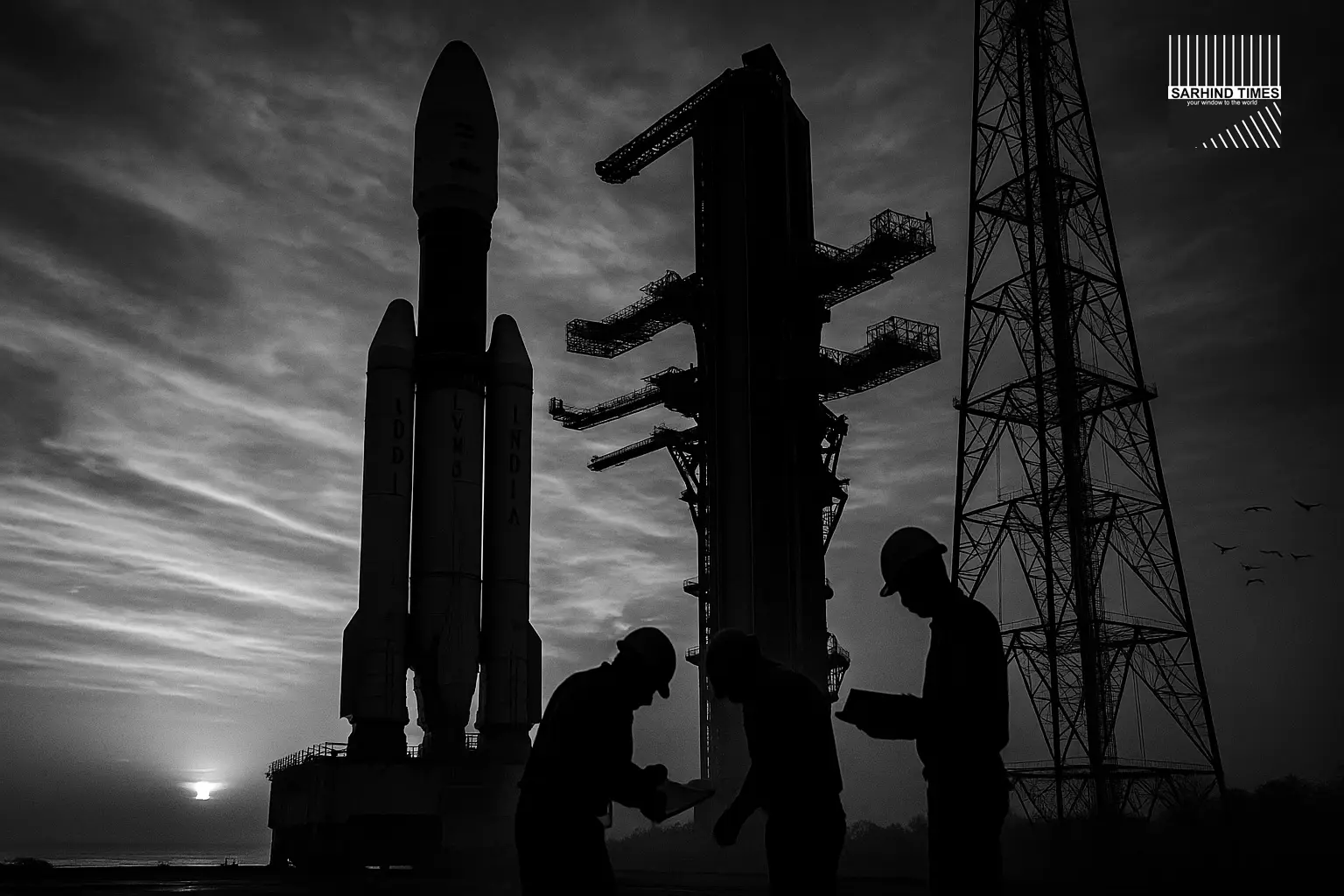
The new bilateral agreement marks a major leap in India’s defence modernisation drive, focusing on artificial intelligence, autonomous avionics, and secure data-link technology for next-generation combat aircraft.
India and France have signed a landmark agreement to jointly design and develop AI-enabled combat technologies, strengthening a decades-long partnership that began with the Mirage and matured through the Rafale. The pact will deepen cooperation in research, testing, and production of autonomous air-combat systems under the Make in India + Make with India framework.
What Was Signed and Why It Matters
New Delhi, October 24 — In a defining moment for global defence collaboration, India and France on Thursday finalised an inter-governmental framework agreement to co-develop artificial-intelligence-based fighter avionics and electronic warfare systems. The pact, signed at South Block by Defence Minister Rajnath Singh and French Armed Forces Minister Sebastien Lecornu, aims to position both nations at the forefront of intelligent air combat and marks the first time India has partnered a NATO ally on AI-centred defence R&D.
“This partnership blends France’s advanced aerospace technology with India’s digital innovation ecosystem. It will transform our combat aviation into an integrated, self-learning network.” — Rajnath Singh, Defence Minister of India
The agreement is as much about technology as it is about trust. It signals a shift from platform-centric procurement toward code-centric co-creation, where algorithms, data pipelines, and interoperability standards become strategic assets equal to airframes and engines.
Scope of the Agreement
Under the memorandum, India’s Defence Research and Development Organisation (DRDO) and France’s Direction Generale de l’Armement (DGA) will co-lead a “Combat AI Consortium”. The mission set spans capability development, testing, certification, and eventual production scale-up, with a deliberate emphasis on sovereign control and export-compliant design.
- AI Decision Engines: Algorithms for real-time threat detection, target prioritisation, sensor cueing, and pilot-assist manoeuvre suggestions.
- Secure Data-Link Protocols: Quantum-resistant, jam-resilient communications between fighters, loyal wingman drones, and command-and-control nodes.
- Predictive Maintenance: Onboard self-diagnostics and fleet-wide prognostics to flag mechanical and cyber anomalies before failure.
- Swarm Integration Suite: A control architecture enabling a manned fighter to orchestrate multiple unmanned assets in contested airspace.
Two joint test facilities will anchor the programme: at the Aeronautical Development Agency (ADA) in Bengaluru and at Dassault Aviation’s CEMAC lab near Paris. The labs will mirror each other’s simulation stacks so that code validated in one can be flown in the other with minimal porting overhead.
Strategic Context: AMCA, FCAS, and the Sixth-Gen Arc
The timing aligns with India’s AMCA (Advanced Medium Combat Aircraft) entering its prototype stage and France’s work on the tri-national Future Combat Air System (FCAS) with Germany and Spain. The new pact provides a technical interface without merging sovereign flagship projects, ensuring national control over sensitive subsystems while avoiding duplicated effort on common building blocks like human-machine teaming, sensor fusion, and low-latency networking.
“AI is the new jet fuel of warfare. This deal ensures India is not a buyer but a co-creator in sixth-generation combat systems.” — Air Marshal (Retd.) Anil Chopra
From Mystere to Rafale: A Partnership Evolves
India-France defence cooperation spans seven decades: the Mystere IV in the 1950s, Mirage 2000s that proved decisive during Kargil in 1999, and the Rafale inducted from 2020. Those milestones were platform acquisitions. The present chapter, by contrast, is about co-innovation — sharing algorithms, simulation tools, and verification methods that will define air combat for the next twenty years.
“Our alliance symbolises trust built in combat and continuity built in peace. We will share not just airframes but algorithms.” — Sebastien Lecornu, French Armed Forces Minister
Funding and Industrial Framework
The joint programme will operate with an initial allocation of € 600 million (approximately ₹ 5,500 crore), split equally. France will contribute algorithmic libraries, scenario generators, and high-fidelity simulators; India will provide scalable compute infrastructure, hardware-in-the-loop benches, and expansive field-testing ranges. A deliberate Make in India + Make with India approach will guide procurement and IP sharing.
- Prime contractors: Dassault Aviation and Safran Electronics (France); HAL, BEL, Tata Advanced Systems, and Data Patterns (India).
- SME/startup lanes: Competitive calls for niche algorithms in perception, decision, and edge-compute optimisation.
- Indigenous content: 40% at prototype phase, rising to 70% at serial production, measured across hardware, firmware, and code.
How AI Changes Air Combat
Traditional cockpits feed pilots torrents of raw data. AI-centered avionics invert that flow by synthesising information into decision options: “break right in 0.6s”, “jam band 3 now”, “handover target to wingman-2”. Machine learning models trained on millions of simulated engagements and real-flight logs can recognise tactics, predict adversary moves, and propose counter-manoeuvres faster than human reaction cycles.
| Function | AI Augmentation | Operational Payoff |
|---|---|---|
| Sensor Fusion | Fuses radar, IRST, EW, and offboard feeds into a single track file | Earlier detection, fewer false tracks, faster engagements |
| Pilot Assist | Recommends manoeuvres and weapon envelopes in real time | Lower cognitive load, higher survivability under saturation |
| Loyal Wingman Control | Autonomous tasking and deconfliction of unmanned assets | Distributed lethality with fewer human pilots at risk |
Security and Cyber Resilience
AI brings new attack surfaces: data poisoning, model inversion, adversarial inputs, and link spoofing. To mitigate, the partners will institute a dual-audit protocol overseen by CERT-In (India) and ANSSI (France). Every model will undergo cryptographic signature checks, adversarial robustness tests, and red-team exercises before flight release. An independent fail-safe layer will allow pilots to disengage AI or revert to degraded modes if anomalies are detected.
Voices from the Forces
“We have flown supersonic and stealth; now we will fly smart.” — Air Chief Marshal V. R. Chaudhari, Chief of the Air Staff, IAF
“This cooperation ensures our pilots fight together in data as we once did in the skies.” — General Stephane Mille, Chief of Staff, French Air and Space Force
Economic and Industrial Implications
Defence economists estimate up to 7,000 high-skilled jobs across avionics software, embedded systems, and test engineering in both countries. Indian startups working on autonomy, perception, and secure edge compute — including Bengaluru and Hyderabad clusters — are positioned to supply modules and tooling. The programme nudges India’s defence ecosystem from hardware assembly toward algorithm design, IP creation, and certification services, raising value capture per exported system.
Diplomatic Significance and the Indo-Pacific
The pact reinforces the India-France Strategic Partnership at its 25-year mark. It complements cooperation in submarine propulsion, maritime domain awareness, and space situational awareness. Strategically, interoperable, trusted AI in air power strengthens deterrence across the Indo-Pacific without precipitating arms-race instability, because algorithms can be verified, audited, and constrained by shared rules of engagement.
“Our alliance is no longer transactional — it’s transformational.” — Emmanuel Lenain, French Ambassador to India
Global Reaction and Norm-Setting
Early reactions from international think tanks frame the agreement as a template for equitable North-South collaboration in emerging defence tech. It also contributes to global norm-setting: if democracies converge on verifiable human-in-the-loop controls, robust audits, and incident reporting for military AI, those standards may travel with exported systems and shape wider practice.
Law, Ethics, and Human Control
Both countries acknowledge constraints under international humanitarian law and the UN Convention on Certain Conventional Weapons processes. Programme charters will codify human responsibility for use-of-force decisions, with hard interlocks preventing uncommanded weapon release. A joint ethics review board will assess scenario libraries to avoid bias creep and escalation-prone behaviours in edge cases.
“Defence AI is not about replacing pilots but amplifying human intuition. The challenge is to keep humans firmly in command.” — Dr Ritika Bhandari, AI Strategist
Risks and Challenges
- Integrating AI modules into legacy platforms like Rafale without compromising certification baselines.
- Navigating export-control regimes and data-sharing restrictions while maintaining co-development momentum.
- Synchronising validation, verification, and safety cases across DRDO and DGA standards and toolchains.
- Ensuring supply-chain security for critical chips, cryptographic elements, and radiation-hardened components.
“Every challenge is an opportunity for standardisation, and standardisation is the bedrock of scalable military AI.” — Dr Samir Vohra, Programme Director, DRDO
Engineering Roadmap and Integration
The initial sprint will deliver an “AI Cockpit Assistant” prototype by mid-2026. It will run on a modular, certifiable compute stack with deterministic scheduling, partitioned memory, and built-in explainability logs. Flight testing is planned on a modified Tejas Mk-1A, with hardware-in-the-loop rehearsals to de-risk edge cases. If performance gates are met, the suite will map into AMCA and, on the French side, into FCAS family nodes from 2029 onward.
- Kernel-level hardening and MIL-STD-compliant interfaces for airworthiness.
- Model provenance tracking and cryptographic attestation on load.
- Post-sortie debrief analytics that learn from engagements and update tactics libraries.
Background: From Procurement to Co-Creation
India’s shift toward co-development reflects three realities. First, the centre of gravity in combat power is tilting from platforms to software-defined capabilities that iterate faster than airframe life cycles. Second, supply-chain volatility demands domestic resilience in code and compute. Third, export success in a crowded market will hinge on modularity, transparency, and lifecycle support rather than headline thrust or range figures.
Stakeholders and Governance
A bi-national steering committee will allocate workshares, track milestones, and adjudicate IP. Industry councils on both sides will advise on manufacturability and export pathways. Academic partners will run joint PhD cohorts in safety-critical AI, with open data challenges to seed a wider talent pipeline. Annual white papers will summarise test outcomes, safety incidents, and remediation — classified where necessary, but with public executive summaries to build confidence.
Timeline: From Lab to Squadron
| Phase | Date/Year | Milestone |
|---|---|---|
| I | Q4 2025 – Q2 2026 | Consortium stood up; twin labs commissioned; AI Cockpit Assistant v1.0 integrated on test rigs |
| II | Q3 2026 – 2028 | Flight trials on Tejas Mk-1A; swarm-control and secure data-link demos; cyber hardening and certification |
| III | 2029 – 2030 | Operational fitment on AMCA and FCAS family nodes; export-ready configuration and joint user evaluation |
What to Watch Next
- Release of interface control documents (ICDs) for third-party module suppliers.
- Announcement of the Joint Innovation Fund’s first startup cohort and test ranges for loyal wingman trials.
- Publication of the first bi-national AI safety and incident reporting framework for combat systems.
Conclusion: Data Is the New Defence Frontier
As dogfights migrate from skies to circuits, the India-France AI Defence Pact signals a paradigm shift — from importing jets to co-authoring the intelligence that flies them. Its success will be measured not only by sortie rates and kill chains, but by the integrity of its code, the resilience of its links, and the clarity of its human control. Two democracies are writing that future together, one line of code at a time.



+ There are no comments
Add yours