
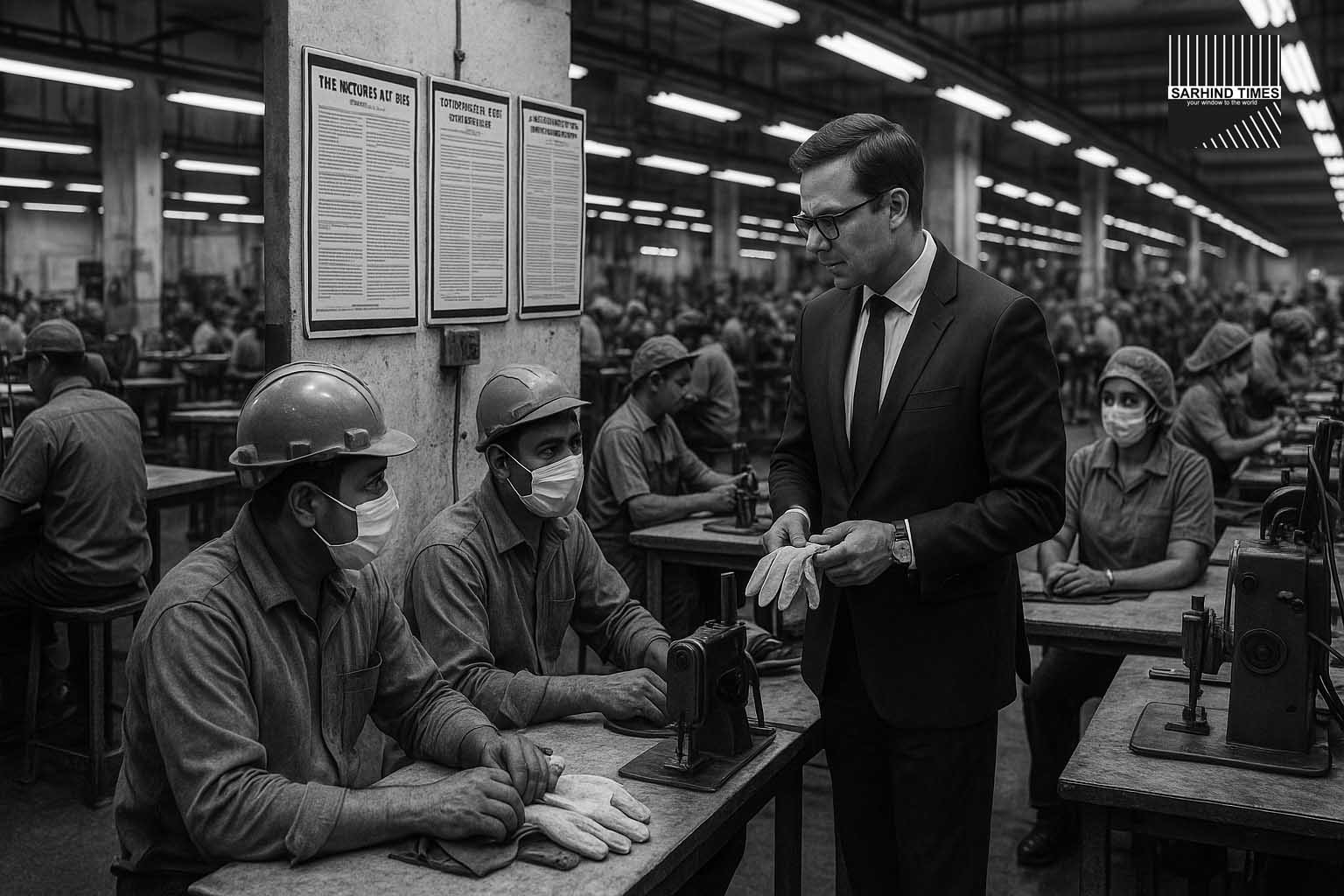
On 21 November 2025, India rolled out four consolidated labour laws. Haryana moves to align and implement them, impacting wages, gig-workers, industrial relations and safety across the state — with both opportunities and risks for Gurugram’s workforce and business community.
Dateline: Gurugram | 25 November 2025
Summary: India’s central government has brought into force four major labour codes covering wages, industrial relations, social security and occupational safety. Haryana has begun the process of adoption in the state, signalling significant changes for workers—especially in Gurugram’s industrial, services and gig economy sectors. While reforms promise expanded protections and unified frameworks, businesses and trade unions alike express caution about implementation, compliance costs and changes in workforce structure.
The Reform Landscape: Labour Laws Consolidated
After years of discussion and legislative delays, the central government has taken the significant step of implementing four major labour codes from 21 November 2025, replacing 29 older laws. These codes are: the Code on Wages (2019), the Industrial Relations Code (2020), the Code on Social Security (2020), and the Occupational Safety, Health and Working Conditions (OSHWC) Code (2020).
The stated objective is to modernise India’s labour-governance framework: simplify compliance, enhance worker protections, adapt to the changing nature of work (gig, platform, migrant), and support economic growth by reducing legacies of fragmented regulation. For Haryana — home to Gurugram, large manufacturing clusters and significant gig-services employment — this marks a pivotal transition.
Key Changes Workers Must Know
Among the most significant provisions for workers are:
- Mandatory written job-appointments/offer letters, improving clarity for informal workers.
- A national minimum-wage floor, narrow wage-disparities across regions.
- Recognition of gig and platform workers under labour law — extending social-security benefits to previously excluded categories.
- Overtime payments at double the normal wage rate if weekly work exceeds specified limits.
- Women workers now eligible for night shifts with mandatory safety provisions; extended maternity-leave protection in the unorganised sector.
What Businesses in Gurugram Should Watch
From the business side, especially in Gurugram’s services, manufacturing and gig-economy sectors, the codes introduce key changes including:
-
- The threshold for mandatory government approval for layoffs and shutdowns has been raised from firms with 100 workers to those with 300 workers — giving businesses more flexibility.
- Daily working hours may now stretch from 8 to 12 hours under certain conditions, as long as weekly hours do not exceed 48. ﹙ Note: specific state rules may further define this.﹚
- Contractors will be able to operate across states under a nationwide five-year licence, simplifying multi-state operations common in the NCR region.
- Improved clarity on industrial-relations frameworks may facilitate dynamic labour deployment and reduce legal friction, though some firms caution about transitional compliance costs.
Gurugram’s Unique Position: Opportunities and Risks
Gurugram — with its dense mix of IT services, manufacturing parks, logistics hubs and gig-economy workforce — stands at a crossroads. On the one hand, the simplified labour structure and recognition of platform work open formal channels and protections. On the other hand, transitional uncertainties could disrupt established practices.
For example, gig-workers in app-based delivery and ride-hailing firms, numbering thousands in Gurugram’s economy, may now qualify for social-security benefits. But companies and platforms must swiftly adjust payroll, contracts and benefit frameworks. Trade-unions have already flagged that implementation timelines remain unclear.
Implementation Timeline and State-Level Coordination
While the codes are in force nationally, actual enforcement in states like Haryana requires state-government notification of rules, aligning state legislation, setting wage schedules, safety-licence frameworks and consultation with industry. The Haryana Labour Department has started state-level rule-making and stakeholder consultations.
In Gurugram, district-level enforcement units are being briefed on the new codes; digital portals are being upgraded to reflect changes. Businesses have been advised to audit their employment records, contracts, overtime practices and contractor arrangements ahead of full rollout.
Praise and Pushback: Mixed Reactions at Ground Level
Labour-rights groups in Gurugram and Haryana welcomed expanded protections for unorganised workers, gig-workers, and women. However, trade-union bodies remain critical, arguing that increased hire-and-fire flexibility may weaken collective bargaining and workers’ rights.
Business chambers welcomed clarity and unified framework but warned of short-term adjustment costs, administrative burden, uncertainty around state-rules and clarity needed on contractor regulation. Many MSMEs in Gurugram fear cost-escalation in compliance and potential penalties if transition is mishandled.
Labour Relations & Industrial Relations Code: What Changes?
The Industrial Relations Code introduces a more structured framework for negotiation, dispute-resolution, strikes and lock-outs. Firms with up to 300 employees now face fewer prior-approval requirements for layoffs and closures. Larger firms will still require government approvals, but the threshold shift may influence how manufacturing and large-scale operations in Gurugram manage labour.
Occupational Safety & Health: A Stronger Focus
Under the OSHWC Code, employers must now ensure systematic health-check programmes, emergency medical provisions, hazard identification, and reporting mechanisms. For industrial-parks, logistics-warehouses and goods-movement clusters around Gurugram, this means tightened oversight. Free annual health check-ups for workers above a threshold age, mandatory safety certifications and expanded ambit to “unorganised” worksites are part of the reform.
Social Security Code: Gig-Workers, Migrants, Unorganised Sector Now in Focus
The Code on Social Security expands coverage to gig- and platform-workers, unorganised-sector workers, and establishes mechanisms for social-security funds. In Gurugram’s large population of delivery, ride-hailing, domestic-help, warehouse-labour and contract-staff, this could be transformative — if implemented effectively. Still, the timeline for constructing these schemes remains uncertain.
Wages Code: Floor, Transparency and Regional Equity
The Code on Wages standardises wage regulation, mandates payment of minimum wages, equal pay for equal work, timely payments, and breadth across sectors. For states like Haryana, compiling and notifying region-specific minimum-wage schedules aligned to central floors will now be an urgent task. For Gurugram’s wide variety of job-profiles and skilling levels, clarity in this area is key.
Transition Challenges for MSMEs and Start-ups
While large firms in Gurugram have dedicated HR and compliance teams, many small-and-medium enterprises (SMEs), start-ups and logistics providers may struggle with the shift. Key concerns include:
-
-
- Need to re-draft employment contracts and appointment letters
- Restructuring contractor and subcontractor arrangements
- Understanding new wage floors and overtime calculations
- Accounting for social-security contributions to new categories of workers
- Training for safety-compliance and reporting workflows
-
What Workers in Gurugram Should Do Now
For employees and gig-workers in Gurugram, immediate action can include:
-
-
- Request formal employment letter if lacking one
- Check for overtime payment compliance
- For gig-workers, ask the aggregator or platform for social-security-scheme information
- Ensure site safety at worksites and request safety check-ups if in hazardous roles
- Check minimum-wage schedule once Haryana publishes it — align expectations accordingly
-
What Businesses Should Audit Immediately
Employers in Gurugram should begin internal audits of:
-
-
- Contracts and letter-of-appointment records
- Wage compliance (minimum wage, overtime, equal pay) across workforce
- Contractor licences and multi-state activity compliance
- Safety-audit documentation and annual health-check data
- Social-security coverage architecture for gig/contract workers
- Industrial-relations thresholds and lay-off policies in light of new thresholds
-
Outlook: What Will Be the Impact in 12–18 Months?
In the medium term, if the new labour-codes are implemented effectively in Haryana and Gurugram:
-
-
- Workers should see improved clarity, protection and social benefits.
- Businesses may benefit from simplified, unified rules if compliance burden is managed.
- Start-ups and gig-platforms may integrate social-security frameworks and become more sustainable employers.
- Formalisation of the economy may increase, bringing more workers into documented roles and benefit systems — which can boost consumption and stability.
-
However, risks remain if enforcement is weak, state-rules delayed or cost burdens rise unduly. Trade-unions caution that transitional flexibility may lead to dilution of rights unless monitored carefully.
Conclusion: A New Labour Landscape for Gurugram and Haryana
The rollout of the four new labour codes marks a watershed moment for India’s workforce governance. For Haryana and its industrial-and-service hub, Gurugram, the impact will be wide-ranging — from how employees are contracted, paid, assured benefits, to how firms hire, manage labour and deploy contractors.
The promise is clear: clearer rules, broader protections, better alignment with modern employment forms and flexible growth. But the execution path will determine whether this becomes a milestone of progress or a transitional burden. For workers and businesses alike in Gurugram, the time to act is now — adapt, engage, audit, and prepare for the new labour era.



+ There are no comments
Add yours