
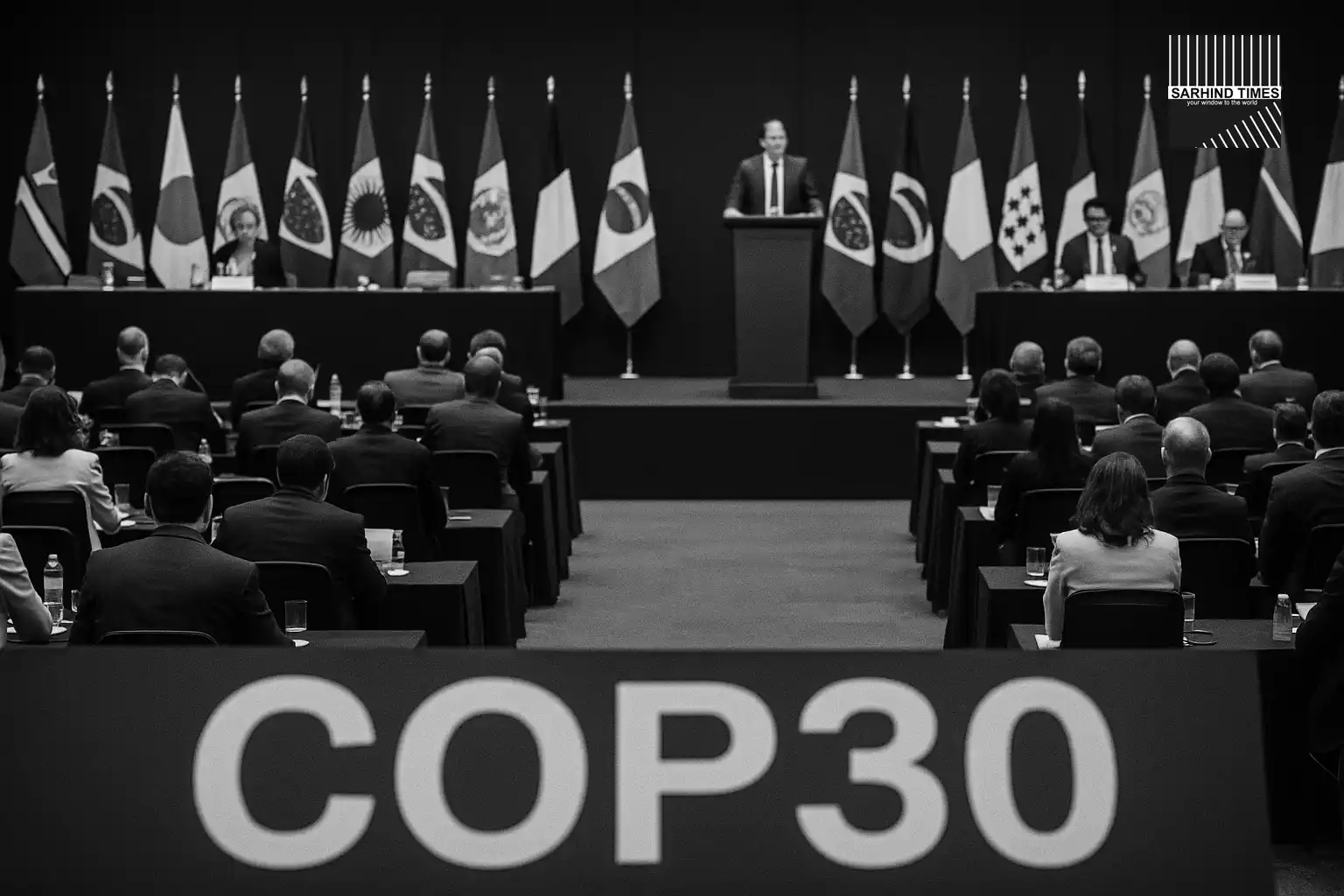
With the summit in Belém, Brazil, just days away, experts warn the world’s climate response hinges on bold adaptation commitments
Dateline: Belém | 05 November 2025
Summary: As representatives gather in Belém for COP30, the spotlight has shifted from emissions reduction to climate adaptation. The Global Center on Adaptation and other leading institutions are calling for a “breakthrough” in adaptation finance, just-transition planning and forest-protection mechanisms ahead of the summit. The window for decisive action is narrowing.
Setting the Scene: From Paris to Belém
It is now more than a decade since the Paris Agreement was adopted, setting global targets to limit warming to 1.5°C. While mitigation efforts have made some headway, the world is now confronted with the reality that adaptation must be central to climate strategy—not an afterthought. The 30th session of the Conference of the Parties (COP30) to the UN Framework Convention on Climate Change will be held in Belém, Brazil from 10 to 21 November 2025.
The choice of Belém — at the gateway to the Amazon — carries symbolic and practical weight: the venue underlines the urgency of protecting forests, safeguarding vulnerable communities and delivering climate justice. But with the summit just days away, key preparatory statements by global adaptation bodies and civil society highlight the precarious state of action.
Why Adaptation is Now Front and Centre
Historically, climate negotiations have focused heavily on mitigation — cutting greenhouse gas emissions, shifting to renewables, curbing fossil-fuel use. But increasingly, the impacts of climate change — extreme weather, floods, droughts, food insecurity and displacement — are not waiting for ideal conditions to act. Resilience and adaptation are now a core part of global climate strategy.
The Global Center on Adaptation, in a statement issued on 3 November 2025, called on world leaders to deliver a climate-adaptation breakthrough at COP30. It warned that “adaptation can no longer be treated as a secondary pillar of climate action”.
Among the concerns cited: only a small fraction of climate-finance flows currently support adaptation, especially in developing countries. The shift from targets to implementation is urgent.
Key Demands and Policy Breakpoints
Several major demands have emerged ahead of COP30:
- Tripling adaptation finance by 2030 relative to 2022 levels.
- Embedding adaptation across all national climate and development plans, including National Adaptation Plans (NAPs) and Nationally Determined Contributions (NDCs).
- Developing measurable indicators and tracking frameworks for resilience outcomes — not just emissions cuts.
- Establishing new financial architecture — blended finance, guarantees, de-risking tools, and moves to attract private-sector funding into resilience.
- Ensuring climate justice: financing supports communities and workers transitioning from high-carbon sectors, particularly in the Global South. Civil society groups highlight the “just transition” gap.
Forest Protection & The Tropical Forests Forever Facility (TFFF)
One of the signature initiatives expected at COP30 is the Tropical Forests Forever Facility (TFFF), a Brazil-led blended-finance mechanism designed to mobilise up to US $125 billion to support tropical-forest nations that preserve ecosystems rather than converting them.
On 3 November, Brazil’s Finance Minister indicated that reaching an initial goal of US $10 billion in its first year was “possible” if major G20 countries participate.
The TFFF intends to function like an endowment: funds will yield returns which will be used to pay annual results-based stipends to forest-preserving countries. Its launch at COP30 could set a new benchmark for nature-based climate finance.
The Scale of the Finance Gap
Despite growing awareness, adaptation finance remains grossly under-funded. The Institute for Sustainable Development (IISD) and other analysts estimate an annual adaptation-finance gap of between US $284 billion and US $339 billion for developing countries alone.
A recent report found that less than 3 % of international climate-aid funding is aligned with just-transition principles (i.e., supporting workers and communities as fossil-based industries are phased out).
These shortfalls leave vulnerable countries exposed: floods, droughts, crop failures, and habitat loss are no longer future risks—they are present-day realities. Adaptation is not a luxury but urgent.
Why This Matters for India and Other Emerging Economies
Italy, India, Brazil and many other emerging economies are at the crossroads of climate vulnerability, rapidly urbanising populations, and rising emissions. For India in particular, and states such as Haryana and cities like Gurugram, climate adaptation intersects with heat-waves, pollution, extreme rainfall, urban flooding and infrastructure stress.
For Indian policymakers and business leaders, COP30 outcomes bear directly on access to finance, technology, and multilateral cooperation. The challenge is two-fold: managing the domestic transition — cleaner energy, resilient infrastructure, resilient agriculture — and aligning with global finance and policy flows. Participation in instrumentation, carbon markets, nature-based solutions and adaptation funding streams will deepen as outcomes from Belém set precedent.
Political and Institutional Dynamics
The lead-up to COP30 has shown signs of tension and delay: developed-country commitments to climate finance have been slower than promises. At the same time, developing-country delegates emphasise sovereignty, equity and risk-sharing.
The Global Center on Adaptation made clear: “History will not judge us by the promises we make but by the lives we save.”
Civil society groups emphasise the need for a “People’s COP” — one in which grants, not loans, support vulnerable regions; and where women, youth, Indigenous peoples and local communities occupy leadership roles in designing adaptation solutions.
From Aspirations to Implementation: What COP30 Must Deliver
Observers identify four practical deliverables to assess COP30’s success:
- A new global adaptation-finance goal (e.g., tripling 2022 levels), with major jurisdictions committing to figures and timelines.
- Launch of the TFFF or equivalent nature-finance mechanism, with concrete pledges.
- Operationalisation of “just transition” frameworks: metrics and funding that support workers/businesses shifting out of high-carbon sectors.
- Financing architecture reforms: moving from project-based climate grants to system-wide, resilient infrastructure, private-sector engagement and local-led delivery.
Challenges and Risks Ahead
Despite the heightened urgency, COP30 faces important headwinds:
1. Finance commitments lag. With global targets of US $1.3 trillion per year by 2035 for climate finance, only a small fraction has been mobilised so far.
2. Implementation gap remains. Many national plans (NDCs/NAPs) remain inadequate, under-costed or lacking measurable outcomes.
3. Equity concerns. Emerging economies assert that climate-finance burdens and responsibilities must align with historical emissions and current capacities. Without that, trust erosion may hamper multilateral processes.
4. Private-sector mobilisation remains uncertain. While many funds call for blended finance and de-risking instruments, converting intent into capital flows has proven slow.
Implications for Business, Cities and Communities
The outcome of COP30 will filter down to businesses, municipal governments, and local communities worldwide.
For businesses: Adaptation will increasingly become a factor in investment-risk assessment — physical risks (floods, heat, supply-chain disruption) are now material. Those companies able to align with resilience-finance streams stand to gain early.
For cities and regions: The dialogue on “locally-led adaptation” means that city administrations will need to design resilience-planning frameworks, seek access to climate-adaptation funds and integrate nature-based solutions (e.g., urban green infrastructure, flood-resilient zoning).
For communities: The push for equity and just transition underscores that climate-action must include people — farmers, urban renters, informal workers, Indigenous populations. Their inclusion will determine whether adaptation is effective and fair.
What to Watch in the Next Few Days
As COP30 opens, several signals will indicate whether the summit is pivoting from ambition to action:
- Which countries pledge adaptation-finance figures and join the TFFF initiative?
- Will the summit adopt a coherent adaptation-finance target with timelines and metrics?
- How will the outcome address the just-transition gap and support for vulnerable workers and communities?
- Will negotiations include measurable frameworks for transparency, accountability and financing flows to local levels?
Conclusion: A Pivotal Moment, Yet Not a Guarantee
COP30 presents a pivotal moment for elevating adaptation in global climate governance. From Belém, the expectation is clear: the world must move from talking about resilience to delivering it. The initiatives under discussion — from adaptation finance to forest-preservation funds to just transition-mechanisms — offer pathways to tangible progress.
However, outcomes are not predetermined. The gap between pledges and implementation remains wide. Accountability, funding mobilisation and local execution all demand work. For India, other emerging economies and vulnerable regions, the stakes are high: adaptation readiness, resilience of infrastructure and communities, and access to global flows of climate finance may well hinge on what emerges from Belém.
If COP30 succeeds, it will mark the beginning of a new phase of climate action — one rooted not just in cutting carbon, but in safeguarding lives, livelihoods and nature. If it falls short, the gaps of yesterday will widen into the crises of tomorrow.



+ There are no comments
Add yours