
New Delhi / Johannesburg | 4 November 2025
Dateline: New Delhi / Johannesburg | 4 November 2025
Summary: A major taskforce assembled under South Africa’s G20 presidency has warned of an urgent “inequality emergency,” noting that the richest 1 % of the world’s population captured 41 % of all new wealth since 2000 while the poorest half gained just 1 %. The findings, led by Nobel laureate Joseph Stiglitz, are set to become a core agenda item at the upcoming G20 summit in Johannesburg and may reshape global economic governance and policy priorities.
Setting the stage: G20, South Africa and a shift in tone
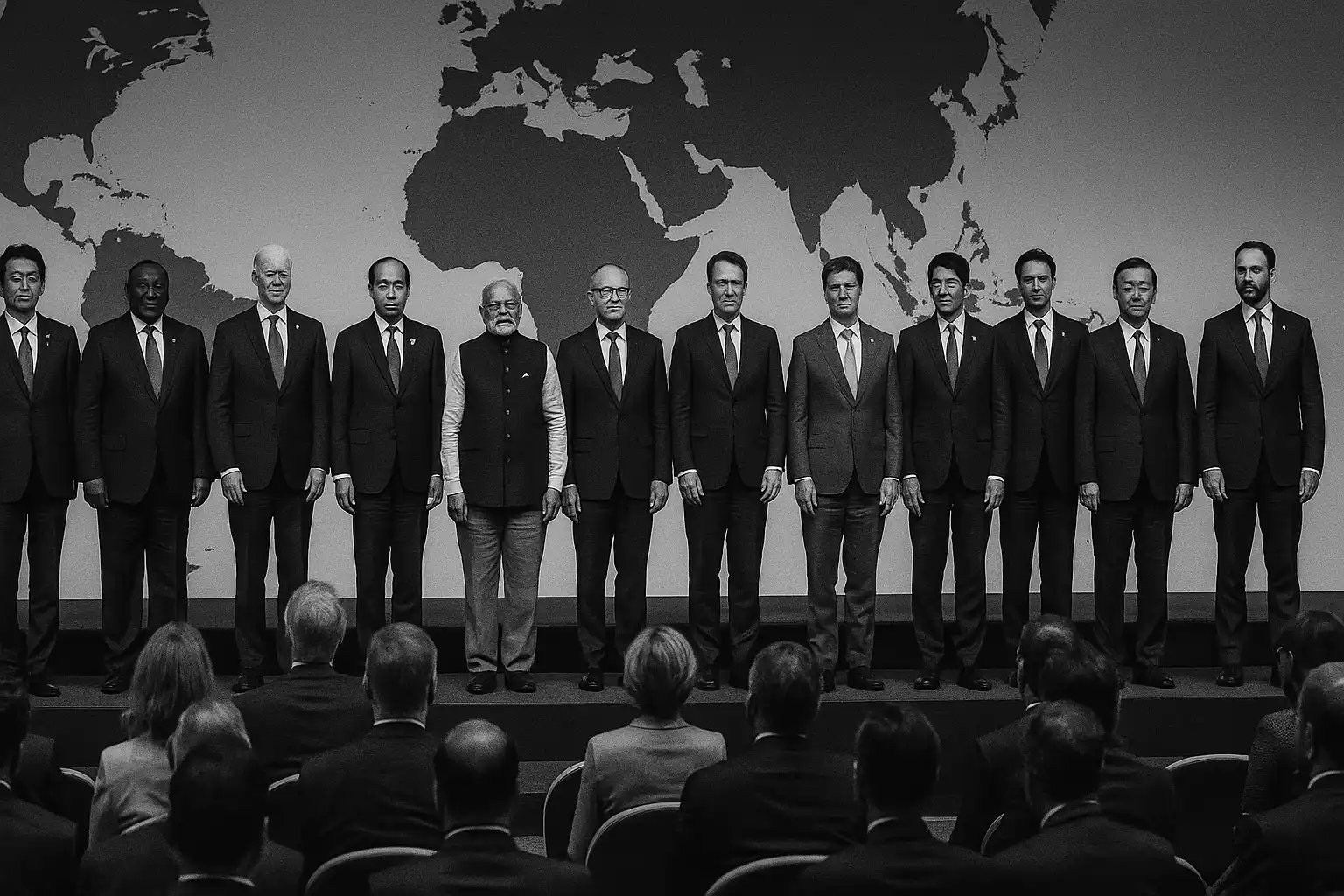
This year’s gathering of the Group of Twenty (G20) will take place in Johannesburg, South Africa, from 22-23 November and marks the first time the summit is held on the African continent. With South Africa holding the rotating presidency under the theme “Solidarity, Equality and Sustainability,” there has been heightened expectation that issues of development, debt relief and economic inclusion will figure more prominently.
Against this backdrop, the taskforce — formally the Extraordinary Committee of Independent Experts on Global Inequality — delivered a report warning that global inequality has reached levels that jeopardise economic stability, democratic governance and social cohesion. Its findings reveal that the richest 1 % globally captured roughly 41 % of all new wealth generated between 2000 and the present, while the poorest 50 % gained only about 1%.
The report does not merely call inequality “high”; it declares an “emergency” – signalling that the stakes are more than ethical or moral, but structural. The timing is significant: as the global economy confronts headwinds from rising interest rates, supply-chain disruptions, climate shocks and geopolitical tensions, the risk of social fragmentation or political backlash grows. The report aims to influence the G20’s declaration and the agenda of finance ministers and central bankers in the days leading up to the summit.
Why the inequality alarm now? What the data say
The data underpinning the taskforce’s warning highlight several key features:
- Concentration at the top: The richest 1 % capturing 41 % of new wealth indicates that income and asset gains are heavily skewed. That implies that growth-led models are not distributed equitably.
- Stagnation at the bottom: The poorest half of the world’s population gaining just 1 % of new wealth reflects stagnation in real upward mobility for the majority. That raises questions about whether growth is inclusive or exclusionary.
- Prevalence of inequality: The report estimates that 83 % of countries — accounting for 90 % of the global population — meet the World Bank’s threshold for high inequality.
- Multiple predictors of risk: The taskforce links high inequality to greater risk of democratic erosion, political instability and weaker growth. In many ways, it frames inequality not just as a fairness issue but as an economic and political risk.
The findings reflect decades of research showing that unequal growth can undermine long-term investment, suppress demand, elevate debt burdens and amplify social tensions. The taskforce’s framing of inequality as an “emergency” thus aims to elevate it from a background theme to a front-line risk for global governance structures.
Implications for emerging economies and India
For emerging markets — including India — the emphasis on inequality opens several policy considerations:
- Growth strategy recalibration: If global deliberations shift toward inclusive growth, investment and policy may increasingly favour labour-intensive sectors, broader access to capital, digital inclusion and regional development rather than just high-end export-led growth.
- Fiscal and tax policy focus: The emphasis may increase on progressive taxation, wealth-tax consideration, closing tax loopholes and enhancing redistribution mechanisms as part of global consensus frameworks. The taskforce report signals that tax avoidance and wealth concentration are central levers of inequality.
- Global-south voice stronger: With South Africa chairing the G20 and bringing Africa to the centre of conversation, countries like India may find more space to shape the agenda around development, debt relief, sustainable infrastructure and human-capital investment. That could translate into favourable commitments or explicit mention of capacity-building for the global south.
- Domestic pressure for inclusive policy: In India, where growth has been strong but income and spatial disparities persist, the global emphasis on inequality may reinforce domestic reform agendas on social protection, rural-urban balance, MSME support, and digital inclusion. It provides policy framing and signalling value.
What to watch: Key themes ahead of Johannesburg
In the run-up to the G20 summit, several themes are likely to dominate and overlap with the inequality agenda:
- Debt and financial architecture reform: For heavily indebted developing countries, the link between inequality, debt burden and limited policy space is critical. Many expect that the Johannesburg declaration will emphasise reforms of multilateral institutions, public development banks and debt-relief mechanisms.
- Climate justice and transition financing: Inequality ties into access to climate finance, technology transfer and just transitions. Countries seeking to align climate action with social equity may find common cause under the broader “solidarity” theme of the presidency.
- Digital inclusion and innovation ecosystems: As technology continues to drive global value-chain shifts, the ability of countries and people to access digital infrastructure, skills and data becomes an inclusion risk. The taskforce’s report implicitly touches on this dimension — wealth concentration often correlates with digital-divide entrenchment.
- Trade and investment flows: The question of who captures gains from globalisation — multinational capital, large firms, or local communities — remains central. The inequality lens may shift emphasis from simply raising GDP to raising inclusive, shared benefit from trade and investment.
Potential policy outcomes and declarations
The taskforce report recommends the creation of a dedicated international panel to monitor and tackle global inequality in a manner similar to the Intergovernmental Panel on Climate Change (IPCC). According to the report, this panel would provide data, policy recommendations and global benchmarking for inequality.
In practice, this could lead to the following outcomes at the summit:
- An explicit mention in the Johannesburg Leaders’ Declaration of an “inequality emergency” and commitment to measurable targets on wealth distribution, human-capital investment and access to opportunity.
- A plan to create or empower a global monitoring body on inequality, possibly housed within an existing multilateral institution or as a new mandate under the G20. The report suggests modelling on the climate-change IPCC structure.
- Enhanced focus on domestic and international tax reform, including sharing of beneficial-ownership data, minimising wealth-escapes, addressing tax havens, and supporting developing-country tax-capacity building.
- Priority pledges for development finance, especially directed to the global south, to invest in education, digital infrastructure and health — recognising that inequality is not only about wealth but about opportunity and outcomes.
Challenges and dissenting views
While the inequality agenda is gaining traction, several challenges complicate translation into policy:
- <strong=Lack of consensus on measurement and targets: Unlike climate change, where the 1.5 °C target serves as a reference, establishing global inequality benchmarks involves complex questions of national sovereignty, differing social models, and political buy-in.
- Political appetite: Some advanced economies may resist commitments seen as redistributive, citing fears of reduced growth, capital flight or competitiveness. The creation of a global panel may face opposition on governance or jurisdictional grounds.
- Data and implementation gaps: Many countries – especially lower-income ones – lack granular data on wealth, income, inequality and mobility. Without robust measurement and transparency, monitoring mechanisms may prove weak.
- Priority trade-offs: In an era of competing crises — climate, geopolitics, migration, pandemics — there is a risk that the inequality agenda may be crowded out or delayed. Ensuring it remains a lead item will require sustained advocacy and political momentum.
Why this matters for India and global investors
For India, the global focus on inequality may add impetus to reforms that emphasise inclusive growth, human-capital development and regional balance. Domestic policies that address spatial inequality (between states, urban and rural areas) and economic inclusion (micro-enterprises, digital access) may align closer with global deliberations, thereby attracting greater international cooperation, funding and alignment.
For global investors, the shift implies that markets may place increasing emphasis on ESG (environmental, social, governance), shared-value models, and inclusive business strategies. Corporate behaviour, supply-chain choices, worker empowerment and regional investment may all gain greater scrutiny. Investors who anticipate this shift may benefit from aligning portfolios with firms and economies that emphasise social inclusion, human-capability building and equitable growth.
Next steps and what to monitor
As the summit approaches, several indicators and developments deserve monitoring:
-
- The draft G20 Leaders’ Declaration: whether it explicitly references an “inequality emergency”, and how it frames commitments to monitoring and target-setting.
- Any formal launch of a global inequality panel or roadmap towards such an institution. The timing of this announcement will reveal the seriousness of the agenda push.
- Announcements of new finance flows, tax-capacity building initiatives, or development-partnership frameworks aligned with the inequality theme.
- India’s role: Whether India proposes or supports specific initiatives (e.g., human-capital investment, digital inclusion, regional development) and how it positions itself in the global inequality discourse.
- Corporate and investor signals: Will business announcements and investor strategies reflect greater focus on inclusion, responsible value-chains and redistributive impact? Are markets adjusting valuations or expectations on these dimensions?
Conclusion
In sum, the report released by the G20 taskforce transforms inequality from a long-standing concern into a summit-level emergency. Its framing – that inequality threatens democracy, growth and stability – elevates the issue to the same strategic level as climate change or trade tensions. With the Johannesburg summit just weeks away, the world will be watching whether major economies are prepared to commit beyond words and whether the momentum for inclusive growth can translate into measurable, sustained action.
For India – and for global investors, policy-makers and citizens – this marks a moment of inflection. The way this agenda is adopted (or not) will affect not just economics, but the broader social compact, governance models and future of globalisation. As the architecture of global cooperation adapts to an emerging south-led era, inequality is emerging as a defining challenge for the decade ahead.


+ There are no comments
Add yours