
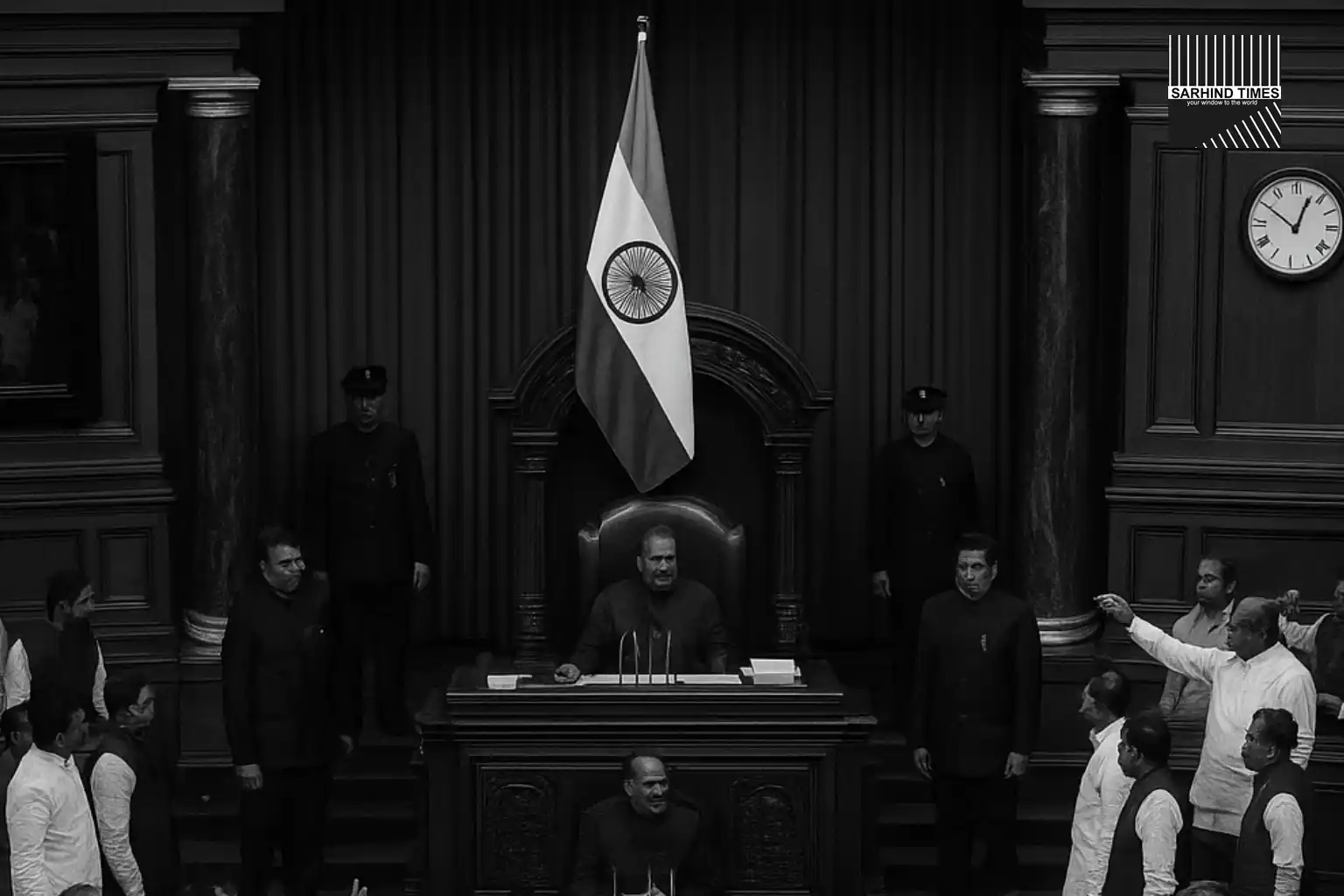
New Delhi | 4 November 2025
Dateline: New Delhi | 4 November 2025
Summary: The central government has introduced the Constitution (One Hundred and Thirtieth Amendment) Bill, 2025 in the Lok Sabha, proposing a constitutional change that would require the Prime Minister, Chief Ministers and other ministers to vacate office if they are arrested and detained for 30 consecutive days on serious criminal charges punishable by five years or more. The move has sparked intense debate over accountability, constitutional safeguards and the balance between law and politics.
What the Amendment Bill proposes
On 20 August 2025, the central government tabled the 130th Constitutional Amendment Bill in Parliament. The bill seeks to insert new provisions into Articles 75 (Union Council of Ministers), 164 (State Council of Ministers) and 239AA (Provisions for National Capital Territory of Delhi) of the Constitution. Under the proposed change:
- If the Prime Minister or a Union Minister is arrested and detained for 30 consecutive days in connection with an offence punishable with a minimum of five years’ imprisonment, the President must, on the Prime Minister’s advice, remove that Minister. If no such advice is tendered by the 31st day, the Minister automatically ceases to hold office.
- A parallel mechanism is proposed for Chief Ministers and State Ministers: if detained under similar conditions for 30 days, the Governor must act on the Chief Minister’s advice; failing that, automatic cessation occurs.
- The measure is also extended to the National Capital Territory of Delhi and to Union Territories, ensuring that a Minister arrested and detained under defined serious offences would also have to vacate office.
Additional complementary bills have been introduced to apply the rule across union territories state-administrations. The government argues that the reform is aimed at strengthening constitutional morality, governance and public trust, by ensuring those facing serious criminal allegations cannot continue to wield executive power while in custody.
Government’s rationale: restoring integrity in public office
The Home Minister stated that “it is not right that ministers, Chief Ministers or Prime Ministers who are accused of corruption or other serious crimes punishable with over five years remain in office while detained”. He noted that existing law under the Representation of People Act already disqualifies those sentenced for two years or more, and argued the amendment equates to extending similar accountability to a ministerial position before conviction. The government emphasised that the concept of “constitutional morality” underpins the Bill — public office cannot continue when the holder is deprived of liberty under serious criminal charge.
Major public and political reactions
The Bill’s introduction has triggered a wide spectrum of responses:
- Opposition parties</strong have strongly criticised the measure as an assault on constitutional safeguards, separation of powers and presumption of innocence. Some regional party leaders labelled it a “black bill” and warned of a slide towards majoritarian-executive dominance.
- Civil society commentators</strong are divided. Some praise the intent to tighten accountability for those in high office; others warn the mechanism allows for political or prosecutorial misuse, potentially transforming arrest into an instrument of forced resignation.
- Legal analysts</strong highlight that while the intention of integrity is laudable, the proposal raises legal concerns: using detention (not conviction) as basis for removal, definition of “serious offence”, potential overlap with judicial review, and the question of automatic cessation without hearing.
The bill was referred to a Joint Parliamentary Committee (JPC) for scrutiny, as per legislative procedure, with amendments and deliberations expected in the coming weeks.
Why now: context and timing
A number of contextual factors appear to have influenced the timing and framing of the Bill. First, the government faces increasing public demand for cleaner politics and stronger accountability, particularly after high-profile cases where ministers in office faced serious allegations. Secondly, the measure aligns with the broader electoral cycle and forthcoming state and national elections; a commitment to governance reform can be a potent electoral message. Third, the Bill taps into the discourse of “political morality” and seeks to bridge the gap between legal disqualification and ministerial office. Finally, it reflects a global trend of focusing on integrity and responsibility in high public office, especially in democratic jurisdictions facing corruption and credibility crises.
Key legal and constitutional issues
The Bill raises several significant constitutional and legal questions:
- Presumption of innocence: Critics argue that removal based on detention rather than conviction undermines the principle that a person is innocent until proven guilty.
- Separation of powers: Allowing executive or legislative consequences of detention may blur lines between judiciary, legislature and executive, especially if arrest triggers removal rather than a court verdict.
- Definition of “serious offence”: The Bill ties this to a punishment threshold of five years or more, but legal experts question whether this is an adequate or appropriate demarcation and how consistently it will be applied.
- Automatic cessation and lack of hearing: The process allows automatic removal after 30 days of detention without necessarily offering the minister an adjudicative hearing, raising due-process concerns.
- Federal implications: Extending the rule to states and union territories may impinge on states’ autonomy and raise issues of centre-state balance.
- Political risk of misuse: Given the power to detain (via police, investigating agencies, remand courts) lies in the executive and judicial space, the risk of targeted removal through arrest looms large if safeguards are weak.
Implications for governance and political dynamics
Should the Bill evolve into law, implications across governance and politics may include:
Stronger accountability expectation: Ministers and senior politicians may face greater scrutiny, and ministerial portfolios may require more rigorous internal vetting. Senior political parties could adjust their selection and alignment strategies to avoid reputational risk.
Impact on coalition politics and insurgent regional parties: Regional alliances and smaller parties dependent on ministerial positions may feel exposed to heightened legal-political risk. The threat of removal based on arrest may alter coalition bargaining behaviour, ministerial stability and power sharing.
Change in investigative landscape: Agencies conducting investigations of senior leaders may find increased leverage, as arrest and detention have augmented consequences. Conversely, ministers may exercise more caution, resort to legal delay strategies or broaden influence over investigative timelines.
Public trust and political marketing: If implemented and perceived as credible, the reform could bolster public confidence in governance. On the contrary, if enforcement appears selective or politicised, it could erode trust and deepen cynicism toward institutions.
Potential route of passage and legislative hurdles
As a constitutional amendment bill, it requires passage in both Houses of Parliament by a special majority, and ratification by at least half of state legislatures if federal implications are significant. The JPC process may introduce changes, and political negotiations are expected with opposition and possibly state governments, which will broker support in return for changes or safeguards. Time-lines suggest debate may extend into the winter session of Parliament.
Wider reflections: balancing reform and rights
This legislative push underscores a perennial tension in governance: how to reconcile the need for strong accountability and clean governance with the foundational rights of individuals and office-bearers. Situating ministerial removal on the basis of detention rather than conviction reflects the deep impatience with public office-holders facing serious allegations—but it also reframes the architecture of constitutional protections. The momentum behind this proposal shows how governance reform is becoming a pivotal electoral and systemic issue. Yet the bill’s journey will test whether procedural safeguards, institutional integrity and rights-based protections can withstand political pressures.
Looking ahead
Over the coming months, key points to monitor include:
- How the JPC frames amendments and whether safeguards for due-process and proportionality are introduced.
- Responses of state governments and opposition parties, including whether some states with differing party governance pose impediments to ratification.
- The impact on ministerial behaviour, investigative-agency activity and political stability if the law comes into effect.
- Judicial reaction—should the Bill become law, constitutional challenges are likely about rights of office-holders, separation of powers and procedural fairness.
The debate around this amendment marks a significant moment in India’s constitutional law trajectory—where the promise of clean governance meets the risk of rights curtailment. How the country negotiates this balance will shape its democratic credentials in the years ahead.
Conclusion
The 130th Constitutional Amendment Bill presents a bold and contentious step in India’s governance landscape, anchoring accountability in law while inviting scrutiny of constitutional protections, procedural fairness and political equity. Whether it becomes an instrument of transformative reform or a source of institutional strain will depend on its design, debate and implementation. The stakes extend beyond immediate ministerial resignations—they reach the heart of democratic legitimacy, public trust and the health of India’s constitutional order.



+ There are no comments
Add yours