
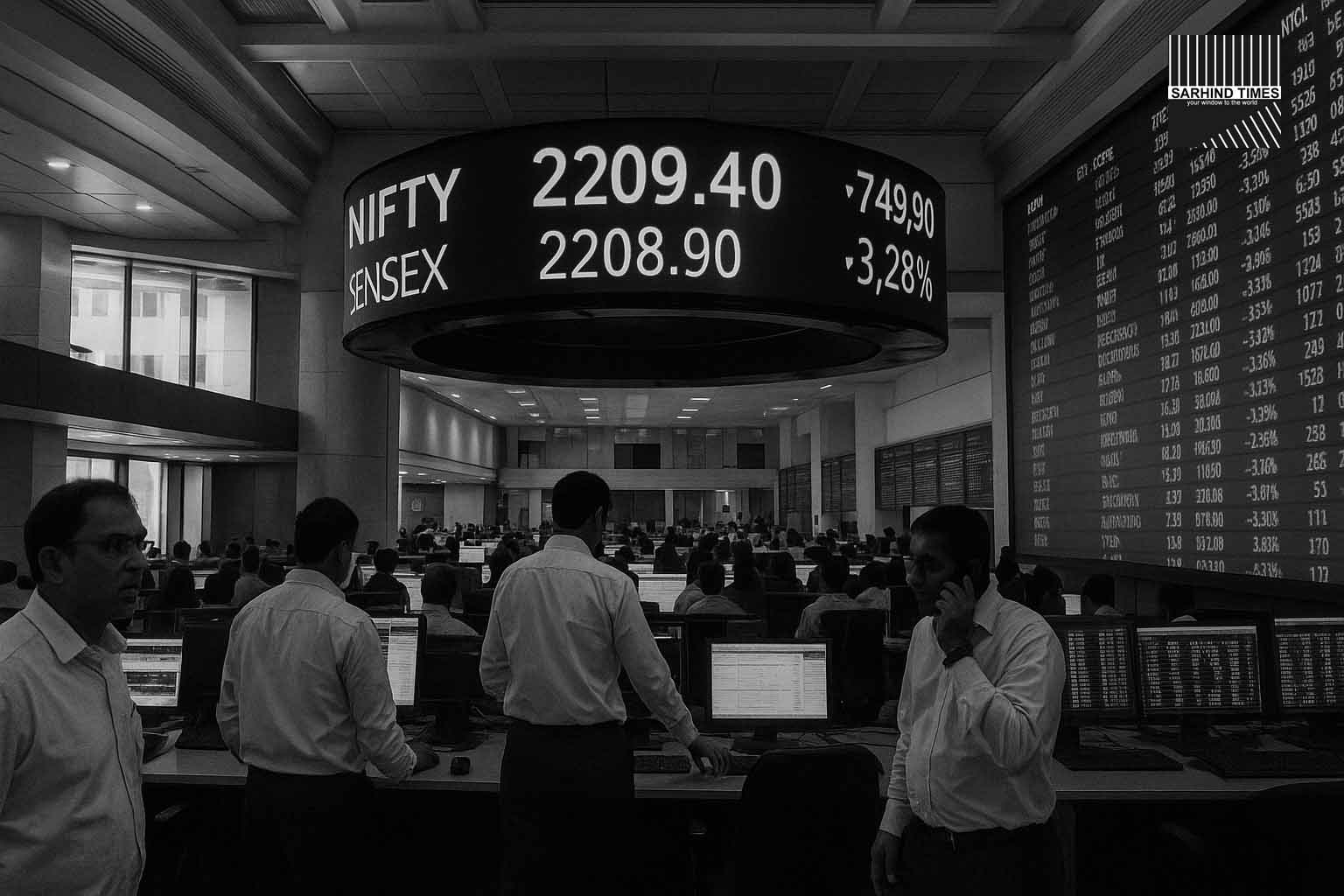
Goldman Sachs lifts India to “overweight” and sets ambitious benchmark target; signals structural rally ahead for equities
Dateline: New Delhi | 11 November 2025
Summary: In a landmark shift, Goldman Sachs has upgraded India’s equities from “neutral” to “overweight”, issuing a target for the Nifty 50 index to reach 29,000 by end-2026. This comes amid improving earnings momentum, policy support, and strong domestic institutional flows, marking a turning point for Indian markets even as export-driven sectors continue to face headwinds.
What the upgrade says and why it matters
Goldman Sachs’s decision reverberates across the investor landscape. After a lengthy period of caution on India’s markets, the firm now expects a 14 % upside for the Nifty 50 from current levels, targeting 29,000 by end-2026. The upgrade stems from a combination of factors: a pick-up in corporate earnings (especially domestically oriented sectors), favourable policy adjustments including interest-rate cuts and tax reforms, and robust flows from domestic institutional investors (DIIs) even as foreign institutional investors (FIIs) remain tentative. The signal is loud: India’s equity story may be shifting from cyclical pause to structural inflection.
Behind the numbers: earnings, policy and flow dynamics
Goldman’s thesis rests on several pillars:
- Earnings upgrade emerging: After a period of earnings downgrades, especially among export-oriented and commodity sectors, select companies are now reporting better-than-expected results for Q2 and showing signs of recovery in domestic demand. This reduces one major drag on valuations.
- Policy tailwinds building: India’s central bank has signalled easier liquidity and modest rate cuts, GST reforms and bank deregulation are in motion, and the fiscal-policy stance appears more supportive. These add momentum to valuation expansion.
- Flow shift to domestic investors: Even as FIIs have pulled back (about US $30 billion since the 2024 peak), domestic investors have continued to buy—in fact DIIs have accounted for roughly US $70 billion in net equity purchases this year. This change improves stability of flows.
Sectoral implications: winners and laggards
The upgrade and market commentary highlight that not all sectors will benefit equally.
According to Goldman’s outlook:
- Favoured sectors: Financials, consumer goods, autos, defence, oil-marketing companies, internet and telecom firms—all sectors viewed as benefiting from domestic cycles.
- Caution on export-sensitive sectors: The IT services, pharma, commodity and chemicals sectors remain under watch due to global headwinds, potential offshore demand slowdown and currency risks.
The current market backdrop
Monday’s trading session saw a rebound in indices after three days of losses. The Nifty closed above the 25,550 mark and the Sensex gained roughly 319 points. Key sectoral indices led by IT and financials posted gains, reflecting improved sentiment.
One important note: while headline indices have firmed, valuation metrics still lean cautious. The Nifty 50 may not be cheap in absolute terms, but relative to emerging-market peers some of the premium has dissipated. Goldman notes that India is still one of the priciest among peers, but now the premium looks more defensible.
Risks and what could derail the thesis
The upgrade is meaningful, but risks must be treated seriously:
- Global liquidity and macro shocks: India remains exposed to global interest-rate changes, dollar strength, commodity volatility and supply-chain shifts. An adverse global shock could reverse sentiment quickly.
- Export/dependency vulnerabilities: Since part of the underpinning of past Indian-equity strength was export growth, sectors dependent on offshore clients may disappoint. The caution on IT and pharma is illustrative of this vulnerability.
- Valuation re-rating needs follow-through: While the upgrade signals confidence, actual delivery in earnings growth, policy execution and capital-allocation discipline will be required to sustain the rally. Market agents may have to be patient rather than expecting an immediate blow-off move.
- Structural constraints and reform fatigue: India’s growth story is strong but not immune to structural challenges—land-use reform, state-level implementation, labour markets and infrastructure bottlenecks remain under stress. If reforms stall, investor enthusiasm may fade.
Implications for investors
For domestic and global investors alike, this moment offers strategic cues:
- Focus on domestic-cycle names: Given the tilt in the upgrade, stocks leveraged to Indian consumption, bank-credit growth, auto replacement demand and defence-spend may be the early winners.
- Be selective on export-stories: Given the caution flag on IT, pharma and chemicals, investors may want to wait for clearer earnings inflection in those segments rather than assume broad-based recovery.
- Maintain discipline on valuations: Despite the upgrade, margin for error remains narrow. Investors entering now must calibrate expectations and prepare for volatility rather than assuming smooth upward trajectories.
- Monitor flow dynamics: The shift to DII inflows is positive but FIIs may re-emerge later and bring volatility. Keeping an eye on net flows into India will remain a key indicator of sustainability.
What to watch for over the next 6-12 months
Several indicators will signal whether this upgrade turns into sustained market momentum:
- Corporate-earnings revisions: a shift from downgrades to upgrades across sectors, especially H2FY26.
- Policy developments: announcements of bank-deregulation, further GST reductions, infrastructure capex acceleration and possible interest-rate cuts.
- Flow behaviour: increased FII participation alongside continuing DII support, stabilising net-flow environment.
- Key sector earnings: financials showing credit expansion, autos showing double-digit growth, telecom and internet showing monetisation of digital services, and defence companies securing large-scale orders.
- External risk management: how India weathers any global slowdown, currency pressures or commodity-shock events without triggering a correction in equities.
Broader significance for India and emerging markets
This upgrade is about more than just an index target. It signals that a major global brokerage believes India’s fundamentals and policy momentum have reached a level warranting a higher allocation. For emerging-market investors seeking portfolio diversification, India may again emerge as a front-runner rather than a peripheral play. It also highlights that the “India story” is evolving from its services-led growth model to a domestic-demand-driven narrative—something akin to the transition seen in other large growth markets.
Conclusion
With Goldman Sachs elevating its stance on India, the market is receiving a clear vote of confidence. The combination of improving earnings, policy support and heavy domestic investor participation sets the stage for a meaningful up-move in Indian equities. But the path ahead is not without hurdles—investors must remain disciplined, monitor structural delivery and avoid complacency.
For India’s economy, this moment may mark the transition from latent potential to visible momentum. The challenge now is execution: can the indicators align and deliver on this upgrade? If they do, stocks may look back on this period as the beginning of a durable rally. If not, enthusiasm may fade and markets may revert to a correction. The next 12-18 months will be pivotal for the India equity narrative.



+ There are no comments
Add yours