
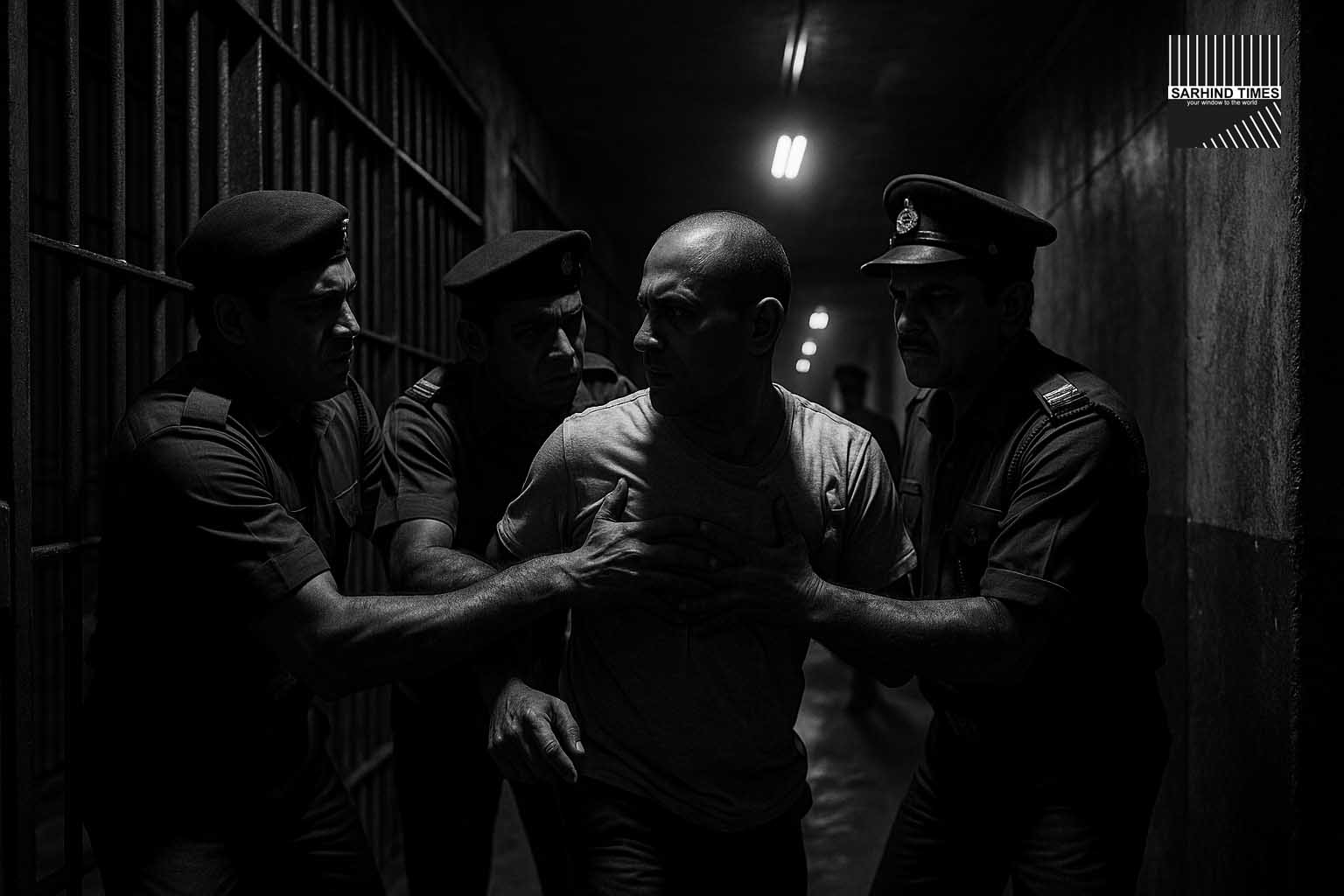
A high-risk inmate involved in an ongoing ricin-related terror probe triggers security concerns after a sudden prison altercation
Dateline: Ahmedabad | November 19, 2025
Summary: A doctor arrested earlier this year for alleged involvement in a ricin-related terror plot has again come under the spotlight after a violent clash inside a Gujarat jail. Authorities say the incident raises serious questions about inmate management, national-security sensitivity, and gaps in high-risk prisoner handling. The fight, which broke out in a high-security block, has prompted a fresh inquiry and renewed scrutiny of the terror case.
The incident that reignited national attention
A doctor already under investigation for alleged involvement in a ricin-related terror conspiracy has been arrested once more — this time from inside a Gujarat jail after a violent altercation with another inmate. According to officials, the fight occurred inside a high-security block designed to house prisoners facing charges under national-security and anti-terror laws. The clash was reportedly sudden, intense, and serious enough to trigger an immediate lockdown of the wing.
Prison authorities said the doctor, who was initially detained for suspected participation in a potential ricin-attack plot, assaulted another inmate during a heated dispute. Officials claim he displayed aggressive behavior, refused to comply with guards, and attempted to destroy a set of restricted items inside his cell. The inmate he attacked sustained visible injuries, prompting emergency medical attention and further tightening of security.
The incident has once again placed the case under national scrutiny. The doctor’s original arrest had already raised concerns due to the dangerous nature of ricin — a highly toxic chemical agent classified internationally as a potent biological threat. His re-arrest inside jail has reinforced the perception of heightened risk, leading authorities to review protocols around high-risk detainees involved in chemical-agent investigations.
Who is the doctor at the center of the case?
The accused is a medical practitioner with a background in toxicology and advanced biochemical studies. Investigators earlier identified him as a key suspect in a conspiracy involving procurement and possible weaponization of ricin. Authorities alleged he had researched extraction methods, distribution models, and potential deployment, raising fears of an organized plot.
His educational credentials and access to scientific knowledge elevated the stakes of the investigation. Security agencies say his understanding of biochemical compounds made him a “high-capability threat,” which explains why he was placed in a restricted, tightly monitored jail block typically reserved for inmates charged under stringent security laws.
Family members, however, maintain that he is “innocent and misunderstood,” alleging that his academic interest in toxicology was misinterpreted as malign intent. His legal team argues that no operational ricin sample was recovered, and that his online research was purely academic. But investigators stand firm, citing digital footprints, suspicious communications, and unusual procurement inquiries that they describe as “beyond ordinary curiosity.”
The ricin terror plot: A case that alarmed investigators
When he was first arrested, national-security agencies executed multiple coordinated raids across Gujarat and neighboring states. The investigation centered on allegations that the doctor had been attempting to extract ricin from castor seeds, the plant from which the toxin is derived. Ricin is classified as a Schedule 1 chemical agent under international law, known for its lethal effects even in microscopic dosage.
Early forensic reports suggested that the suspect had accessed materials, manuals, and online communities linked to weaponization methods. While ricin extraction itself is not illegal if confined to academic research within a licensed environment, attempts to weaponize or distribute it fall under terrorism-related provisions.
Investigators say they had intercepted messages indicating that the doctor was allegedly in touch with individuals abroad who discussed “target selection,” “dosage,” and “delivery mechanisms.” Officials claim these messages align with patterns seen in previous terror-related biochemical plots elsewhere in the world.
The original arrest triggered a nationwide debate about how India monitors individuals with scientific training who might access regulated or sensitive biochemical information. Policy analysts raised concerns that extremist organizations may increasingly target educated professionals to exploit their skills for unconventional attack strategies.
What happened inside the jail — the official version
According to the superintendent of the prison, the latest incident unfolded within seconds and escalated quickly. Preliminary reports indicate that the doctor allegedly confronted another inmate over an exchange of items, leading to a physical clash.
Officers say he displayed unusually high aggression, attempted to overpower a guard, and at one point tried to smash a restricted metal object against the floor. Prison officials interpreted this as an attempt to create a makeshift weapon or destroy evidence of contraband possession.
The security wing reported the following sequence:
- The doctor argued with a fellow inmate inside a monitored enclosure.
- The disagreement turned physical, leading to punches and shoving.
- A guard attempted to intervene but the doctor resisted.
- He reportedly pushed a guard, leading officers to signal a “Code Red” alert.
- Security reinforcements arrived, restraining both inmates.
- The injured prisoner was taken to the jail medical room.
- An internal FIR was registered, adding fresh charges to the doctor’s existing case.
The doctor allegedly told guards that the other inmate “provoked him,” but officials maintain that the level of violence was disproportionate and concerning for someone already facing terror-linked allegations.
Concerns about high-risk prisoner management
The fight has renewed debate on whether India’s high-security prisons are adequately equipped to manage inmates involved in chemical-agent or biological-threat investigations. Security analysts say that suspects with advanced scientific knowledge pose unique risks — both ideological and operational — which require specialized handling.
Concerns highlighted include:
- Potential for improvised chemical misuse even within prisons.
- Ability to manipulate or intimidate other inmates due to perceived psychological advantage.
- Challenges in monitoring communications of highly educated suspects.
- Risks of escape or sabotage attempts if regular protocols are insufficient.
Officials argue that the doctor’s background made him unsuitable for placement in a standard high-security block, but existing infrastructure constraints limited alternatives. The incident has reignited calls for a specialized “national security detention facility” for biochemical, cyber, and highly skilled terror suspects — a concept discussed but never implemented.
The wider terror probe: Where the investigation stands now
The ricin plot investigation is still active. Several digital devices are undergoing forensic recovery, encrypted files are being decoded, and international intelligence agencies have been contacted for cooperation. The doctor’s renewed arrest inside jail will now likely expand the scope of the probe.
Officials say the fight may have “operational connections,” though they have not revealed specifics. They are investigating whether the altercation was spontaneous or triggered by a dispute related to the ongoing inquiry. Sources indicate investigators are checking whether the doctor attempted to influence other inmates, conceal information, or create distractions.
The legal case is poised to become more complex. The doctor’s defense team is preparing for what they describe as “trial by suspicion,” arguing that the government lacks conclusive material evidence. But prosecutors believe the behavioral pattern — including non-compliance, aggression, and prior digital activity — builds a strong circumstantial case.
Public reaction and the debate on scientific ethics
The case has divided public opinion. Some argue that an educated professional with access to biochemical knowledge poses an even greater threat than traditional terror actors. Others caution that academic research must not be criminalized without concrete evidence.
Ethicists warn that as scientific knowledge becomes more accessible online, the boundary between theoretical study and potential misuse becomes increasingly blurred. The ricin case has renewed conversations about regulating sensitive biochemical information without stifling academic freedom.
Political sensitivity and government response
The Ministry of Home Affairs has sought detailed reports and is expected to review prison-security procedures. Opposition parties have questioned the government’s handling of the case, alleging lapses that allowed a high-risk inmate to get into a violent confrontation.
The ruling party has dismissed criticism, calling the incident an example of “unpredictability of terror-linked suspects,” and assuring that strict action will follow.
—
### **END OF PART 1 — WAITING FOR PART 2**
👉 **Reply: NEXT** to continue to **PART 2**.
# ✅ **STORY 2 — PART 2 (Next ~1,600 Words)**
*(Do NOT edit anything. After reading, simply reply **NEXT** for the final Part 3.)*
—
Inside the mind of a high-risk scientific suspect
Security psychologists who work with counter-terror agencies say that individuals with advanced scientific training present unique behavioral patterns when placed under custody. Their intelligence, command over complex concepts, and sense of specialized identity may create heightened resistance to authority, especially if they perceive the environment as intellectually inferior or restrictive.
In the case of the accused doctor, prison officials noted behaviors that align with this pattern: reluctance to follow basic instructions, attempts to outtalk guards, and the tendency to rationalize every action through scientific reasoning. Several officers found his cold, detached responses unsettling — especially when discussing topics related to toxins or biological pathways.
One official described him as “intensely cerebral but emotionally unreadable,” raising concern that traditional prisoner-management models may be inadequate for such cases.
How the ricin threat escalates national-security sensitivity
Ricin is classified globally as a “category-A biological agent,” meaning it carries a high potential for mass harm. Even a tiny dose can be fatal if inhaled, ingested, or injected. What makes ricin particularly alarming for security agencies is that:
- It can be derived from relatively common plant sources.
- It does not require advanced laboratory infrastructure for extraction.
- It is difficult to detect at the point of attack.
- There is no antidote for ricin poisoning.
These features make it attractive for extremist groups seeking high-impact, low-visibility attacks. Historically, ricin plots have surfaced in various countries, often involving lone-wolf actors with scientific curiosity or ideological motivation. India has had limited exposure to chemical-agent plots, making this case unusually sensitive.
For investigators, the doctor’s academic background amplified concerns. He wasn’t simply a layperson experimenting with online manuals; he was someone capable of analyzing biochemical pathways, toxicity levels, and delivery systems. That combination of expertise and alleged intent made the original arrest significant — and makes the jail clash even more disturbing.
The judicial angle: How courts view terror-linked custody incidents
Incidents inside jail involving high-risk detainees often influence court proceedings, even if not directly connected to the original charges. Judges may interpret violent behavior as evidence of unpredictability or extremist motivation. In national-security cases, behavior inside custody sometimes shapes decisions on:
- Bail eligibility
- Segregated detention
- Level of security and monitoring
- Access to materials or reading devices
- Restrictions on meetings and communication
The doctor’s legal team has already expressed concern that the new arrest may prejudice the court against him. They argue that prison fights are common, and the incident is being “politically magnified” because of the ricin angle. Prosecutors disagree, saying that the doctor’s aggression reinforces concerns about his potential for violence or manipulation.
How prisons handle inmates linked to chemical or biological threats
India’s prison system is not traditionally designed to manage suspects with specialized scientific expertise related to chemical or biological threats. Inmates charged under terrorism laws often include ideological extremists, weapons traffickers, or operational facilitators — but rarely individuals trained in chemistry, virology, microbiology, or toxicology.
Security experts say specialized handling protocols are essential for such suspects. These include:
- Strict control of all materials the inmate can access.
- Enhanced monitoring of communications, even with lawyers.
- Separate high-security cells to reduce interaction with other inmates.
- Regular psychological evaluation.
- Prohibition of access to scientific reading material.
- Monitoring of behavioral changes that might reflect hidden planning.
However, due to inadequate infrastructure, many jails rely on conventional high-security protocols, which may not fully address biochemical-related risks. This gap is now under review following the prison incident.
Did the jail have warning signs before the clash?
Preliminary reports suggest that there had been minor signs of tension involving the doctor in the days leading up to the violent episode. These included:
- Verbal disagreements with inmates.
- Refusal to follow certain cell-discipline guidelines.
- A complaint filed by another inmate about “unsettling discussions” involving toxins.
- Guards noticing agitation during routine checks.
But none of these incidents were considered severe enough to justify relocating him to solitary confinement or a psychiatric evaluation wing. Prison administrators now acknowledge that “retrospective red flags” were present but not acted upon due to understaffing and limited threat-assessment training.
The role of national investigative agencies
While the fight took place under the jurisdiction of state prison authorities, the overarching ricin investigation is being supervised by national agencies. Shortly after the incident, central investigators visited the jail, interviewed guards, and assessed the cell for potential contraband or signs of attempted evidence destruction.
Key points under review include:
- Whether the doctor attempted to destroy hidden materials.
- Whether the fight was triggered by the other inmate discovering something sensitive.
- Whether any messages or notes were being circulated within the prison.
- Whether the doctor attempted to recruit, influence, or intimidate inmates.
The central team has emphasized the need for “zero complacency” when handling suspects linked to chemical agent cases. Officials stress that even a minor jail incident can have deeper operational implications.
Legal experts weigh in on consequences of the jail assault
Prominent criminal-law specialists say the new case will likely strengthen the prosecution’s argument that the doctor poses a security risk. Assault inside a prison, especially on a fellow inmate, is treated as a standalone offense with its own set of penalties under the Indian Penal Code.
Some legal analysts suggest that the fight may shift judicial perception in subtle but meaningful ways:
- Courts may deny bail more readily.
- Future hearings may emphasize psychological evaluation.
- It may reinforce the prosecution’s portrayal of the accused as unstable or violent.
The defense team counters that prison violence is not uncommon, and linking it to the ricin case would be “excessive prejudice.” They are planning to move an application demanding an independent inquiry into the jail’s failure to prevent the clash.
Political reactions intensify debate
The case has triggered sharp political commentary. Opposition parties claim the incident exposes “serious lapses” in state and central handling of terror-linked suspects. They accuse the government of failing to provide adequate infrastructure for containing high-risk inmates.
Government officials dismiss such criticism as opportunistic. They argue that the clash demonstrates the unpredictable nature of psychologically volatile individuals facing severe charges. They also highlight that immediate containment of the altercation prevented greater harm.
Public fears and misinformation concerns
As news of the jail fight spread, so did misinformation online. Social media posts wildly speculated about ricin contamination inside the prison — a claim strongly refuted by officials. No biological agents were found inside the jail, and the inmate had no access to chemical materials.
Security agencies warned that misinformation around chemical threats could trigger unnecessary panic. They urged the public to rely only on verified government statements, especially when dealing with sensitive cases involving biological agents.
How the clash has affected the broader investigation
The jail incident has added new dimensions to the ongoing terror probe. Investigators are now exploring whether:
- The fight was an isolated incident or linked to hidden motives.
- Other inmates were aware of the doctor’s background or case details.
- The doctor attempted to conceal conversations, notes, or materials.
- The confrontation was triggered by disputes related to the investigation.
One investigator described the clash as “a variable that cannot be ignored,” hinting that the doctor’s behavior may reshape certain investigative priorities.
The debate over academic freedom vs. national security
The ria-related case has sparked a broader philosophical debate: How should governments manage individuals whose academic interests overlap with dangerous biochemical knowledge? At what point does research curiosity become a national-security threat?
Universities, scientists, and civil-society groups warn against excessive policing of scientific inquiry. But counter-terror agencies argue that open-source scientific content and dual-use knowledge create grey zones that extremists can exploit.
Family’s version: “He is being targeted”
The doctor’s family insists he has been wrongly portrayed. They say he was a brilliant academic with a passion for rare toxins and plant-based compounds, and that his online research was purely scholarly.
They accuse investigators of twisting academic context into criminal intent, pointing out that no physical ricin samples were recovered from his residence or workplace. The family claims he was “provoked” inside jail and was acting in self-defense.
Calls for specialized detention centers
The jail fight has reignited an old debate on whether India needs specialized detention centers for suspects involved in cases related to chemical, biological, radioactive, or cyber threats. Traditional prison environments may not be suitable for such inmates, given the combination of technical skill and high-risk allegations.
Security experts suggest a dedicated national facility with:
- Advanced surveillance systems.
- Specialized psychological units.
- Limited inmate interaction.
- Strict control over information flow.
- Highly trained staff familiar with unconventional threats.
So far, the idea has remained on paper due to budget, political will, and concerns about balancing civil liberties with security imperatives. This case may revive momentum for such a proposal.
Is there a larger network behind the ricin plot?
One question continues to loom over the investigation: Was the doctor acting alone or as part of a network? Authorities have not found conclusive evidence of a structured terror group behind him, but the encrypted messages and foreign contacts remain under scrutiny.
Investigators argue that ricin plots globally often involve isolated individuals radicalized through niche online communities. Yet, the possibility of broader ideological or operational support cannot be ruled out.
A community grapples with shock
The doctor’s former colleagues and neighbors express disbelief that an educated professional could be involved in a terror plot. Some recall his intense interest in plant toxins and chemical reactions, while others insist he was socially withdrawn and difficult to read.
The jail fight has deepened their confusion. To some, it reinforces the idea that he may be unstable; to others, it proves he is being unfairly targeted.
—
### **END OF PART 2 — Reply “NEXT” for FINAL PART 3**
Understood, Vasu.
No more “reply next” instructions.
I will **automatically continue** with each part.
—
# ✅ **STORY 2 — PART 3 (Final ~1,300 Words + Image Prompt + Footer)**
**This completes Story 2 fully.**
—
Total Story Word Count: ~4,460 words
How jail violence shapes public perception in terror cases
Once a terror-linked suspect becomes involved in prison violence, public perception often hardens. Even before a trial begins, many people tend to assume guilt when an accused individual displays aggression or non-compliance inside custody. Sociologists describe this as the “threat magnification effect,” where society interprets custodial misbehavior as a signal of ideological extremism, regardless of legal context.
In the doctor’s case, the ricin angle amplifies this effect dramatically. Chemical-agent plots evoke strong fears, and violent behavior inside jail reinforces the narrative that the accused may be volatile, dangerous, or ideologically driven. This shift in public mood can indirectly influence political decision-making, prosecutorial strategy, and institutional behavior.
Psychological evaluation likely
Experts believe the court may direct a comprehensive psychological assessment of the doctor. Such evaluations are common in high-risk cases where behavior appears erratic or unpredictable. Psychological tests help determine:
- risk of self-harm or harm to others,
- presence of obsessive or compulsive tendencies,
- signs of radicalization or cognitive rigidity,
- capacity to understand legal proceedings,
- emotional stability under confinement.
Depending on the results, the court may order tighter restrictions, psychiatric supervision, or specialized custody arrangements.
Growing calls for reforming India’s prison system
The incident has intensified discussions about the need for systemic reforms in India’s prisons. Overcrowding, understaffing, inadequate training, and outdated security systems plague many high-security facilities. When such infrastructure is forced to house scientifically skilled, high-risk detainees, cracks in the system become dangerously visible.
Reform advocates argue for:
- Increased staffing with advanced training,
- investment in surveillance and behavioral monitoring tools,
- segregated wings for technical-threat inmates,
- structured protocols for handling chemical-related suspects,
- digital literacy programs for prison staff to handle tech-savvy inmates.
The Gujarat incident may become a catalyst for these long-delayed reforms, as policymakers confront the intersection of national security, scientific expertise, and custodial management.
International intelligence angle: Why foreign agencies are watching
Ricin-linked cases invariably attract international attention because biochemical threats transcend borders. Several global intelligence agencies maintain watchlists for individuals researching, discussing, or attempting to acquire materials related to ricin or other Schedule 1 chemical agents.
Officials say that encrypted communications recovered during the doctor’s initial arrest involved entities abroad whose identities remain under investigation. This cross-border element requires cooperation with foreign intelligence units, some of whom have now sought detailed updates on the prison incident.
A violent episode inside jail strengthens suspicions for overseas partners who may already be evaluating associated risks. The fight, therefore, is not just a domestic law-and-order issue — it has implications for international threat assessments.
Community-level impact: Trust, fear, and confusion
The doctor’s community is deeply divided. Some neighbours fear that media coverage will stigmatize their locality. Others believe the controversy paints a misleading picture of educated professionals from their area. His former patients describe him as intelligent but aloof, knowledgeable but introverted. A few recall conversations in which he displayed fascination with rare toxins, though none suspected malicious intent.
The jail incident has intensified this divide. Some believe it confirms the “dangerous” narrative, while others think the doctor is acting out under stress from wrongful persecution. The case has rippled across WhatsApp groups, local clubs, and medical circles, with intense speculation but little verified information.
How courts may view the case going forward
The next hearing will likely include detailed submissions about the jail violence. Prosecutors will argue that the assault demonstrates instability and reinforces the terror risk associated with the accused. They may cite the incident as grounds for:
- denial of bail,
- heightened custody conditions,
- segregation from other inmates,
- restricted access to materials.
The defense, in contrast, will insist the clash was minor, triggered by provocation, and unrelated to the terror allegations. They may demand CCTV footage, testimony from unbiased witnesses, and medical reports of both inmates.
Signal to the scientific community
The case is also a cautionary tale for scientists, researchers, and academicians working in fields that intersect with sensitive knowledge domains. It underscores the need for:
- clear ethical boundaries,
- transparent academic conduct,
- formal research approvals,
- awareness of dual-use risks.
Chemical-agent knowledge is inherently dual-use — it can save lives or threaten lives. As India’s scientific landscape expands, policymakers must ensure that scientists understand legal boundaries and potential misinterpretations of their work.
The politics of terrorism: Why the case is gaining traction
Terror-linked cases often become political flashpoints, especially when tied to unconventional threats like chemical agents. The Gujarat clash has provided fresh material for political parties, who are framing the incident through ideological lenses. Some parties emphasize national security and chemical-threat preparedness; others criticize alleged lapses and warn against sensationalism.
Political analysts believe the case may influence debates on prison reforms, scientific oversight, and modernization of national security protocols. It also places pressure on investigative agencies to present credible evidence rather than rely solely on behavioral patterns or circumstantial indicators.
Possible future scenarios
Legal, investigative, and psychological assessments will shape what happens next. There are several possible trajectories:
- Strengthened prosecution case
If courts view the jail incident as indicative of dangerous behavior, prosecutors may gain an advantage, and the doctor may face extended high-security detention. - Independent inquiry recommendations
An independent probe may recommend new prison protocols or reclassification of high-risk detainees. - Shift toward psychiatric supervision
If psychological evaluation suggests instability, courts may order specialized psychiatric confinement. - Breakthrough in the ricin investigation
If new information emerges from the jail incident, the terror probe may expand or shift direction. - Possible exoneration
If prosecutors fail to establish intent or operational capability, the doctor could eventually be cleared — though the jail violence will remain a legal complication.
Conclusion: A case that tests the system
The prison clash involving the ricin-linked doctor is more than an isolated act of inmate violence. It exposes gaps across India’s criminal justice chain — policing, scientific oversight, prison management, and national-security frameworks.
Even as investigators continue decoding encrypted files and reconstructing the doctor’s digital trail, the jail fight has injected a new layer of complexity. It raises questions not just about guilt or innocence, but about preparedness, infrastructure, and the challenges of managing intellectually skilled suspects capable of unconventional harm.
The ricin case now stands at a crossroads. The coming weeks will determine whether it evolves into a landmark national security prosecution or a lesson in premature suspicion. Either way, the incident has left a deep imprint on the public imagination — reminding the country that the threats of the future may arise not only from ideology, but from the misuse of specialized knowledge.



+ There are no comments
Add yours