
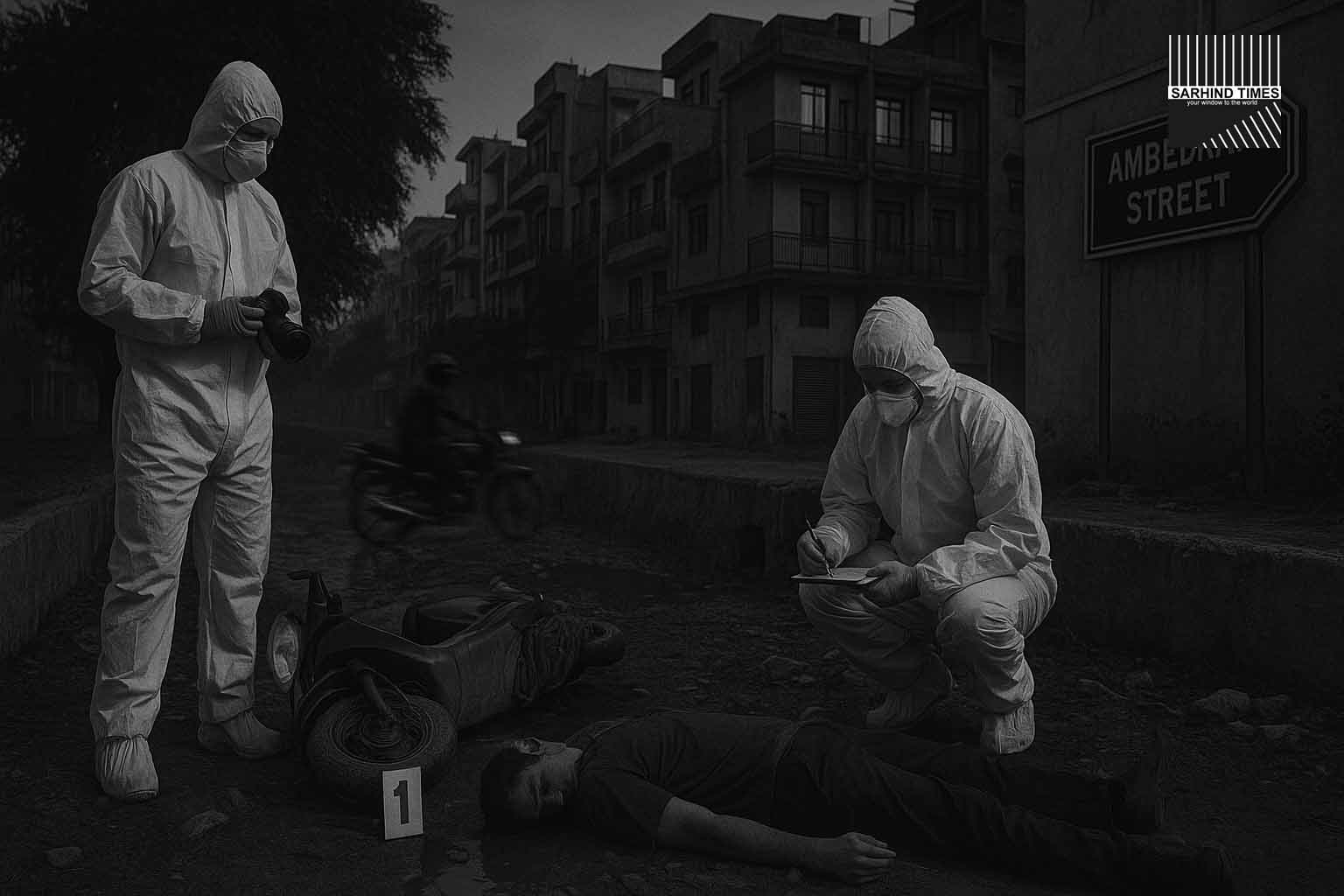
After months of investigation and manhunt, accused remains absconding while court moves ahead under new law
Dateline: New Delhi | 25 November 2025
Summary: In a landmark move, the Delhi Police has filed charges and begun a trial in absentia under Section 356 of the Bhartiya Nagarik Suraksha Sanhita 2023 in the murder of former employer Ramesh Bhardwaj, whose body was recovered after a month of disappearance. The primary suspect, ex-servant Jitender Mehto, remains on the run—prompting questions on policing gaps, legal innovation and justice delivery in India’s capital.
The Case and the Legal Breakthrough
The case resurfaces anew this week as Delhi law enforcement marks its first use of in-absentia trial provisions under the Bharatiya Nagarik Suraksha Sanhita (BNSS) in a murder investigation. The victim, 68-year-old realestate trader Ramesh Bhardwaj, vanished on 29 January after leaving his home in Narela for a routine outing. His family reported him missing shortly thereafter.
Investigators zeroed in on his former domestic servant, 34-year-old Jitender Mehto, who disappeared the same day. Months of inquiries later, Bhardwaj’s decomposed body was discovered in a storm-water drain along the Outer North district lane, while Mehto remained missing.
On 24 November 2025, police announced that they had formally framed charges against Mehto under Section 302 (murder), Section 201 (destruction of evidence) and other relevant provisions of the BNSS despite his absence. That same day, the court accepted the charge sheet and initiated proceedings in Mehto’s absence, citing the accelerated mechanism under Section 356 of the BNSS. This marks the first time that Delhi courts have allowed a proclaimed offender murder suspect to be tried without physical presence of the accused—a significant shift from previous practice.
The police emphasised that adequate investigation evidence — phone-records showing Mehto’s last known location with the victim, CCTV footage of their last known association, witness testimony and physical forensic links — justified proceeding without delay. According to the Deputy Commissioner of Police (Outer North), Hareshwar Swami, this step was needed “so that justice is not indefinitely delayed because one accused has absconded.”
What Happened: Timeline of Events
Late January 2025: Bhardwaj leaves his home on his scooter, picks up Mehto from his rented accommodation, gives him Rs 4.5 lakh as part‐payment for a land deal. That marked the last confirmed sighting of the victim. By the following morning, he is missing. The family files a missing persons complaint.
February–October 2025: Police trace Mehto’s movement via telecom towers. Mehto is found to have cleared the victim’s flat, disconnected utilities and transferred tenancy to an alias. The rented scooter used by the victim is recovered abandoned near a green-belt area. Forensic teams detect bloodstains in the drain where the body is later found.
Mid-November 2025: After months of delay, Bhardwaj’s body is recovered in a drain in the Outer North district. Autopsy reveals multiple blunt-force injuries and evidence of being dumped days after death. On 24 November, the police formally declare Mehto a proclaimed offender and file chargesheet under BNSS.
25 November 2025: Court accepts the charge sheet and frames charges in the absence of Mehto under Section 356 BNSS, enabling trial to move forward despite his escape.
Why In-Absentia Trial Matters
Under the previous Criminal Procedure Code (CrPC), Indian courts largely postponed trials if a key accused was missing or absconding. That often meant justice was delayed or derailed. BNSS, which came into force in July 2024, includes Section 356 that allows trial in absentia if an accused is proclaimed and efforts to apprehend them are ongoing.
According to legal experts, this case sets a precedent in Delhi that could change how protracted cases involving absconding accused are handled. A senior advocate notes: “This removes one of the main strategic tools that unscrupulous accused used—evade arrest and stall trial endlessly.” The Delhi Police has flagged this case as a milestone in leveraging the BNSS framework.
Investigation Snapshot: Evidence, Leads, Gaps
Investigators believe the motive may stem from the partial payment of sale proceeds (Rs 4.5 lakh) that Bhardwaj gave to Mehto, potentially linked to an earlier land transaction gone awry. Mehto had been the victim’s employee for several years, granting him access and insider knowledge.
Phones and telecom records show Mehto and the victim made calls on the same day and were together at 14:32 in Narela zone. Last ping of victim’s phone came two hours later from a lane near the Outer North boundary. Credit-card records show Rs 1.2 lakh was transferred from Bhardwaj’s account to an alias Mehto held two days after disappearance. Forensics matched blood traces on the scooter handlebar to Bhardwaj’s DNA.
Despite these leads, the accused remains at large. Police say they have identified a possible interchange route via Panipat–Kundli corridor, and are coordinating with Haryana State Police to track his movement. Warrant and red-corner notice (RCN) are reportedly being processed for international arrest if required.
Voices & Reactions
Bhardwaj’s family expressed relief that formal court proceedings have started but demanded swift arrest of the accused and better compensation. They said: “Our fight was dragged for ten months while the body lay in a drain. The law must ensure he does not escape justice.”
Local advocacy groups applauded the police’s use of BNSS but warned that legal innovation is only meaningful if law enforcement follows up with arrests and convictions. An NGO lawyer said: “In-absentia trial is a tool, not a solution. The system still needs to ensure robust prosecution, witness protection and conviction of accused.”
Some civil-liberties voices cautioned that expanding in-absentia trials must be balanced against defendants’ rights to be present and defend themselves. They emphasised procedural safeguards, anonymity risks and ensuring evidence-integrity when accused is missing.
What It Reveals: Crime & Justice in Delhi
This case highlights several structural issues in Delhi’s crime and justice ecosystem. First, employer-servant relationships in domestic sectors often involve unmonitored financial flows and trust vulnerabilities—here, the payment of a large sum reportedly unlocked a fatal dispute. Second, the long delay in body recovery and tracing of accused underscores limitations in missing persons tracking, surveillance of fringe zones and inter-state coordination.
Moreover, law enforcement’s reliance on new legal tools reflects institutional acknowledgement of past inadequacies. The move to prosecute in-absentia signals urgency to break glass ceilings in justice delivery, but it also places pressure on police to make arrests swiftly lest the trial become symbolic.
What Happens Next? Key Agenda for Law Enforcement
For the Delhi Police and prosecution, the immediate agenda includes:
- Tracking, apprehending and extraditing the accused. If found abroad, processing extradition or RCN promptly.
- Ensuring safe custody of key witnesses and recovering physical evidence (vehicle, knife/axe, rental agreements) without compromise.
- Maintaining trial momentum and avoiding procedural delay now that trial has begun. Safeguards must be designed for bench proceedings despite absence of accused.
- Deploying public-communication strategies to reassure citizens that absconding accused cannot stall justice indefinitely.
Broader Implications & Policy Lens
The use of in-absentia trial under BNSS may encourage more timely disposal of cases where suspects flee. But experts caution: it must be paired with strong detective work, speedy evidence collection and preservation to reduce chances of appeal-based delay. Some legal analysts foresee this becoming a model for other states beyond Delhi.
However, the worry remains: will this lead to ‘trial without accused’ becoming the norm and thereby erode the accused’s right to be present? The judiciary will need to evolve jurisprudence and guidelines to prevent misuse.
Conclusion
The Bhardwaj-Mehto case stands at the intersection of domestic trust betrayal, legal evolution and institutional reform. While the Delhi Police has leveraged the BNSS framework to advance the trial even without the accused, the real test lies ahead: will the absconding suspect be caught and brought to justice, and will the trial conclude with conviction and closure for the victim’s family?
In a capital where headlines often focus on terror, politics and infrastructure, this employer-servant murder reminds us that basic rule-of-law, rapid response and conviction delivery still matter. If this case leads to strong policing, swift arrest and robust conviction, it may shape Delhi’s judicial trajectory for years to come. But if the accused continues to evade capture, the accelerated trial may ring hollow. For now, the city watches, waits and hopes justice leaps forward rather than stalls again.


+ There are no comments
Add yours