
Low-cost diagnostic ready for scale-up promises quicker treatment and a major push in India’s fight against antimicrobial resistance
Dateline: Bhavnagar / New Delhi | 14 November 2025
Summary: A research team at CSIR–Central Salt & Marine Chemicals Research Institute (CSMCRI), Bhavnagar has developed a diagnostic kit, named U-AST (Urinary Antibiotic Susceptibility Test), capable of identifying urinary tract infections (UTIs) and antibiotic resistance in just nine hours at a manufacturing cost of about ₹50. The innovation is especially relevant for rural and semi-urban India, where laboratory infrastructure is limited, and it arrives at a critical moment in the fight against the growing threat of antimicrobial resistance (AMR).
Diagnosing UTIs: the current landscape in India
Urinary tract infections affect a large share of the Indian population, particularly women, and recurring infections impose both health burdens and cost burdens. In the current diagnostic setup, patients typically undergo urine microscopy, culture and sensitivity testing—processes which can stretch over 36 to 72 hours and incur unpredictably high costs. For many rural clinics or peripheral health centres, the turnaround time and infrastructure requirements mean delayed or empirical treatment. This often leads to inappropriate antibiotic use, which compounds the problem of antimicrobial resistance (AMR).
In this context, the newly developed U-AST kit by CSMCRI represents a shift: a single kit costing around ₹50 (~US$0.60) and delivering actionable results within a working day opens new avenues for primary care, quicker intervention, and rational antibiotic use.
What the U-AST kit does and how it works
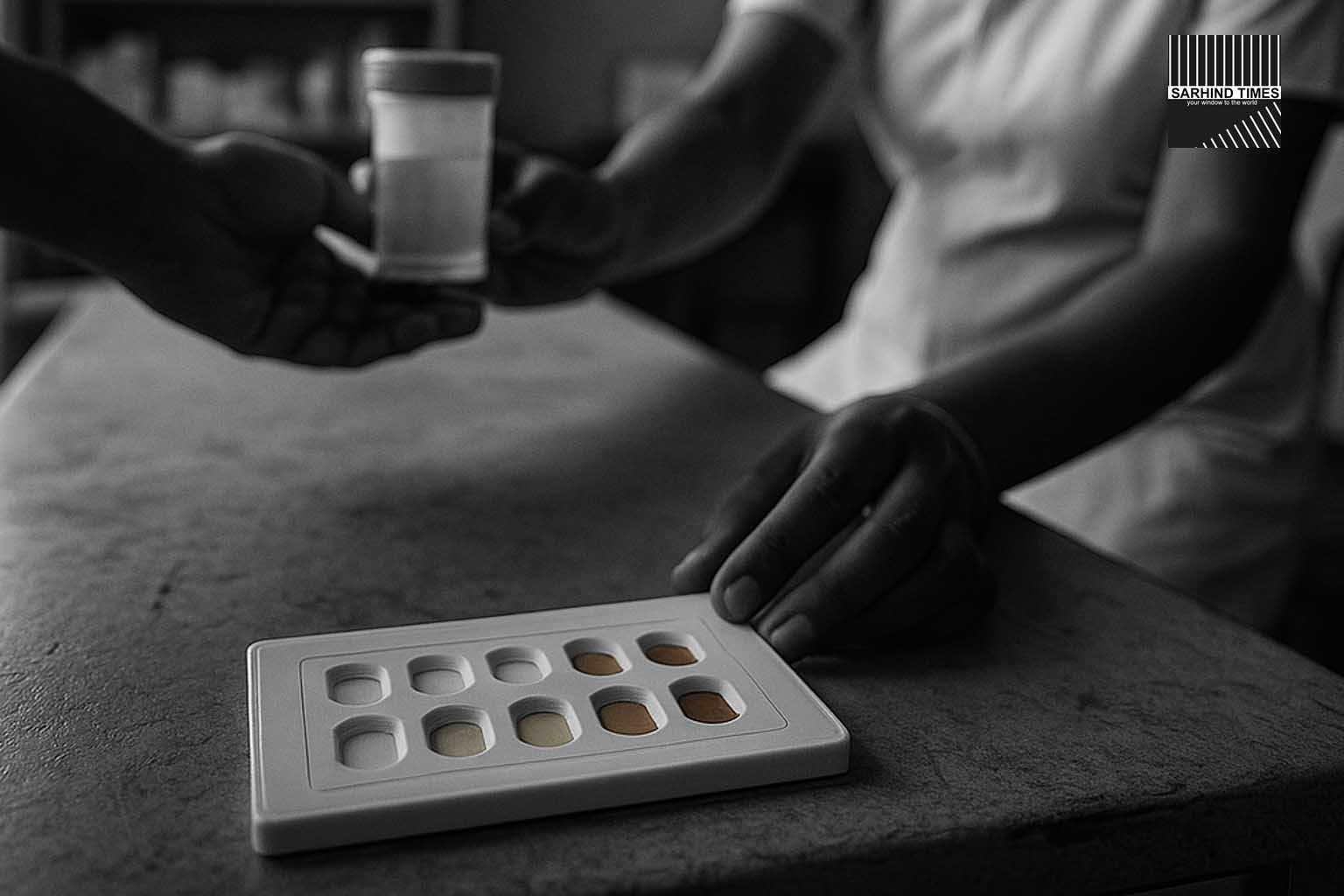
The innovation comprises a colour-based micro-well format. A urine sample is introduced into the kit, which includes reagents and micro-wells pre-loaded with antibiotic challenge zones. The sample is incubated and a colour change indicates both the presence of infection and the likely antibiotic susceptibility pattern. Clinical validation using 50 anonymous urine samples from a reference laboratory in Ahmedabad showed results consistent with standard culture methods—but with vastly shorter turnaround time and lower cost.
The critical differentiation is the inclusion of antibiotic‐sensitivity testing, not just infection detection. Many rapid tests identify pathogens but do not resolve which antibiotic will work; the U-AST kit closes that gap. Importantly, it is designed for use outside highly specialised labs—requiring minimal equipment, no cold chain, and can be operated by basic health-centre staff after brief training.
Why this matters: implications for rural and peripheral healthcare
India’s healthcare challenge is two-fold: managing high disease burdens in rural areas and containing antibiotic misuse and resistance. Here are key implications:
- Faster diagnosis, earlier treatment: When patients receive diagnosis and antibiotic guidance within 9 hours, there is less empirical prescribing, fewer treatment delays, and potentially fewer complications (e.g., kidney infections which can arise from untreated UTIs).
- Cost-effective diagnostics: A kit costing roughly ₹50 lowers the barrier for primary health centres and outreach programmes; lower cost may also drive scale adoption and quicker screening of symptomatic patients.
- AMR prevention: One of the major drivers of AMR is the empirical or broad-spectrum use of antibiotics when diagnostics are slow or unavailable. By enabling targeted prescribing, the kit could reduce unnecessary antibiotic exposure—especially in rural and semi-urban areas where oversight is weak.
- Decentralisation of diagnostics: Many Indian health centres lack full microbiology labs; a tool that works in simpler setups can bring diagnostics closer to the patient, reducing wait times and referrals to distant labs.
Challenges and caveats ahead
Even with the promise, several issues need to be addressed for real impact:
Quality assurance and scale-up: The kit has shown promising validation in initial trials, but mass production, quality control, distribution logistics, training of health-centre personnel and regulatory approvals are underway. Manufacturing at scale while maintaining cost-effectiveness is a challenge.
Integration into care pathways: Diagnosing is one step; ensuring patients receive appropriate follow-up care, prescriptions, monitoring of outcomes, and data capture on antibiotic use will determine the broader public-health return.
Data and surveillance: To track AMR trends and build a national response, diagnostics must link into surveillance systems. The U-AST kit will need mechanisms for data capture and reporting to feed into systems such as the Indian Council of Medical Research (ICMR) AMR surveillance networks.
Behaviour change and antibiotic policy: Even with diagnostics, prescribers must trust, use and follow the results—health-workers accustomed to empirical treatments may need training and incentives. Also, supply chains and antibiotic availability must align with the results—if diagnostics identify a non-first-line antibiotic but it is unavailable, benefits are limited.
Broader context: AMR, diagnostics and public-health policy in India
India has been flagged as one of the high-priority countries in the global battle against AMR. Reports suggest that over-the-counter antibiotic sales, empirical prescribing, and lack of diagnostics are major drivers of resistance. Innovations such as the U-AST kit are aligned with national priorities-–including the “AMR Programme” of the Ministry of Health and Family Welfare and the One-Health framework linking human, animal and environmental health.
This diagnostic also aligns with India’s push to strengthen primary-care infrastructure, improve health access in rural zones, and shift from reactive to preventive or early-diagnosis-led care. The Ministry of Health’s upcoming policy drafts emphasise diagnostic access, rational antibiotic use and integration of diagnostics into health-delivery models.
What to watch: next steps and measurable indicators
Over the next 12-18 months, several markers will indicate whether this innovation fulfils its promise:
- Number of kits manufactured, distributed and deployed in primary-health-centres and rural clinics.
- Turn-around time in field use compared to existing lab-based methods and reduction in empirical antibiotic use as a result.
- Reported reduction in treatment delays or complications (e.g., fewer recurrent UTIs, fewer kidney infections) in pilot regions.
- Integration into AMR surveillance data streams and capture of antibiotic-use shifts attributable to the diagnostic.
- Cost-benefit analyses comparing standard diagnostics vs. the new kit in rural/semi-urban Indian settings.
Conclusion: small kit, big implications
The U-AST kit is more than a diagnostic tool—it represents a shift in how diagnostics can be brought closer to patients, how antibiotic prescribing can be more rational and how rural healthcare infrastructure can leap-frog constraints. At ~₹50 and delivering results in 9 hours, it offers a template for cost-effective, rapid diagnostics in India’s complex public-health environment.
However, the step from laboratory validation to large-scale impact is non-trivial. It will demand coordination between manufacturing, regulatory frameworks, health-delivery systems, training, supply chain and antibiotic stewardship efforts. For rural clinics across India, this kit could remove a major barrier—but only if the wider ecosystem rises to meet the challenge.
In short: the technology may be ready—now the question is whether India’s health-system can execute and scale it—and whether this will translate into measurable reductions in infection burden, antibiotic misuse and AMR. This is a promising signal—but one that merits rigorous testing and sustained follow-through.



+ There are no comments
Add yours