
Neighbours detect foul smell, police find victim’s body hidden under bed; investigation underway with husband and partner among key persons of interest
Dateline: Gurugram | 6 November 2025
Summary: The body of a 26-year-old woman, reported to have been approximately seven months pregnant, was discovered in a rented accommodation in Sector 21, Gurugram. Police suspect strangulation or throttling and have begun a murder investigation, with the victim’s husband and a former partner among persons of interest.
Initial discovery and scene details
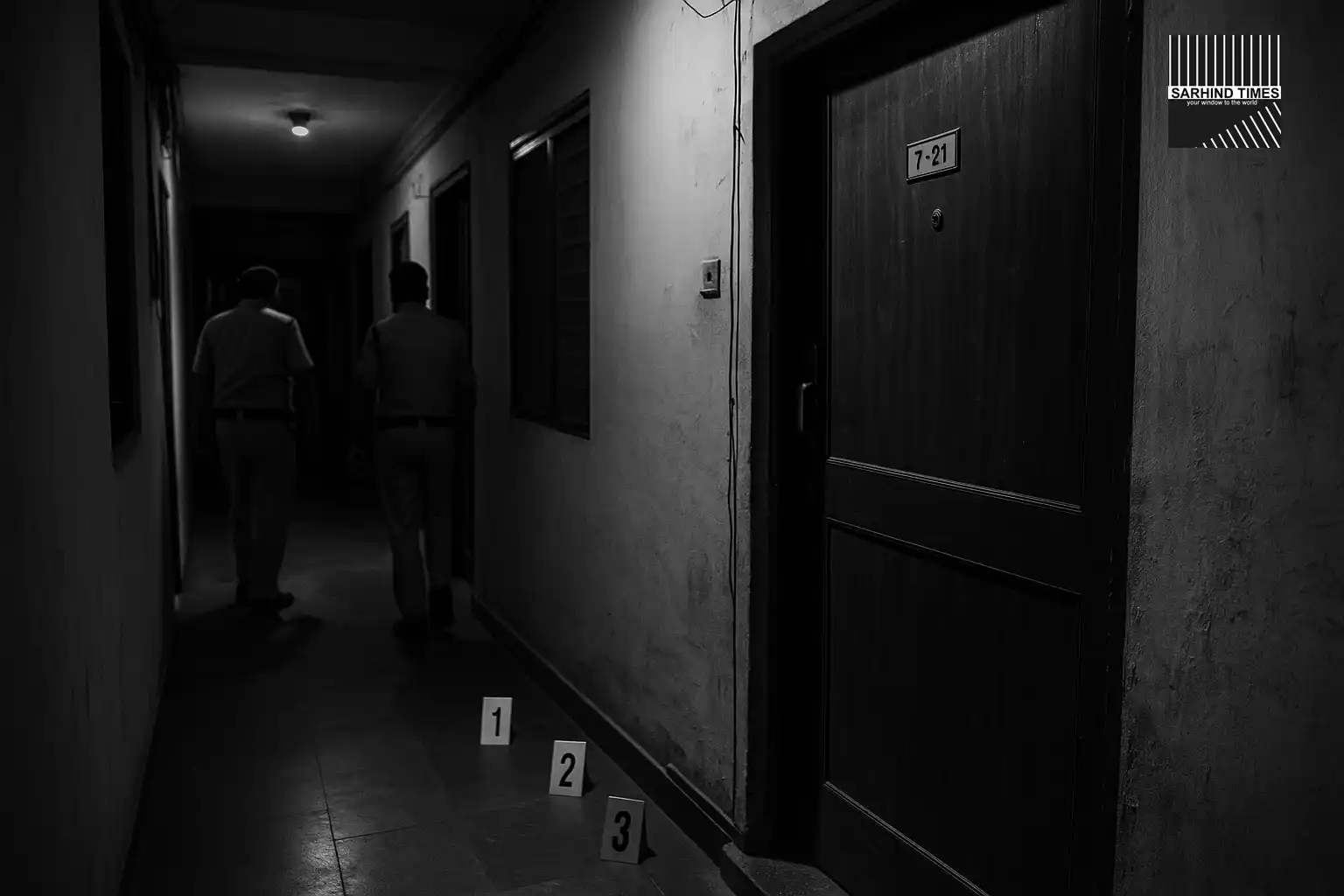
In a chilling discovery early on Wednesday morning, law-enforcement officials in Gurugram responded to a distress call from a residential building in Udyog Vihar’s Dundahera area, Sector 21. The neighbour of the victim, disturbed by a foul odour emanating from the landing and noticing blood-like seepage from under a locked main door, alerted the caretaker, who then called the police. Once access was forced, the body of the 26-year-old woman was found concealed beneath a bed in a two-bedroom rented flat.
According to the station-house officer of the local police station, the main door had been locked from the outside, and only once the police broke in did the victim’s body come to light. The condition of the body suggested it had been there for several days; the smell and leakage pointed to early stages of decomposition. Investigators believe the death occurred earlier in the week, possibly as far back as Friday evening when the last confirmed sighting by neighbours took place.
Neighbours told police they had last seen the victim – identified as Ms Anguri Devi, hailing from Kapashera in Delhi – on the Friday evening prior, when she was observed washing clothes outside her flat. Since then she had not been seen, and no one had heard from her until the odour alerted the building’s occupants. Reports indicate she had been residing in the flat for a few months, renting the accommodation separately from her husband.
Victim’s background and local context
Ms Devi, age 26, had come from Kapashera in Delhi and had been living in Dundahera, Gurugram, in a rented accommodation. She had separated from her husband and for the past several months had been residing alone – according to neighbours – though she was in a relationship with another man and was reportedly around seven months pregnant.
The fact that she was pregnant has added urgency and sensitivity to the investigation. Police sources indicate that the gestation period was being verified through medical and hospital records; the pregnancy status is currently treated as an assertion by neighbours and acquaintances. The dual factors of separation from her husband and a separate relationship are being closely examined by investigators as potential motives.
Investigation begins: suspects, motive and official response
The local police have initiated a murder investigation, with suspicion of strangulation or throttling – based on preliminary examination of the body. The victim’s husband, currently under scrutiny, has denied contact since Friday and claims not to have met or spoken with the victim. He is being questioned as part of ongoing probe. However, another male acquaintance – the man with whom the victim was reportedly in a relationship – is missing and is considered a prime suspect.
Inspector Vinod Kumar, station-house officer of Udyog Vihar police station, stated that while investigators await the autopsy report to confirm the exact cause and time of death, all evidence so far points toward homicide rather than accidental or natural death. He confirmed that the body was hidden under the bed and the door locked from outside raised concerns about pre-meditation and efforts to conceal the crime.
Forensic teams were deployed at the scene to collect evidence – the bed and surrounding area were cordoned off; fingerprints, DNA swabs and trace samples were taken. Investigators also collected CCTV footage from neighbouring buildings and the landing area of the block, and are analysing mobile-phone data to trace the victim’s last known movements as well as confirm her communication history in the days leading up to the death.
Neighbour accounts and local housing dynamics
Neighbours described the victim as quiet and keeping to herself for the most part. She had seemed outwardly normal, occasionally seen washing clothes or stepping outside the flat. Few had noted her pregnancy; one neighbour said she observed her doing domestic chores about seven months ago, but she had not overtly displayed signs of distress or sought help.
The building in question is located in a commercial-residential zone of Dundahera, Gurugram – an area popular for rented accommodations serving professionals working in nearby industrial and IT parks. Flats in the block are often let to single occupants or couples, and the turnover of residents is high. In such settings, neighbours often don’t know each other well, and absent or limited community engagement may hamper early detection of issues.
The incident highlights the vulnerability of single women living alone in rented accommodations in rapidly urbanising zones. While such zones offer flexibility and proximity to workplaces, they also present security and social-protection challenges – particularly when occupant separation from family or isolation is involved. The relative anonymity of the building and high resident turnover may have contributed to low detection of potential warning signs.
Legal angle: murder charge, concealment and case framing
Once the autopsy report is concluded – which is being prioritised by the district forensic department – the police are expected to formally register a first-information report under the Indian Penal Code sections for murder (Section 302) and concealment of body (Section 201) among others. If the relationship between the victim and suspect is confirmed and motive established, additional sections such as adultery-related scandalous headings may be invoked under certain older judicial precedents (though modern practice tends to focus purely on criminal conduct rather than moral judgement).
Authorities have also booked the case under local provisions relating to illegal locking and concealment of the body, attempted to trace the suspect for evading law-enforcement, and intend to press for custody and interrogation once the suspect is apprehended. Meanwhile, the husband is a key person of interest because of his earlier proximity though he denies contact; the relationship partner being missing complicates the investigation and constitutes a flight-risk scenario.
Broader crime-pattern context in Gurugram
This case comes amid an uptick in high-profile crime investigations in Gurugram. Just days earlier, the crime-branch of the Gurugram Police arrested a 44-year-old organised-crime kingpin along with two associates for illegal arms possession. In another incident, three individuals were arrested before a planned robbery in Sector 37. These high-intensity operations point to a concerted effort by local police to crack down on organised and violent crime in the city.
The fact that a woman’s murder in rented accommodation raises concerns not just about individual conduct but also about the safety ecosystem in urbanised zones. Rented single-occupancy units are often less supervised, raising the question of whether local police and municipal agencies need to step up monitoring, community liaison and early-warning systems for vulnerable residents.
Impact on public confidence and local governance
Such a violent incident within a commercial-residential precinct strikes at the heart of public confidence in urban safety. Gurugram has long been regarded as a leading corporate and residential hub yet suffers from the structural challenges of rapid expansion – including heavy traffic, new township development, high-density worker housing, and associated security vulnerabilities.
The district administration and police leadership are under pressure to reassure residents, particularly women and families, that safety protocols, rapid-response mechanisms and monitoring are being strengthened. Community policing initiatives, liaison with housing societies and better surveillance infrastructure are likely to become part of the immediate policy response in the wake of this murder.
Psychological and social dimensions
The fact that the victim was reportedly pregnant adds a layer of societal gravity to the case. Domestic separation, relationships outside marriage, rented housing, and the pressures of urban life converge in a tragic manner. Experts in urban sociology and women safety note that many issues such as isolation, lack of family support, stigma around pregnancy outside marriage, and halfway accommodation arrangements can increase risk for women and make them less able to seek help.
While details remain under investigation, this case echoes deeper concerns: young women living independently in the city, navigating relationships and work, may sometimes lack robust social-networks and institutional safeguards. Rented accommodation, by nature more transient and less community-anchored than older society-structures, can amplify vulnerability.
What’s next: forensic results, suspect tracing and public transparency
The next few days are critical. The autopsy report will establish cause of death and approximate time frame; forensic analysis of the lab results may link suspects via DNA or fingerprint evidence. Police are simultaneously working to trace the missing male suspect, use mobile and digital forensics to ascertain his last location and communications, and review financial records for any motive involving money or property.
The husband’s version of events is being tested against CCTV footage, visitor logs and phone records to check whether his denial of contact holds. Meanwhile, the landlord and neighbours are being interviewed to establish whether any disturbance or unusual activity was seen or heard in the days prior. Police may also review rental-agreement documentation and access check-in logs to identify if any unauthorised entries occurred.
Community response and civil-society viewpoint</
Civic groups and women-safety organisations in Gurugram have responded with concern. They emphasise that rented accommodation clusters must not become isolated enclaves without safety nets. Several local NGOs have called on the district administration to set up a helpline for rented women-tenants, promote a neighbours-watch scheme, and speed up implementation of emergency panic-buttons and surveillance lighting in buildings known to house single occupants.
Resident welfare associations in Dundahera and Sector 21 are holding meetings to revisit building security protocols. Many older societies already have gated structures and frequent occupant turnover but lack formal safety audits; the current case is likely to drive those associations to adopt stricter registration of guests, tighter elevator access controls and periodic reviews of visitor logs and movement patterns.
Policy implications and urban housing safety agenda
Urban housing policy in India has increasingly recognised that safety is not just about crime reduction but also about built-environment design, tenant scrutiny, occupant integration and community vigilance. This incident may prompt the Gurugram district administration to coordinate with the municipal corporation and police to launch a “safe rental residence” accreditation scheme, where buildings letting to single tenants or couples are periodically audited for lighting conditions, access logs, CCTV coverage, neighbor-liaison and rapid-response access.
From a governance perspective, the state of Haryana and local municipalities may review whether rented accommodation clusters – especially in zones that combine industrial offices and worker flats – require specialised monitoring or dedicated policing units. The challenge of integrating millions of renters into the civic safety framework remains significant in India’s fast-growing cities.
Victim support, legal process and timeline expectations
For the family of Ms Devi and for the wider public, prompt action is key. The police have indicated they will seek a remand of any arrested suspect swiftly, present a chargesheet once forensic results are in, and keep the family updated. Civil-society advocates emphasise the need for counselling for the victim’s family, protection of any witnesses, secure storage of evidence, and transparency in the investigation to retain public trust.
While police aim to file a chargesheet within a 60-day period, in practice complex homicide cases may extend if key suspects evade arrest or forensic links take time to establish. The public would expect at least periodic updates from the district police and district prosecutor about progress and next hearing dates; media oversight may help keep the case in the spotlight so that justice is both swift and seen to be delivered.
Conclusion: a city’s challenge and a woman’s tragedy
This tragic incident places a young woman’s life – and that of her unborn child – at the centre of a city’s broader question about urban safety, rented living, and criminal responsiveness. Gurugram, which has grown rapidly into a major commercial and residential hub, now faces the imperative of ensuring that its fast-paced transformation does not leave certain resident-groups vulnerable.
The cause of death, investigation outcome, and final court proceeding will unfold in the coming weeks. But what remains immediate is the message this case sends: that safety cannot be assumed simply because a city is affluent or dynamic, and that the structural vulnerabilities of rented accommodation and transient residents must be addressed with as much urgency as crime-busting operations.
For the citizens of Gurugram – and cities like it across India – this is a moment for reflection, policy intervention and enhanced community engagement. For the family of the victim, it is a moment of grief, of seeking answers and of hoping for swift justice. And for the police, it is a call to act now, ensure the case proceeds without delay, and set a visible precedent that no offence, no matter how hidden it may initially appear, escapes detection.


+ There are no comments
Add yours