
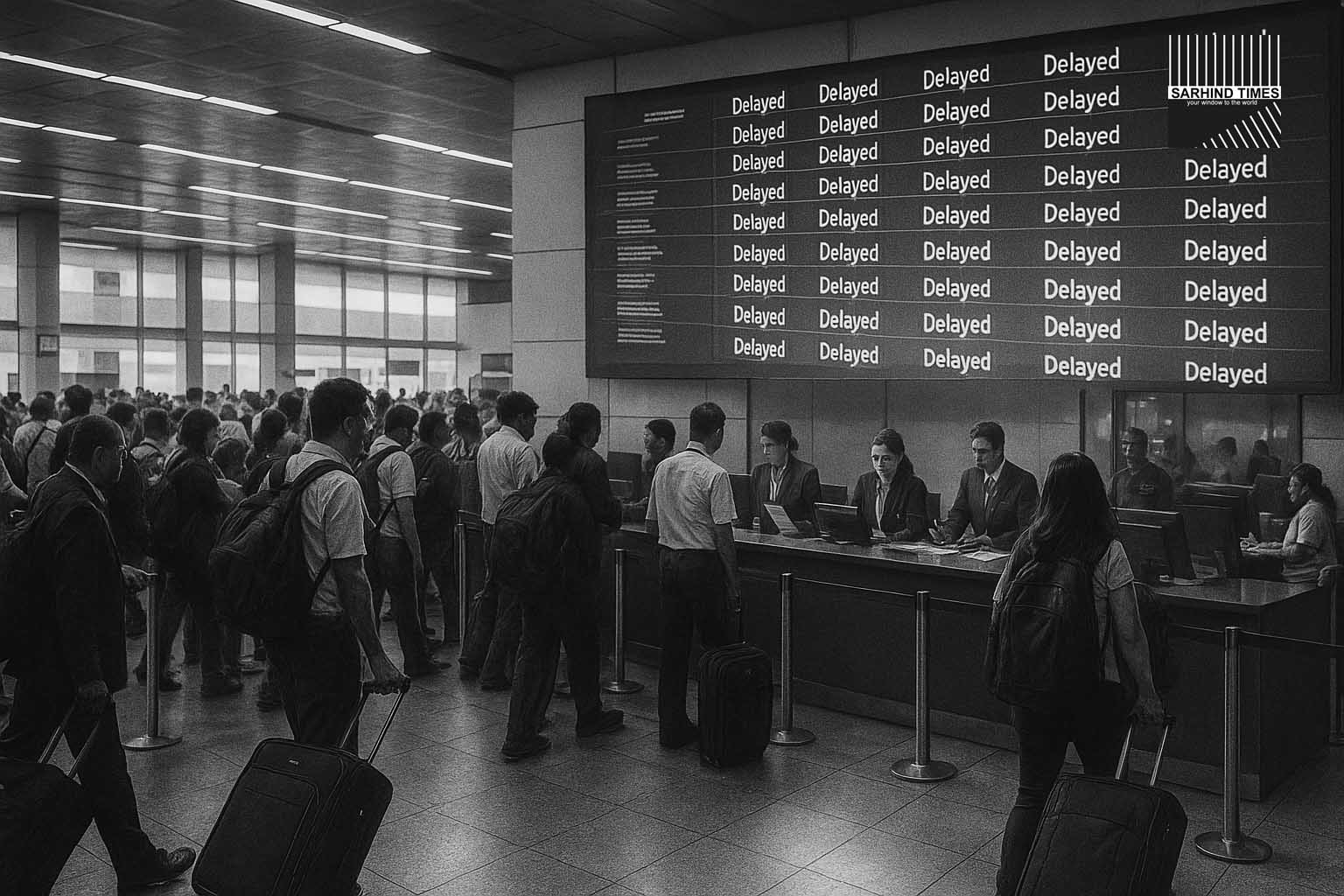
Technical fault disrupts crew rostering software; DGCA seeks report as delays stretch into hours at Delhi, Mumbai, Bengaluru, Chennai and Kochi
Dateline: New Delhi | 25 November 2025, Asia/Kolkata
Summary: Air India Express faced widespread disruption across India on Tuesday after a crew scheduling software malfunction grounded flights and triggered cascading delays. The glitch, which prevented proper assignment of pilots and cabin crew, affected operations at several major airports, leaving thousands of passengers stranded and forcing the airline to manually reassign crews. The Directorate General of Civil Aviation (DGCA) has demanded a detailed report, and airports were instructed to activate backup support systems to manage swelling crowds and mounting complaints.
India wakes up to major aviation disruption
Passengers across India experienced severe travel disruptions on Tuesday morning as Air India Express, the country’s fast-growing low-cost international and domestic airline, suffered a major operational breakdown due to a critical scheduling system failure. The glitch crippled crew assignment processes, causing dozens of flights to be delayed and several others grounded temporarily.
The impact was felt most prominently at major hubs including Delhi’s IGI Airport, Mumbai’s Chhatrapati Shivaji Maharaj International Airport, Bengaluru’s Kempegowda Airport, Chennai International Airport, Kochi International Airport and Hyderabad’s Rajiv Gandhi International Airport.
Passengers reported chaotic scenes, long queues, unclear communication, and airport congestion that lasted for hours.
The root cause: a crew rostering system breakdown
According to early reports, the disruption originated from a malfunction in the airline’s automated crew rostering software — a central system that allocates pilots, cabin crew, rest periods and duty hours in compliance with aviation regulations.
The glitch prevented staff from viewing, assigning or validating crew schedules. Without verified crew availability, flights could not depart, triggering a chain reaction across the network.
An Air India Express spokesperson confirmed a “technical difficulty with the rostering module,” adding that manual fallback procedures were activated once engineers failed to restore the system quickly.
DGCA demands explanation and safety assurance
India’s aviation regulator, DGCA, immediately sought a detailed incident report. Officials emphasized that crew scheduling is directly linked to flight safety, as duty-time limitations ensure that pilots and cabin crew are well-rested and compliant with aviation norms.
DGCA instructed the airline to:
• ensure no flight departs with unverified crew duty hours
• activate manual oversight checkpoints
• provide real-time updates to passengers
• prevent overworking of pilots hidden by technical malfunction
• coordinate with airports to manage passenger flow
The regulator said it would evaluate whether the glitch resulted from software failure, human oversight, inadequate fallback processes or systemic IT vulnerabilities.
Passengers describe frustration, confusion and long waits
Hundreds of passengers shared videos online showing crowded boarding gates, departure boards filled with “Delayed” notifications, and airline staff trying to calm increasingly agitated travellers.
Common complaints included:
• lack of timely updates
• flight delay notifications arriving minutes before scheduled departure
• missing airline staff at counters
• confusion regarding rebooking and refunds
• elderly passengers stranded without assistance
• long queues stretching outside terminal entrances
One passenger at Delhi airport said, “We were told the flight was delayed due to operational reasons. It was only after two hours we learned there was a crew shortage.”
Another passenger travelling from Kochi said she missed a connecting international flight due to the delay. “There was no guidance on what to do next,” she said.
Airline activates contingency measures
Air India Express said it had deployed a crisis management team to coordinate mitigation efforts and manually assign crews on priority routes. Additional customer-care staff were sent to crowded counters, and airport partners were asked to provide drinking water, seating arrangements and assistance for passengers requiring special support.
The airline also offered:
• free rescheduling for delayed flights
• cancellation with full refund
• meal vouchers for delays beyond defined thresholds
• hotel accommodation in extreme cases
• coordination for missed international connections (case-specific)
Despite these measures, the intensity of the disruption meant that several passengers had to wait hours before receiving clarity.
Cascading delays: why aviation disruptions spread so quickly
In modern aviation networks, even a single fault can disrupt dozens of flights. A glitch in crew scheduling is considered one of the most severe triggers because:
• every flight requires pilots + cabin crew with valid duty hours
• crew are often rostered for multiple back-to-back flights
• crew availability affects aircraft rotation
• delays cause crews to exceed permitted duty hours
• resetting new rosters requires time-consuming manual approvals
Thus, even when the technical error was identified, recovery took much longer due to regulatory safety constraints designed to prevent pilot fatigue.
Other airlines impacted indirectly
While the glitch directly affected only Air India Express, large-scale delays created ripple effects for airport operations. Congested check-in zones, baggage belts and security checkpoints slowed down other airlines operating in the same terminals.
Airport officials said they had to:
• activate overflow waiting zones
• increase CISF deployment at security gates
• reassign gates to optimize traffic flow
• coordinate apron movements to prevent aircraft congestion
Low-cost carriers operating adjacent morning slots experienced mild operational slowdowns as a result.
Possible cause: software update or infrastructure overload
Technical teams are examining whether the glitch originated from:
• a faulty software patch
• corrupted database entries
• cloud-server sync issues
• failure in communication between rostering and crew duty-time modules
• an internal systems overload triggered by peak-season scheduling
Experts noted that aviation IT systems require extreme precision and redundancy, and even small errors can cascade into network-level breakdowns.
Air India Express under transformation
The disruption comes at a time when Air India Express is undergoing significant transformation following its integration within the Tata Group’s aviation portfolio. The airline has announced major expansion plans, including new international routes, fleet upgrades, digital modernization and operational automation.
Analysts noted that while automation improves efficiency, it also increases dependence on robust IT systems — and failures can have outsized impact.
Passengers demand stronger communication protocols
A recurring theme across passenger complaints was inadequate information flow. Travellers said the airline’s app and SMS alerts lagged behind real-time situations, and on-ground staff were often unaware of updated changes due to back-end issues.
Consumer rights groups argue that airlines must implement:
• real-time integrated alerts
• unified communication dashboards
• multilingual announcements
• proactive updates at every milestone of delay
• escalation pathways for passenger grievances
They also call for strict enforcement of DGCA’s passenger rights charter.
DGCA revisits passenger rights norms
The DGCA is reviewing whether the disruption triggered obligations such as:
• mandatory food and refreshment
• compensation for delays beyond three hours
• hotel accommodation for overnight cancellations
• rebooking on alternate carriers in extreme cases
Officials say they will evaluate whether Air India Express adhered to all requirements and whether penalties are warranted.
Experts warn of rising aviation vulnerabilities
As airlines across the world heavily digitise operations, the aviation industry becomes more vulnerable to:
• software glitches
• system incompatibility
• cyberattacks
• data sync failures
• cloud outages
• API misalignment
Experts recommend building multi-layered redundancies, including backup scheduling servers, parallel crew databases, manual scheduling windows and disaster-recovery IT architecture.
Economic impact and peak-season concerns
The disruption comes during a high-demand period, with holiday travel, business conferences, and year-end tourism creating heavy passenger load. Delays can result in:
• missed business meetings
• disrupted tourist itineraries
• added burden on airport infrastructure
• increased operational cost for airlines
• loss of goodwill and brand trust
Travel agents reported a spike in rebooking requests, cancellations and refund claims.
Airline staff face fatigue and stress
Insiders said pilots and cabin crew experienced significant pressure due to constant schedule changes and uncertainty. Many crew members waited at airports without clarity on next assignments as manual rostering progressed slowly.
Protecting crew mental and physical well-being will be crucial as the airline stabilises operations.
International flights also affected
Flights to Dubai, Abu Dhabi, Sharjah, Muscat and Doha faced extended delays, disrupting travel plans for migrant workers, business travellers and holiday passengers. Immigration queues grew longer as airlines attempted to prioritise departures with available crews.
Social media outrage grows
The disruption drew national attention as hashtags related to Air India Express delays trended across platforms. Passengers posted images of overcrowded terminals, infants sleeping on airport floors, and elderly passengers struggling to find assistance.
The airline responded with public statements and apologies, but online sentiment remained critical.
Recovery expected to take several hours
Air India Express said normal operations would return only after full restoration of the crew rostering system and clearance of backlog flights. Aviation experts estimate that even a three-hour glitch could cause ripple delays lasting 12–18 hours across a large network.
Conclusion: A wake-up call for aviation digital infrastructure
The Air India Express scheduling glitch has highlighted growing dependence on digital systems within the aviation ecosystem and the catastrophic consequences of system failures. While airlines continue to modernise, the incident underscores the need for strong redundancy, manual overrides, real-time passenger communication and cross-department coordination.
The coming days will reveal more about the root cause of the glitch, the scale of disruption, and the lessons airlines must incorporate as India’s aviation ecosystem expands rapidly.



+ There are no comments
Add yours