
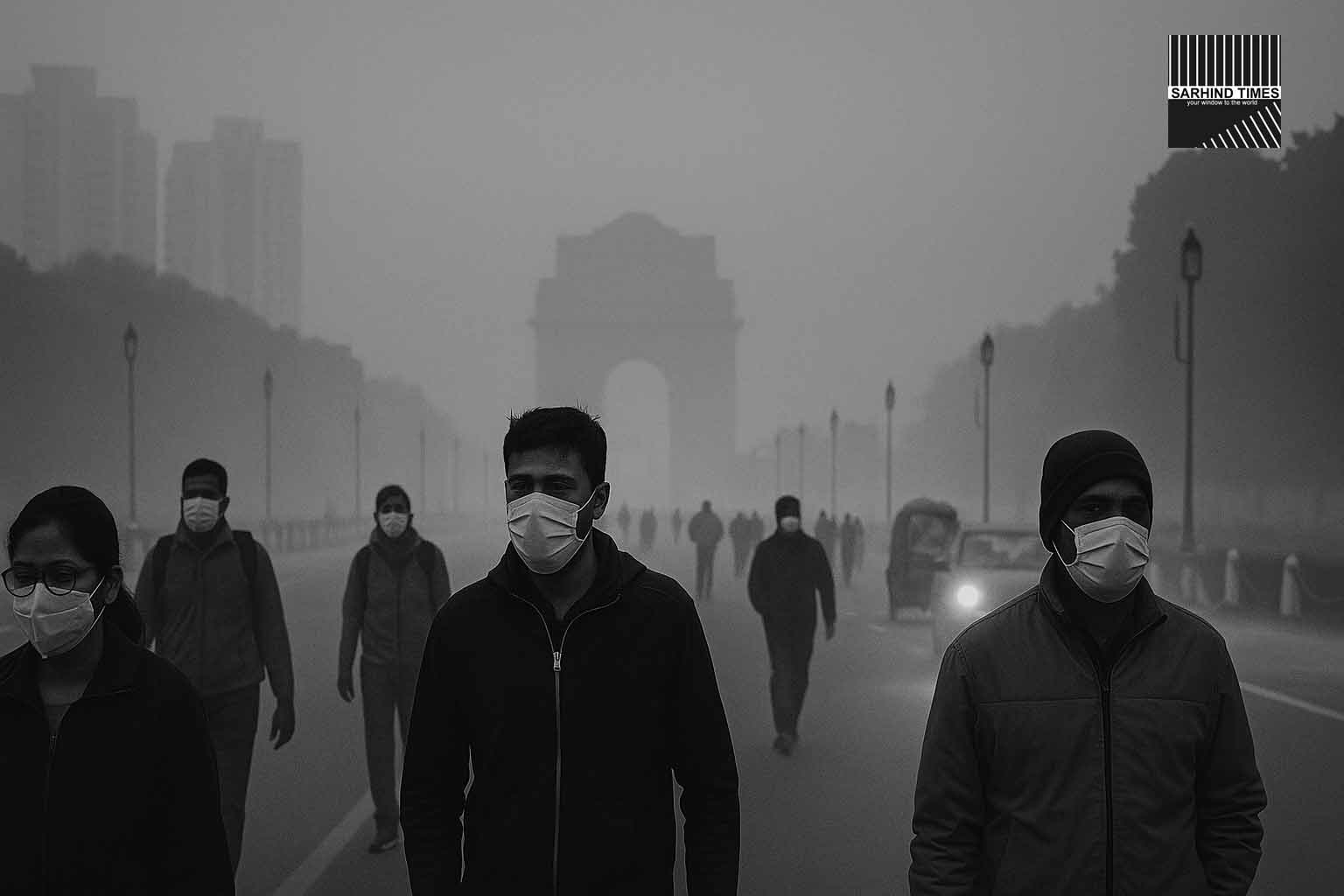
Thick smog, crop-residue burning and stagnant winds push air quality to ‘severe’ zone; health advisories issued across city
Dateline: New Delhi | 25 November 2025
Summary: The National Capital Region, including Delhi, is experiencing an early and intense spike in air pollution, with PM2.5 levels breaching the ‘severe’ category. The confluence of crop-residue burning in neighbouring states, fireworks from Diwali, construction dust and calm winds has triggered a public health alert. Authorities have initiated emergency measures while residents are warned of serious health impacts.
Emerging Crisis: Pollution Surges Earlier Than Usual
This November, the Delhi-NCR region has seen air-quality deterioration earlier than in most previous years. According to monitoring data, the Air Quality Index (AQI) in many parts of Delhi has repeatedly hovered around 400 and above—categorized as ‘severe’ under India’s air-quality classification. Major causes include stagnant surface conditions, reduced wind speeds, and heightened emissions from multiple sources.
Environmental monitoring agencies flagged the early onset of winter-smog conditions. One analyst described the situation: “We expected deterioration as the season advances, but the confluence of post-festival fireworks, crop-residue burning and weather conditions has accelerated the timeline.” With the key holiday of Diwali recently concluded and agricultural residue burning underway in Punjab and Haryana, the pollution spike came sooner than anticipated.
Key Contributors: What’s Driving the Smog?
The pollution surge is not confined to one factor—it is the result of multiple overlapping triggers:
- Crop-residue burning: Farmers in Punjab, Haryana and adjoining belts have resumed stubble fires following harvests, injecting soot and particulate matter into the atmosphere that drifts south-east into Delhi. Estimates suggest crop-burning may contribute up to 30-40 % of the PM2.5 load in the region during peak season.
- Fireworks and Diwali fallout: The recent festival lighting and fire-cracker usage added a burst of fine particulate matter and sulphur/nitrogen oxides. The heavy volume of emissions over a short period contributes to residual ambient pollution.
- Vehicle emissions and construction dust: Despite vehicular-emission controls, the high traffic density, diesel generator use, building-site dust and unregulated activities add to the ambient load. With slow wind movement, the pollutants linger.
- Weather-driven stagnation: Cooler nights, low wind-speeds and thermal inversion layers trap pollutants near ground level—creating the typical winter-smog environment sooner than expected.
Health Impacts: For Everyone, Especially the Vulnerable
The implications of sustained exposure to severe air pollution are stark. Fine particles (PM2.5) can penetrate deep into the lungs, enter the bloodstream, aggravate respiratory and cardiovascular diseases, reduce lung-function growth in children, and increase mortality risk. For Delhi, where the AQI breach is frequent, the risk mounting this early in the season is especially concerning.
Medical professionals in the city are already reporting an uptick in patients presenting with coughs, breathlessness, wheezing and chest-tightness. Breathing difficulties among children, elderly persons and those with pre-existing lung or heart conditions are being treated more frequently.
One emergency-room physician at a public hospital noted: “We’ve seen a spike in admissions for acute exacerbation of asthma and COPD. The environment indoors can be safer for some hours, but outdoor exposure even for short periods is risky.”
Government Response: Warnings, Advisories and Enforcement
As the smog-alert heightened, the Central Pollution Control Board (CPCB) activated its early-warning systems and released bulletins stating the region’s air quality may oscillate between ‘very poor’ and ‘severe’ over the coming days.
The federal and state authorities have taken several immediate steps:
- Issuing public health advisories: Residents are being urged to minimise outdoor activity, use N95/N99 masks when going outside, keep children and the elderly indoors and use air-purifiers where available.
- Launching GRAP (Graded Response Action Plan) Stage II/III measures: These include restrictions on construction/demolition activities, limiting diesel-generator usage, banning burning of solid waste in open and deploying additional monitoring patrols in crop-burning zones.
- Inter-state coordination: Recognising that pollution does not respect borders, Delhi-Haryana-Punjab authorities are coordinating fire-patrols and surveillance of stubble-burning hotspots.
- Enforcement drives: In several districts of Haryana neighbouring Delhi, police have begun patrolling pre-dawn hours to prevent stubble-burning, imposing fines and initiating legal action against offenders.
Community Reaction: Growing Anxiety and Mobilisation
In the last week, visible frustration and concern have grown among Delhi residents. At the city’s India Gate monument a small protest called for urgent action, with placards reading “We cannot breathe” and “Smog is the new norm”. The demonstration highlighted how daily life has begun to drift toward toxic-air expectation rather than occasional alerts.
One resident said: “Walking outside after 7 a.m. means wearing a mask; even then you feel your throat scratch. I expected better support from the city.” Others reported poor visibility, hazy skylines and a dull sun even at midday—symptoms commonly seen earlier only in December or January.
Economic & Infrastructure Impacts: Beyond Health
While the primary concern is public health, the pollution spike is also affecting infrastructure and economic activity. Low visibility and heavy smog have led to :
- Reduced traffic speeds and minor disruptions in early-morning commute.
- Airport delays: Several flights arriving in Delhi faced speed restrictions during approach and low-visibility setbacks.
- Decline in outdoor-work productivity: Construction and manual-labour sectors have noted that supervisors are delaying early morning tasks due to thick smog.
Looking Ahead: What to Monitor This Season
The critical question is whether the early rise in pollution represents a harsher season ahead or a one-off spike. The next few variables will determine the severity:
- Weather trajectory: If wind-speeds remain low and temperatures fall faster (favouring inversion), pollutant trapping will intensify.
- Crop-burning volume and enforcement efficacy: Arresting early stubble-burning counts among Punjab/Haryana farmers will influence regional loads significantly.
- Public-compliance and behavioural change: If restrictions on fireworks, generating usage and dust control fail, local emissions will compound the problem.
- Air-purification & indoor-protection uptake: How quickly households and institutions adapt—especially schools—will affect health-outcome trajectories.
What Residents Should Do: Practical Steps
If you live in Delhi or the surrounding region, immediate actions can reduce risk:
- Monitor local AQI regularly; if the index reads above 300, treat outdoor exposure as dangerous.
- Limit outdoor activity—especially early morning and evening when pollutant levels peak.
- Use certified respirator masks (N-95 or higher); bandana or cloth masks offer limited protection.
- Keep windows closed during peak pollution hours; use indoor air-filters if available.
- If you have respiratory or cardiovascular ailments, consult your doctor proactively—carry medication and avoid uncontrolled outdoor exposure.
- Avoid strenuous exercise outdoors; prefer indoor workouts with air-purified spaces.
Policy Imperatives: What Must Change
Short-term interventions are vital, but experts warn that without structural reform the crisis will re-emerge every year. Policy priorities include:
- Stronger regulation of stubble-burning—both in supply of alternatives and enforcement on ground.
- Expansion of ambient-air filtration systems in schools, hospitals and public buildings.
- Accelerated retrofit of diesel vehicles and higher penalties for non-compliant heavy vehicles.
- Investment in regional wind-modelling to forecast smog-events and schedule proactive closures or remote-work advisories.
- Public education campaigns emphasising that smog is not seasonal discomfort—it is a health emergency.
Conclusion
The early onset of Delhi-NCR’s smog season has triggered an immediate health and environment alert. The region faces a dangerous confluence of seasonal weather, emissions and agricultural practices that threaten to replicate—or worse—some of the worst air-quality episodes on record.
For residents, the advice is clear: treat the air as toxic, adjust behaviours and demand higher institutional response. For authorities, the test is whether this alarm becomes routine or leads to decisive action. Because next month, when the temperature dips further and winds slow even more, the window for prevention will have significantly narrowed.


+ There are no comments
Add yours