
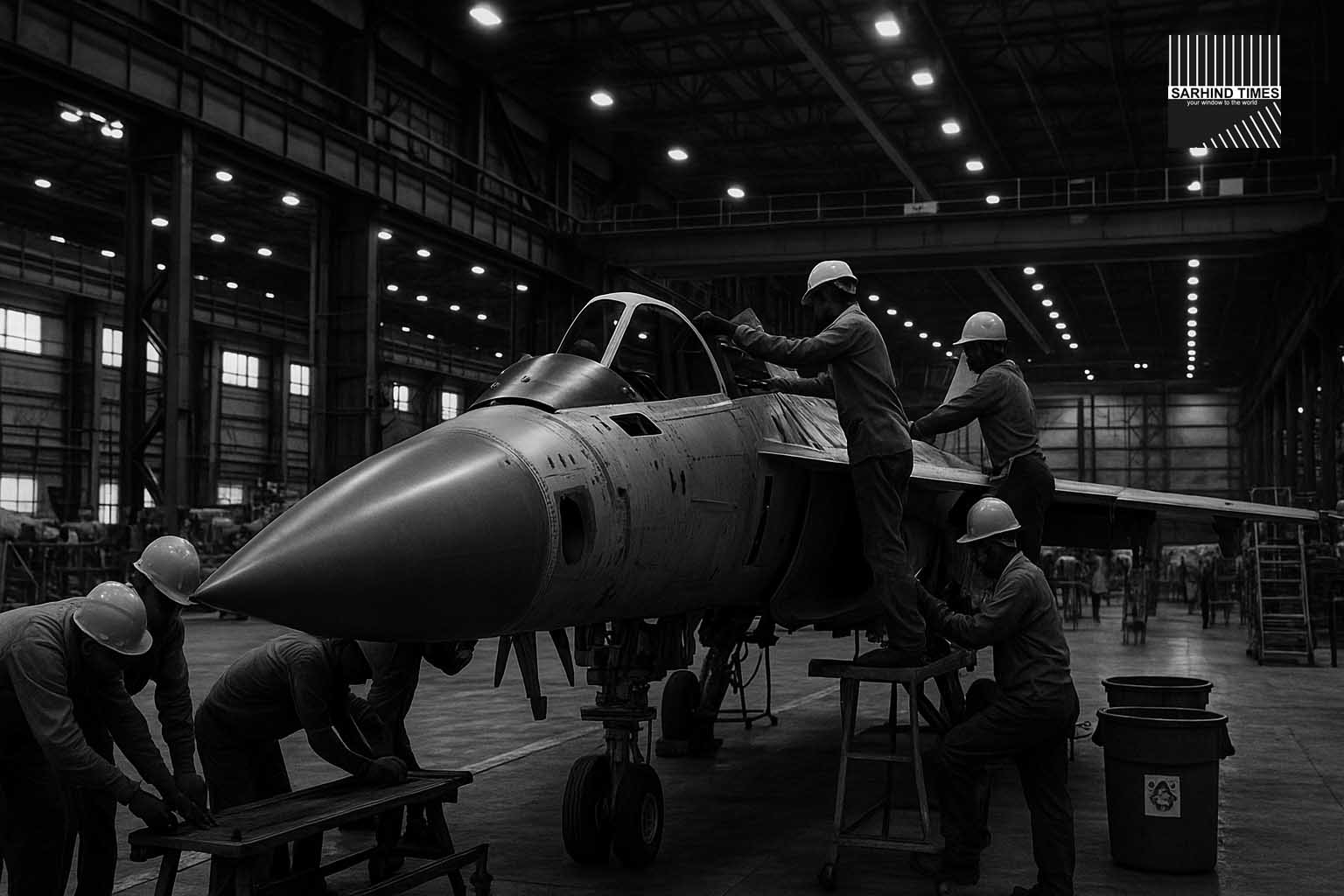
With the Ministry of Defence rolling out the DPM 2025, approving deals worth tens of thousands of crores and pushing export growth, the defence-industry ecosystem enters a new phase of transformation.
Dateline: New Delhi | 24 November 2025, Asia/Kolkata
Summary: India’s defence-manufacturing sector is seeing multiple inflection points: the DPM 2025 (Defence Procurement Manual) has been issued, signalling relaxed norms and faster pathways for procurement; major deals totalling around ₹79,000 crore were approved in October alone; and export numbers reached a record level, supporting the “Make in India” and “Atmanirbhar Bharat” narratives. The challenge now is converting approvals into production, ensuring first-time delivery, scaling MSMEs and avoiding historic delays.
What is the DPM 2025 and why it matters
Late in October 2025, the Ministry of Defence formally issued the Defence Procurement Manual 2025, to come into effect on 1 November 2025. This replaces the earlier long-standing DPM from 2009.
The new manual is designed to govern revenue procurements (estimated around **₹1 lakh crore annually** for the three Services and MoD establishments) and brings in pivotal changes:
– Caps on liquidated damages (LD) for inordinate delays reduced to 10 % and 0.1 % per week for indigenously developed projects.
– Up-front orders allowed for indigenously developed items for up to five years—offering production stability for domestic manufacturers.
– Removal of requirement for “No Objection Certificate” (NOC) from DPSUs (Defence Public Sector Undertakings) before procurement from alternate sources, thereby opening up competition.
– Limited tender enquiries allowed for amounts up to ₹50 lakh, in specific cases, reducing entry barriers for start-ups and MSMEs.
These reforms are significant: they signal that India is moving from procurement bottlenecks and legacy delays toward a more agile, industry-friendly regime. The expectation is that domestic industry—both large firms and smaller suppliers—will gain clarity, faster timelines and lower regulatory friction.
Procurement approvals: scale, timing and implications
In addition to procedural reform, the MoD has approved multiple major acquisitions in recent months. A key press release noted that in October 2025 the Defence Acquisition Council (DAC) cleared procurement proposals worth approximately **₹79,000 crore** for the Army, Navy and Air Force.
These approvals include advanced weapon systems such as the indigenous Nag Missile System (Tracked) Mk‑II, ground-based mobile ELINT systems, amphibious landing platform docks, 30 mm naval surface guns, medium-altitude long-endurance (MALE) RPAs and more. The emphasis is clearly on high-tech, indigenously designed equipment.
Separately, a standalone contract valued at around **₹2,095.70 crore** was signed by the MoD with Bharat Dynamics Ltd for INVAR anti-tank missiles, under the “Buy (Indian)” category.
On the export front, India recorded defence-export revenue of around **₹23,622 crore** in FY 2024-25, up from being far smaller just a few years ago, demonstrating that Indian defence manufacturing is beginning to substantively export.
Taken together, the approval of production capacity, reform of procurement rules and export momentum show that the defence-manufacturing ecosystem is scaling up—beyond just domestic supply to global competitiveness.
Sectoral and manufacturing implications
For the Indian manufacturing ecosystem, these developments carry multiple implications:
– **Domestic supply-chain activation:** Firms involved in design, manufacturing, electronics, optics, actuators, composite materials and software will benefit from the “Buy (Indian-IDDM)” push. The DPM changes ensure more frequent and stable order books.
– **MSME and start-up involvement:** By lowering tender-thresholds and simplifying processes, smaller firms will have better access—potentially enhancing innovation, cost-competitiveness and employment in defence manufacturing.
– **Export competence:** As export numbers rise, Indian firms must meet global quality, certification and delivery standards. This opens opportunities in allied markets and draws foreign partners.
– **Regional industrial hubs & employment:** States hosting defence production clusters (e.g., Karnataka, Maharashtra, Telangana) may get fresh investment, job creation and infrastructure injection.
– **Indigenisation momentum:** With larger contracts directed toward domestic production, reliance on foreign imports may decline over time. This may reduce supply-chain risk and enhance strategic autonomy.
Challenges and risk-factors still ahead
While the moment is promising, several hurdles remain:
– **Delivery and execution gap:** Historically, India’s defence deals have been delayed by years. The new procurement rules simplify process—but firms must deliver on time, meet quality norms and sustain costs.
– **Supply-chain readiness:** Indigenised systems still rely on specialised components (e.g., micro-electronics, sensors) often imported. Ensuring full domestic content will take time.
– **Cost escalation and project overruns:** Without strong cost controls, manufacturing ramp-up may become expensive. Baseline costing, fixed-price contracts and accountability are critical.
– **Capacity utilisation and workforce:** Firms must scale skilled workforce, production facilities and certification systems to meet order books and export demands.
– **Global dynamics and export barriers:** Defence exports face regulatory, diplomatic, compliance and offsets risks. Indian firms must adapt to multi-jurisdiction standards and forging partnerships.
– **Budget-sustainability concerns:** Just approving deals is not enough—the fiscal commitment, lifecycle maintenance cost, spares, upgrades and obsolescence need long-term planning.
What to watch next
Monitoring progress in the coming quarters will be key to assessing how deep this shift is. Key signals include:
– Which firms secure major contracts under the new regime; announcement of order winners and Indian-content commitments.
– How many MSMEs and start-ups partner in Tier-2/3 supply chains and the pace of their certification and deliveries.
– Export deals announced for Indian defence products—especially in Southeast Asia, Africa and West Asia.
– Delivery timelines and whether initial production batches meet schedule, quality and cost norms.
– State-wise investment flows, job creation numbers in defence clusters and how infrastructure is evolving.
– Whether policy changes reduce time-to-contract, reduce dispute incidents, and boost ease of doing business in defence manufacturing.
Conclusion
The issuance of the DPM 2025, combined with large-scale procurement approvals and rising defence exports, suggests India’s defence-manufacturing ecosystem is entering a new phase. For industry, this means a clearer, more stable order-book, deeper domestic opportunity and increasing export potential. For policy-makers, the challenge is shifting from policy framing to execution—making sure that the “Make in India” promise converts into production, jobs, exports and strategic autonomy.
In short: India is no longer merely approving big defence deals — it is building a structure to deliver them. The stake now is delivery and depth: if executed well, this could become a defining chapter in India’s industrial-and-defence story; if not, it risks remaining a promise unfulfilled.



+ There are no comments
Add yours