
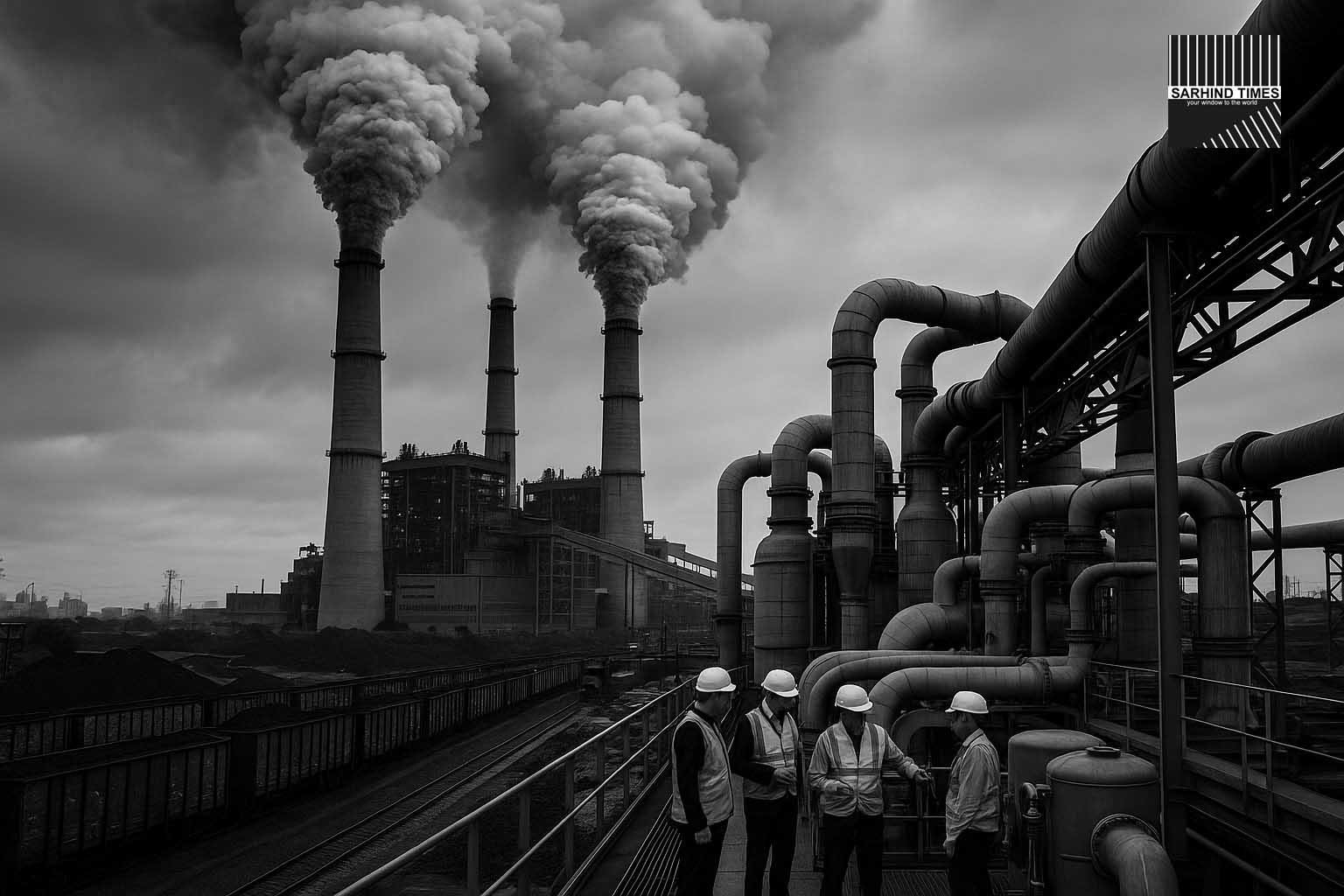
New nationwide incentives for CCUS signal a pivot in India’s climate approach—but key challenges loom over coal-dependent growth
Dateline: New Delhi | 14 November 2025
Summary: The government has unveiled a large-scale support package for carbon capture, utilisation and storage (CCUS) technologies, offering up to 100 per cent funding support for select projects, while simultaneously committing to adding nearly 100 GW of coal-based capacity by 2035. The move underscores India’s dual objective of expanding energy access and maintaining economic growth, even as it attempts to align with global climate goals.
Introduction: balancing growth and climate in India’s energy journey
India’s energy policy is walking a tightrope. On one side lies the imperative of delivering power to a rapidly growing economy, expanding access, and supporting industrialisation. On the other lies the global and domestic targets to reduce carbon intensity, transition to cleaner energy sources and meet the net-zero goal by 2070. The recently announced national initiative to promote carbon-capture, utilisation and storage (CCUS) technologies is India’s latest attempt to thread that needle—seeking to make coal and other heavy-industry processes more sustainable rather than phasing them out immediately.
At the heart of the matter is this: India remains heavily reliant on coal for power generation, industrial heat and chemicals. According to analysts, more than 60 per cent of electricity comes from thermal-coal plants and many of these are deeply embedded in the country’s economic infrastructure. A detailed study found that even under aggressive decarbonisation scenarios new coal capacity will still be added in India.
The government’s announcement that it will offer asset-level subsidies covering 50 – 100 per cent of cost for certain CCUS projects marks a significant pivot. The aim is to embed carbon-capture within coal-based power, gasification of coal, steel and cement industries. That said, the overarching commitment to expand coal-based capacity by roughly 97 GW by 2035 suggests that India is opting for a “sustain and decarbonise” path rather than a rapid phase-out.
What the announcement covers: incentives, targets and scope
The initiative’s details as announced are as follows:
- Funding support: Selected projects will receive government-subsidised support in the range of 50 per cent to **100 per cent** of eligible costs, depending on technology readiness, scale and strategic value.
- Target sectors: Coal-fired power plants, coal gasification units (producing synthetic natural gas or syngas), heavy-industry emitters such as cement and steel plants, and potentially direct air-capture or industrial capture projects.
- Coal capacity plan: While renewables are expanding rapidly, the government plans to add around 97 GW of coal-based power capacity by 2035, bringing total coal capacity to approximate 307 GW, in order to ensure reliable “round-the-clock” power.
- Integration with gasification: The scheme explicitly mentions integrating CCUS efforts with coal-to-synthetic-natural-gas and coal-gasification projects, which could reduce India’s dependence on imported natural gas by up to half, according to official commentary.
- Broader renewable target: Meanwhile, India targets 500 GW of non-fossil-fuel capacity by 2030, signalling that renewables remain a parallel track though not yet the substitute for coal.
The rationale: why India is doubling down on carbon capture
Several interlocking reasons explain why India is embracing CCUS while not dramatically reducing coal capacity.
1. Energy security and demand growth. India’s electricity demand is still growing strongly, driven by rising incomes, expanding manufacturing, electrification of mobility and heating. Coal remains the most affordable and reliable domestic fuel for many regions, and phasing it too fast could risk supply-side stress.
2. Manufacturing and industrial growth. Heavy industries such as steel, cement and chemicals are major emitters and hard to decarbonise. CCUS offers a pathway to mitigate emissions without shutting down industrial capacity or abandoning coal-based processes overnight.
3. Global climate commitments and technology push. The global climate-community view is that to meet net-zero goals, CCUS will play a key role—especially for “hard to abate” sectors. India seems to be aligning with this narrative by elevating CCUS within its policy toolkit.
4. Domestic resource leverage. India has large domestic coal reserves and infrastructure already built around coal mining, rail, power, and chemicals. Rather than abandon that, policymakers are opting to make it “cleaner” via carbon-capture investments. This reduces reliance on imported fuels while giving more breathing space for renewable build-out.
The catch: Risks, uncertainties and practical hurdles
While the concept is bold, the execution presents a number of risks and open questions.
High cost and technology maturity. Globally, CCUS remains expensive. The cost of capturing one tonne of CO₂ ranges widely (US $40–120) and is higher for coal-based power when retrofitting old plants. Questions remain on how India will structure tariff frameworks or incentives to make commercial sense.
Scale and deployment timelines. Many CCUS programmes globally have stalled or progressed slowly. India’s push is timed, but the ability to deploy at scale—across multiple gigawatt-scale plants or heavy industrial units—within a decade is uncertain.
Infrastructure for storage and transport. Captured CO₂ must be transported (pipelines) and stored securely (underground rock formations). India currently lacks large scale geology-mapped carbon storage sites, regulatory clarity on liability and leak risk, and pipeline networks for CO₂ transport.
Lock-in risk. By committing to new coal capacity and relying on CCUS, India runs the risk of locking in infrastructure that may become stranded later if stricter climate regimes arrive globally or domestic policy shifts. Researchers have warned that retrofitting coal plants does not eliminate all emissions and could lead to higher cost per unit of generation.
Regulatory and social challenges. Large-scale underground CO₂ storage raises questions of community consent, health monitoring, land and water use. Transparency and governance will be critical but have historically been weak in certain industrial zones.
International lens: how India’s stance fits global climate dynamics
Globally, the deployment of CCUS has been slower than hoped, but remains a key focus for many developed economies. For major emerging economies like India, the twin challenge is to scale energy supply while reducing emissions—a challenge unique compared to mature economies.
For India to meet both its growth and climate goals it must manage a transition that simultaneously adds new capacity, strengthens grid and networks, develops clean fuels, and eventually phases down fossil-based generation. The decision to continue adding coal capacity while embedding CCUS may be seen as pragmatic—but it also invites scrutiny regarding long-term viability and exposure to future climate-policy costs (such as carbon pricing or border adjustment mechanisms).
Stakeholder reactions: industry, financiers and environmental groups
Industry response. Many power utilities, coal-mining companies and industrial emitters have welcomed the incentive announcement—seeing a pathway to keep coal-based operations viable with lower emissions. They argue that retrofits are preferable to premature shutdowns of plants still in their useful life.
Financier view. Investors remain cautious. While subsidies de-risk early projects, the long-term viability depends on plant-load factors, retrofit costs, and carbon-pricing clarity. Some lenders are wary of financing coal-CCS unless underlying economics improve. Analysts note that unless tariff or incentive frameworks are explicitly defined, CCUS may remain a “nice to have” rather than commercially mainstream.
Environmental group concerns. Green-campaigners welcome the policy direction but caution that CCUS should not be used as an excuse to expand coal indefinitely. They argue that investments should prioritise renewables, storage and grid infrastructure, not merely prolong coal infrastructure via carbon capture. Some call for stricter timelines for coal phase-out alongside CCUS rollout.
Commercial implications: investment trends and business models
For businesses and investors in energy, several commercial implications stand out:
- New business opportunities: CCUS engineering, CO₂-transport, underground storage, monitoring technologies, carbon-credit trading, industrial clusters around capture-utilise-store value chains.
- Risk repositioning: Coal-power companies now need to factor in capture-retrofit costs, liability risk for storage, and evolving regulatory regimes. Tech firms specialising in CO₂-capture may find India an emerging large market.
- Tariff uncertainty: Utilities that invest in CCUS will need clarity on how incremental costs are passed to consumers or subsidised by government; this will influence reinvestment decisions.
- Stranded-asset risk: Firms deciding between new coal build-out plus CCUS vs investment in renewables must evaluate long-term demand, policy risk, carbon-border adjustment exposure (especially for exports) and potential future carbon pricing. India’s continuing coal build increases this risk.
What to watch: indicators over next 1-5 years
The success of this initiative will hinge on several measurable indicators:
- Number and scale of CCUS projects sanctioned, commissioned and operational by 2030.
- Volume of CO₂ captured, transported and securely stored (or utilised) over time—target metrics likely to emerge.
- Retrofitted coal plants reaching commercially viable operations with CCUS integrated rather than pilot mode only.
- Development of robust regulatory frameworks for CO₂ storage liability, transport pipeline regulation, monitoring and verification systems.
- Integration of CCUS with coal-gasification and syngas projects—especially given the government’s mention of synthetic natural gas derived from coal as a parallel route.
- Financial viability of capture projects—whether tariff regimes or carbon-credits are sufficient to make business case without perpetual subsidies.
Conclusion: pragmatic pivot or dangerous delay?
India’s latest policy shift is ambitious and important. Embedding CCUS into coal-based power and industrial infrastructure recognises reality: the country cannot instantly abandon coal and heavy industry and must find a way to decarbonise while scaling energy supply and growth.
Yet this approach is also a high-stakes gamble. If CCUS does not scale, or if the economics remain unattractive, India may end up with large new coal infrastructure that continues to emit high levels of GHGs, while diverting resources from faster transition pathways like renewables and storage. In short: it’s a question of execution, not intention.
For policymakers, industry and citizens alike the key question is: will we see CCUS become mainstream—or will this become a costly stop-gap that delays the fundamental shift away from fossil fuels? The next few years will likely determine which side of the gamble India lands on.



+ There are no comments
Add yours