
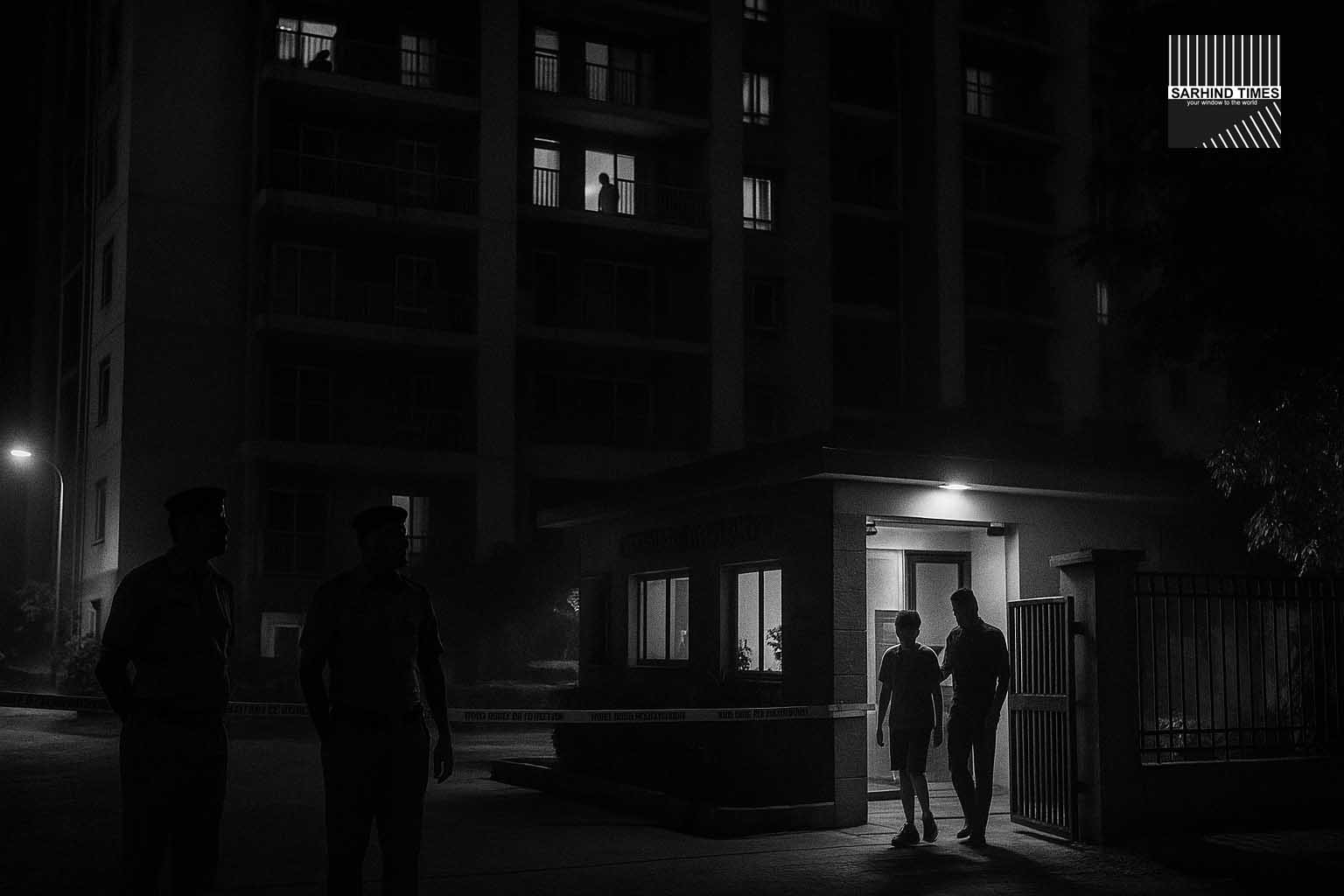
Growing alarm as two minors in Gurugram allegedly use a licensed firearm to settle a school grudge
Dateline: Gurugram | November 12, 2025
Summary: A 17-year-old boy in Gurugram is in critical condition after being shot by a classmate inside a condominium in Sector 48, using the accused’s father’s licensed pistol. Two minors have been detained and the incident has triggered a broader police outreach to younger generations.
The Incident: From dinner invite to gunfire
Disturbing scene unfolded late on the night of Saturday in a high-rise apartment complex in Sector 48, Gurugram. Two classmates, both in Class 11, reportedly invited their 17-year-old peer for dinner. The evening was planned under the guise of social gathering — yet beneath the facade lay a simmering grudge from earlier months at school. According to police investigation, the accused, with the access to his father’s licensed firearm, retrieved the gun and fired at his classmate, striking him in the neck. The victim is now fighting for his life in a private hospital. Local authorities say they found the weapon — a country-made pistol – at the scene and the accused have been detained. The motive appears to be personal resentment and a pre-existing conflict rather than robbery or random violence.
How license, access and responsibility collided
The gun used in this shooting belonged to the father of one of the minors under detention. The firearm was stored in the home of a property-dealer father and ostensibly under licence and register. The fact that a minor could access the weapon raises multiple questions about safe storage, regulation, parental responsibility and oversight of licensed firearms.
The police report indicates that the father’s firearm was kept at home and was used without his knowledge — or at least without timely detection. Under the Bhartiya Nyaya Sanhita, 2023 and India’s Arms Act framework, safe storage and unauthorized access by minors remain legal risks and administrative vulnerabilities.
This case has triggered renewed focus on licensed-gun safeguards in residential complexes, especially those with minors, and the need for heightened education and monitoring.
School grudge, generational concerns
The initial catalyst appears to have been a school-yard altercation several months ago. The accused held a lingering resentment, which was reportedly unknown to school authorities or parents at the level of seriousness seen here. The invite for dinner turned out to be a trap of sorts.
A disturbingly sudden moment escalated the situation, from shared food to life-threatening violence. Police sources say the planning was minimal but decisive: two young people, acting on a cold impulse, bringing a firearm into a residential setting.
The incident has triggered urgency in law-enforcement circles. For the first time in the city, the Gurugram Police have begun reaching out proactively to “Gen Alpha” (children born from 2010 onward) under a special awareness initiative launched this week, aimed at early identification of violence-prone behaviour, gun access, parental oversight and peer-conflict resolution.
Police response and outreach programme
Within hours of the incident becoming public, the Haryana Police launched an outreach initiative focused on younger teens and their social media habits, behavioural changes and attitudes toward violence. Officers visited nearby school complexes, held sessions with students and parents and issued advisories regarding licensed firearms at home.
A senior police officer commented: “We cannot wait until a tragedy occurs. This access to a licensed weapon by a minor showing aggressive impulses raises critical red flags.” He added that the new engagement programme will act as a preventive layer beyond legal enforcement.
The initiative includes:
– Rapid-response teams to investigate gun-access in affluent residential societies
– Dialogue sessions in schools and local youth clubs
– Collaboration with mental-health professionals to spot warning signs among teens
– Coordination with residential-society management and security to monitor unusual behaviour
Context: Youth violence, licensed firearms and urban residential risks
Gurugram, part of India’s National Capital Region, has seen its share of residential violence, teen altercations and misuse of licensed firearms. Affluent societies and gated complexes often sense themselves insulated from serious crime—but incidents like this puncture that illusion.
Licensed guns are generally issued for self-defence, sport shooting or collection—but must be stored under lock, accurate record–keeping and safe access protocols are mandatory. However, what is often overlooked is the environment of a teenager growing up in a pool of peer-pressure, social media, access to expensive resources, and sometimes inadequate parental monitoring.
Licensed-gun misuse by minors is rare but particularly alarming as it combines access, intent and lack of mature decision-making. Juvenile crime policy in India has evolved, but adapting new forms of violence emerging in affluent urban settings remains a challenge.
Impact on residential society governance and parental oversight
For residential societies in Gurugram, this incident serves as a warning. The residential society management association in Sector 48 has announced an emergency meeting this week to review security protocols, visitor logs, weapon-related access and teenage behaviour monitoring.
Parents living in these societies express concern that their children may be exposed to guns, peer-pressure, unmonitored social gatherings and elevated expectations — all contributing to risk of violence. One mother said off-record: “We thought our building was safe. We never imagined a dinner invitation from a classmate could end like this.”
Experts in adolescent psychology say that teens in affluent areas often seek higher adrenaline, risk-taking and validation from peers; combine that with gun access and the outcome can be unpredictable. The case may spur revised guidelines for gun owners living in multi-storey residences to have external-safe lockers, independent audits, parental awareness training and community reporting frameworks.
Legal and juvenile-justice aspects
Under juvenile law in India, minors under 18 are subject to the Juvenile Justice (Child and Adolescent Care) Act, 2015. The accused in this case are 17 and possibly younger; one is 17, the other partner is slightly younger. The state police are exploring whether to try the case in juvenile court or move to adult trial depending on seriousness.
Use of a licensed pistol, premeditated attack, and injury to a peer raise questions of whether the case could qualify for prosecution in adult courts—something allowed under certain provisions of the law. The police will evaluate evidence, intent, planning and possession of weapon to decide.
In parallel, the father’s liability will also come under scrutiny for improper storage or negligent oversight of a licensed firearm. If negligence is proven, the licence may be revoked, and criminal charges may follow under arms-regulations.
Reactions from education and parental community
Local school administrators have begun reviewing their counselling frameworks, peer-conflict detection protocols and support systems for students facing aggression or social-media induced conflicts. One high-school principal said: “We discipline behaviour but didn’t focus on gun-access risks. This incident has changed our risk-map.”
Parents’ associations in sector 48 have asked for emergency seminars, safety audits and restricted unsupervised youth gatherings. Some have called for societies to register dinner invites and have parents accompany if complex behaviour is suspected.
Political representatives from Gurugram have also weighed in. One local MLA said that while the city enjoys prosperity, it must not become complacent on safety. “Affluent doesn’t mean immune,” he said. The state government is under pressure to review licensed-gun policies for urban residences, given the potential for misuse.
Wider implications: Guns, youth, urban India
This incident in Gurugram is not just about one fight gone wrong—it reflects larger urban-India dynamics. Rising affluence, peer-pressure, teenage isolation, high-value weapons at home, and loosely-monitored social gatherings form a troubling mix. As India urbanises fast, such combinations may become more visible.
Licensed-gun regulation in India often focuses on rural or sport-shooting frameworks; the urban dimension of minors accessing them is less highlighted. This case may become a template for policy review: should gun-licences carry mandatory child-safe storage conditions? Should residential societies require certificate of safe storage? Should schools collaborate with police on “gun-risk awareness” with teens?
What to watch next
Tracking the follow-up in this case will be important:
– Whether the accused are tried in juvenile or adult court and what precedent arises.
– Whether the father’s firearm licence is suspended and what changes are made in the city’s licensed-gun culture.
– Whether the outreach programme to Gen Alpha expands beyond basic counselling to include digital-behaviour audits and residential-society monitoring.
– Whether similar incidents surface in other NCR cities, prompting state-wide or national policy shifts.
– Whether schools in Gurugram adopt mandatory “safe-guns at home” training for parents and students.
Conclusion
What began as a dinner among classmates ended in a hospital emergency and a citywide alarm. In a city known for its modern infrastructure and emerging global-city aspirations, the ease with which two teens obtained a licensed firearm and turned it into violence reveals cracks in parental oversight, residential governance and urban gun-culture. The police outreach may help, but unless storage norms, parental awareness and peer-conflict early interventions improve, such incidents risk becoming more frequent. Gurugram must recognise that its prosperity-driven veneer demands deeper safety frameworks for its youth and weapon-access realities.



+ There are no comments
Add yours