
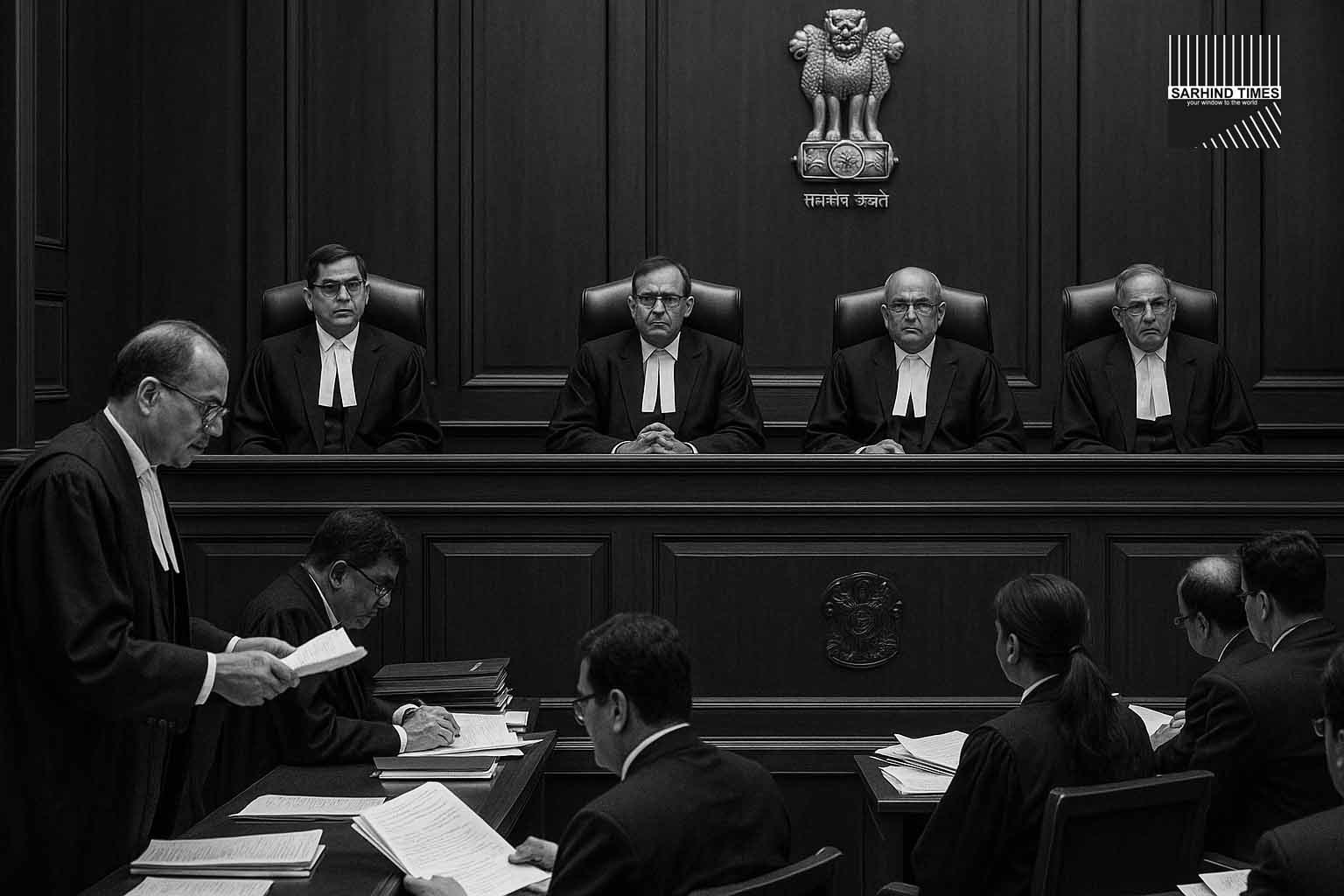
Landmark ruling: man-made water-bodies fall under constitutional right to clean environment
Dateline: New Delhi | 11 November 2025
Summary: In a pivotal judgment, the Supreme Court of India declared that the “public trust doctrine” applies not just to natural water-bodies but also to artificial lakes and reservoirs. The ruling elevates ecological protection under Article 21 of the Constitution and imposes stronger oversight obligations on states, developers and city authorities responsible for man-made water infrastructure.
The judgment and its contours
The Court, through a bench led by the Chief Justice, held that artificial lakes and reservoirs—though engineered—constitute part of the public trust domain and cannot be treated purely as commercial or developmental assets. The judgment observed that when water-bodies are created from natural hydrology, derive from natural sources, or function as part of the ecosystem, they cannot be divorced from constitutional obligations around environment and public welfare.
Rejecting the appeal against a prior High Court order concerning a lake redevelopment project in Nagpur, the Court affirmed that even man-made lakes draw upon natural resources (ground-water, rain-runoff, river diversions). Consequently, trusteeship obligations under the public trust doctrine apply. The government, developers and civic agencies are thus bound to safeguard ecological function, public access, and inter-generational equity.
Why this matters: framing for India’s urban and environmental future
India’s rapid urbanisation, proliferation of high-rise housing, large-scale infrastructure, township development and privatised amenities have seen numerous artificial water-bodies created or expanded—lakes, reservoirs, decorative water features, retention basins. Many of these fall between urban planning, municipal governance, private-developer responsibilities and environment-law enforcement. Until now, legal doctrine treating them as purely “engineered infrastructure” often avoided stronger environmental oversight.
By extending the public trust doctrine to such constructs, the judgment closes a significant “loophole” in legal accountability. It reinforces that the state and its instrumentalities act as trustees of these water-bodies for citizens, not as proprietors free to privatise access, degrade ecology or evade remediation. This has several implications: better protection of urban aquatic ecosystems, higher due-diligence for developers, and elevated expectations from public-health and civic-governance systems.
Key findings of the Court
- The public trust doctrine is not limited to natural rivers, lakes or forests—it extends to water-bodies which may be man-made but are integrally connected to natural hydrology or serve public purpose.
- The constitutional right to a healthy environment under Article 21 (read with Article 48-A and 51-A(g)) demands protection of ecological balance and access to water-bodies; that obligation is substantive, not merely procedural.
- Trustees (state government, municipal agencies) must safeguard these water-bodies for present and future generations, ensure their ecological function is maintained, and cannot allow undue privatisation or commercial enclosure at the cost of public rights.
- Even in redevelopment or engineering modifications, ecological integrity and public-access principles must be preserved; filtration, connectivity with natural flows, sediment management, public shoreline access and long-term sustainability must be factored in.
- Enforcement must include periodic audits, disclosure of ecological health, citizen-grievance mechanisms and “polluter-pays” accountability for developers or agencies which degrade or ignore the ecological obligations of water-body management.
Background to the case
The immediate matter concerned a lakeside redevelopment project, challenged on grounds of ecological damage, encroachment, restricted public access and altered hydrology. The High Court had held that the lake redevelopment can proceed with conditions; the matter reached the Supreme Court on appeal. The Court used the opportunity to articulate the broad principles of the public trust doctrine in the expanding urban-waterspace context.
This is part of a broader judicial trend where Indian courts are increasingly emphasising environmental rights as core constitutional rights and inserting environmental due-process into urban planning, infrastructure law and private-developer oversight. The ruling aligns with global jurisprudence emphasising urban water-bodies as public assets rather than private amenities.
Practical implications for developers and municipalities
Developers creating or altering lakes, reservoirs, retention basins, decorative water-features, township ponds or other man-made water-structures must now factor in: ecological-impact-assessment beyond standard engineering; public shoreline/access obligations; adequate catchment and natural-flow connectivity; long-term sedimentation and ecology management; water-quality maintenance; and community interface rather than closed or private-only structures.
Municipal authorities and state governments must review existing water-bodies, particularly artificial ones created over the last decade, classify trust obligations, ensure transparent governance, and integrate ecological health audits and citizen-grievance redress mechanisms. Non-compliance may attract stronger remedies including restructuring of public-trust duties, developer-liability and environment-regulation enforcement.
Impact on residents and civil-society
For urban residents, the judgment offers stronger legal backing for demanding access to lakes and water-bodies which may have been privatised or restricted. Resident-welfare associations, environmental-NGOs, citizen groups can now invoke public-trust obligations and environmental-rights frameworks when contesting access or development of such water-features.
The decision also raises public-health angles. Lakes and reservoirs play roles in urban heat-island mitigation, storm-water management, groundwater recharge and biodiversity corridors. Their mis-management contributes to flooding, pollution, habitat loss and degraded citizen-livability. The judgment encourages a governance turn where water-body health becomes part of urban liveability metrics—not just aesthetic or luxury features.
Broader jurisprudential significance
Legally, the ruling expands the scope of the public-trust doctrine in India’s constitutional law. Originally applied to rivers and forests, its extension to artificial lakes signals that the doctrine is evolving with urbanisation and hybrid water-infrastructure realities. It reflects the judiciary’s recognition of complex urban-ecosystem interplay and places duty on the state-and-developers beyond mere compliance paperwork.
The judgment will likely influence future litigation, regulatory frameworks and policy design: environmental‐impact assessments will need to embed trusteeship analysis; town-planning approvals must incorporate ecological-rights checks; privatisation of water assets (including lakes) will attract more scrutiny; and state-liability for ecological degradation will be reinforced.
Analysis: strengths and open questions
Strengths:
- Clarity: The Court has clarified that artificial -blocks of urban water-bodies do not escape constitutional environmental scrutiny and trustee obligations.
- Citizen empowerment: It strengthens citizen rights to access and protect water-bodies which may have been locked down by private estates or gated communities.
- Plan for urban-sustainability: It provides a legal mandate to integrate water-body ecology into city-planning, flood-management, climate-resilience and liveability agendas.
Open Questions & Challenges:
- How will existing artificial lakes that have been privatised or are surrounded by gated communities be re-classified or contested under trust law? Transitional liabilities may be contested.
- What exact standards will regulators and courts apply in monitoring ecological-health of artificial lakes—will there be baseline metrics, periodic audits, or third-party verification? The judgment leaves scope for regulatory evolution.
- How will developer-liability frameworks operate—retroactive remediation costs, public-access clauses, long-term maintenance obligations—are not fully spelled out in the judgment and will need detailed implementation guidelines.
- Coordination across agencies (municipal, water-board, environment, urban planning) remains a governance challenge; the doctrine may now exist but city-systems may struggle to enforce it. The real test will be on-ground delivery rather than legal pronouncement.
Implications for India’s “liveable city” ambitions
India is placing increasing emphasis on liveability, climate-resilience, urban-rehabilitation and sustainability as part of its growth story. Cities such as Gurugram, Bengaluru, Hyderabad and others are designing water-fronts, lakeside amenities, township ponds and scenic reservoirs. The Supreme Court’s judgment sets a guard-rail: such water-features cannot be divorced from ecological and citizen-rights responsibilities.
For states like Haryana, and urban hubs like Gurugram, the decision may trigger review of lakes, storm-water retention systems and township pond governance. It may provide citizen-associations and RWAs the legal standing to challenge developments that privatise or degrade water-bodies which serve urban ecosystems. Whether these translate into faster remediation, improved access, and better ecological function depends on implementation velocity—not just legal theory.
Conclusion: moment of opportunity
The Supreme Court’s extension of the public trust doctrine to artificial lakes is more than a legal technicality—it is a moment of opportunity. For citizens, it reinforces that water-bodies are communal assets, not decorative appendages. For cities, it underlines that infrastructure must carry environmental and access obligations. For the judiciary and policy-makers, it raises the stakes—governance, enforcement and accountability must match the ambition of the ruling.
The path ahead involves implementation: mapping water-bodies, reviewing developer obligations, audit protocols, public-grievance systems, and regulatory clarity. India’s urban-water future is complex; this judgment may serve as one of its foundation stones. The challenge will be converting rights into reality.



+ There are no comments
Add yours