
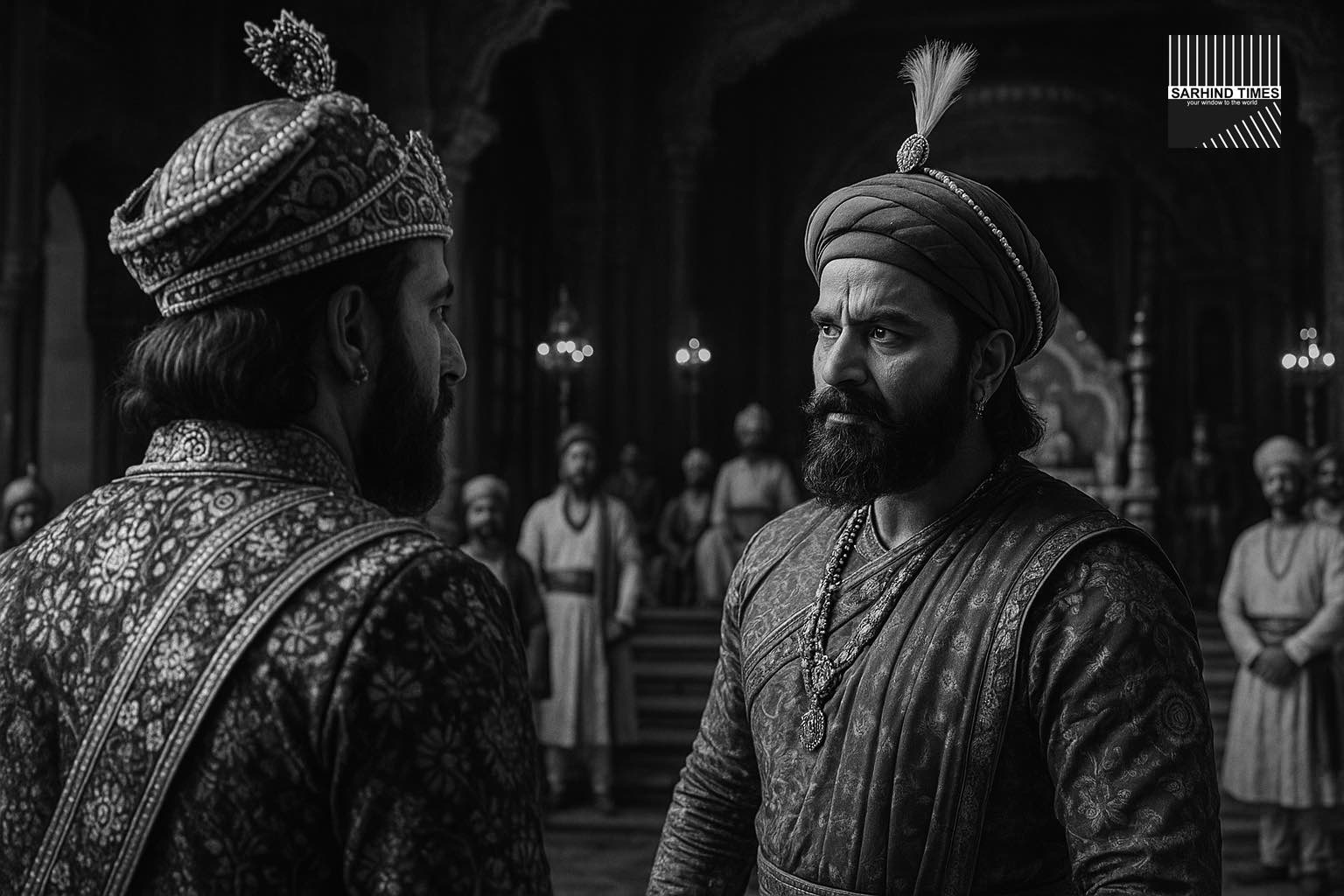
Director Sandeep Singh’s ambitious historical drama sets the stage for one of Bollywood’s most expansive productions
Dateline: Mumbai | November 7 2025
Summary: Bollywood actor Vivek Oberoi is reportedly taking on the role of Mughal emperor Aurangzeb in the upcoming epic drama titled *“The Pride of Bharat: Chhatrapati Shivaji Maharaj”*, directed by Sandeep Singh and starring Rishab Shetty as Shivaji. With a large-scale narrative covering the fortress-state of Swarajya, the film promises to be a landmark in Indian historical cinema.
The Announcement and Key Casting
The latest industry reports indicate that Vivek Oberoi has been locked in for the powerful portrayal of Aurangzeb, the 17th-Century Mughal emperor, in director Sandeep Singh’s upcoming epic, provisionally titled *“The Pride of Bharat: Chhatrapati Shivaji Maharaj”*. The film features Rishab Shetty in the role of Shivaji Maharaj, the legendary Maratha ruler and founder of the Swarajya state. The casting has generated widespread attention given the scale of the project and the stature of the characters involved.
While the production house has yet to issue an official press release listing the final cast, multiple credible media sources report that the Oberoi-Shetty pairing is central to the film’s narrative arc. Reports suggest that the film will cover key episodes from Shivaji’s early life, the formation of the Maratha navy, the legendary confrontations with Aurangzeb’s forces, and the broader political landscape of 17th-century India.
The reported casting of Vivek Oberoi as Aurangzeb marks a strategic choice by the makers: Oberoi is known for his strong screen presence and previous historical or mythological roles, and the character of Aurangzeb demands layered performance—balancing imperial ambition, religious-state conflict, formidable strategy and the weight of legend. The anticipation is high: portraying Aurangzeb in a major Hindi-language film is both a challenge and an opportunity, given the historical and cultural sensitivities surrounding the figure.
Director’s Vision and Production Scope
Director Sandeep Singh, known for grand scale productions and historical themes, is reportedly aiming for one of the biggest historical dramas in Indian cinema, both in budget and narrative ambition. The film is described by industry insiders as a multi-crore undertaking—featuring large-scale sets, expansive battle-sequences, period production design, international locations and possibly visual-effects augmentation for fort-sieges and naval scenes.
According to one source, the makers plan to shoot across multiple states—Maharashtra (for Shivaji’s forts), Rajasthan (for desert or dry terrain scenes), and parts of Central India—alongside special units in the Middle East or Central Asia to capture Mughal architectural authenticity. The film’s production design team is reportedly studying historical treatises, archival records, Maratha ballads (bhavgeet), and sources from the Bombay-Presidency era to recreate fortresses such as Raigad, Pratapgadh, and the Mughal strongholds.
Sandeep Singh’s production is being pitched as both an Indian theatrical event and a global export product: the early marketing narrative includes an aim to premiere in multiple languages (Hindi, Marathi, English subtitled) and target diaspora audiences as well as Indian domestic viewers. In this sense, the film is positioned at the intersection of entertainment, national narrative and cultural export.
Historical Context: Shivaji, Aurangzeb and the Maratha–Mughal Epoch
The planned story centres on one of the most dramatic epochs in Indian history: the 17th-century struggle between the rising Maratha power under Shivaji Maharaj and the expansive Mughal empire under Aurangzeb. Shivaji’s legacy of guerrilla warfare, fort-building, naval force formation and assertion of Hindu-Maratha sovereignty (Swarajya) has long resonated in popular culture.
Aurangzeb, the sixth Mughal emperor, ruled from 1658 to 1707 and has been a complex figure in history—both for his military campaigns, administrative reforms and religious policies. The depiction of Aurangzeb in Indian popular history and film is often contentious; a nuanced portrayal will require balancing historical record, popular sentiment and cinematic dramatisation.
In choosing to place both figures at the core of a mainstream epic, the film challenges itself to navigate complex historical terrains—caste, empire, rebellion, identity, legacy—and translate them into a large-scale visual narrative. The production’s ambition suggests a focus not merely on spectacle, but on character-driven drama, moral ambiguity, and the forging of a historical icon.
Why This Film Matters for Indian Cinema
From a cinematic-industry perspective, the forging of a high-budget, star-anchored historical epic in the Bollywood centre represents a crucial moment. Indian historical dramas in recent years—while popular—have often been smaller in scale, region-specific or episodic. This production aims to raise the bar on production value, marketing ambition and export potential.
For cast and crew, the film offers multiple opportunities: for Vivek Oberoi, a chance to redefine his image in a commanding role; for Rishab Shetty, a marquee pan-India role; for the director and producers, a chance to shape an event film rather than a routine release.
The project also aligns with broader shifts in Indian cinema: increasing pan-India releases, multilingual marketing, OTT-synergies, global collaborations and archival-driven production design. In effect, the film may act as a benchmark for next-generation Indian historical dramas.
Challenges Ahead: Scale, Sensitivity, Execution
As with any large-scale historical cinema, risks are plentiful. Observers highlight several potential challenges:
– **Budget and timelines:** Large sets, period costumes, VFX-heavy sequences and location logistics can dramatically increase cost and complicate schedules. Delays or budget overruns may dampen returns.
– **Historical accuracy vs cinematic license:** Given the charged nature of Shivaji–Aurangzeb narratives, creative choices will likely face scrutiny—from historians, cultural commentators, regional audiences and social-media voices. Balancing dramatic necessity with factual integrity will matter.
– **Audience expectations:** Modern audiences demand not just spectacle but story, character depth, authenticity and cultural sensitivity. A film of such scale will be judged on multiple axes: critical reception, historical engagement, box-office performance, overseas take-up and cultural impact.
– **Market competition and release window:** With multiple major films slated for late 2025 and early 2026, the film’s release timing, marketing campaign and distribution strategy will be critical. Oversaturation or mis-timing could limit visibility.
– **Regional dynamics:** Since Shivaji’s legacy is deeply rooted in Maharashtra and Maratha history, the film will need to manage regional expectations, language versions (Marathi, Hindi, English) and local release strategies to ensure credibility and reach.
Production Timeline and What’s Next
While the cast announcement is the first major public step, the film appears to be early in its formal production phase. According to industry insiders:
– Pre-production (script finalisation, casting of supporting roles, set-design, costume approvals) is said to be underway.
– The makers are reportedly targeting principal photography to commence in the second quarter of 2026, with a release window set for Diwali 2027—a peak season for Indian cinema.
– Marketing and teaser launch strategy is planned around that window, with first look photos likely in late 2025 or early 2026 to build momentum and global visibility.
The choice of Diwali 2027 as a target release reflects the magnitude of the project: the time-frame allows for robust production, post-production (VFX, editing, dubbing) and multilingual release preparation.
Interviews and Industry Reaction
Film-industry commentators have responded to the announcement with optimism tempered by realism. One veteran distributor said: “If the film delivers both spectacle and story, it could change benchmarks—much like the regional epics in South India have done. But execution will define if it’s a landmark.” Another noted that the casting of Oberoi as Aurangzeb is bold, given the sensitivities, but may allow for an unexpectedly nuanced antagonist rather than a caricature.
Social-media reaction shows early excitement: fans of Rishab Shetty are already speculating about his larger-than-life portrayal; Vivek Oberoi’s shift to a mythic historical role has triggered conversations about his career trajectory and the scope of the film. Regional commentary—especially in Maharashtra—has been monitoring how the production handles language versions and Marathi representation.
Broader Cultural Implications
Beyond cinema, the film’s theme resonates with wider cultural-political currents in India: national-identity narratives, regional pride, historical reinterpretation, and globalised Indian-language cinema. By engaging with the Shivaji–Aurangzeb story at a pan-India scale, the film participates in conversations about empire, legacy, regional identity and popular history.
The makers may also be positioning the film for international markets: epics such as *Gladiator*, *Braveheart* or *Lawrence of Arabia* achieved broad global viewership; Indian cinema in recent years (e.g., *Baahubali*) has shown that Indian historical epics can transcend national boundaries. Should this film succeed, it may add to India’s cultural-export portfolio and encourage more large-budget historical narratives.
Conclusion
The casting of Vivek Oberoi opposite Rishab Shetty in a major historical epic marks a significant moment for Indian cinema—one that carries ambition, risk and cultural weight. As the project moves from announcement to action, all eyes will be on how the production navigates scale, story, historical complexity and audience expectations.
If executed well, the film may not only redefine Bollywood’s production paradigms but also deepen popular engagement with India’s past at a time when history, identity and entertainment are increasingly intertwined. For now, the announcement is just the opening act of what promises to be a major cinematic event—and one to watch closely over the coming months and years.



+ There are no comments
Add yours