
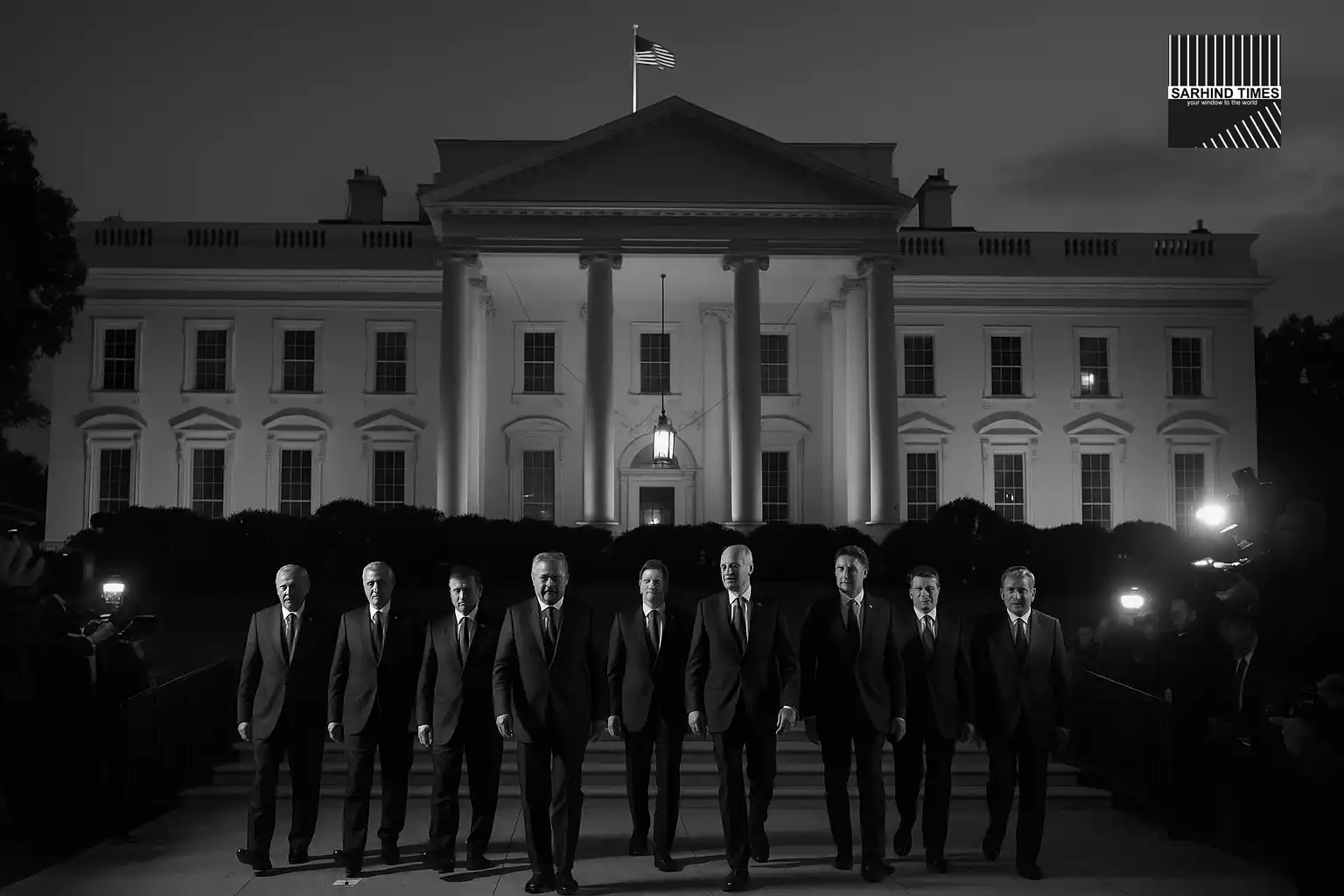
Diplomatic breakthrough as U.S. convenes maximum-level engagement with Central Asia amid shifting global alliances
Dateline: Washington D.C. | 6 November 2025
Summary: The United States has convened a summit in Washington on 6 November 2025 with the five Central Asian republics — Kazakhstan, Uzbekistan, Kyrgyzstan, Tajikistan and Turkmenistan — marking the highest-level gathering in the C5+1 framework. The meeting aims to deepen security, economic and connectivity cooperation, signalling a pivot in U.S. diplomacy toward a fast-growing region amid global strategic rebalancing.
Background: The C5+1 framework and its evolution
Since its establishment in 2015, the C5+1 format — bringing together the United States and the five Central Asian states — has served as a diplomatic platform for dialogue on issues such as counter-terrorism, energy, regional connectivity, climate resilience and human-development cooperation. Until now, engagements under this format have largely been ministerial or lower-level visits; a full summit of all five presidents on U.S. soil has not previously occurred.
According to diplomatic sources, the Washington summit on 6 November marks a deliberate upgrading of the U.S. engagement strategy with Central Asia — at a time when the region is attracting increased interest from global powers, including China, Russia, the European Union and Turkey. Analysts say the shift reflects U.S. recognition of Central Asia’s geostrategic importance: its energy resources, transport corridors, China-Europe supply chains and potential as a security partner in a region that has long been under-engaged by Western diplomacy.
In recent years, Kazakhstan’s President won media attention for his outreach to both East and West; Uzbekistan has undertaken economic reforms and renewed international investment; Kyrgyzstan and Tajikistan face infrastructure and climate risks; Turkmenistan sits on rich hydrocarbon reserves and a long-standing policy of neutrality. The United States’ decision to host all five heads of state together in Washington signals a coordinated effort to deepen collective ties rather than bilaterally patchwork engagements.
Agenda and key discussion points
The summit’s agenda spans multiple domains:
• **Security and defence cooperation** – With trans-national threats such as terrorism, narcotics trafficking, cyberattacks and climate-induced instability rising, the U.S. and Central Asian nations are expected to deepen cooperation in intelligence-sharing, border security, hybrid-threat response and cybersecurity.
• **Energy and sustainability** – Central Asia sits atop significant oil, natural-gas and rare-earth deposits. Discussions are likely to cover export-infrastructure development (pipelines, rail-links), renewable energy transition, and alignment of Central Asian supply chains with global markets.
• **Connectivity and trade corridors** – The U.S. will push to enhance multimodal transport links (road, rail, digital) connecting Central Asia to South Asia, the Caucasus and Europe, thereby reducing reliance on single-axis corridors and bolstering regional resilience.
• **Economic reform and investment climate** – The summit will surface U.S. commitments to increase investment, promote legal and regulatory reforms in the Central Asian states, and support small- and medium-enterprise (SME) ecosystems, digital economies and human-capital development.
• **Climate-resilience and water systems** – As Central Asia is one of the emerging hotspots for climate vulnerability, the agenda includes water-management programmes, glacier-melt hazard mitigation, sustainable agriculture and green-finance flows.
White House officials emphasised that the summit would not only highlight new pledges, but also formalise joint working groups, a “Washington Declaration” of principles, and a U.S.-led “Connectivity Fund” with initial seed capital to support Central Asia-South Asia transport links.
Diplomatic significance and global-strategic context
The timing of this summit is politically and strategically important. Central Asia has long been viewed as Russia’s “near abroad” and a zone of Chinese infrastructural and economic influence via the Belt and Road Initiative. By convening all five presidents together, the U.S. is signalling that it sees the region as a unified strategic partner rather than a series of disconnected states.
From Washington’s perspective, this move serves multiple purposes:
– Diversifying partnerships and reducing over-reliance on Indo-Pacific theatre alone.
– Sending a message to China and Russia that the U.S. remains engaged in Eurasian geostrategy.
– Opening new energy and supply-chain corridors away from congested or contested routes.
– Strengthening ties in a region that is projected to grow economically and politically over the next decade.
For the Central Asian states, the summit offers much-needed global visibility, potential access to technology, finance and western markets, and opportunities to diversify partnerships beyond traditional spheres. The presidents’ participation also signals a coordinated regional identity and willingness to engage multilateral institutions in new ways.
Expected outcomes and deliverables
At the close of the one-day summit in Washington, the following deliverables are anticipated:
– A joint communique affirming shared principles of sovereignty, connectivity, economic openness and regional stability.
– A new U.S.-Central Asia “High-Level Connectivity Fund” (US $1-2 billion initial commitment) to support infrastructure projects linking Central Asia with South Asia and the Middle-East.
– MoUs between U.S. technology firms and Central Asian governments on digital-economy development, start-up ecosystems, data-centres and AI initiative pilot projects.
– Enhanced military-logistics cooperation and training-missions agreement for border-security and counter-narcotics operations.
– A set of “Regional Reform Road-Maps” for Central Asian countries covering legal reform, ESG-investment climate improvement, human-capital development and green-economy transition.
According to press leaks, one notable project will be a rail-link through Kyrgyzstan to Pakistan’s Gwadar deep-water port — tapping into the U.S. interest in alternate routes into the Arabian Sea and reducing transit dependence via Russia or Iran.
Challenges, caveats and critical analysis
While the summit is being hailed as a diplomatic milestone, there are significant challenges:
– **Implementation risk**: Past Western engagements in Central Asia have often faced slow-execution, governance bottlenecks, corruption, regulatory uncertainty and project delays. The success of the Washington Declaration will depend heavily on follow-through.
– **Regional balancing**: Russia and China will watch this U.S. push closely. Moscow, in particular, has military bases and security agreements in Central Asia; Beijing has massive infrastructure interests via Belt and Road. They may respond with counter-offers or strategic pressure on the Central Asian states.
– **Sovereignty concerns**: Central Asian leaders balance multiple external relationships; overt alignment with the U.S. may generate internal political resistance or domestic perception of dependency.
– **Resource constraints**: Even with funding pledges, many Central Asian economies face structural limitations: heavy state-control in many sectors, weak private-sector capacity, limited digital infrastructure and need for reforms before investment flows scale.
– **Geopolitical instability**: The region remains vulnerable to climate-induced shocks (glacier-melt, water conflicts), spill-over from Afghanistan, narcotics trafficking, and violent radicalisation. A strategic foothold does not guarantee immediate stability.
Implications for India and South Asia
The U.S. deepening of ties with Central Asia has direct implications for India and the South Asian sub-continent. India has long pursued the “Connect Central Asia” policy, underlining economic, energy and cultural linkages via Afghanistan, Iran and Russia. The U.S. push could lead to parallel routes, increased infrastructure competition, and a need for India to differentiate its connectivity offer.
Furthermore, as Central Asia integrates more with South Asia and the Arabian Sea — via rail, road or pipeline — India’s geopolitics will evolve: new energy routes, expanded trade corridors, and even digital-economy linkages between Indian and Central Asian start-ups. On the flip side, India must recalibrate its diplomacy to engage not just with Central Asia directly but also through multilateral frameworks where external powers are heavily present.
What to watch next
The following developments will be important to track:
– Formal launch of the “Connectivity Fund” and first set of projects sanctioned under it — timing, locations and sponsors will reveal U.S. engagement depth.
– Tech-investment announcements made alongside Central Asian governments — especially around data-centres, AI, internet-backbone upgrades and digital services.
– Central Asian delegations headed to India, China or Russia in response — project awards, memoranda and diplomatic visits may signal reaction.
– Regional reactions from Moscow and Beijing: whether they respond with renewed offers, investment pledges or security assurances to Central Asian states.
– Economic-and-geopolitical indicators in Central Asia (trade volumes, foreign-direct investment, infrastructure-project awards, internal reforms) that reflect whether the summit is translating into change.
Conclusion
The Washington C5+1 summit on 6 November 2025 signals a renewed U.S. commitment to Central Asia and could reshape regional alignments in Europe, South Asia and the wider Eurasian land-mass. For the United States, the summit offers an entry into a strategically important region; for the Central Asian countries, it offers new partnership pathways. Whether this shift evolves into deep integration or remains symbolic will depend on execution, political will and regional dynamics.
In this evolving global environment, this summit may well be viewed as a fulcrum moment in Eurasian diplomacy — the ripple effects of which may be felt across energy, connectivity, security and economic flows in the coming decade.



+ There are no comments
Add yours