
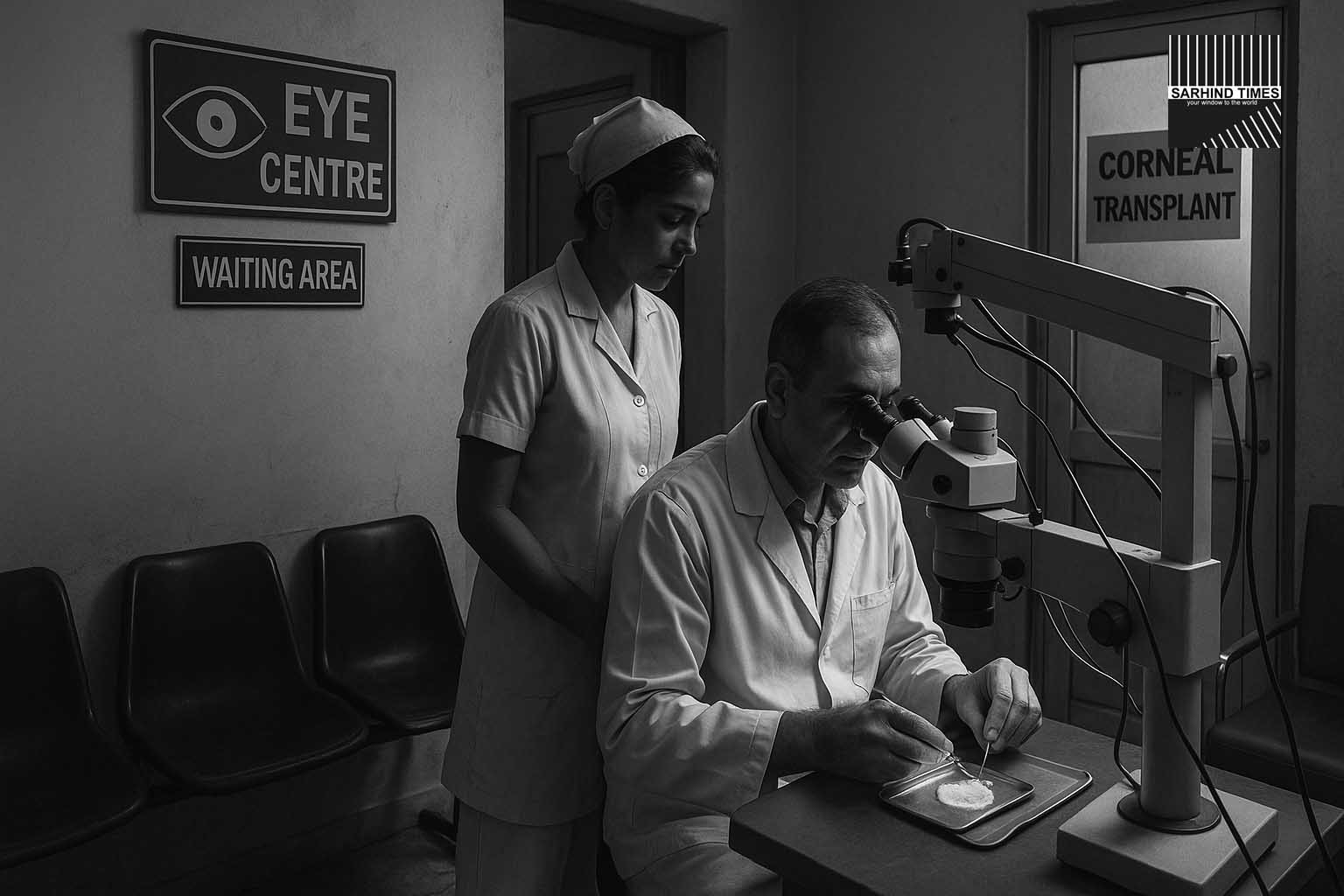
Amendment to the Transplantation of Human Organs and Tissues Act, 1994 rules removes barriers for smaller eye-care centres, opening door to large rural outreach
Dateline: New Delhi | November 12, 2025
Summary: The Ministry of Health and Family Welfare has notified the Transplantation of Human Organs and Tissues (Amendment) Rules, 2025, relaxing mandatory equipment requirements for corneal-transplantation centres and enabling broader donor networks. Experts say this could substantially improve eye-care access in under-served regions, though implementation challenges remain.
What has changed in the amendment
The amendment, issued by the Health Ministry on 6 November 2025, under the authority of the Transplantation of Human Organs and Tissues Act, 1994, includes among its provisions the removal of the mandatory requirement for Clinical Specular Microscopy equipment at corneal-transplant centres. Previous norms required such high-end diagnostic machinery to be present in all registered cornea-transplant units. With the new rule, smaller eye-care centres — especially in rural and semi-urban areas — can register as transplant units, provided they meet basic safety, training and donor-tissue handling standards.
Likewise, the rules streamline licensing formalities, allow greater sharing of donor-tissue across centres, relax infrastructure criteria in non-metro zones and reduce the inspection burden for centres meeting certain criteria. The aim is to broaden the donor-network and stimulate corneal-transplantation capacity outside major urban hospitals.
The background: Why this reform matters
India has historically had a wide gap in eye-care accessibility. While large urban hospital centres can offer corneal-transplants, many smaller towns and districts lack the infrastructure, skilled personnel or licence to undertake the surgeries. This has meant longer wait-lists for patients with corneal blindness, higher travel burdens and elevated costs.
Data indicate that in some states the donor-eye-tissue utilisation rate remains less than 60 % of available tissue, and many eligible patients are unable to access services due to geographical or financial impediments. By reducing regulatory friction, the transferred amendment seeks to expand the network of transplant-capable centres, especially in underserved states.
Expert views and stakeholder reactions
Eye-care specialists welcomed the change but sounded caution. One senior ophthalmologist said: “This will allow district-level eye-centres to step up. But it must be matched by donor-tissue mobilisation, training of surgeons, and monitoring of outcomes. Relaxing equipment norms without oversight would be risky.”
Donor-eye-tissue organisations stated that the reform could enable more hospitals to register as “eye-bank-linked transplant units,” leading to shorter travel distances for patients and earlier surgeries. However, they emphasised the need for quality assurance, adverse-event monitoring and standardisation of sight-restoration outcomes.
Expected impact: Access, equity and scale
In practical terms, the reform could translate into several gains:
- Greater geographical reach: Eye-care centres in tier-2/3 cities and district towns will find it easier to register and perform corneal-transplants. This will reduce the load on major tertiary-centres, cut travel costs and lead-times for patients.
- Improved utilisation of donor-tissue: With more centres eligible, donor-eye-tissue that might have gone unused due to fewer registered units can be deployed more effectively. This may help reduce backlog of patients awaiting treatment.
- Enhanced rural-health equity: The structural reform supports the government’s objective of making advanced health-services accessible outside metropolitan hubs, thereby reducing rural-urban healthcare divide.
Implementation challenges and concerns
Despite the positive headline, several practical issues require attention:
- Training and skill-gap: Corneal-transplant surgery demands skilled ophthalmic surgeons and well-managed eye-banks. Many smaller centres may lack such specialists or may struggle with post-operative care, graft rejection monitoring and complications. Without proper mentoring or referral linkages, outcomes may decline.
- Infrastructure beyond specular-microscopy: While the regulation relaxes one equipment requirement, other infrastructure—sterile operation theatres, donor-tissue handling, cold-chain logistics, follow-up care—remain essential and must be ensured.
- Quality oversight and audit: As more centres come on board, regulatory and monitoring mechanisms must scale. There is a risk that expansion may lead to variable surgical outcomes unless outcome-audit frameworks and patient-safety protocols are strengthened.
- Eye-bank capacity and coordination: More surgical-units will increase demand for donor-tissue, which means eye-banks must expand, coordinate logistics and maintain uniform quality standards. Otherwise, availability may on-paper improve, but real access may still lag.
- Cost and sustainability: Smaller centres may struggle to absorb initial costs of training, tissue-linkage, logistics and follow-up care. Unless matched by subsidy, public-funding or supportive policy, the reform may benefit only well-funded trust-hospitals rather than truly rural clinics.
Policy-and-governance implications
This rule change is part of a broader healthcare-policy shift by the government, aligning with the digital health mission, decentralised service-delivery and public-private partnerships. By easing formalities at peripheral-health facilities, the system moves closer to “task-shifting” and scaling specialised services beyond metros. For governance, the challenge will be to ensure that decentralisation doesn’t mean dilution of standards — rather, a system of tiered accreditation, mentoring and referral must support growth.
From a health-economics perspective, the reform may lower cost-barriers for patients in peripheral zones, reduce load on tertiary-care hospitals, optimise utilisation of donor-tissue and potentially reduce long-term disability burdens. For example, improved access to corneal-transplants may shorten wait-lists, restore vision earlier and enable return to work for affected individuals, which has broader productivity gains.
How this ties into national health infrastructure priorities
The Indian government has been emphasising the transformation of health-systems through three interconnected strategies: digital health records, decentralisation of specialised care and public-private scale-partnerships. The amendment supports these ambitions—smaller centres can link into national eye-bank networks, use tele-medicine for follow-up and integrate with broader digital-health platforms (such as the Ayushman Bharat – Pradhan Mantri Jan Arogya Yojana and the Ayushman Bharat Health Account scheme). Given that corneal-blindness contributes a significant share of preventable blindness in India, this rule change could be a meaningful step toward the national target of reducing visual impairment.
What to watch over the coming year
Several indicators will help assess whether the reform delivers expected outcomes:
- The number of newly-registered corneal-transplant centres outside major-cities in 2026 compared with previous years.
- Change in wait-time for corneal-transplant candidates in district-hospitals and non-metro units.
- Outcome-data: graft-success rates, post-operative complication rates, follow-up adherence in decentralised centres.
- Donor-tissue utilisation dynamics: how many donor-eyes are collected and used, how many remain unused, and distribution efficiency to new centres.
- Patient-affordability: travel costs, out-of-pocket spend, usage of government-scheme subsidies for peripheral centres.
- Whether training programmes, tele-ophthalmology linkages and referral-hub models are established to support smaller centres.
Implications for private-sector and eye-care entrepreneurs
The reform opens business-opportunities: philanthropic trusts, social-enterprise eye-care chains, private eye-clinics and manufacturing of donor-tissue logistics may all gain impetus. Smaller centres can scale vision-care services, integrate with tele-medicine for follow-up, and perhaps leverage government-scheme reimbursements. For investors and service-providers, the decentralised model may yield a new market segment in large tier-2/3 cities and rural districts — beyond the high-end urban hospital market.
Conclusion
The new rules on corneal-transplantation mark a welcome, strategic move to deepen health-service reach in India. The relaxation of high-end equipment norms is a pragmatic acknowledgement of ground realities in rural health-delivery. If implemented effectively, the change could reduce visual-impairment burden, expand access and stimulate a new wave of decentralised eye-care services. But, as always, the success will depend on execution—training, oversight, logistics and follow-up will determine whether this is a genuine upgrade or just another regulatory tweak. For patients waiting in smaller towns, this may offer a lifeline—but ensuring it works will require vigilance, sustained investment and a capacity-building mindset.



+ There are no comments
Add yours