
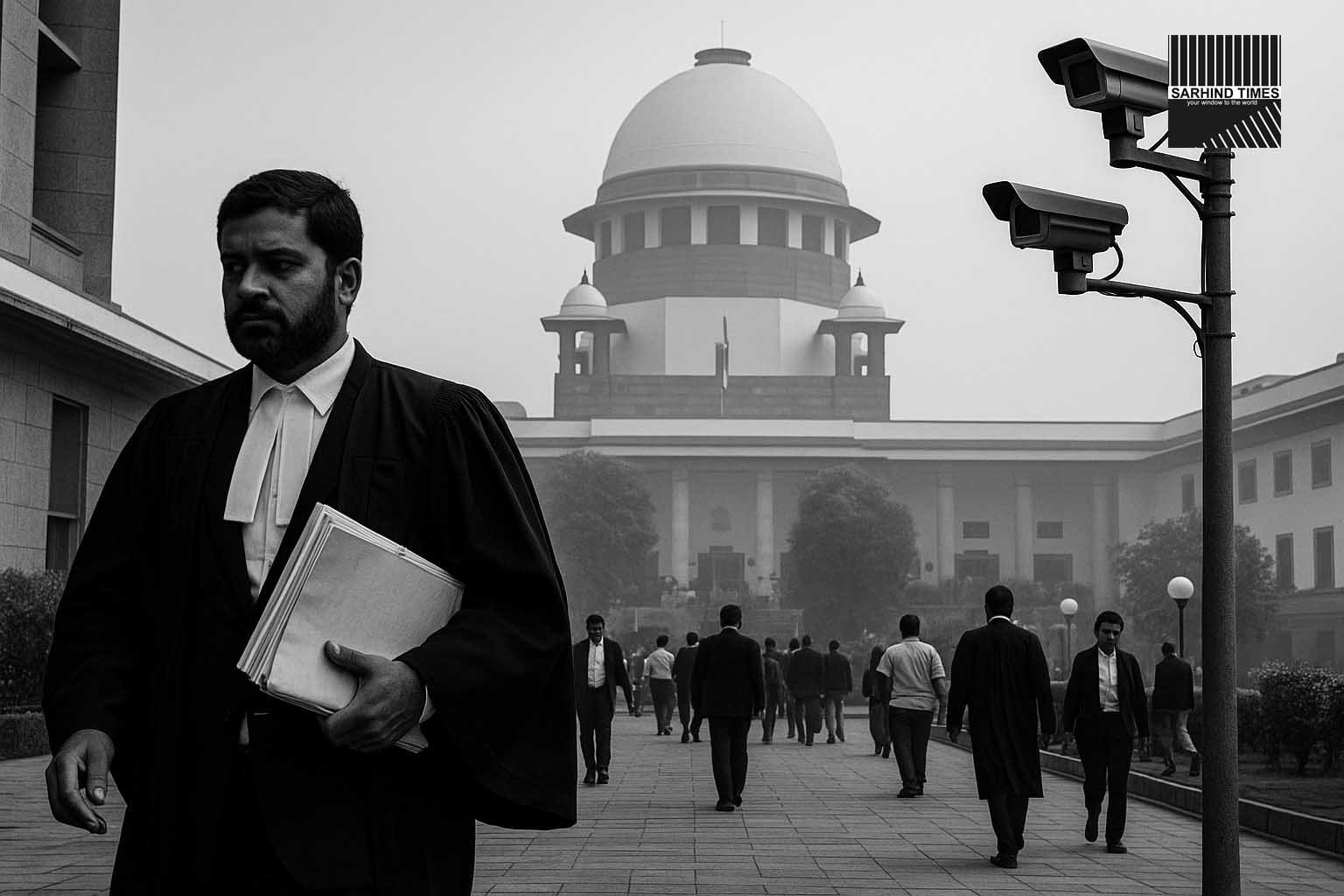
A landmark case on digital rights and surveillance set to test India’s constitutional framework as concerns rise over unchecked facial recognition deployment by law enforcement.
Dateline: New Delhi | (Asia/Kolkata)
Summary: The Supreme Court of India is scheduled to hear an urgent petition alleging widespread, unregulated use of facial recognition technology (FRT) by state agencies without statutory safeguards, transparency, or judicial oversight. Petitioners argue that mass surveillance through FRT violates fundamental rights under Articles 14, 19, and 21. The case arrives at a time when global concerns about algorithmic bias, privacy violations, and digital profiling are escalating. With India ramping up technology adoption in policing and public administration, the Court’s decision could shape the future of AI governance and privacy rights in the country.
1. Supreme Court takes up one of India’s most consequential digital rights petitions
The Supreme Court has agreed to urgently list a petition challenging what the petitioners describe as “unchecked and unconstitutional” use of facial recognition technology by law enforcement and various state authorities. The petition raises fundamental questions about digital privacy, transparency, state power, and the limits of modern surveillance in a constitutional democracy.
According to the plea, several state agencies—including police units, transport authorities, and civic enforcement bodies—are reportedly deploying FRT systems without any statutory framework, oversight mechanism, or data protection safeguard. The petitioners argue that such deployment amounts to mass surveillance and violates citizens’ essential rights.
The matter has drawn immediate national interest as courts worldwide are grappling with the balance between technological efficiency and civil liberties.
2. The core concerns raised in the petition
The petitioners highlight several risks associated with unregulated facial recognition technology. They contend that:
- There is no law governing use, storage, or processing of facial biometric data.
- FRT enables intrusive surveillance and real-time tracking of individuals.
- Algorithmic inaccuracies in FRT can disproportionately harm certain communities.
- State agencies may create databases without consent or legal mandate.
- Data retention policies remain opaque and unregulated.
- FRT systems may be used for profiling or discriminatory policing practices.
The petition urges the Supreme Court to frame immediate guidelines until Parliament enacts robust legislation.
3. The constitutional question: where does FRT fit?
The heart of the case lies in determining whether the use of facial recognition technology violates the fundamental right to privacy established in the landmark Puttaswamy judgment. Petitioners argue that FRT constitutes intrusive data collection that must satisfy strict tests of necessity, proportionality, and legality.
They contend that without explicit legal backing, the current deployment fails the first constitutional threshold: legality. Even if intended for public safety, surveillance systems must be backed by a law passed by the legislature, not administrative discretion.
4. Absence of statutory regulation
India currently has no dedicated law regulating biometric surveillance outside of Aadhaar, which has its own limitations and court-imposed restrictions. Facial data is far more sensitive and dynamic than numerical identity markers, as it can be collected passively, remotely, and without the subject’s knowledge.
The plea argues that deploying FRT without legislative rules creates a vacuum that can be exploited for purposes beyond public security—ranging from political monitoring to social profiling.
5. Allegations of misuse by law enforcement agencies
Petitioners claim that law enforcement agencies in several states have begun using FRT to identify citizens in public rallies, transport hubs, and routine checkpoints. They argue that the use is opaque, lacking public notifications, audit trails, or impact assessments.
The plea says: “Such systems create a chilling effect on democratic participation. Citizens cannot be tracked or profiled without a judicially sanctioned mandate.”
6. Concerns over AI accuracy and bias
Facial recognition systems globally have faced documented challenges in terms of accuracy across gender, age, and ethnic parameters. Studies in several countries indicate that marginalised communities often experience higher error rates, leading to wrongful identifications and harassment.
The plea highlights international cases where flawed FRT tools led to false arrests. It warns that similar outcomes may occur in India if the systems operate without accountability.
7. What the government’s likely stance may be
While the Centre has not yet filed its response, policymakers have historically emphasised that technology enhances security and administrative efficiency. The government may argue that FRT helps:
- Trace missing persons
- Identify criminals and repeat offenders
- Secure large public events
- Improve traffic rule enforcement
- Strengthen border and immigration controls
However, the Court will likely seek evidence of proportional safeguards and legal justification.
8. Broader global context: governments rethink facial recognition
Countries worldwide are wrestling with the implications of FRT. For example:
- Several European cities have paused live FRT deployments.
- The EU is drafting strict AI oversight rules.
- US cities such as San Francisco and Portland have banned police use of FRT.
- Australia and the UK face strong public backlash against mass biometric scanning.
India’s decision could influence global debates, especially among democracies with large populations and diverse policing challenges.
9. India’s unique challenge: scale, diversity, and rapid tech adoption
Unlike countries with smaller populations, India’s potential biometric surveillance footprint spans over a billion people across diverse socio-economic backgrounds. The scale intensifies both opportunities and risks.
Additionally, India is undergoing rapid digital transformation—smart cities, transport automation, and CCTV networks are expanding fast. Several states already operate large integrated control rooms capable of real-time facial analysis.
The Court will examine whether such expansion without procedural safeguards violates constitutional protections.
10. What the petition seeks from the Supreme Court
The petition requests multiple directives, including:
- A moratorium on FRT use until comprehensive legislation is passed
- Mandatory public disclosure of where and how FRT is deployed
- Judicial oversight for large-scale biometric surveillance
- Strict rules for data retention, deletion, and sharing
- Algorithmic audit requirements
- Impact assessments for privacy and civil liberties
It also seeks a clear legal definition of “mass surveillance” within the Indian context.
11. The Supreme Court’s likely approach
Legal experts believe the Court will apply the Puttaswamy proportionality test, asking:
- Is FRT backed by law?
- Is it necessary for a legitimate state purpose?
- Are less intrusive options available?
- Are there safeguards against misuse?
The Court’s observations may shape the future framework of digital policing in India.
12. Stakes for the judiciary
The case places the Supreme Court in a pivotal role—similar to its past interventions on Aadhaar, data privacy, and internet freedoms. The Court must balance India’s security concerns with the democratic imperative of safeguarding rights.
The ruling could become a defining judgment in India’s digital rights jurisprudence.
13. Civil society and tech community respond
Digital rights groups, privacy researchers, and legal scholars have welcomed the Court’s decision to hear the matter urgently. Many argue that India cannot adopt advanced surveillance tools without transparent legal frameworks.
On the other hand, some policing officials argue that technology is essential for crime prevention, especially in dense urban environments.
14. What happens next?
The Supreme Court’s hearing will likely involve multiple stakeholders including the Centre, state governments, law enforcement bodies, technical experts, and rights groups. The Court may also seek regulatory recommendations from bodies such as the Law Commission or MeitY.
Depending on the urgency, the Court may issue interim directions before the final judgment.
15. A landmark moment for India’s digital future
The case represents a critical juncture: How should India balance technological advancement with constitutional liberties? As the world watches, the Court’s decision will influence how India navigates the evolving frontier between safety, innovation, and individual rights in an increasingly digitised society.


+ There are no comments
Add yours