
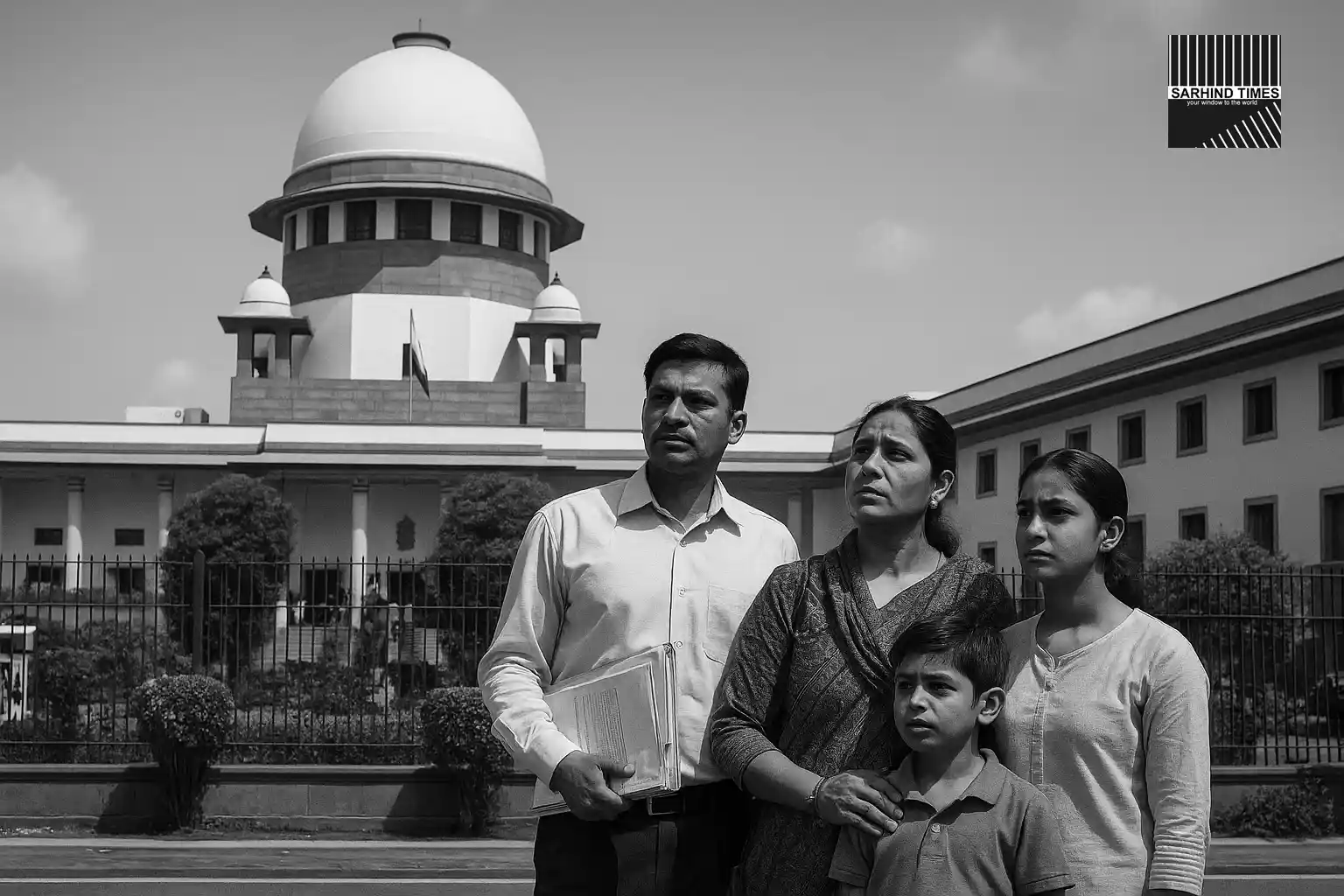
Judgment underscores that prolonged litigation cannot indefinitely delay pension rights even in cases of misconduct allegations
Dateline: New Delhi | 13 November 2025, Asia/Kolkata
Summary: The Supreme Court of India has directed the railways to release all pending pensionary and other financial benefits to the legal heirs of a government employee dismissed in 1988 on charges of bribery, forgery and failure to recover money from passengers. The employee died in 1990 and the case dragged on for 37 years, concluding with the court ruling that the family’s right to pension could not be held hostage indefinitely by procedural delays.
Background: The case history
The matter relates to a former travelling-ticket-examiner (TTE) of the Indian Railways who was dismissed from service in 1988 on multiple charges including accepting illegal bribes, possessing excess cash and forging a duty-pass signature on a passenger’s ticket. An official inquiry found multiple allegations—and disciplinary proceedings were initiated. The employee died in 1990, but his family continued the case through the Labour Court, later the Bombay High Court, and finally the Supreme Court. After 37 years of legal operations his heirs finally secured relief in late October 2025.
The Supreme Court’s ruling and reasoning
The bench reasoned that undue delay in disposal of the family’s entitlement claim amounted to “denial of justice” where the public-sector entity had the resources and knowledge of the case but allowed inertia to persist. Importantly, the court clarified that while serious misconduct can justify termination, it cannot indefinitely suspend payment of legitimate retirement benefits once liability is established or conclusively determined.
Key legal principles laid down
From the judgment, several legal take-aways emerge:
- Pension and other service benefits, once vested, cannot remain frozen indefinitely due to procedural delays or appeals.
- A deceased public-servant’s heirs have a right to the benefits if the service termination is conclusively established and the entitlement has crystallised.
- Public-sector employers must act with reasonable dispatch in finalising dues and should not hide behind procedural inertia.
- Interest on delayed benefits may be ordered if delay is shown to be avoidable and in the employer’s control.
Implications for employees, heirs and government entities
For public-servants and their families, this judgment strengthens the view that benefit entitlements must be treated with urgency, even in the face of misconduct allegations. It reassures that long-winded litigation will not automatically deny post-service rights.
For government departments and employers the message is clear: procedural safeguards for discipline must be balanced with timely resolution of pension/benefit claims. Employers may now face more liability for interest or compensation where delays are unreasonable.
Context: Why this case matters today
The judgment is significant in the larger context of India’s public service rights environment. With thousands of employees, pensioners and heirs awaiting long-pending benefit claims, the ruling serves as a precedent for addressing backlog and delay in public-sector benefit disbursal. It also touches on civil-servant discipline, the speed of adjudication in service matters, and the intersection with welfare rights.
Operational considerations for the Indian Railways and other public entities
The Indian Railways must now review its own pending cases where service termination and benefit disbursal overlap. Officials may need to audit cases older than a defined threshold and fast-track settlement of dues with interest. Other public-sector employers may also face pressure to review and remedy similar delay-situations.
What remains unresolved and watch-points
While the judgment orders benefits to the heirs in this case, it does not automatically convert into a blanket directive for all similar cases. Each case will still require assessment whether the service termination was tenable, whether benefit rights had crystallised, and whether delay was avoidable.
Watch-points include how departments implement the interest component, how many older-cases are reopened, and whether systemic mechanisms are put in place to avoid future delay—such as time-limits, standard operating procedures, digitised tracking of benefit claims and mandatory timelines for service benefit closure.
Conclusion
In sum, the Supreme Court’s ruling marks a decisive intervention in favour of benefit-justice for public-servants and their families. It reaffirms that procedural complexity or litigation length cannot become a bar to entitlements owed. For the late employee’s heirs, victory at last after 37 years. For public-sector institutions, a clear signal: delays in benefit settlement are now legally untenable.
Going forward, the expectation is that government employers and departments will proactively clean up legacy cases, set clear timelines and avoid entitlements getting stuck in judicial or administrative limbo. In a broader sense, the judgment reminds us: service to the public sector deserves timely respect—even after service ends.


+ There are no comments
Add yours